Source Omnidirectional Indoor GPS Antenna for Cars, Homes, Offices
Find and compare 30 Omnidirectional Indoor GPS Antenna options from verified suppliers. Buyers can evaluate specifications like gain, frequency, and mounting types for automotive, base station, and communication applications.
Key considerations
Products List




Comprehensive Sourcing Guide
Strategic Sourcing Guide for Omnidirectional Indoor GPS Antennas
Procuring an Omnidirectional Indoor GPS Antenna requires a nuanced understanding of signal propagation, mounting constraints, and the specific regulatory landscape governing wireless communication devices. Unlike directional variants that focus energy in a single vector, omnidirectional models are engineered to receive signals from all horizontal azimuths, making them ideal for indoor environments where the line-of-sight to satellites is frequently obstructed by building materials. This guide synthesizes available market data and technical attributes to assist procurement professionals in defining requirements, evaluating suppliers, and ensuring long-term supply chain reliability without relying on unverified external claims.
Technical Architecture and Signal Performance
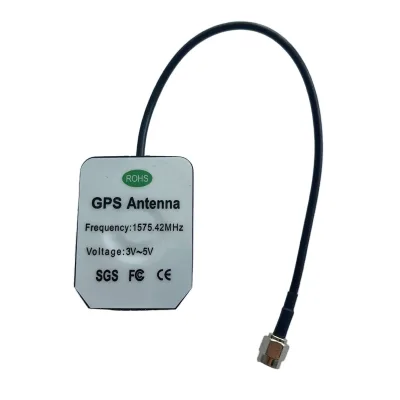
The fundamental distinction of an omnidirectional antenna lies in its radiation pattern, which ensures consistent signal reception regardless of the device's orientation relative to the satellite array. In the context of indoor applications, the antenna must often compensate for signal attenuation caused by walls, ceilings, and metallic structures. Key technical attributes to verify include the operating wavelength and frequency range. Market data indicates that specific models operate at the L1 band frequency of 1575.42MHz, which is the standard carrier frequency for civilian GPS signals. This frequency is critical for ensuring compatibility with standard GPS receivers and navigation systems.
Gain is another pivotal specification. While high-gain antennas are often associated with long-range outdoor applications, indoor omnidirectional units require a balanced approach. Data suggests that certain high-performance indoor models may boast gains around 28±2dBi, though this is an observation of specific high-end configurations rather than a universal standard for all indoor units. Buyers must verify the Voltage Standing Wave Ratio (VSWR), a measure of impedance matching. A VSWR value of less than 1.5 is considered optimal for minimizing signal reflection and maximizing power transfer to the receiver. The physical structure of these antennas often involves wire or printed circuit elements, and the dimensionality is typically two-dimensional, fitting within compact form factors such as 483715mm.
The choice of material significantly impacts durability and signal integrity. Copper (Cu) is frequently cited as a primary conductor material due to its superior electrical conductivity, while aluminum (Al) is often used for housing or structural components to reduce weight and provide shielding. The cable assembly, typically utilizing RG174 coaxial cable with lengths around 3 meters, connects the antenna element to the receiver. The connector type, such as MCX Male, must be verified against the specific interface of the host device to prevent physical incompatibility issues during installation.
Regulatory Compliance and Certification Verification
Navigating the regulatory landscape is a non-negotiable aspect of sourcing electronic components for the global market. Compliance ensures that the device does not cause harmful interference and meets safety standards for human exposure to radio frequency energy. Buyers should demand evidence of adherence to international standards. Common certifications observed in the market include CE (Conformité Européenne) for European markets, FCC (Federal Communications Commission) for the United States, and RoHS (Restriction of Hazardous Substances) for environmental compliance regarding hazardous materials.
Furthermore, automotive and industrial applications often require adherence to quality management standards. ISO/TS16949 is a specific quality management standard for the automotive industry, while ISO9001:2008 represents general quality management systems. The presence of these certifications indicates that the manufacturer has established processes for consistent quality control. However, buyers must treat these as observations of specific supplier capabilities rather than guaranteed attributes of every product listed. It is essential to request current, valid certificates rather than relying on marketing claims. The origin of the product, often cited as China or specifically Guangzhou, influences the regulatory framework the manufacturer is accustomed to, but the final product must meet the certification requirements of the destination market.
Cost Drivers and Pricing Dynamics
The pricing of omnidirectional indoor GPS antennas is influenced by a complex interplay of factors, including material costs, customization levels, and order volume. The observed market price range is broad, spanning from $0.30 to $150.00 USD. This variance reflects differences in technical specifications, such as gain, VSWR, and the inclusion of integrated features like magnetic mounting or automatic connection capabilities.
The Minimum Order Quantity (MOQ) is a significant cost driver. Suppliers may offer MOQs ranging from 1 unit for prototyping to 500 units for mass production. Higher volumes typically unlock lower unit costs, but the initial investment for smaller batches can be substantial. Customization is a key variable; while standard models are readily available, customizing the cable length, connector type, or mounting mechanism (e.g., magnetic vs. adhesive) will increase the unit price and potentially extend the lead time. Sample times are generally short, often between 1 to 3 days, allowing for rapid prototyping, but the full production lead time can range from 3 to 5 days depending on the order size and current factory capacity.
Application Scenarios and Integration Requirements
Omnidirectional indoor GPS antennas are versatile and serve a wide array of applications. Their primary usage is in communication systems where continuous tracking is required regardless of device orientation. In the automotive sector, these antennas are frequently integrated into car navigation systems, where the magnetic mounting option allows for flexible placement on the vehicle's roof or dashboard without permanent modification. The "Nature of Operation" for these devices is primarily receiving, distinguishing them from transmitting antennas used in two-way communication systems.
Beyond automotive use, these antennas are critical for base station applications and asset tracking within large indoor facilities such as warehouses, hospitals, and logistics centers. The "Base Antenna" classification often implies a high-gain variant designed to overcome significant indoor signal loss. The integration of these antennas into larger systems may require specific interface standards, such as the "Multiplex Multi-Purpose Channel" ports found in some advanced integration models. Buyers must ensure that the antenna's operating principle, which may be interferometric in advanced setups, aligns with the system's signal processing capabilities. The "Headphones Function" or automatic connection features noted in some specifications suggest a level of user-friendly integration, though this terminology may be specific to certain product lines and requires careful verification against the actual hardware interface.
Supplier Evaluation and Quality Assurance
Selecting a reliable supplier involves more than just comparing price points. The "Main Market" of the supplier, often East Asia, provides insight into their experience with high-volume manufacturing and export logistics. However, the most critical factor is the supplier's ability to maintain consistent quality. Buyers should evaluate the supplier's production standards, looking for evidence of ISO/TS16949 and ISO9001:2008 compliance. These standards suggest a robust framework for managing product quality and continuous improvement.
Quality control should be a collaborative effort. Buyers must verify the "Structure Form" and "Dimensionality" of the product against their design requirements. For instance, confirming that the antenna is indeed a "Wire Antenna" or "Two-Dimensional Antenna" as specified is essential for physical integration. The packaging standards, such as "Polybag" and "Paper Carton" or "PP Bag/Piece," also play a role in preventing damage during transit. A reputable supplier will offer flexible packaging options, including "Standard Package or as Customer Requirements," to accommodate specific logistics needs.
Long-Term Procurement and Supply Chain Resilience
Sourcing decisions should be made with a long-term perspective, considering the stability of the supply chain and the availability of spare parts. The "Lead Time" of 3-5 days is a positive indicator of a responsive supply chain, but buyers must account for potential delays during peak seasons or global disruptions. The availability of customization is a strategic advantage, allowing buyers to adapt the product to evolving technical requirements without switching suppliers.
The "Sampe Time" of 1-3 days facilitates rapid iteration and testing, which is crucial for validating the antenna's performance in the specific indoor environment where it will be deployed. Buyers should establish a clear communication channel with the supplier to monitor production status and ensure that the "prod_model" (e.g., GKA-P-006, GkA-GPS-M01) remains consistent across orders. Consistency in model numbers and specifications is vital for maintaining the reliability of the end product.
Comparative Analysis of Key Specifications
To assist in the decision-making process, the following table summarizes the key technical and commercial attributes observed in the market for omnidirectional indoor GPS antennas. This comparison highlights the variability in specifications and helps buyers identify the features most relevant to their specific application.
| Attribute | Observation A | Observation B | Observation C |
|---|---|---|---|
| Directionality | Omnidirectional Antenna | Directional Antenna | Omnidirectional Antenna |
| Frequency | 1575.42MHz | Medium Wave | Single Frequency |
| Gain | 28±2dBi | Not Specified | High Gain |
| VSWR | <1.5 | Not Specified | Not Specified |
| Material | Cu (Copper) | Al (Aluminum) | Cu (Copper) |
| Connector | MCX Male | Not Specified | Not Specified |
| Mounting | Magnetic | Not Specified | Not Specified |
| Certification | CE, FCC, RoHS | ISO/TS16949, CE, RoHS | CE, FCC, ROHS |
| Origin | China / Guangzhou | China | China |
| Usage | Car Antenna, Base Antenna | Communication Antenna | GPS Signal Receiving |
This table illustrates that while core functions like GPS signal reception and omnidirectional coverage are consistent, specific attributes like material composition and mounting methods vary. Buyers must prioritize the attributes that align with their system requirements. For example, a project requiring magnetic mounting for a vehicle will prioritize Observation A or C, while a project requiring aluminum housing for weight reduction might look for Observation B.
Final Procurement Considerations
In conclusion, sourcing an Omnidirectional Indoor GPS Antenna requires a meticulous approach that balances technical performance, regulatory compliance, and cost efficiency. Buyers should not rely on a single data point but rather evaluate the entire product profile, including the operating wavelength, gain, VSWR, and certification status. The broad price range and MOQ flexibility offer opportunities for both prototyping and mass production, but the buyer must remain vigilant in verifying supplier claims against actual product specifications. By focusing on verified standards such as ISO/TS16949 and CE, and by clearly defining the application context, procurement professionals can secure a reliable supply of high-quality GPS antennas that meet the demanding requirements of modern indoor navigation and communication systems. The availability of customization and short sample times further enhances the agility of the supply chain, allowing for rapid adaptation to changing market needs.
FAQs
What certifications do omnidirectional indoor GPS antennas typically have?
These antennas often carry CE, FCC, and RoHS certifications for safety and environmental compliance. Some models also meet ISO/TS16949 and ISO9001:2008 standards for quality management, particularly in automotive applications.
How is the frequency of these antennas defined?
The operating frequency is commonly set at 1575.42MHz to match the standard L1 band for civilian GPS signals. This ensures compatibility with most GPS receivers and navigation systems used in indoor environments.
Can these antennas be customized for specific needs?
Yes, customization is available for cable length, connector type, and mounting mechanisms. Buyers can request specific packaging or modifications, though this may affect the unit price and lead time slightly.
What is the typical lead time for production?
The standard lead time ranges from 3 to 5 days depending on order volume and factory capacity. Sample times are shorter, usually taking between 1 to 3 days for rapid prototyping and testing.
Which materials are used for the antenna construction?
Copper is frequently used for the conductor material due to its superior electrical conductivity. Aluminum is often utilized for housing or structural components to reduce weight and provide necessary shielding against interference.
What is the minimum order quantity for these antennas?
The minimum order quantity ranges from 1 unit for prototyping up to 500 units for mass production. Higher volumes typically unlock lower unit costs, making bulk orders more cost-effective for large projects.
Where are these antennas primarily manufactured?
The products originate from China, with specific manufacturing hubs located in Guangzhou. This region is known for its robust supply chain and experience in producing electronic components for the global market.