Source Optical Breadboard for Labs, Optics, and Testing
Compare 30 Optical Breadboard options from Chinese manufacturers with customizable sizes and mounting grids. Buyers can evaluate aluminum alloy and steel models featuring low deflection and high compressive strength for precision applications; compare the available evidence and request quotations based on your requirements.
Key considerations
Products List

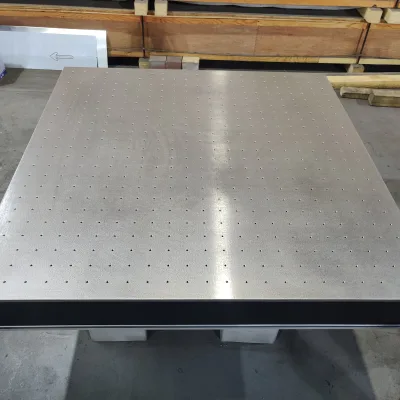
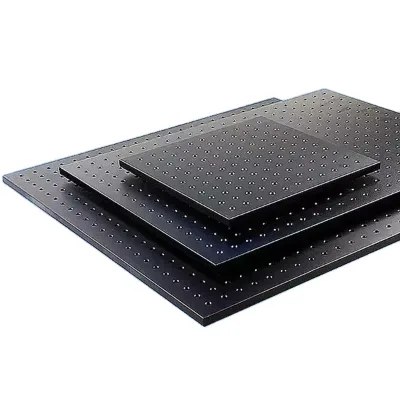
High Density Hotsale Honeycomb Solid Optimized Damping Optical Breadboard
$50.00 - $5000.00
MOQ: 1 Pieces


Mot-L Optics Aluminum Optical Plate Breadboard Optical Plate Optical Breadboard
$238.00 - $239.00
MOQ: 1 pieces


Lightweight Aluminum Optical Breadboard for Lab and Precision Equipment
$238.00 - $239.00
MOQ: 1 pieces




Comprehensive Sourcing Guide
Optical Breadboard Sourcing Guide
Optical breadboards serve as the foundational platform for precision optical experiments, laser setups, and industrial machine vision systems. These modular tables provide a stable, vibration-dampened surface for mounting mirrors, lenses, and detectors with micron-level accuracy. Procurement teams must evaluate the structural integrity and surface finish to ensure long-term alignment stability. The choice of material and grid pattern directly impacts the repeatability of optical alignments and the ease of future modifications.
Buyers should prioritize platforms that offer customizable mounting grids to accommodate diverse component footprints. Common configurations include metric M6 holes on 25mm centers or larger 50mm grids for heavy-duty applications. The surface treatment, whether matte aluminum or steel, influences light scattering and component visibility. Selecting the right breadboard thickness and material composition is critical for minimizing deflection under load, ensuring that optical paths remain unchanged during extended operational periods.
Product Scope and Observed Listing Signals
The current market offers a wide variety of optical breadboards, ranging from small 600x450mm units to large, customizable platforms. Observed listings indicate a broad price spectrum, reflecting differences in material quality, surface treatment, and manufacturing precision. Buyers will encounter models such as the MOT-F, MOT-S, and MOT-L series, each tailored to specific experimental needs. The presence of honeycomb breadboard structures suggests a focus on high stiffness-to-weight ratios, ideal for portable or vibration-sensitive setups.
Packing methods vary significantly, with suppliers offering plywood cases, fumigated wooden boxes, or honeycomb cartons to protect the delicate surface during transit. Origin data points to manufacturers in Jiangxi and Nanchang, China, indicating a concentrated production hub for these precision instruments. The availability of OEM customization and support for English documentation facilitates international procurement. Buyers must verify the specific model series against their dimensional requirements, as platform sizes are often customizable to fit unique laboratory constraints.
Technical Specifications to Verify
Surface plate material is a primary technical consideration, with options including medium carbon steel wallboards and high-quality hard aluminum alloys. Aluminum variants often feature a 1 Cr13 or 304 stainless steel layer, providing corrosion resistance and a non-magnetic environment essential for sensitive electronic or magnetic experiments. The platen flatness is a critical metric, with some specifications citing tolerances of less than 0.1mm per square meter. Buyers must confirm that the surface roughness meets their optical requirements, typically around 1.6 micrometers with a matte treatment to reduce glare.
Mounting hole precision and grid consistency are vital for repeatable component placement. Standard configurations include M6 threaded holes on 25mm centers, though customizable metric grids are available for specialized needs. The breadboard thickness, often 12mm or 20mm, influences the natural frequency and deflection characteristics of the table. Buyers should verify the elastic modulus and compressive strength to ensure the platform can support the weight of heavy optical components without sagging or deforming over time.
Compliance and Safety Documentation
While optical breadboards are passive mechanical structures, compliance with international shipping and material standards is essential for global procurement. Suppliers often adhere to standards such as 430 Aluminum specifications or customer-defined requirements, ensuring material consistency and traceability. Documentation should confirm that wooden packaging materials are fumigated and compliant with international phytosanitary regulations, preventing customs delays. Buyers must request material test reports to verify the specific gravity and water absorptivity of the core material, ensuring long-term dimensional stability.
Safety considerations primarily involve the handling of heavy platforms and the secure mounting of optical components. The integral appearance and low self-weight design of honeycomb structures reduce the risk of injury during installation. Buyers should verify that the supplier provides a warranty, typically one year, covering manufacturing defects in the surface plate and mounting grid. Clear support language, such as English, ensures that technical documentation and safety guidelines are accessible to all operators, reducing the risk of misalignment or equipment damage.
Cost Drivers and Commercial Terms
The cost of an Optical Breadboard is driven by material selection, surface treatment complexity, and the degree of customization required. Aluminum alloy platforms with stainless steel surfacing generally command higher prices than standard steel alternatives due to superior corrosion resistance and non-magnetic properties. Customizable platform sizes and mounting hole patterns add to the manufacturing complexity, increasing the unit cost. Buyers should anticipate a wide price range, reflecting the diversity of available configurations and quality tiers in the market.
Minimum order quantities (MOQ) vary, with some suppliers offering single-unit purchases while others require bulk orders for customized specifications. Lead times are influenced by the origin of manufacture and the availability of raw materials, with Chinese suppliers often providing competitive pricing and flexible production schedules. Buyers should negotiate clear commercial terms regarding packaging, ensuring that the breadboard is protected in plywood cases or honeycomb cartons to prevent surface damage. Payment terms and shipping responsibilities should be explicitly defined to avoid unexpected logistical costs.
Supplier Qualification and Quality Control
Supplier qualification requires a thorough review of manufacturing capabilities and quality assurance processes. Buyers should verify that the supplier offers OEM services and can produce breadboards to exact customer specifications, including custom grid patterns and surface finishes. The presence of standardized production processes, such as the use of specific aluminum alloys or steel wallboards, indicates a mature manufacturing operation. Suppliers should provide evidence of consistent quality control, including flatness testing and hole positioning accuracy checks.
Quality control measures should include rigorous inspection of the surface plate for defects, scratches, or unevenness. Buyers must ensure that the mounting holes are precisely threaded and free of burrs to prevent damage to optical component threads. The supplier should demonstrate the ability to produce integral structures with low deflection and high compressive strength. Requesting samples or detailed technical drawings before placing large orders allows buyers to verify the physical attributes, such as shore hardness and linear expansion coefficient, against their experimental requirements.
Long-Term Procurement Checks
Long-term procurement success depends on the supplier’s ability to maintain consistent quality and provide reliable after-sales support. Buyers should establish a relationship with suppliers who offer ongoing technical support and can assist with troubleshooting alignment issues or component compatibility. The availability of replacement parts or custom modifications ensures that the optical setup can evolve with changing experimental needs. Regular audits of supplier quality metrics, such as defect rates and delivery performance, help maintain high standards over time.
Monitoring the shelf life and storage conditions of the breadboards is also crucial for long-term performance. Materials with low water absorptivity and high specific gravity are less prone to environmental degradation, ensuring stable optical alignments. Buyers should document the specific model series and technical specifications of each purchased unit for future reference and reordering. Establishing a clear communication channel with the supplier facilitates quick resolution of any issues related to surface damage or mounting grid inconsistencies, minimizing downtime in critical optical experiments.
FAQs
What mounting hole options are available for optical breadboards?
Standard models feature M6 holes on a 25mm centre grid, while customized versions offer metric M6mmx25mm or 50mmx50mm grid patterns. Buyers can select from various mounting hole types to suit specific experimental setups, ensuring precise component alignment and secure attachment for laboratory applications.
Which materials are used for Optical Breadboard construction?
Manufacturers utilize high-quality hard aluminum alloy or medium carbon steel wallboard for the surface plate. Some models specify 1 Cr13 or 304 stainless steel panels with thicknesses ranging from 6 to 20mm, providing durable, non-magnetic, and low-deflection platforms suitable for precision optical experiments.
Can optical breadboards be customized for specific requirements?
Yes, customization is available for platform size, breadboard thickness, and mounting hole types. Suppliers offer OEM support and can produce boards according to customer-required standards, allowing for tailored dimensions and structural configurations to meet unique laboratory or industrial testing needs effectively.
What are the key physical properties of aluminum optical breadboards?
Aluminum breadboards exhibit low self-weight, low deflection, and non-magnetic characteristics. They typically have a compressive strength of 245-254MPa, water absorptivity under 0.31%, and a linear expansion coefficient of 4.61x10^-6/ºC, ensuring stability and reliability in sensitive optical alignment tasks.
How are optical breadboards packaged for shipping?
Packaging methods vary by model and supplier, including honeycomb breadboard boxes, plywood and fumigated wooden boxes, plywood cartons, and wooden cases. These protective measures ensure the integrity of the breadboard surface and structure during transit, preventing damage to the precise mounting grid and flat surface.