Source Ophthalmology Visual Field Analyzer for Clinics
Find and compare 30 Ophthalmology Visual Field Analyzer models from Chinese manufacturers. Evaluate features like static perimetry, automatic pupil testing, and CE certification to select the right diagnostic equipment for hospitals and clinics; compare the available evidence and request quotations based on your requirements.
Key considerations
Products List

Medical Automatic Ophthalmology Projection Perimeter Visual Field Analyzer
$2000.00 - $2650.00
MOQ: 1 Pieces

Hio-100 Ophthalmology Multifunctional High-Speed Glaucoma Progression Visual Field Analyzer
$2000.00 - $6000.00
MOQ: 1 Pieces

Eye Clinics Early Glaucoma Detection Visual Field Analyzer for Early Glaucoma Detection
$2000.00 - $6000.00
MOQ: 1 Pieces

Hospital Ophthalmic Automated Perimetry Test Machine Visual Field Analyze
$2000.00 - $2650.00
MOQ: 1 Pieces


Automatic Perimeter Visual Test Machine Fast Ophthalmic Medical Visual Field Analyzer
$2400.00 - $2650.00
MOQ: 1 Pieces


Auto Perimeter Ophthalmic Diagnostic Machine Factory Price Visual Field Analyzer
$5800.00 - $5900.00
MOQ: 1 Pieces


Ophthalmic Anterior Segment Dry Eye Examination Comprehensive Analyzer
$5000.00 - $10000.00
MOQ: 1 Pieces

China Factory Price Visual Field Perimetry Test Analyzer Automatic Ophthalmic Perimeter
$1000.00 - $3500.00
MOQ: 1 Pieces


Dry Eye Analyzer Ophthalmic Eye Exam Instrument Ophthalmoscope Ocular Surface
$9999.00 - $10699.00
MOQ: 1 Pieces

Ophthalmic Equipment Dry Eye Examination Ocular Surface Analyzer for Eye Hospital
$4200.00 - $6999.00
MOQ: 1 Pieces

Automatic Visual Field Analyzer / Computer Perimeter / Ophthalmic Equipment
$1000.00 - $3000.00
MOQ: 1 Pieces

Ophthalmology Ocular Surface Analyzer Optical Instruments for Eye Hospital
$1060.00 - $6800.00
MOQ: 1 Pieces

Ophthalmic Equipment Auto Projection Perimeter Visual Field Analyzer Mslbio110
$4999.00 - $7899.00
MOQ: 1 Pieces
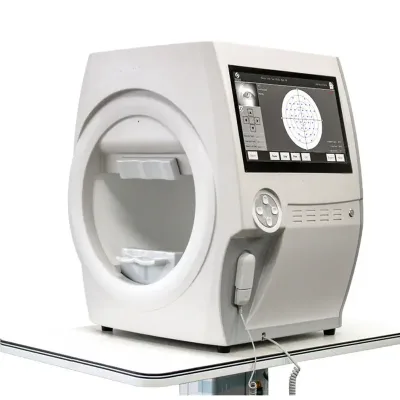

Comprehensive Real-Time Monitoring Ophthalmic Auto Visual Field Perimeter
$3000.00 - $4500.00
MOQ: 1 Pieces


Ophthalmic Eye Optical Equipment Auto Projection Perimeter Visual Field Analyzer
$7000.00 - $7500.00
MOQ: 1 Pieces

Comprehensive Sourcing Guide
Ophthalmology Visual Field Analyzer Sourcing Guide
Procurement professionals must first distinguish between the various model iterations available in the current market, such as the HIO-1000, HIO-100, and HC800 series, as these designations often dictate specific functional capabilities. The observed product listings indicate a diverse range of configurations, including models like the SY-V020A and BIO-1000, which may feature different operational systems or target sizes. Buyers should carefully cross-reference the specific model number with their clinical requirements to ensure the device supports the necessary diagnostic protocols for their specific patient demographic.
The market data reveals a significant price variance, with observed listings ranging from 799 to 17,700 USD, suggesting that cost is heavily influenced by the complexity of the detection method and the included software features. While some units are listed with a minimum order quantity of just one unit, others may require different commercial terms based on the customization options selected. It is critical to analyze whether the lower price points correspond to basic static perimetry units or if they exclude essential accessories like automatic pupil size testing capabilities found in higher-tier models.
Product Scope and Observed Listing Signals
Buyers should verify the specific inspection parameters, noting that observed units feature an inspection distance of 30cm and a visual target interval time of 200ms, which are critical for accurate perimetry testing. The visual target size is frequently specified as Goldmann Lll or Goldmann 3, and the inspection range typically covers 90 degrees, ensuring comprehensive field mapping for glaucoma and neurological assessments. These technical signals help differentiate between basic screening tools and advanced diagnostic equipment capable of detailed static perimetry analysis.
The operational environment requirements are another key signal, with some models requiring a Windows 7 or higher operating system to function correctly. Background light brightness varies significantly across listings, ranging from 1 asb to 10,000 asb, or specific values like 31.5 asb for white light, which impacts the sensitivity of the test results. Procurement teams must confirm that the selected analyzer supports the required background light settings, such as yellow or white options, to match the specific testing protocols used in their hospital or clinic settings.
Technical Specifications to Verify
Technical due diligence must focus on the stimulus generation method, as observed listings specify front projection LED technology and optical projection for the appearance of stimulate points. The detection method is consistently identified as static perimetry, with a brightness level range of 0-51dB and a detection range of 0-90 degrees, which defines the device's sensitivity and field coverage. Buyers should confirm that the visual target colors, including red, blue, and white options, align with the specific testing standards required for their diagnostic workflows.
The classification of these devices as imaging diagnostic equipment necessitates a verification of the automatic features, such as the automatic pupil size test, which streamlines the examination process. The product origin is listed as Jiangsu or Chongqing, China, and the packing is typically a carton or standard exporting package, which influences logistics planning. It is essential to validate that the specific model, whether it is the VF-960 or another variant, includes the necessary hardware interfaces to integrate with existing hospital information systems.
Compliance and Safety Documentation
Regulatory compliance is a primary concern, with observed certifications including ISO, CE, and ISOMSDS, which are essential for market entry and clinical safety. Some listings explicitly mention EEC certification alongside CE and ISO standards, indicating a broader compliance scope for international distribution. Procurement teams must request current certification documents for the specific serial number of the unit being purchased to ensure that the device meets the safety and performance standards of the destination country.
The product standards listed often include CE and ISO, but buyers should also verify if the device adheres to specific medical device directives relevant to their region. The classification as imaging diagnostic equipment implies strict adherence to safety protocols regarding electrical safety and radiation, although the latter is not applicable to optical perimetry. Ensuring that the supplier provides a complete compliance dossier, including the ISOMSDS where applicable, is vital for maintaining regulatory standing and avoiding potential import or usage restrictions.
Cost Drivers and Commercial Terms
The commercial landscape is characterized by a minimum order quantity of one unit, which allows for flexible procurement strategies for smaller clinics or research facilities. However, the wide price range observed, from 799 to 17,700 USD, suggests that customization options and specific model features are the primary drivers of cost. Buyers should clarify whether the quoted price includes the warranty, which is typically listed as one year, and if it covers software updates or hardware maintenance for the duration of the coverage period.
Customization availability is a notable factor, with some products listed as having customization options while others are marked as non-customized. This distinction can significantly impact the final cost and the lead time required for delivery. Procurement teams should negotiate clearly on whether the standard export package or carton packing is sufficient for their shipping needs or if additional protective measures are required to prevent damage during transit from the origin locations in China.
Supplier Qualification and Quality Control
Supplier qualification should involve verifying the origin of the equipment, as listings indicate production in Jiangsu and Chongqing, China, which are known manufacturing hubs for medical devices. The scale of the operation is described as medium, suggesting that suppliers may have the capacity to handle both small and large orders without significant delays. Buyers should request evidence of the supplier's quality control processes, particularly regarding the assembly and testing of the visual field analyzer before it leaves the factory.
Quality assurance extends to the warranty terms, which are commonly listed as one year, covering potential defects in materials or workmanship. It is crucial to confirm the specific terms of the warranty, including whether it covers on-site service or requires the unit to be shipped back to the manufacturer. Additionally, verifying the supplier's ability to provide technical support and spare parts is essential for maintaining the operational uptime of the visual field analyzer in a busy clinical environment.
Long-Term Procurement Checks
Long-term procurement success depends on establishing a clear maintenance and support framework, as the visual field analyzer is a critical piece of diagnostic equipment. Buyers should inquire about the availability of calibration services and the frequency with which the device requires recalibration to maintain the accuracy of the 0-51dB brightness levels and 90-degree detection range. Ensuring a reliable supply chain for replacement parts, such as LEDs or projection lenses, is vital for minimizing downtime and preserving the integrity of patient data.
Finally, buyers must plan for the lifecycle of the software, given that some models require Windows 7 or above to operate. As operating systems evolve, there is a risk of compatibility issues that could render the device obsolete if not properly managed. Procurement teams should negotiate software support agreements that include updates or migration paths to newer operating systems, ensuring that the visual field analyzer remains a viable and compliant tool for years to come.
FAQs
What detection methods do these analyzers support?
These devices primarily support static perimetry for accurate visual field mapping. The systems utilize optical projection for stimulus generation, ensuring precise target presentation. Front projection LED technology is commonly employed to deliver stimuli. This approach allows for reliable diagnostic results in clinical settings, supporting comprehensive eye examinations and disease monitoring protocols effectively.
What certifications are required for these medical devices?
Manufacturers typically provide CE certification to ensure compliance with European safety standards. Some models also include ISO and MSDS documentation for quality assurance. These certifications verify that the equipment meets rigorous medical device regulations. Buyers should verify specific certification lists for each model to ensure regulatory compliance in their target markets before procurement.
Can these analyzers be customized for specific needs?
Customization options are available for many visual field analyzer models. Buyers can often request specific configurations to suit particular clinical workflows. However, some standard models are sold as non-customized units. It is essential to check the specific product attributes for each model to determine if tailored solutions are possible for your facility.
What is the typical inspection range of these devices?
Most visual field analyzers offer a detection range of 0 to 90 degrees. This wide angle allows for comprehensive mapping of the peripheral vision. The inspection distance is often set around 30cm for optimal accuracy. This range supports detailed analysis of visual field defects, aiding in the diagnosis of various ophthalmological conditions effectively.
Where are these analyzers typically manufactured?
Many of these devices are manufactured in China, with origins in regions like Jiangsu and Chongqing. These locations are known for producing medical imaging diagnostic equipment. Buyers can source units directly from these manufacturing hubs. The origin information helps in evaluating logistics, lead times, and supply chain reliability for international procurement orders.
What operating systems are compatible with these analyzers?
These systems generally require Windows 7 or above to operate effectively. The software interface is designed for standard personal computers. Compatibility with modern operating systems ensures smooth data processing and report generation. Buyers should ensure their clinical workstations meet these minimum software requirements for optimal device performance and data management.