Source Open Top Electrician Tool Bag for USB Tools, Hand Tools, Car Repair
Find 30 options for the Open Top Electrician Tool Bag suitable for USB tools, hand tools, and car repair. Compare specifications like capacity, material, and customization features from verified suppliers in China.
Key considerations
Products List


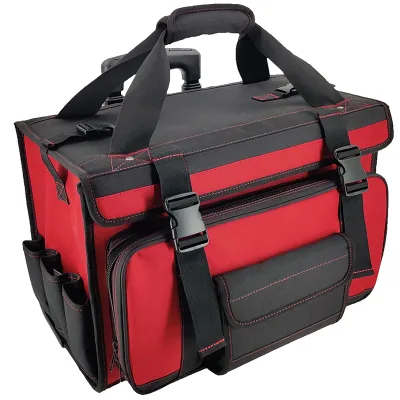
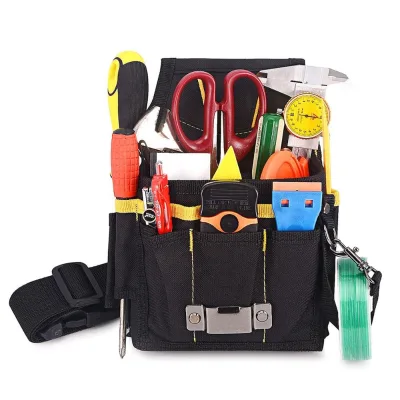
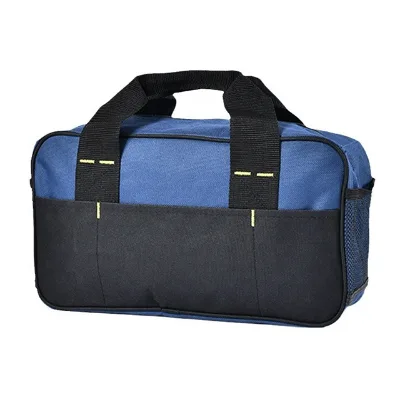
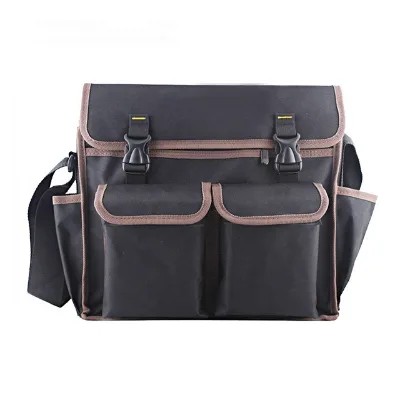
Comprehensive Sourcing Guide
Strategic Sourcing Guide for Open Top Electrician Tool Bags
Technical Specifications and Material Composition
When sourcing an Open Top Electrician Tool Bag, the primary focus must be on the intersection of material durability, structural integrity, and functional capacity. The product landscape for this category is defined by specific material choices that directly influence performance. Analysis of available inventory indicates that manufacturers predominantly utilize Polyester and Nylon as the base materials. Polyester variants are frequently cited for their balance of cost and resistance to abrasion, while Nylon options often appear in contexts requiring higher tensile strength. The hardness of the bag material is a critical differentiator; buyers should expect to encounter options ranging from "Soft" to "Medium Soft," with some heavy-duty variants described as having "Partial Hard" characteristics. This variance allows for selection based on whether the primary need is flexibility for storage or rigidity for protecting delicate instruments.
Capacity is another defining technical parameter. The market offers a spectrum of sizes, specifically categorized as "Medium Capacity" and "Big Capacity." For electricians who require extensive storage for cables, testers, and power tools, the "Big Capacity" designation is often the preferred specification. The physical dimensions and internal organization are tailored to accommodate specific tool types, including USB tools, hardware tools, hand tools, electrical tools, and car repair tools. The bearing capacity of these bags is a crucial metric for load management; observed specifications indicate a range of 3-10 kg for standard models, while heavy-duty versions are engineered to support loads exceeding 10 kg. This distinction is vital for professionals carrying multiple heavy power tools or extensive rolls of cable.
Furthermore, the structural design of the bag must align with the "open top" requirement while maintaining security. Many models feature a "Double Shoulder" configuration to distribute weight effectively during transport, reducing fatigue for the user. The gross weight of the empty bag itself is also a consideration, with observed ranges falling between 0.5-1 kg for lighter models and 1-1.5 kg for more robust constructions. The color palette is generally standardized, with Black and Blue being the most common options, likely chosen for their ability to conceal dirt and grease common in electrical work environments.
Compliance, Certification, and Standard Verification
In the realm of B2B procurement for industrial equipment, verifying compliance and standards is as important as the physical attributes of the product. Unlike consumer electronics, tool bags do not always carry universal safety certifications, but they must adhere to specific material and manufacturing standards to ensure longevity. The supplied data points to specific fabric standards, notably 600D and 1680D denier ratings. These numbers refer to the density and thickness of the fabric weave; a higher denier count generally correlates with increased resistance to tearing and punctures. Buyers must explicitly verify that the supplier can consistently meet these 600D or 1680D specifications, as lower-quality substitutes may degrade rapidly under the stress of daily industrial use.
Waterproofing is a non-negotiable functional requirement for electricians working in varied environments. The product attributes confirm that "Waterproof" is a standard function for these bags. However, "waterproof" can range from water-resistant coatings to fully sealed seams. Procurement teams should request detailed technical sheets that define the level of waterproofing, such as the specific coating used or the seam-sealing methods employed. Additionally, the "Customize" standard mentioned in the product data suggests that many manufacturers operate on a flexible standard basis. This implies that while a baseline standard exists, the final product may be tailored to specific client requirements. Buyers should ensure that any customizations do not compromise the structural integrity or the waterproof rating of the original design.
Regarding certifications, while specific third-party test results are not listed in the general product data, the "Accept OEM ODM" and "Accept Customized Logo" attributes indicate a high level of manufacturing flexibility. This flexibility often requires a robust quality management system to ensure that custom orders meet the same quality benchmarks as standard stock items. Buyers should inquire about the supplier's internal quality control protocols and whether they adhere to international textile standards for durability and colorfastness. The origin of the goods is consistently noted as China, with specific loading ports in Xiamen and Shanghai. This geographical context is relevant for understanding the supply chain dynamics and potential regulatory requirements for importing industrial goods into various regions.
Cost Drivers and Pricing Dynamics
The pricing structure for open top electrician tool bags is influenced by a complex interplay of material costs, customization levels, and order volume. The observed price range in the market spans from $2 to $50 USD, a wide variance that reflects differences in material quality, capacity, and feature sets. The lower end of this spectrum likely corresponds to basic Nylon or Polyester bags with medium capacity and minimal reinforcement. Conversely, the higher price points are associated with heavy-duty bags featuring 1680D fabric, superior waterproofing, and larger bearing capacities exceeding 10 kg.
Material composition is a primary cost driver. The transition from standard Polyester to high-grade Nylon, or the increase in denier count from 600D to 1680D, directly impacts the unit cost. Additionally, the "Big Capacity" and "Double Shoulder" features add to the material and labor requirements, pushing the price upward. Customization is another significant factor. While the "Customization: Available" attribute suggests flexibility, the extent of customization—such as unique branding, specific internal pocket layouts, or custom color combinations—will influence the final price. Suppliers offering "Customized Designs" and "OEM ODM" services often charge a premium for the engineering and setup costs associated with these bespoke solutions.
Order volume plays a critical role in determining the final unit price. The Minimum Order Quantity (MOQ) ranges from 2 to 1000 units. Buyers purchasing near the lower end of the MOQ spectrum may face higher per-unit costs due to the fixed costs of production setup. Conversely, orders approaching the 1000-unit threshold can leverage economies of scale to achieve prices closer to the lower end of the observed range. The payment terms, typically structured as T/T (Telegraphic Transfer), also influence the financial dynamics. A deposit is required before production begins, with the balance due upon completion or shipment. Understanding these terms is essential for cash flow management, especially given the production lead time of 45-60 days after receiving the deposit.
Typical Applications and Usage Scenarios
The versatility of the Open Top Electrician Tool Bag makes it suitable for a diverse range of professional applications. The primary usage categories identified include hardware tools, hand tools, electrical tools, and car repair tools. This broad applicability means the bag is not limited to a single trade but serves as a general-purpose storage solution for technicians who work across multiple disciplines. For electricians, the bag's capacity to hold USB tools and electrical testing equipment is paramount. The "Big Capacity" models are particularly well-suited for field technicians who need to carry a comprehensive set of tools without making multiple trips to a vehicle or workshop.
The "Hand-Held" and "Double Shoulder" configurations offer different ergonomic advantages depending on the work environment. Hand-held bags are ideal for quick access in tight spaces or for tasks requiring one-handed operation, such as holding a flashlight while working. Double shoulder bags, on the other hand, are better suited for long-duration workdays where weight distribution is critical to preventing fatigue. The "Medium Soft" to "Partial Hard" hardness levels provide a balance between protecting delicate tools and allowing the bag to conform to the shape of the tools inside, maximizing space efficiency.
Furthermore, the waterproof nature of these bags makes them essential for outdoor electrical work or environments where moisture is a constant threat. Whether working on construction sites, in basements, or in automotive repair shops, the ability to keep tools dry is a critical safety and operational feature. The "Open Top" design facilitates rapid retrieval of tools, which is crucial in emergency repair scenarios or when time is of the essence. The inclusion of specific compartments for "USB Tools" and "Electrical Tools" suggests that these bags are designed with the specific layout needs of modern electricians in mind, ensuring that small, high-value items are secure and easily accessible.
Supplier Evaluation and Production Logistics
Selecting the right supplier requires a thorough evaluation of their production capabilities, logistics, and responsiveness. The data indicates that suppliers are located in China, with major loading ports in Xiamen and Shanghai. This geographical concentration suggests a mature supply chain with established logistics networks. However, buyers must verify the specific port of loading for each order, as this can impact shipping costs and transit times. The "Fob Xiamen" price condition indicates that the buyer is responsible for freight and insurance from the port of loading, which is a standard Incoterm that requires careful cost calculation.
Production time is a significant logistical factor. The standard production lead time is reported as 45-60 days after receiving the deposit. This extended timeline necessitates advanced planning and inventory management. Buyers should factor this lead time into their procurement schedules to avoid stockouts, especially for custom orders. Sample lead times are significantly shorter, ranging from 7-10 days, which allows for quality verification before committing to a full production run. The ability to produce samples quickly is a positive indicator of a supplier's agility and readiness to engage in the evaluation process.
The "Terms of Payment: T/T" is a standard practice in international trade but requires trust and clear communication. Buyers should ensure that the payment terms are clearly defined in the contract, including the percentage of the deposit required and the timeline for the final payment. The "One Bag in One Polybag" packing standard for standard models and "Carton" packing for custom or bulk orders indicates attention to detail in the packaging process. This level of care helps prevent damage during transit. Suppliers offering "Customized Designs" and "OEM ODM" services should be evaluated on their ability to maintain consistent quality across different batches, as customization can introduce variability in the production process.
Quality Control and Long-Term Procurement Considerations
Ensuring long-term value from an Open Top Electrician Tool Bag investment requires a rigorous approach to quality control and supplier relationship management. The observed specifications, such as the 600D and 1680D fabric standards, provide a baseline for quality, but buyers must implement their own verification processes. This includes inspecting samples for seam strength, zipper durability, and the effectiveness of the waterproof coating. The "Partial Hard" and "Medium Soft" hardness attributes should be physically tested to ensure they meet the specific needs of the end-user. For instance, a bag that is too soft may not protect heavy tools, while one that is too hard may be uncomfortable to carry.
Long-term procurement considerations also involve the scalability of the supplier's operations. As a buyer's needs grow, the supplier must be able to increase production volume without compromising quality. The MOQ range of 2 to 1000 units suggests that suppliers are flexible enough to accommodate both small test orders and large-scale deployments. However, buyers should establish clear communication channels for feedback and continuous improvement. The "Accept Customized Logo" and "Accept OEM ODM" features indicate that suppliers are willing to adapt to the buyer's branding and design needs, which is essential for building a long-term partnership.
Finally, the "Gross Weight" and "Bearing Capacity" specifications should be monitored over time to ensure that the bags do not degrade under repeated use. Regular quality audits and user feedback loops can help identify any recurring issues, such as strap failure or zipper malfunction. By maintaining a proactive approach to quality control and fostering a collaborative relationship with suppliers, buyers can ensure that their open top electrician tool bags remain reliable, durable, and cost-effective assets for their workforce. The combination of high-quality materials, robust construction, and flexible manufacturing capabilities makes these bags a valuable investment for professionals in the electrical and hardware industries.
FAQs
What materials are used for open top electrician tool bags?
These bags are primarily constructed from Polyester or Nylon fabrics. The material hardness ranges from soft to medium soft, with some heavy-duty options featuring partial hard characteristics to protect tools during transport.
How much weight can an Open Top Electrician Tool Bag hold?
Standard models support a bearing capacity between 3 and 10 kg. Heavy-duty variants are engineered to carry loads exceeding 10 kg, making them suitable for multiple power tools and extensive cable rolls.
Can I customize the logo and design of the tool bag?
Yes, customization is available for logos, designs, and OEM or ODM services. Suppliers accept customized designs and specific branding requests, allowing buyers to tailor the product to their corporate identity.
What is the production lead time for custom orders?
Production typically takes 45 to 60 days after receiving the deposit. Sample lead times are shorter, usually requiring about 7 to 10 days for quality verification before full-scale manufacturing begins.
Which capacity sizes are available for electrician tool bags?
The market offers both medium capacity and big capacity options. Big capacity bags are ideal for electricians needing to store USB tools, electrical tools, and car repair tools without making multiple trips.
What are the standard payment terms for these bags?
The standard terms of payment are T/T, or Telegraphic Transfer. Buyers must pay a deposit before production starts, with the balance due upon completion or shipment, depending on the specific agreement.
From which locations do these tool bags ship?
Goods originate from China with major loading ports in Xiamen and Shanghai. The price condition is typically FOB Xiamen, meaning the buyer is responsible for freight and insurance from the port of loading.