Source Outboard Motor Water Pump Impeller for Yacht Boat and Marine
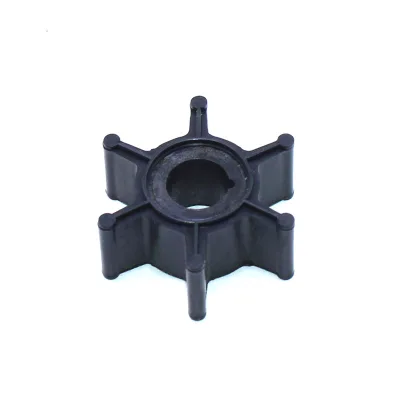
Find and compare 18 Outboard Motor Water Pump Impeller options with varying horsepower ratings and dimensions. Buyers can review specifications including casting processes, material standards, and testing methods for marine applications.
Key considerations
Products List


Comprehensive Sourcing Guide
Strategic Sourcing Guide for Outboard Motor Water Pump Impellers
The global marine industry relies heavily on the reliability of propulsion systems, where the water pump impeller serves as a critical component for engine cooling. For procurement professionals, sourcing this specific part requires a nuanced understanding of material science, manufacturing tolerances, and the diverse application landscape. The market presents a complex array of options ranging from standardized replacement units to highly customized solutions for specific engine models. This guide synthesizes available product data and industry standards to provide a disciplined framework for evaluating suppliers and ensuring component integrity.
Technical Specifications and Manufacturing Processes
When evaluating outboard motor water pump impellers, the primary focus must be on the manufacturing process and the resulting physical attributes. The supplied data indicates that Lost Wax Casting is a recognized production method for certain high-performance variants, a process that allows for complex geometries and high precision. However, for rubber impellers commonly found in water pumps, the material composition is equally critical. One specific entry notes the material as Rubber, which is standard for impellers due to its flexibility and resistance to water abrasion.
Precision is non-negotiable in marine cooling systems. The observed Machining Tolerance for related components can reach ±0.01mm, a standard that ensures the impeller fits perfectly within the pump housing to prevent cavitation and maintain optimal flow rates. Surface quality is equally vital; a Surface Roughness of Ra3.2 is cited as a benchmark for finished parts, ensuring smooth operation and reduced friction. Furthermore, Surface Preparation techniques such as Sand Blast are employed to enhance surface adhesion and durability, particularly for metal components that may be part of the pump assembly.
The dimensional specifications vary significantly based on the intended engine model. Data points reveal a wide spectrum of sizes, with diameters ranging from 40mm to 500mm in broader component categories, while specific impeller assemblies may have shaft diameters of 14mm and depths of 22mm. Buyers must verify that the specific model number, such as 662-44352-01 or the HJB series (e.g., HJB-J-140, HJB-O-155), matches the exact requirements of their vessel's engine. The OEM No. is a crucial identifier for cross-referencing compatibility, ensuring that the replacement part integrates seamlessly with the existing engine block.
Compliance, Certification, and Material Standards
In the B2B marine sector, compliance with international standards is a prerequisite for liability management and operational safety. The sourcing landscape includes suppliers adhering to ISO and ASTM standards, which provide a baseline for quality management and material testing. Specific certifications such as ISO9001 are noted, with applications extending to high-stakes environments like Turbojet Engines, indicating that the manufacturing facilities possess the capability to meet rigorous aerospace-grade quality controls, which is a positive indicator for marine applications.
Additionally, SGS certification is observed in the market, offering third-party verification of product quality and safety. When evaluating a supplier, buyers should request evidence of these certifications rather than accepting them as generic claims. The Standard designation for certain components includes specific dimensional tolerances like A(50.8)/B(18.9)/C(17.4), suggesting that compliance involves meeting precise geometric profiles rather than just general size categories.
Material integrity is often validated through rigorous testing. For high-temperature applications, which may be relevant for engines operating under heavy load, Tensile Strength can exceed 830MPa, and Elongation at high temperatures remains above 3%. The Persistent Creep Temperature is noted to be above 975 Degree, and Creep Tensile Strength above 225MPa, ensuring the material does not deform under sustained stress. While these specific high-temperature metrics may apply to metallic components in the broader supply chain, they highlight the importance of verifying material limits for any impeller operating in high-performance scenarios.
Cost Drivers and Pricing Dynamics
The pricing structure for outboard motor water pump impellers is influenced by a combination of factors, including material complexity, customization levels, and order volume. The observed price range in the market spans from 1 USD to 1130 USD, reflecting the vast difference between a simple rubber replacement unit and a complex, precision-machined assembly or a high-horsepower engine component.
Customization is a significant cost driver. The data confirms that Customization is available, and many products are listed as Customized. Custom orders typically command higher prices due to the setup costs for molds, the need for specialized tooling, and the lower economies of scale. Furthermore, the Horse Power rating of the engine the impeller serves is a direct correlate to cost. Listings show power ratings ranging from 3.3/4/5/6HP for small craft up to 70/75HP for larger vessels, and even 40HP or 35 Jet/40/48/50HP configurations. Higher horsepower requirements often necessitate larger impellers, more durable materials, and tighter tolerances, all of which increase the unit cost.
The Minimum Order Quantity (MOQ) also plays a pivotal role in the final landed cost. The observed MOQ range is 10 to 1000 units. Buyers purchasing small quantities may face a higher per-unit price due to the fixed costs of production setup and logistics. Conversely, bulk orders can leverage economies of scale to reduce the unit price, but they require a higher upfront capital commitment. Packaging requirements, such as Plywood Boxes for heavy or precision items versus Plastic Bag and Big Carton for standard units, also contribute to the overall cost structure.
Typical Applications and Performance Environments
The versatility of outboard motor water pump impellers is evident in their application across various marine environments. The primary use case is for Yacht and Boat propulsion systems, where reliable cooling is essential to prevent engine overheating. The Application field explicitly lists these vessel types, confirming the component's role in recreational and commercial marine transport.
Performance requirements vary based on the operating conditions. For instance, the High Temperature Duration is noted to be Above 40h, suggesting that certain components are designed for extended operation under thermal stress. This is critical for engines that run continuously in hot climates or under heavy load. The Tensile Test Temperature being Above 900 Degree indicates that the materials used in the broader component ecosystem are capable of withstanding extreme thermal environments, a feature that may be relevant for high-performance racing boats or industrial marine applications.
The diversity of models, such as the HJB-P-890 and HJB-J-345, suggests that impellers are tailored to specific engine families. The Standard dimensions provided, such as A(78.7)/B(25.2)/C(19.2), serve as a reference for matching the impeller to the correct engine series. Buyers must ensure that the prod_model matches the engine's specifications exactly, as a mismatch can lead to inadequate water flow, engine failure, and costly downtime.
Supplier Evaluation and Quality Control Protocols
Selecting a reliable supplier requires a rigorous evaluation of their quality control (QC) capabilities. The data highlights several critical testing methods that should be part of a supplier's QC protocol. Fpt is listed as the Test of Surface Defect, a method likely used to identify cracks, porosity, or other surface imperfections that could compromise the impeller's integrity. X-ray testing is specified for the Test of Internal Defect, ensuring that the internal structure of the component is free from voids or inclusions that are not visible to the naked eye.
Dimensional accuracy is verified through CMM (Coordinate Measuring Machine) testing, which provides high-precision measurements of the Size. This is essential for maintaining the ±0.01mm tolerance levels required for proper fit. When evaluating a supplier, buyers should request detailed reports on these testing procedures to verify that the supplier consistently meets these standards.
The Origin of the product is also a factor in supplier evaluation. The data indicates that many components originate from China, a major hub for marine manufacturing. While this offers competitive pricing, it necessitates a thorough vetting process to ensure that the local manufacturing standards align with international expectations. The N.W. (Net Weight) of 11.2g for specific small components highlights the need for precise weight verification as part of the QC process to ensure consistency.
Long-Term Procurement Considerations and Logistics
Sourcing outboard motor water pump impellers is not just about the initial purchase; it involves long-term logistics and supply chain stability. The prod_packing varies from Carton/Bag to Plywood Boxes, depending on the fragility and size of the item. Proper packaging is essential to prevent damage during transit, especially for components with tight tolerances.
Lead times and MOQ constraints must be factored into inventory planning. With an MOQ ranging from 10 to 1000, buyers need to balance the cost benefits of bulk ordering against the risk of inventory obsolescence or storage costs. For critical spare parts, maintaining a safety stock is advisable to avoid vessel downtime.
Furthermore, the Customized nature of many products means that lead times may be longer than for standard off-the-shelf items. Buyers should establish clear communication channels with suppliers to manage expectations regarding production schedules. The Application of these parts in Yacht and Boat environments means that reliability is paramount; therefore, establishing a relationship with a supplier who can provide consistent quality and timely delivery is more valuable than simply choosing the lowest price.
Summary of Key Specifications and Standards
To assist buyers in their decision-making process, the following table summarizes the key technical and compliance attributes observed in the market data. This comparison highlights the diversity of options available and the specific parameters that must be verified during the sourcing process.
| Attribute Category | Observed Data Points | Verification Requirement |
|---|---|---|
| Manufacturing Process | Lost Wax Casting, Sand Blast | Confirm process suitability for material type |
| Tolerances | Machining Tolerance: ±0.01mm | Verify CMM test reports for dimensional accuracy |
| Surface Quality | Surface Roughness: Ra3.2 | Check surface finish specifications |
| Certifications | ISO, ASTM, SGS, ISO9001 | Request valid certificates and scope of application |
| Material Properties | Tensile Strength >830MPa, Elongation >3% | Verify material test reports for high-temp performance |
| Testing Methods | Fpt (Surface), X-ray (Internal), CMM (Size) | Ensure QC protocols include these specific tests |
| Dimensions | Diameter: 40mm to 500mm, Shaft: 14mm | Match exact model numbers (e.g., 662-44352-01) |
| Packaging | Plywood Boxes, Plastic Bag, Carton | Assess packaging for shipping safety |
| Origin | China | Verify country of origin for compliance and logistics |
By adhering to these guidelines and rigorously verifying the provided specifications, procurement professionals can secure high-quality outboard motor water pump impellers that ensure the safety and efficiency of marine operations. The focus must remain on data-driven decision-making, prioritizing verified standards and proven quality control measures over unverified claims.
FAQs
What manufacturing process is used for high-performance impellers?
Lost Wax Casting is a recognized production method for certain high-performance variants. This process allows for complex geometries and high precision, ensuring the component fits perfectly within the pump housing to prevent cavitation.
Which certifications verify the quality of these marine components?
Suppliers adhere to ISO and ASTM standards, with specific certifications like ISO9001 and SGS observed in the market. These certifications provide third-party verification of product quality and safety for liability management and operational safety.
How precise are the machining tolerances for these parts?
The machining tolerance for related components can reach plus or minus 0.01mm. This standard ensures the impeller fits perfectly within the pump housing to prevent cavitation and maintain optimal flow rates for the engine.
Can buyers request customized impellers for specific engine models?
Customization is available, and many products are listed as customized to meet specific engine requirements. Custom orders typically command higher prices due to the setup costs for molds and the need for specialized tooling.
What testing methods ensure internal and surface defect-free parts?
Fpt is used for surface defect testing, while X-ray testing verifies internal defects. Dimensional accuracy is further verified through CMM testing to maintain the required precision levels for proper fit and operation.
Which materials are commonly used for outboard motor impellers?
Rubber is the standard material for impellers due to its flexibility and resistance to water abrasion. Some high-performance variants may involve metal components with specific tensile strength properties for high-temperature applications.
What is the typical price range for these marine components?
The observed price range spans from 1 USD to 1130 USD depending on complexity. Simple rubber replacement units cost less, while complex, precision-machined assemblies or high-horsepower engine components command higher prices.