Source Plastic Adjustable Cabinet Legs for Sofa, Table, and Cabinet
Find and compare 30 Plastic Adjustable Cabinet Leg options for sofa, table, and cabinet applications. Evaluate models like AL001-S-1 and 32H0116, ranging from 500 to 100,000 MOQ, with load capacities up to 300 kg and heights from 50 to 200 mm.
Key considerations
Products List


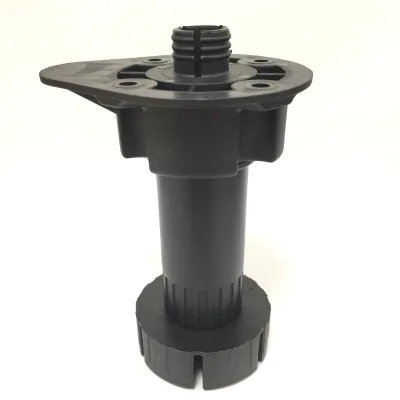


PVC Adjustable Leg Metal Cabinet Kitchen Furniture Legs Plastic Sofa Leg
$0.28 - $0.58
MOQ: 5000 Pieces

PVC Adjustable Leg Cabinet Kitchen Furniture Desk Legs Plastic Sofa Leg
$0.28 - $0.58
MOQ: 5000 Pieces

Black PVC Adjustable Leg Cabinet Kitchen Furniture Legs Plastic Sofa Leg
$0.28 - $0.58
MOQ: 5000 Pieces


Comprehensive Sourcing Guide
Plastic Adjustable Cabinet Leg Sourcing Guide
Sourcing plastic adjustable cabinet legs requires a disciplined approach to balancing load-bearing reliability, aesthetic integration, and commercial flexibility. These components serve as the foundational interface between furniture frames and floor surfaces, providing critical stability for sofas, tables, and cabinets. Buyers must navigate a market where material composition, height adjustability ranges, and mounting configurations vary significantly across suppliers. The following guide outlines the essential verification steps, technical parameters, and commercial considerations necessary to secure a reliable supply chain for these hardware elements.
Product Scope and Observed Listing Signals
The current market landscape for plastic adjustable cabinet legs reveals a diverse array of configurations tailored to specific furniture types and structural demands. Observed listings indicate a strong presence of products designed for sofas, tables, and cabinets, with some units specifically optimized for single-use applications like cabinets alone. The material composition is predominantly plastic, with specific variants utilizing Polypropylene (PP), Acrylonitrile Butadiene Styrene (ABS), and even plastic cement formulations. This variety suggests that buyers should not assume uniform material properties across all suppliers; instead, they must verify the specific polymer grade to ensure compatibility with the intended furniture weight and environmental conditions.
Listing signals further highlight significant variability in customization options and physical dimensions. Many suppliers offer both customized and non-customized solutions, allowing buyers to choose between standard off-the-shelf items and bespoke designs that match specific aesthetic or functional requirements. The observed product models, such as AL001-S-1, AL004-K-2, and 32H0116, demonstrate a wide range of standard sizes, with height adjustments spanning from 50mm to 200mm and diameter specifications often centered around 50mm. Additionally, the presence of both fixed and unfixed variants indicates that buyers must clearly define whether their assembly process requires pre-attached feet or separate clip-on components to ensure seamless integration with their manufacturing workflow.
Technical Specifications to Verify
Load capacity is a paramount technical specification that directly impacts the safety and longevity of the final furniture product. Verified data points indicate loading capacities ranging from 150kg per leg to 300kg for the entire unit, with some specific models rated at 200kg per leg. Buyers must rigorously verify these ratings against the total weight of their furniture, including the frame, upholstery, and intended contents. It is crucial to distinguish between per-leg capacity and total unit capacity, as misinterpretation can lead to structural failure. Furthermore, the adjustability range, observed between 90mm and 180mm for certain models, must be matched to the floor irregularities and leveling requirements of the target market, ensuring that the furniture remains stable on uneven surfaces.
The physical design and mounting mechanism are equally critical for assembly efficiency and aesthetic finish. Specifications such as the "Classic" style and "Round" shape suggest a focus on traditional aesthetics, while the availability of fittings with or without clips offers flexibility in assembly methods. Buyers should verify the exact diameter of the leg, with 50mm being a common standard, and confirm the compatibility of the mounting interface with their furniture frame. The condition of the product is consistently listed as "New," but buyers should also inspect the surface finish for defects and verify the durability of the plastic against wear and tear. Additionally, the packing density, ranging from 100 to 200 pieces per carton, impacts logistics planning and storage requirements, making it a key operational detail to confirm during the sourcing phase.
Compliance and Safety Documentation
While specific certification statuses are not universally disclosed in the observed listings, buyers must proactively request documentation to ensure regulatory compliance in their target markets. For plastic components, this typically involves verifying compliance with international standards for material safety, such as REACH in Europe or CPSIA in the United States, to ensure the absence of harmful phthalates or heavy metals. Buyers should also inquire about fire retardancy ratings, especially for furniture intended for commercial use or public spaces, as plastic materials can be susceptible to ignition. Requesting test reports from accredited laboratories provides objective evidence of these compliance measures, reducing liability and ensuring that the products meet local safety regulations.
Structural integrity and performance under stress are another area where documentation is essential. Buyers should ask for load-bearing test results that validate the claimed capacity of 150kg to 300kg per leg. These tests should simulate real-world conditions, including dynamic loading and long-term static stress, to ensure that the plastic does not deform or crack over time. Additionally, buyers should verify the environmental durability of the materials, particularly if the furniture is intended for outdoor use or high-humidity environments. Documentation regarding UV resistance and moisture absorption rates can prevent premature degradation and maintain the aesthetic and functional quality of the cabinet legs throughout the product's lifecycle.
Cost Drivers and Commercial Terms
The cost of plastic adjustable cabinet legs is influenced by several key factors, including material type, customization level, and order volume. Observed price ranges start as low as $0.01, indicating that basic, non-customized units in high volumes can be sourced at minimal cost. However, prices can rise significantly for customized designs, specialized materials like ABS, or smaller order quantities. Buyers should analyze the cost structure to understand the premium associated with features such as adjustable height ranges, specific color options like black, or unique mounting mechanisms. Understanding these drivers allows for more accurate budgeting and negotiation, ensuring that the chosen supplier offers competitive pricing without compromising on quality.
Minimum Order Quantities (MOQ) and payment terms are critical commercial considerations that affect cash flow and inventory management. The observed MOQ range spans from 500 to 100,000 pieces, reflecting the scalability of production lines and the supplier's capacity. Buyers with smaller volume requirements may need to negotiate flexible MOQs or accept higher per-unit costs, while those with large volumes can leverage economies of scale for better pricing. Additionally, the availability of samples, as indicated in some listings, allows buyers to test product quality before committing to large orders. Buyers should also clarify the packing specifications, such as 100 or 200 pieces per carton, to optimize shipping costs and warehouse efficiency, and confirm the lead times to align with their production schedules.
Supplier Qualification and Quality Control
Evaluating supplier qualifications is essential to ensure a reliable and consistent supply of plastic adjustable cabinet legs. Buyers should verify the supplier's manufacturing capabilities, including their production capacity, quality control processes, and experience in the furniture hardware industry. Suppliers originating from regions like Guangdong, China, often have established supply chains and expertise in plastic molding, but buyers should still conduct due diligence to confirm their operational stability and financial health. Requesting references from existing clients and reviewing their track record for on-time delivery and quality consistency can provide valuable insights into the supplier's reliability.
Quality control measures should be integrated into the procurement process to minimize defects and ensure product uniformity. Buyers should establish clear quality standards and inspection criteria, covering aspects such as dimensional accuracy, surface finish, and load-bearing performance. Implementing pre-shipment inspections or third-party quality audits can help identify and rectify issues before the goods are dispatched. Additionally, buyers should define acceptable defect rates and establish procedures for handling non-conforming products, including returns or replacements. By maintaining rigorous quality control standards, buyers can protect their brand reputation and ensure that the final furniture products meet customer expectations for durability and aesthetics.
Long-Term Procurement Checks
Establishing long-term procurement relationships requires ongoing monitoring and evaluation of supplier performance. Buyers should regularly review key performance indicators such as delivery times, product quality, and responsiveness to issues. Continuous feedback loops with suppliers can facilitate improvements and address any emerging challenges promptly. Additionally, buyers should stay informed about market trends and technological advancements in plastic hardware, such as new materials or manufacturing techniques, to identify opportunities for cost savings or product enhancements. By maintaining a proactive approach to supplier management, buyers can build resilient supply chains that adapt to changing market conditions and customer demands.
Sustainability and ethical sourcing are increasingly important considerations in long-term procurement strategies. Buyers should assess their suppliers' environmental practices, including waste management, energy consumption, and use of recyclable materials. Ensuring that suppliers adhere to ethical labor practices and comply with relevant regulations can mitigate reputational risks and align with corporate social responsibility goals. Furthermore, buyers should consider the end-of-life disposal of the plastic components, exploring options for recycling or responsible disposal. By integrating sustainability into their procurement processes, buyers can contribute to a more circular economy and enhance their brand's appeal to environmentally conscious consumers.
FAQs
What materials are used for these plastic adjustable cabinet legs?
These legs are constructed from durable plastic materials including PP, ABS, and Plastic Cement. The specific material depends on the model, such as AL001-S-1 using standard plastic or AL006-S utilizing ABS for enhanced strength and stability in various furniture applications.
How much weight can each leg support?
The loading capacity varies by model, with some legs supporting up to 300 kilograms total while others handle 150 to 200 kilograms per leg. Buyers should verify the specific capacity for their chosen model to ensure safe usage for sofas, tables, or cabinets.
Which models offer adjustable height features?
Several models like 32H0116 and 12H0401 feature adjustable heights ranging from 50 to 200 millimeters or 125 to 180 millimeters. These adjustable options allow for precise leveling and customization to fit different furniture types and floor conditions effectively.
Can I order customized plastic cabinet legs?
Yes, customization is available for certain models, allowing buyers to specify unique requirements. While some items are listed as non-customized, the product line supports custom orders, enabling tailored solutions for specific furniture designs and functional needs.
What is the minimum order quantity for these legs?
The minimum order quantity typically ranges from 500 to 100,000 pieces depending on the specific model and supplier terms. Some items like 32H0116 have an MOQ of 1000 pieces, while others may require higher volumes for standard production runs.
How are the legs packaged for shipping?
Packaging varies by model, with options including 100, 150, or 200 pieces per carton. Standard packaging often uses normal carton boxes to ensure safe transport, and specific models like 32H0116 are shipped in cartons to protect the plastic components during transit.
Where are these plastic legs manufactured?
These products originate from China, with specific manufacturing locations including Guangzhou and Guangdong. The origin ensures access to established supply chains for plastic furniture components, facilitating efficient logistics and distribution for international buyers seeking cost-effective solutions.