Source PLC Capacitor Forming Machine for Electronics Manufacturing
Compare 30 PLC Capacitor Forming Machine listings from Chinese suppliers. Evaluate specifications like 10 kW power, 110 kg weight, and CE certification to find suitable equipment for industrial capacitor production lines; compare the available evidence and request quotations based on your requirements.
Key considerations
Products List
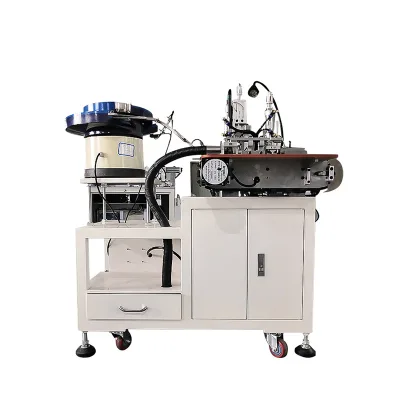

Vacuum Box for Metallized Film Capacitors Assembly Line Capacitor Making Machine
$1000.00 - $5000.00
MOQ: 1 Pieces

$6800.00 - $7000.00
MOQ: 1 set




Comprehensive Sourcing Guide
PLC Capacitor Forming Machine Sourcing Guide
The PLC Capacitor Forming Machine represents a critical automation solution for manufacturing facilities requiring precise dielectric layer formation. Based on observed market data, these units typically integrate Programmable Logic Controllers to manage complex forming cycles, ensuring consistent voltage application and mechanical precision. Buyers should note that the core component is explicitly the PLC, which serves as the central nervous system for coordinating hydraulic pressure and winding axis operations. This automation level is essential for maintaining the tight tolerances required in modern capacitor production, where manual intervention would introduce unacceptable variability.
Procurement decisions must account for the diverse configuration signals found in current listings, ranging from single-item selling units to customized industrial setups. The observed product attributes indicate a wide spectrum of operational capacities, with some models rated for 1200 to 1500 pieces per hour while others focus on specific film winding speeds up to 1400 RPM. Sourcing teams must carefully distinguish between these performance tiers, as the intended production volume directly dictates the appropriate machine selection. A mismatch between the machine's rated capacity and the facility's output goals can lead to significant bottlenecks or unnecessary capital expenditure.
Product Scope and Observed Listing Signals
Current market listings reveal a distinct variation in physical dimensions and structural designs, necessitating a thorough review of spatial requirements before purchase. Observed specifications include standard footprints such as 1100 by 600 by 1100 millimeters, alongside alternative configurations like 650 by 700 by 1500 millimeters or 6.5 by 1.2 by 1.2 meters. These dimensional differences often correlate with the internal arrangement of the winding axis and the hydraulic transmission method. Buyers must verify that their factory floor can accommodate the specific footprint of the selected model, as the machine structure is described as horizontal, which impacts aisle width and operator access.
Weight and power consumption data further complicate the scope definition, with observed values ranging from 110 kilograms to 150 kilograms and power ratings spanning from 200 watts to 10 kilowatts. This disparity suggests that the listings encompass both compact, low-power units suitable for small-batch operations and heavy-duty industrial machines designed for high-volume continuous processing. The electric supply requirement is consistently noted as 220V AC, yet the power draw varies significantly based on the motor power, which can be as low as 0.32 kilowatts or as high as 1 kilowatt depending on the specific model. Procurement teams must align these power specifications with their facility's electrical infrastructure to avoid costly retrofitting.
Technical Specifications to Verify
The operational parameters of the PLC Capacitor Forming Machine are defined by a complex interplay of pressure, speed, and material handling capabilities. Critical verification points include the working pressure range, which is observed between 0.4 and 0.8 megapascals, and the winding speed, which can reach up to 1400 RPM. These metrics are directly linked to the machine's ability to handle film thicknesses ranging from 4 to 20 micrometers and widths between 21 and 110 millimeters. Buyers must ensure that the specific model selected can accommodate the exact film dimensions and thicknesses required for their capacitor production lines, as the machine's mechanical limits are fixed by its design.
Further technical due diligence requires a detailed examination of the capacitor core diameter limits and the specific model numbers associated with different capabilities. The maximum capacitor core diameter is observed to be 100 millimeters, a constraint that must be respected during the design phase of the capacitors being manufactured. Additionally, the presence of multiple model identifiers, such as ZH-20, 255, 840, and IBR, indicates that performance characteristics vary significantly across the product line. It is imperative to cross-reference the desired production output, such as the 1200 to 1500 pieces per hour capacity, with the specific model number to confirm that the machine meets the throughput requirements without compromising quality.
Compliance and Safety Documentation
Safety and regulatory compliance are paramount when sourcing industrial machinery, and the observed listings provide clear indicators of certification status. Many units are documented with CE certification, which is a mandatory requirement for selling machinery within the European Economic Area, while others carry ISO certification, indicating adherence to international management standards. Some listings explicitly state that both ISO and CE certifications are present, offering a higher level of assurance regarding the machine's construction and safety protocols. Buyers must request and verify the validity of these certificates for the specific serial number of the machine they intend to purchase, as certification is not automatically transferable between different units.
Beyond static certifications, the availability of machinery test reports is a critical component of the safety documentation package. The supplied facts confirm that test reports are provided for these units, which serve as empirical evidence of the machine's performance under controlled conditions. These reports should be reviewed to confirm that the hydraulic pressure systems, electrical components, and automatic grade operations function within the specified safety margins. Procurement teams should ensure that the test report covers the specific configuration of the machine being purchased, including the customizations and the specific power rating, to guarantee that the safety claims are applicable to the actual equipment delivered.
Cost Drivers and Commercial Terms
The pricing landscape for PLC capacitor forming machines is characterized by a vast range, with observed values spanning from 260 to 150,000 US dollars. This extreme variance is driven by factors such as the machine's power rating, automation level, and the extent of customization available. Lower-priced units likely correspond to basic models with minimal customization and lower power consumption, while the upper end of the spectrum reflects fully automated systems with advanced PLC integration and higher throughput capabilities. Buyers must carefully analyze the cost-to-performance ratio, ensuring that the price aligns with the specific technical requirements and production goals of their facility.
Commercial terms also vary significantly, with minimum order quantities (MOQ) observed as low as one unit, allowing for flexible procurement strategies. The selling units are typically listed as single items, which simplifies the purchasing process for facilities needing just one machine. However, the warranty terms present a notable divergence, with some listings offering a one-year warranty while others provide coverage for 24 months. This discrepancy highlights the importance of negotiating clear warranty terms that cover critical components like the PLC and hydraulic systems. Buyers should also consider the packing method, which ranges from naked packing to wooden packages, as this affects shipping costs and the risk of damage during transit.
Supplier Qualification and Quality Control
Supplier qualification for PLC capacitor forming machines requires a rigorous assessment of the place of origin and the manufacturing standards employed. The observed data indicates that these machines originate from various locations in China, including Jiangsu, Guangzhou, and Botou, each potentially representing different manufacturing clusters with varying levels of expertise. Buyers should investigate the specific production history of the supplier in these regions to ensure they have a proven track record in building high-precision forming equipment. The condition of the machines is consistently listed as new, but verifying the supplier's quality control processes is essential to confirm that the "new" status implies factory-fresh, fully tested equipment rather than refurbished units.
Quality control extends to the customization capabilities and the specific material grades used in construction. The listings confirm that customization is available, allowing buyers to tailor the machine to their specific production needs, such as adjusting the winding axis or modifying the film width capabilities. However, the material is generally specified as metal, and the structural design is horizontal, which must be verified against the buyer's operational environment. It is crucial to request detailed quality assurance documentation that covers the assembly process, the testing of the PLC components, and the final inspection of the hydraulic pressure systems to ensure the machine meets the required performance standards before shipment.
Long-Term Procurement Checks
Sustaining the operational efficiency of a PLC Capacitor Forming Machine requires a proactive approach to long-term maintenance and support. The warranty period, whether one year or 24 months, serves as the baseline for initial support, but buyers must plan for post-warranty service needs. The complexity of the PLC and hydraulic systems means that specialized technical knowledge is often required for repairs and adjustments. Procurement teams should establish a relationship with the supplier to ensure access to spare parts, such as specific motor components or hydraulic seals, and to secure technical support for troubleshooting any issues that arise after the warranty expires.
Future-proofing the investment involves monitoring the evolution of the machine's specifications and the availability of upgrades. As the industry evolves, the ability to update the PLC software or modify the transmission method may become necessary to maintain competitiveness. Buyers should verify the supplier's commitment to long-term product support and their ability to provide firmware updates or hardware modifications. Additionally, the capacity of the machine, currently observed at 1200 to 1500 pieces per hour, should be regularly evaluated against production demands to determine if an upgrade or replacement is needed. Regular performance audits will help ensure that the machine continues to meet the facility's output targets and quality standards over its entire lifecycle.
FAQs
What is the voltage requirement for this machine?
The machine operates on AC220V electric supply. This standard voltage ensures compatibility with common industrial power outlets in many regions. Buyers should verify local electrical standards before installation to ensure safe and efficient operation of the PLC-controlled system.
How fast can the machine wind films?
The winding speed ranges from 0 to 1400 Rpm. This variable speed allows operators to adjust processing rates based on film thickness and material properties. The automatic grade ensures consistent performance while maintaining precise control over the winding axis for optimal quality.
What certifications does the equipment hold?
The equipment holds CE and ISO certifications. These marks indicate compliance with international safety and quality management standards. Buyers can rely on these documented certifications for regulatory approval in various markets, ensuring the machinery meets established industrial safety requirements for operation.
Can the machine be customized for specific needs?
Yes, customization is available for this machine. Buyers can request specific modifications to meet unique production requirements. The manufacturer supports tailored solutions, allowing for adjustments in dimensions or operational parameters to better fit specific factory layouts or specialized capacitor forming processes.
What is the warranty period for the machine?
The warranty period is typically one to two years. This coverage protects buyers against manufacturing defects and ensures support for core components like the PLC. Buyers should confirm the exact terms with the supplier to understand the scope of maintenance and repair services included.
What is the production capacity of the machine?
The machine has a capacity of 1200 to 1500 pieces per hour. This output rate supports efficient mass production of capacitor cores. The hydraulic pressure transmission method ensures stable operation, allowing for consistent throughput while maintaining the structural integrity of the finished components during high-speed processing.