Source Pneumatic Staple Gun Wire Staples for framing, roofing, and lathing
Find 30 options for Pneumatic Staple Gun Wire Staples from verified manufacturers. Compare specifications like gauge, crown width, and length for wire lathing and construction applications to select the right fasteners for your project needs.
Key considerations
Products List


High Quality 1/2" Air Stapler 8016 Pneumatic Fine Wire Crown Stapler Gun
$10.86 - $19.78
MOQ: 300 Pieces


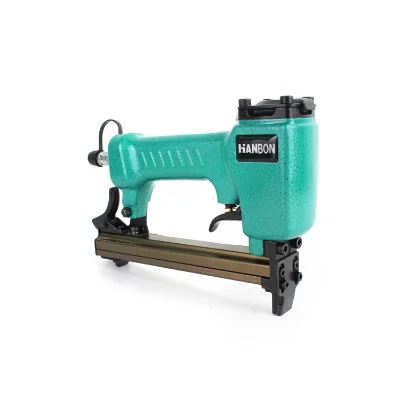
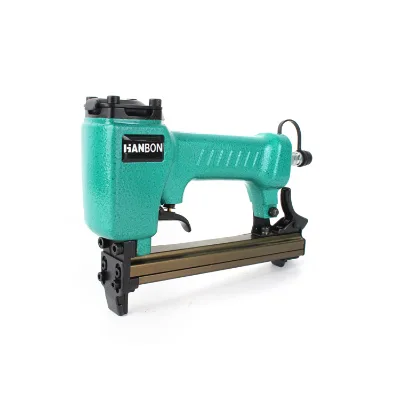


10j Series Pneumatic Wide Crown Staplers 20 Gauge Air Stapler/Staple Gun/Nail Gun
$10.35 - $10.92
MOQ: 100 Pieces


21ga 6-16mm Bea Pneumatic Stapler Air Stapler Long Nose Pneumatic Nail Gun
$23.00 - $25.00
MOQ: 50 Pieces


Comprehensive Sourcing Guide
Strategic Sourcing Guide for Pneumatic Staple Gun Wire Staples
Understanding Technical Specifications and Compatibility
When sourcing Pneumatic Staple Gun Wire Staples, the primary challenge lies in the extreme variance of technical specifications across different product listings. Buyers must recognize that "Pneumatic Staple Gun Wire Staples" is a broad category encompassing distinct sub-types, each requiring precise matching with the intended fastening tool. The observed market data reveals a fragmented landscape where attributes such as gauge, crown width, shank type, and length vary significantly even within the same product category. For instance, specific listings indicate a "16 Gauge Senco Wide Crown Staple" with a crown dimension of 13mm, while other entries specify a "21ga" shank with dimensions of 0.91x0.7mm. This discrepancy highlights the critical necessity for buyers to verify the exact compatibility between the staple and the pneumatic tool before placing an order.
The physical dimensions of the staple are the most immediate technical constraint. The observed data lists lengths ranging from 6mm to 16mm for certain models, while other entries specify a broader range of 4mm to 16mm or even up to 64mm depending on the specific model series like the "501906/501908" series. The crown width, which determines the holding power and surface coverage, is equally variable, with observed values including 13mm, 12.8mm (1/2"), 11.60mm (0.456"), and 10.80mm. Furthermore, the shank type is a crucial differentiator; the market offers "Smooth," "Ring," and "Screw" shank options. The choice between these shank types directly impacts the withdrawal resistance and the material's ability to hold under vibration. A "Ring" or "Screw" shank is typically preferred for heavy-duty applications like wire lathing or construction machinery, whereas smooth shanks may suffice for lighter tasks.
Material composition and surface treatment are also defining technical factors. The supplied facts indicate that staples are commonly manufactured from "Galvanized Iron Wire" or "Steel," with surface treatments ranging from "Galvanized" to "Zinc Plated." The color of the finished product can vary, with observations noting "Silver," "Galvanized," "Yellow," "Blue," and "Golden" finishes. These variations are not merely aesthetic; they denote different corrosion resistance levels and coating processes. Buyers must ensure that the material grade matches the environmental conditions of the application. For example, outdoor applications require robust galvanization to prevent rust, while indoor applications might utilize standard zinc plating. The thickness of the wire, observed in ranges such as 0.020" (0.50mm) to 1.40mm, further dictates the structural integrity of the fastener.
Compliance, Certification, and Standard Verification
Navigating the compliance landscape for pneumatic staples requires a careful review of the standards and certifications claimed by suppliers. The market data presents a mix of international and domestic standards, including "GB" (Chinese National Standard), "ISO," and specific certification marks like "SGS" and "CE." It is important to note that while some listings explicitly mention "SGS CE ISO" or "ISO" as their standard, others reference only "SGS" or "GB." This inconsistency necessitates a rigorous verification process where the buyer must confirm that the specific batch of staples being purchased adheres to the relevant safety and quality standards for the target market.
The "GB" standard suggests compliance with Chinese manufacturing regulations, which is common for products originating from China, as indicated by the "prod_origin" attribute. However, for international procurement, reliance solely on GB may be insufficient if the destination country requires ISO certification or specific industry standards. The presence of "SGS" in the product attributes indicates that third-party testing has been conducted, but buyers should request the specific test reports to validate the claims. The "CE" marking, when present, implies conformity with health, safety, and environmental protection standards for products sold within the European Economic Area. However, the absence of a specific certification in a listing does not automatically disqualify a product; rather, it signals the need for the buyer to request documentation to verify compliance.
In addition to product standards, the manufacturing process itself is subject to scrutiny. The "Surface Treatment" and "Surface Finishing" processes, such as galvanization and zinc plating, must be consistent with the stated standards to ensure longevity. Buyers should verify that the supplier's quality control procedures align with the claimed standards. For instance, if a supplier claims ISO certification, the buyer should ensure that the production line is audited and that the quality management system covers the specific dimensions and material properties of the staples. The "Low-confidence" background note regarding "reach" suggests that while some suppliers may claim compliance with REACH regulations, this should not be assumed without explicit verification in the product documentation.
Cost Drivers and Pricing Dynamics
The pricing structure for Pneumatic Staple Gun Wire Staples is influenced by a complex interplay of material costs, manufacturing complexity, and order volume. The observed price range in the market spans from $0.70 to $500 USD, a vast disparity that reflects differences in product type, quantity, and packaging. The lower end of the spectrum likely corresponds to basic, high-volume orders of standard gauges, while the higher end may include specialized models, custom sizes, or smaller batch sizes with premium packaging. The "MOQ" (Minimum Order Quantity) range of 1 to 400 units further complicates the cost analysis. Buyers ordering small quantities may face a higher per-unit cost due to the setup and handling fees associated with low-volume production runs.
Material costs are a primary driver of the final price. The use of "Galvanized Iron Wire" versus "Steel" with specific surface treatments like "Zinc Plated" or "Galvanized" affects the raw material expense. The thickness of the wire, ranging from 0.50mm to 1.40mm, directly correlates with the amount of metal used per staple, thereby influencing the unit price. Additionally, the complexity of the shank type plays a role; staples with "Ring" or "Screw" shanks require more intricate manufacturing processes compared to those with smooth shanks, potentially increasing the cost.
Packaging and logistics also contribute to the overall cost. The observed packaging options include "Carton," "Carton & Pallet," and "as Customer Requirement." Customized packaging, which is listed as "Available" in the product attributes, often incurs additional charges. The "prod_packing" attribute indicates that some suppliers offer flexible packaging solutions, which can be beneficial for buyers with specific storage or shipping requirements but may come at a premium. The "Business Type" of the supplier, described as "Manufacturer and Trading Company," suggests that buyers may encounter different pricing structures depending on whether they are purchasing directly from the factory or through a trading intermediary. Direct manufacturer purchases might offer better pricing for large orders, while trading companies may provide more flexibility for smaller quantities.
Typical Applications and Usage Scenarios
The versatility of Pneumatic Staple Gun Wire Staples is evident in the diverse range of applications observed in the market. The "Usage" attribute explicitly mentions "Wire Lathing," indicating a primary application in construction and building materials where staples are used to secure wire mesh or lathing to framing structures. This application requires staples with high withdrawal resistance, often achieved through "Ring" or "Screw" shanks and appropriate gauge thicknesses. The "Working Style" being "Pneumatic" confirms that these staples are designed for use with pneumatic tools, which are common in construction sites for their speed and efficiency.
Beyond wire lathing, the "Pneumatic Drill Range" attribute mentions "Construction Machinery," suggesting that these staples are also utilized in the assembly and maintenance of heavy machinery. In this context, the staples must withstand vibration and mechanical stress, necessitating robust materials like "Galvanized Iron Wire" or high-grade "Steel." The "Degree of Automation" being "Semi-automatic" implies that the stapling process may involve some manual intervention, which is typical in construction environments where precision and adaptability are required.
The "Air Wrench Type" attribute, listing "Pulse pneumatic wrench," and the "Screwdriver Startup Mode" of "Under pressure" provide further insight into the operational environment. These tools are likely used in conjunction with the staples for various fastening tasks in industrial and construction settings. The "Type" attribute, which includes "Stapler" and "U-Type Nail," indicates that the products can be used for a variety of fastening needs, from securing insulation to attaching wire mesh. The "Compatible Tools" attribute, specifying "Pneumatic Staple Gun," reinforces the need for buyers to ensure their existing equipment is compatible with the specific staple dimensions and gauge they intend to purchase.
Supplier Evaluation and Business Model Assessment
Evaluating suppliers for Pneumatic Staple Gun Wire Staples requires a deep understanding of their business model and operational capabilities. The "Business Type" attribute identifies suppliers as "Manufacturer and Trading Company," which offers a dual advantage. Manufacturers typically have direct control over the production process, ensuring consistency in quality and the ability to customize products. Trading companies, on the other hand, may offer a broader range of products and more flexible order quantities, acting as intermediaries between multiple manufacturers and buyers.
The "Customized" and "Customization" attributes indicate that suppliers are willing to accommodate specific buyer requirements. This is a significant factor for buyers with unique application needs, such as non-standard lengths, crown widths, or shank types. The "prod_packing" attribute, which includes "as Customer Requirement," further supports the idea that suppliers are adaptable to specific packaging needs. However, buyers must verify the supplier's capacity to handle custom orders efficiently and within the specified lead times.
Location is another critical factor in supplier evaluation. The "prod_origin" attribute confirms that the products originate from "China," a major hub for manufacturing fasteners. Buyers should consider the logistical implications of sourcing from this region, including shipping costs, import duties, and potential supply chain disruptions. The "Lead Time" is not explicitly provided in the data, but buyers should inquire about it during the supplier evaluation process to ensure it aligns with their project timelines.
Quality Control and Long-Term Procurement Considerations
Ensuring consistent quality in Pneumatic Staple Gun Wire Staples is paramount for maintaining operational efficiency and safety. The "Standard" attributes, including "GB," "ISO," and "SGS," provide a framework for quality assurance, but buyers must go beyond these labels to verify the actual quality control processes in place. The "Surface Treatment" and "Surface Finishing" processes, such as "Galvanized" and "Zinc Plated," must be consistently applied to prevent corrosion and ensure the longevity of the staples. Buyers should request samples and conduct their own testing to verify the quality of the surface treatment and the mechanical properties of the staples.
Long-term procurement considerations involve building a sustainable relationship with suppliers who can consistently meet quality and delivery requirements. The "MOQ" range of 1 to 400 units suggests that suppliers are flexible, but buyers should aim to establish a steady order volume to secure better pricing and priority service. The "Condition" attribute, listed as "New," confirms that the products are fresh and not refurbished, which is essential for maintaining performance standards.
Buyers should also consider the environmental impact of their procurement decisions. The "Material" attributes, such as "Galvanized Iron Wire" and "Steel," indicate the use of recyclable materials, but the specific environmental certifications and sustainability practices of the supplier should be evaluated. The "Low-confidence" note regarding "reach" suggests that while some suppliers may claim compliance with environmental regulations, this should be verified through documentation.
In conclusion, sourcing Pneumatic Staple Gun Wire Staples requires a meticulous approach that balances technical specifications, compliance, cost, and supplier reliability. By carefully evaluating the observed data and adhering to the principles of evidence-based procurement, buyers can make informed decisions that ensure the quality and performance of their fastening solutions. The diverse range of products available in the market offers opportunities for customization and optimization, but success depends on a thorough understanding of the specific requirements of each application and the capabilities of the chosen suppliers.
FAQs
What are the available staple lengths for Pneumatic Staple Gun Wire Staples?
Staple lengths vary by model, ranging from 6mm to 16mm for standard types and up to 64mm for specific series. Buyers must verify the exact length required for their application, as dimensions like 4mm to 16mm or 12mm to 64mm exist depending on the product model.
Which shank types are available for Pneumatic Staple Gun Wire Staples?
The market offers smooth, ring, and screw shank types for these staples. Ring or screw shanks provide higher withdrawal resistance for heavy-duty tasks like wire lathing, while smooth shanks are suitable for lighter applications requiring less holding power.
Can I customize the packaging for Pneumatic Staple Gun Wire Staples?
Yes, customization is available, with options including cartons, pallets, or specific customer requirements. Suppliers often accommodate unique packaging needs, though this may affect the minimum order quantity and overall pricing structure for the transaction.
What materials are used to manufacture Pneumatic Staple Gun Wire Staples?
Staples are typically made from galvanized iron wire or steel with galvanized or zinc-plated finishes. These materials ensure durability, with colors ranging from silver to yellow, blue, or golden depending on the specific surface treatment applied during manufacturing.
Which certifications are commonly associated with Pneumatic Staple Gun Wire Staples?
Common certifications include SGS, CE, and ISO standards, alongside Chinese GB standards. Buyers should verify specific batch documentation to ensure compliance with international safety and quality regulations before placing large orders for construction or industrial use.
What is the typical crown width for Pneumatic Staple Gun Wire Staples?
Crown widths vary significantly, with observed values including 13mm, 12.8mm, 11.60mm, and 10.80mm. Selecting the correct crown width is critical for compatibility with specific pneumatic staple guns and to ensure adequate surface coverage for the intended fastening task.
How does the gauge affect the performance of Pneumatic Staple Gun Wire Staples?
Gauges range from 16 gauge to 21 gauge, directly influencing wire thickness and structural integrity. Thicker gauges like 16 gauge offer greater strength for construction machinery, while thinner gauges suit lighter duty applications requiring less penetration force.