Source Pneumatic Trolley Wheel for Wheelbarrow, Hand Trolley, and Trolley
Find 30 Pneumatic Trolley Wheel options with varying diameters, rim materials, and load capacities. Compare specifications for wheelbarrow, hand trolley, and general trolley applications from Chinese manufacturers offering customization and small order acceptance.
Key considerations
Products List


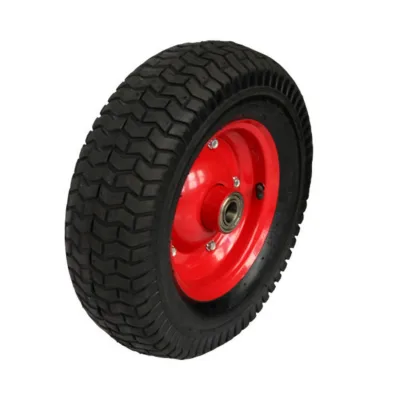
Pneumatic Rubber Wheel Air Tyre for Wheelbarrow Tire Trolley Wheel (6.00-6)
$1.95 - $8.85
MOQ: 1000 Pieces


$2.20 - $2.50
MOQ: 1000 Pieces




Comprehensive Sourcing Guide
Strategic Sourcing Guide for Pneumatic Trolley Wheels
Understanding Technical Specifications and Variability
When sourcing pneumatic trolley wheels, buyers must first navigate a landscape of diverse technical specifications that define the wheel's performance envelope. The core product category encompasses wheels designed for various load-bearing applications, ranging from hand trolleys to heavy-duty wheelbarrows. A critical observation in the current market is the variance in diameter and rim construction. Specifications indicate that wheels are available in dimensions such as 14 inches, while metric equivalents like 200mm and 300mm are also prevalent. Specific model numbers frequently encountered in the supply chain include 350-8, 300/325-8, 300-4, 400-8, and 500-6. These alphanumeric codes often denote the wheel diameter and rim width, serving as the primary identifier for compatibility with existing trolley frames.
The construction of the wheel itself is another pivotal factor. The market offers wheels with either plastic or metal rims, each offering distinct advantages regarding durability and weight. For instance, metal rims are often paired with steel axle components, providing a robust connection for high-load scenarios. Conversely, plastic rims may be selected for lighter applications where corrosion resistance is a priority. The tire composition is predominantly rubber, designed to absorb shock and provide traction on uneven surfaces. Buyers should note that while "Pneumatic" is the primary classification, some listings also reference "Air/Solid" options, suggesting a hybrid market where solid alternatives exist for maintenance-free environments. However, the focus for pneumatic wheels remains on the air-filled chamber, which typically requires a tube thickness ranging from 0.5mm to 1.0mm to ensure structural integrity under pressure.
The axle configuration is equally important for integration. Many units are supplied with an axle pre-installed, simplifying the mounting process for the end-user. The bearing type is another specification that dictates the smoothness of rotation; roller bearings are a common feature in this category, offering a balance between load capacity and rotational efficiency. The finishing process often involves a black coating, which may serve both aesthetic and protective functions against environmental elements. Additionally, the surface handling of metal components frequently includes zinc plating to prevent rust, a crucial consideration for equipment operating in damp or outdoor conditions.
Compliance, Certification, and Standard Verification
In the B2B procurement of industrial components like pneumatic trolley wheels, verifying compliance with international standards is essential for risk mitigation. While specific test results are not universally documented in general product listings, the presence of ISO certification indicates that the manufacturing facility adheres to recognized quality management systems. Buyers should explicitly request proof of this certification rather than relying solely on product descriptions. The standard "10 x 300-4" and "400-8" mentioned in product data suggest that specific dimensional standards exist for these wheel sizes, likely correlating to industry norms for trolley and wheelbarrow compatibility.
When evaluating a supplier, the verification of standards goes beyond the product label. Buyers must ensure that the "prod_standard" listed matches the actual physical dimensions and load ratings of the delivered goods. For example, a model designated as "WB6404" or "PR1800" implies a specific internal coding system used by the manufacturer. It is the buyer's responsibility to cross-reference these codes with the physical product to ensure they meet the required specifications for the intended application. The absence of a brake mechanism on many of these wheels is a standard design choice for trolleys, but this must be confirmed during the specification phase to avoid compatibility issues with braking systems on the trolley frame.
Furthermore, the origin of the product plays a role in compliance. A significant portion of the supply originates from China, with specific manufacturing hubs noted in regions like Jiaonan Qingdao. While this location data is factual, buyers should be aware that regional manufacturing centers may have varying levels of regulatory oversight. Therefore, the ISO certification becomes a more critical checkpoint. It serves as a proxy for the supplier's commitment to consistent quality control processes. Buyers should also verify if the "OEM" weight designation implies that the supplier can adjust the product weight to match specific client requirements, which is a common customization option in this sector.
Cost Drivers and Pricing Dynamics
The pricing structure for pneumatic trolley wheels is influenced by a complex interplay of material costs, manufacturing processes, and order volume. The observed price range in the market spans from $1.8 to $16 USD, a wide variance that reflects differences in size, material quality, and included components. A wheel priced at the lower end of this spectrum likely corresponds to smaller diameters, such as the 200mm or 300mm models, with basic rubber tires and plastic rims. In contrast, the higher price points are typically associated with larger diameters like the 14-inch or 400-8 models, which utilize metal rims, roller bearings, and more robust axle assemblies.
Material composition is a primary cost driver. Wheels constructed with steel axles and metal rims generally command a premium over those with plastic rims due to the higher raw material costs and the additional processing required for metal finishing, such as zinc plating. The thickness of the inner tube, ranging from 0.5mm to 1.0mm, also impacts the cost; thicker tubes require more rubber and offer greater durability, justifying a higher price point. Additionally, the inclusion of a bearing, specifically a roller bearing, adds to the manufacturing complexity and cost compared to simple bushing designs.
Order volume is another significant factor in determining the final unit price. The market typically enforces a Minimum Order Quantity (MOQ) ranging from 200 to 2000 units. Suppliers often structure their pricing tiers to reward larger purchases, meaning the unit cost will decrease as the order quantity approaches the upper end of the MOQ range. However, the flexibility of the market is evident in the acceptance of small orders by some suppliers, which can be beneficial for buyers testing the market or fulfilling urgent, low-volume needs. This flexibility often comes with a slight premium on the unit price. Packaging requirements also influence costs; options such as "10 PCS Per Nylonbag" or "in Bulk" may incur different handling and shipping fees, which should be factored into the total landed cost calculation.
Typical Applications and Usage Scenarios
Pneumatic trolley wheels are versatile components designed for a wide array of industrial and commercial applications. The primary usage scenario identified is for hand trolleys, where the wheels facilitate the movement of heavy loads across various terrains. The specific application of "Wheel Barrow" is also prominent, indicating that these wheels are engineered to withstand the rigors of construction sites, gardening, and agricultural settings. The ability to handle maximum loads of up to 100kg per wheel suggests that they are suitable for medium-duty tasks, making them ideal for logistics, warehousing, and maintenance operations.
The "Unfolding" style mentioned in product attributes points to a specific design feature where the trolley frame or wheel assembly may be collapsible for storage or transport. This is particularly valuable for buyers who need to optimize storage space in warehouses or delivery vehicles. The customization availability allows manufacturers to tailor wheels to specific brand requirements, such as the "Future" brand mentioned in some listings, or to adapt the wheel color, such as the "Green Rim" option, for brand identity or safety visibility.
Furthermore, the versatility of these wheels extends to different surface conditions. The pneumatic nature of the tire provides a cushioning effect that is superior to solid wheels when traversing rough or uneven ground. This makes them particularly suitable for outdoor applications where shock absorption is necessary to protect both the cargo and the trolley structure. The "Air/Solid" duality in the market suggests that while pneumatic wheels are preferred for comfort and traction, solid alternatives are available for environments where puncture resistance is the absolute priority, such as areas with sharp debris or high-temperature zones.
Supplier Evaluation and Origin Considerations
Evaluating suppliers for pneumatic trolley wheels requires a focus on their manufacturing capabilities, geographic location, and logistical reliability. The supply chain for these components is heavily concentrated in China, with specific production hubs identified in Qingdao and Jiaonan. These regions are known for their robust manufacturing infrastructure and expertise in metalworking and rubber processing. When selecting a supplier, buyers should verify the specific origin, as "Jiaonan Qingdao" and "Qingdao, China" may represent different facilities with varying production capacities and quality control standards.
A key aspect of supplier evaluation is their ability to handle customization. The market data indicates that customization is available, allowing buyers to request specific model numbers, colors, or packing configurations. This flexibility is a strong indicator of a supplier's responsiveness and technical capability. Buyers should also assess the supplier's approach to packaging, as options range from "10 PCS Per Nylonbag" to "in Bulk or in Pallet." The choice of packaging can significantly impact shipping efficiency and the condition of the goods upon arrival. Suppliers who offer palletized shipping for larger orders demonstrate a commitment to protecting the product during transit, which is crucial for maintaining quality.
Additionally, the acceptance of small orders is a valuable trait for suppliers, particularly for buyers who are new to the market or have fluctuating demand. This flexibility reduces the financial risk associated with initial procurement. However, buyers must balance this convenience against the potential for higher unit costs. It is also essential to verify the supplier's communication channels and their ability to provide detailed product specifications, such as the exact model number (e.g., 350-8-#7453) and standard compliance (e.g., WB6404). A supplier that can provide clear documentation and transparent communication is better positioned to support a long-term procurement relationship.
Quality Control and Long-Term Procurement Strategies
Implementing a robust quality control strategy is vital for ensuring the longevity and performance of pneumatic trolley wheels. Given the variability in specifications, such as the 27mm thickness or the 370mm PCD (Pitch Circle Diameter), buyers must establish clear acceptance criteria before production begins. The PCD is a critical dimension that determines the wheel's fitment on the axle; any deviation can lead to installation failures or unsafe operating conditions. Similarly, the tube thickness must be strictly monitored to prevent premature failure due to pressure loss or punctures.
For long-term procurement, buyers should consider the total cost of ownership rather than just the initial purchase price. While a lower-priced wheel may be attractive, the durability of the rubber compound, the quality of the roller bearing, and the corrosion resistance of the zinc-plated surface will determine the replacement frequency. A wheel that lasts twice as long, even at a higher initial cost, can result in significant savings over time. Buyers should also evaluate the supplier's capacity for consistent production. The ability to maintain the "10 x 300-4" standard across multiple batches ensures that replacement parts will always be compatible with existing equipment.
Finally, the procurement strategy should include a plan for managing inventory and lead times. While specific lead times are not provided in the general data, the MOQ ranges of 200 to 2000 units suggest that production cycles may vary based on order size. Buyers should negotiate clear delivery schedules and maintain a buffer stock to mitigate the risk of supply chain disruptions. By focusing on suppliers who offer customization, adhere to ISO standards, and demonstrate a commitment to quality through rigorous testing and packaging, buyers can secure a reliable supply of pneumatic trolley wheels that meet their operational needs.
| Feature Category | Key Specifications Observed | Procurement Verification Point |
|---|---|---|
| Dimensions | Diameter: 14inch, 200mm; Thickness: 27mm | Verify PCD (370mm) and fitment compatibility |
| Materials | Wheel: Rubber; Rim: Plastic/Metal; Axle: Steel | Confirm material grade and corrosion resistance |
| Performance | Max Load: 100kg; Bearing: Roller | Validate load capacity against actual usage |
| Packaging | 10 PCS/Nylonbag, Bulk, Pallet | Assess packaging for shipping safety |
| Origin | China (Jiaonan Qingdao, Qingdao) | Verify facility location and ISO certification |
| Customization | Color: Green Rim; Brand: Future | Confirm ability to meet branding needs |
FAQs
What are the common diameter sizes for pneumatic trolley wheels?
Common diameters include 14 inches, 200mm, and various metric sizes like 300mm or 400mm. Specific models such as 350-8 and 300-4 indicate these dimensions, ensuring compatibility with different trolley frames.
Which rim materials are available for these wheels?
Wheels are available with either plastic or metal rims. Metal rims often pair with steel axles for heavy loads, while plastic rims suit lighter applications and offer corrosion resistance.
Can I order small quantities of pneumatic trolley wheels?
Yes, small orders are accepted by some suppliers despite typical MOQs ranging from 200 to 2000 units. This flexibility helps buyers test the market or fulfill urgent low-volume needs without large commitments.
What is the maximum load capacity for these wheels?
Some models support a maximum load of up to 100kg per wheel. This capacity makes them suitable for medium-duty tasks in logistics, warehousing, and construction environments.
Are these wheels customizable for specific brand requirements?
Customization is available for features like color, such as green rims, and specific model numbers. Buyers can request tailored specifications to match their brand identity or operational needs.
What certifications do the manufacturers typically hold?
Manufacturers often hold ISO certification, indicating adherence to recognized quality management systems. Buyers should verify this certification to ensure consistent quality control during production.