Source Velvet Star Hair Rope for decoration, events, and daily wear
Compare 30 Velvet Star Hair Rope options from verified suppliers. Buyers can review customization, pricing, and packaging details for girls and women's hair accessories suitable for daily use and special occasions.
Key considerations
Products List


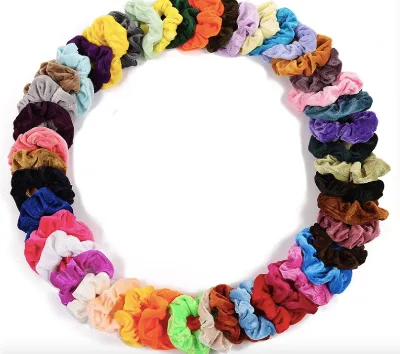


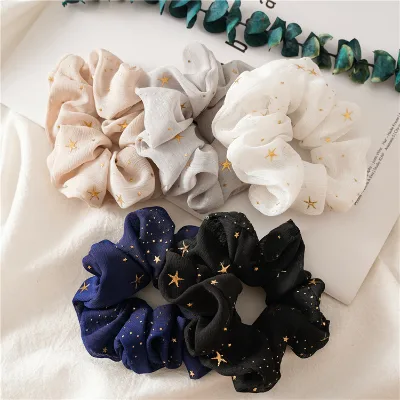
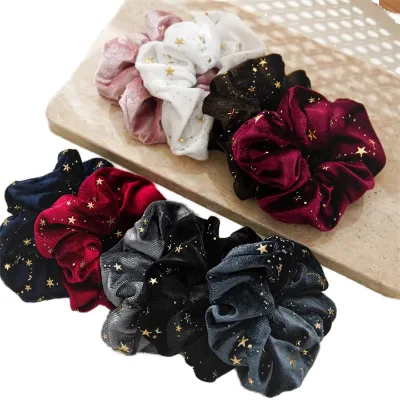


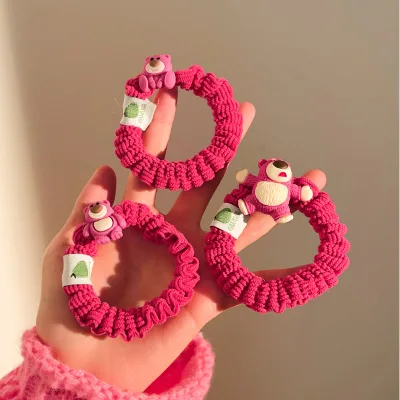
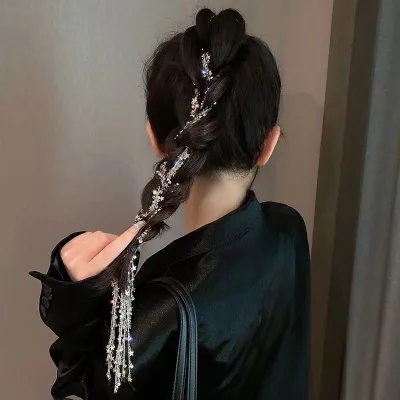


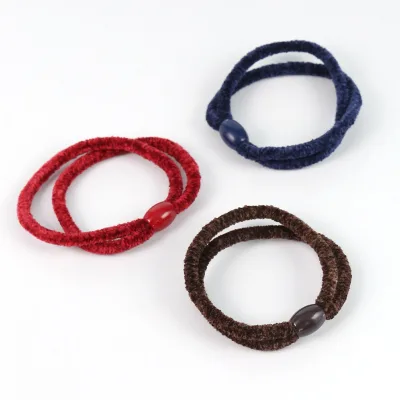
Women Winter Simple Plain Elastic Chenille Hair Tie for Women Hair Styling
$0.51 - $0.61
MOQ: 12 pieces
Comprehensive Sourcing Guide
Strategic Sourcing Guide for Velvet Star Hair Rope Procurement
The global market for hair accessories has evolved significantly, with a distinct shift toward premium materials and customizable designs that cater to diverse consumer demographics. For procurement professionals investigating the core keyword "Velvet Star Hair Rope," the sourcing landscape presents a unique intersection of aesthetic appeal and functional utility. This guide provides a disciplined framework for evaluating potential supply chains, analyzing technical specifications, and establishing quality control protocols. The objective is to navigate the complexities of B2B procurement without relying on unverified claims, ensuring that every decision is grounded in observable product attributes and verified market data.
Technical Specifications and Material Composition
When sourcing velvet star hair ropes, the primary technical differentiator lies in the material composition and structural integrity. The supplied product data explicitly identifies "velvet" as a confirmed material attribute for specific hair band models. This material choice suggests a soft texture and a premium visual finish, which aligns with the "Elegant" and "Fashion" style attributes observed in the market. However, it is critical to distinguish between general fabric descriptions and specific material claims. While some listings in the broader category reference "Fabric" as a generic material, the specific inquiry for velvet requires verification of the pile density and backing strength to ensure durability during daily use.
The physical dimensions of these accessories are equally vital for inventory planning and product compatibility. Data indicates a standard outer diameter range of 3-8cm for elastic hair bands and scrunchies. This specification is crucial for determining the suitability of the product for different hair types and head sizes. Procurement teams must verify that the velvet material maintains its shape within this 3-8cm range without excessive stretching or deformation. Furthermore, the "Shape" attribute often cited as "Flowers" or "Stars" in similar product lines implies a specific molding or stitching process. Buyers should request physical samples to confirm that the star shape is consistent and that the velvet fabric does not fray at the edges, which is a common failure point in low-quality textile accessories.
Compliance, Certification, and Standard Verification
In the realm of textile accessories, compliance and certification are often areas of ambiguity for buyers. While the supplied context mentions "ISO 27001" and "ISO 27001:2022" as low-confidence background information, these standards relate to information security management rather than product safety or textile quality. Consequently, buyers should not assume that a supplier's mention of these standards guarantees compliance with chemical safety or material quality regulations. Instead, the focus must shift to verifying textile-specific certifications such as Oeko-Tex Standard 100, which ensures the absence of harmful substances in the velvet fabric.
The "prod_standard" attribute in the provided data lists "hair decoration" and specific measurements like "1.5m" or "3-8cm in outer diameter." These serve as functional standards rather than regulatory certifications. Procurement professionals must establish their own internal quality benchmarks that align with the target market's regulatory requirements. For instance, if the product is intended for the European market, compliance with REACH regulations regarding azo dyes and heavy metals in the velvet dyeing process is mandatory. The "Quality: High" attribute observed in some listings is a subjective claim and cannot be used as a substitute for third-party testing reports. Buyers should explicitly request test results for flammability, colorfastness, and tensile strength to validate the "High" quality assertion before placing large orders.
Cost Drivers and Pricing Structure Analysis
Understanding the cost drivers for velvet star hair ropes requires a granular analysis of the supply chain components. The observed price range in the market spans from $0.03 to $15.00 USD. This wide variance indicates that price is heavily influenced by the complexity of the design, the quality of the velvet, and the volume of the order. The lower end of the spectrum likely corresponds to basic fabric hair bands with simple stitching, while the higher end may reflect custom molds, premium velvet textures, or intricate star-shaped embellishments.
Minimum Order Quantity (MOQ) is another significant cost driver. The data shows an MOQ range from 10 to 2400 units, with specific instances of 200 PCS, 1200 Sets Per Design, and 10 PCS. A lower MOQ of 10 PCS suggests a supplier capable of handling small-batch or prototype orders, which is beneficial for market testing but often carries a higher unit cost. Conversely, an MOQ of 1200 sets per design implies a commitment to larger production runs, which typically reduces the per-unit cost but increases the initial capital outlay. Buyers must balance their inventory needs against these thresholds. Additionally, the "Customization: Available" and "OEM: Welcome" attributes suggest that custom branding and design modifications are possible, but these services will invariably add to the base cost. The "Package" options, ranging from bulk to 6PCS/Card+Polybag, also impact the final landed cost, as custom packaging requires additional setup fees and material expenses.
Typical Applications and Market Segmentation
The versatility of velvet star hair ropes allows for application across various market segments. The product data explicitly notes that these items are suitable for "Girls," "Adults," and "Women," indicating a broad demographic appeal. The "Occasion" is listed as "Daily Use," "ANY," and "Daily Use for Hair Decoration," suggesting that these accessories are not limited to special events but are intended for everyday wear. This ubiquity makes them a staple item for retailers in the fashion and beauty sectors.
The "Season: Whole Year" attribute further reinforces the product's stability as a year-round inventory item. Unlike seasonal clothing, hair accessories made from velvet can be marketed effectively across all seasons, provided the color palette is adjusted to match current trends. The "Style" attributes of "Elegant" and "Fashion" position these products in the mid-to-high end of the accessory market, appealing to consumers who value aesthetic details over purely functional items. The "Mode" of "Scrunchies" and "Elastic Hair Bands" indicates that the primary application is for securing hair in a comfortable, non-damaging manner while adding a decorative element. Procurement teams should align their sourcing strategy with retailers who focus on lifestyle brands, beauty supply stores, and online fashion platforms that cater to a female demographic seeking high-quality, stylish hair accessories.
Supplier Evaluation and Operational Capabilities
Evaluating suppliers for velvet star hair ropes requires a rigorous assessment of their operational capabilities and logistical reliability. The "prod_origin" is consistently listed as "China," with specific locations including "Yiwu City, Zhejiang Province" and "Zhejiang, China." Yiwu is a globally recognized hub for small commodities and accessories, suggesting that suppliers in this region likely have established supply chains for textiles and packaging. However, the presence of multiple origin points within the same province indicates a need for due diligence to ensure the specific factory has the capacity to handle velvet processing.
Key operational metrics to verify include the "Delivery Time," which is observed as 15 Days in the provided data. This lead time is a critical factor for inventory planning and should be confirmed with the specific supplier, as it can vary based on order volume and customization requirements. The "Shipping" methods listed as "by Sea, by Air, by Express" offer flexibility, but buyers must calculate the cost implications of each method relative to their urgency and budget. Payment terms such as "T/T," "L/C," and "Western Union" are standard, but the specific terms (e.g., 30% deposit, 70% before shipment) should be negotiated based on the supplier's reputation and the order size. Furthermore, the "Customization" and "Design: Customized" attributes highlight the importance of a supplier's R&D capability. Buyers should assess whether the supplier has in-house design teams or relies on external partners to ensure that custom velvet star designs are executed accurately.
Quality Control and Long-Term Procurement Strategy
Establishing a robust quality control (QC) protocol is essential for maintaining brand integrity when sourcing velvet hair accessories. Given the "Quality: High" claim found in some listings, buyers must implement a multi-stage QC process. This should include pre-production sample approval, in-line inspection during the manufacturing of the velvet fabric, and final random inspection of the finished star-shaped hair ropes. Specific attention must be paid to the stitching quality, as loose threads can detract from the "Elegant" appearance. Additionally, the "prod_packing" variations, such as "12PCS/Doz" or "Bulk Package," require verification to ensure that the packaging protects the velvet from crushing and dust during transit.
For long-term procurement, building a strategic partnership with suppliers who offer "OEM" and "Customized" services is advantageous. This allows for continuous product iteration and adaptation to changing fashion trends. The "Export Markets: Global" attribute suggests that suppliers are experienced in international trade compliance, but buyers should still verify their ability to handle specific regional regulations. A long-term strategy should also include a contingency plan for supply chain disruptions, given that the "MOQ" can be as high as 2400 units for certain designs. Diversifying the supplier base to include multiple manufacturers in different regions of China can mitigate risk. Finally, maintaining open communication regarding the "Payment" terms and "Delivery Time" ensures that both parties remain aligned, fostering a relationship that supports consistent quality and timely delivery over the long term.
FAQs
What materials are used for velvet star hair ropes?
Velvet is the confirmed material for specific hair band models, offering a soft texture and premium finish. Some listings also reference generic fabric, but velvet requires verification of pile density to ensure durability during daily use.
Which sizes are available for elastic hair bands?
The standard outer diameter range for these accessories is 3-8cm, suitable for various hair types and head sizes. Buyers must verify that the velvet material maintains its shape within this range without excessive stretching.
How long is the delivery time for orders?
The observed delivery time is 15 days, which is a critical factor for inventory planning. This lead time can vary based on order volume and customization requirements, so it should be confirmed with the specific supplier.
Can I customize the design and packaging?
Customization is available with OEM services welcome for branding and design modifications. Packaging options include bulk, 12PCS/Doz, or 6PCS/Card+Polybag, though custom packaging may add setup fees and material expenses to the base cost.
What is the minimum order quantity for these items?
The MOQ ranges from 10 to 2400 units depending on the specific design and supplier. Lower MOQs like 10 PCS are suitable for prototypes, while higher MOQs like 1200 sets reduce per-unit costs but increase initial capital outlay.
Where are the manufacturers located?
Products originate from China, specifically Yiwu City in Zhejiang Province. This region is a recognized hub for small commodities, suggesting established supply chains for textiles and packaging.