Source Polished Rectangular Corian Sinks for Hotels, Homes, and Restaurants
Find Polished Rectangular Corian Sinks for commercial and residential projects. Compare 22 available models featuring stainless steel and Corian materials, various installation types, and customizable sizes to meet your specific design requirements.
Key considerations
Products List


Elegant Circular Sink Made of Durable Stainless Steel Can Be Customized
$20.00 - $25.90
MOQ: 300 Pieces


Stylish Quartz Stone Kitchen Sink
$25.00 - $45.00
MOQ: 50 Pieces
Jiangmen Yide Technology Kitchen & Sanitary Ware Co., Limited

Customizable Quartz Stone Kitchen Sink
$30.00 - $45.00
MOQ: 50 Pieces
Jiangmen Yide Technology Kitchen & Sanitary Ware Co., Limited


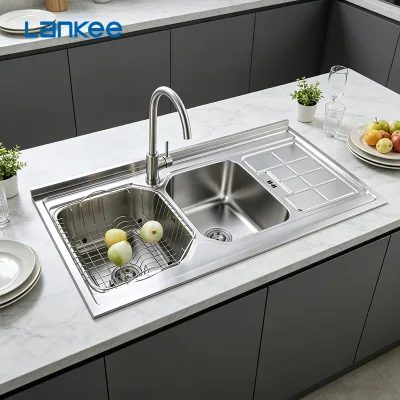
Comprehensive Sourcing Guide
Polished Rectangular Corian Sinks Sourcing Guide
Sourcing Polished Rectangular Corian Sinks requires a careful distinction between material realities and market listings. While the core keyword specifies Corian, a solid surface material known for its seamless integration and repairability, the observed product data predominantly features stainless steel constructions. Buyers must recognize that "Corian" is often used as a generic term for solid surface materials in broad search contexts, but true Corian products have specific manufacturing and maintenance profiles distinct from metal alternatives. The procurement strategy must therefore begin with rigorous material verification to ensure the purchased item matches the aesthetic and functional expectations of a polished, non-porous solid surface rather than a brushed or polished metal basin.
The visual and tactile experience of a polished finish demands high-quality surface treatment processes. In the context of solid surfaces, a polished finish implies a high-gloss, smooth texture that resists staining and allows for easy cleaning, which is critical for kitchen and bathroom environments. However, the supplied data indicates a mix of brushed and polished treatments across various models, with many listings explicitly describing stainless steel rather than acrylic-based solid surfaces. Procurement teams must clarify whether the "polished" attribute refers to the surface sheen of a metal sink or the inherent gloss of a solid surface composite, as this distinction fundamentally alters the installation requirements, durability expectations, and long-term maintenance protocols for the end-user.
Product Scope and Observed Listing Signals
The current market landscape for these fixtures reveals a significant divergence between the keyword intent and available inventory signals. The observed listings heavily feature stainless steel single and double bowl sinks with dimensions such as 780430200mm and 570450200mm. These products are often described with attributes like "Brushed" or "Polished" surface treatments, but the material is explicitly stated as stainless steel. Buyers searching for rectangular corian sinks will likely encounter these metal alternatives first, necessitating a clear filtering strategy to exclude metal products that do not meet the solid surface criteria. The presence of "Rectangular" shapes in the data confirms that the geometric form factor is widely available, but the material composition requires strict validation.
Installation types vary across the observed data, including above-counter, undermount, and countertop configurations. For corian sinks, undermount and integrated countertop installations are particularly popular due to the material’s ability to be joined seamlessly with matching solid surface countertops. The data shows models with "Undermount" installation types and "Single Bowl" styles, which align well with modern minimalist design trends. However, buyers must verify that the specific product supports the thermal and structural requirements of corian, as stainless steel sinks often have different mounting hardware and thermal expansion characteristics. The "Without Faucet" style is common, allowing for customized fixture selection, which is a key advantage in high-end residential and hospitality projects.
Technical Specifications to Verify
Dimensional accuracy is paramount when sourcing rectangular sinks, especially for custom countertop fabrication. The observed product sizes range from 570450200mm to 780430200mm, with some variations in depth such as 180mm or 200mm. For corian sinks, the depth and rimless design must be precisely matched to the countertop thickness and cutout specifications. Buyers should verify the exact cutout dimensions provided by the supplier, as solid surface sinks often require specific edge profiles and support structures that differ from standard drop-in or undermount metal sinks. The "One Hole" or "Three Hole" configurations also impact faucet compatibility, requiring careful coordination with plumbing fixtures.
Material thickness and structural integrity are critical technical parameters that are often under-specified in general listings. While the data mentions thickness ranges of 0.5-1.0mm for stainless steel models, corian sinks typically utilize thicker solid surface panels to ensure rigidity and resistance to cracking. Buyers must confirm the actual thickness of the solid surface material, as thinner panels may require additional reinforcement underneath the countertop. Additionally, the "Rotundity" of the bowl shape, as noted in some listings, affects water drainage and cleaning ease. For a polished corian sink, the internal corners should be softly radiused to prevent staining accumulation while maintaining the sleek rectangular aesthetic.
Compliance and Safety Documentation
Certification requirements for solid surface sinks differ from those for metal fixtures, focusing on material safety and hygiene rather than just structural load. The observed data references ISO SGS certification, which is a common quality management standard, but buyers must ensure this applies to the specific corian material composition. Solid surface materials should comply with relevant health and safety standards regarding chemical leaching and bacterial resistance, particularly for kitchen and bathroom applications. Buyers should request material safety data sheets (MSDS) and hygiene test reports to verify that the polished surface does not harbor bacteria and is safe for food preparation areas.
Environmental and regulatory compliance is increasingly important in global procurement. Buyers should verify that the solid surface material meets local building codes and environmental regulations, such as VOC emissions limits or recycled content requirements. While the data mentions "ISO SGS," it does not specify the exact standards for environmental impact or fire resistance. For corian sinks, fire resistance ratings and non-toxicity certifications are key differentiators. Procurement teams should ensure that the supplier can provide documentation proving compliance with these standards, especially for commercial projects in hotels, restaurants, and healthcare facilities where regulatory scrutiny is higher.
Cost Drivers and Commercial Terms
Pricing for Polished Rectangular Corian Sinks is influenced by material quality, surface finish complexity, and customization options. The observed price range of 5-200 USD likely reflects stainless steel models, which are significantly less expensive than genuine solid surface corian sinks. Buyers should anticipate higher costs for true corian products due to the material’s premium positioning and the labor-intensive polishing process. The "Customization" attribute noted in the data suggests that bespoke sizes, colors, and integrated features can further impact pricing. Procurement teams should budget for potential price variations based on the specific shade, grain, or solid color chosen, as custom colors often carry a premium.
Minimum Order Quantities (MOQ) and payment terms are critical commercial considerations. The data indicates an MOQ of 100 PCS for some models, while others allow for lower quantities, reflecting the flexibility of solid surface manufacturing. Buyers should negotiate MOQs based on project needs, as corian sinks can often be produced in smaller batches compared to mass-produced metal sinks. Payment terms such as EXW or FOB are common, and buyers should clarify who bears the risk and cost of transportation. Given the fragility of solid surface materials during transit, packaging requirements and insurance coverage should be explicitly defined in the contract to mitigate the risk of damage during shipping.
Supplier Qualification and Quality Control
Supplier qualification for corian sinks requires verification of manufacturing capabilities and quality control processes. Buyers should assess whether the supplier has experience in producing solid surface products, as the fabrication techniques differ significantly from metal stamping or welding. The observed data mentions origins in Guangdong and Dongguan, China, which are major manufacturing hubs, but buyers must verify the specific factory’s expertise in corian or similar solid surface materials. Requesting samples is essential to evaluate the surface finish, color consistency, and structural integrity of the polished rectangular sinks.
Quality control checks should include visual inspection for surface defects, dimensional accuracy, and edge finishing. For polished corian sinks, any scratches, pits, or uneven gloss can be highly visible and detrimental to the aesthetic appeal. Buyers should establish clear acceptance criteria for surface quality and ensure that the supplier performs rigorous pre-shipment inspections. Additionally, verifying the supplier’s ability to provide consistent color matching is crucial, especially for large projects requiring multiple sinks. The "Optional Choice" for accessories suggests that buyers should also verify the quality and compatibility of any included mounting hardware or sealing components.
Long-Term Procurement Checks
Long-term procurement success depends on the supplier’s ability to provide consistent supply and after-sales support. Buyers should evaluate the supplier’s production capacity and lead times, as observed data suggests delivery within 30 days, but this may vary for custom orders. Establishing a reliable supply chain for corian sinks requires regular communication and periodic quality audits to ensure that the polished finish and material quality remain consistent over time. Buyers should also consider the availability of replacement parts or repair services, as solid surface sinks can be repaired if damaged, unlike metal sinks which may require full replacement.
Sustainability and lifecycle management are increasingly important factors in long-term procurement. Buyers should inquire about the recyclability of the solid surface material and the supplier’s environmental practices. Corian and similar materials are often recyclable, which aligns with green building standards and corporate sustainability goals. Procurement teams should document the material’s lifecycle data and ensure that the supplier adheres to responsible manufacturing practices. By focusing on these long-term factors, buyers can secure a reliable supply of high-quality Polished Rectangular Corian Sinks that meet both aesthetic and sustainability objectives.
FAQs
What are the standard dimensions for these stainless steel sinks?
The standard product sizes include 780*430*200mm, 570*450*200mm, and 760*430*200mm. These rectangular models are designed for kitchenroom usage and fit various installation types. Buyers can choose between single or double bowl configurations depending on their specific spatial requirements and workflow needs.
Can I customize the sink specifications for my project?
Yes, customization is available for these stainless steel sinks. The product line supports custom dimensions and surface treatments such as brushed or polished finishes. Buyers can also select optional accessories and choose between undermount or above-counter installation types to match their interior design preferences.
What is the minimum order quantity for bulk purchases?
The minimum order quantity is typically 100 pieces for standard models. However, the observed MOQ range extends from 1 to 300 units depending on the specific supplier and product configuration. Custom orders may have different thresholds, so buyers should verify the exact MOQ with the manufacturer before placing an order.
How long does delivery take after order confirmation?
Delivery time is generally within 30 days for standard orders. This lead time applies to most rectangular stainless steel sinks produced in Guangdong or Dongguan, China. Buyers should confirm the exact schedule with the supplier, as production capacity and customization requirements can influence the final delivery date.
Are these sinks suitable for commercial hotel or restaurant use?
Yes, these sinks are designed for home, hotel, and restaurant applications. They are made from durable stainless steel with thicknesses ranging from 0.5 to 1.0mm. The robust construction and modern design make them suitable for high-traffic commercial environments requiring reliable and easy-to-clean kitchen or bathroom fixtures.
What certifications do these stainless steel sinks hold?
The products hold ISO and SGS certifications, ensuring quality and safety standards. These credentials verify the material integrity and manufacturing processes for the stainless steel sinks. Buyers can rely on these certifications for compliance in international markets, particularly for commercial projects requiring documented quality assurance and material safety.