Source Polyester Lining Daily Crossbody Bag for travel, work, and shopping
Explore 30 listings for Polyester Lining Daily Crossbody Bag options featuring nylon or fabric interiors. Buyers can compare specifications, customization capabilities, and pricing from suppliers in China to find suitable bags for everyday use.
Key considerations
Products List


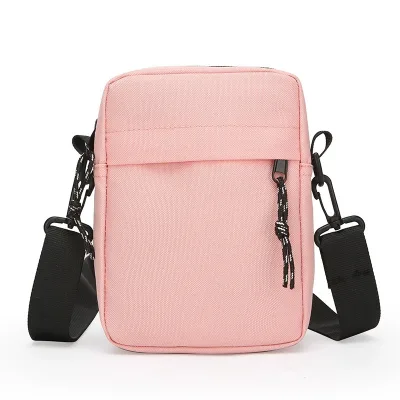
Sling Backpack Multipurpose Crossbody Shoulder Bag Travel Hiking Daypack
$5.00 - $8.50
MOQ: 500 Pieces




Comprehensive Sourcing Guide
Strategic Sourcing Guide for Polyester Lining Daily Crossbody Bags
Understanding Product Specifications and Material Composition
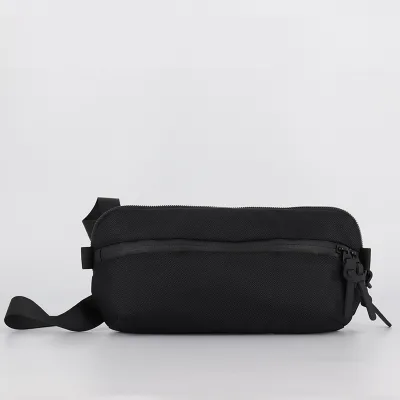
When sourcing a Polyester Lining Daily Crossbody Bag, the primary objective is to identify a product that balances durability, cost-efficiency, and aesthetic versatility. The core material composition often dictates the bag's longevity and suitability for daily use. In the current market, high-quality nylon is frequently cited as the main exterior material, offering a lightweight yet robust structure that resists tearing and abrasion. This is often paired with a polyester lining, which provides a smooth interior surface that protects contents from snagging while adding a layer of structural integrity to the bag's body.
The design specifications for these items vary significantly, yet certain patterns emerge in high-volume production. Common dimensions for a standard daily crossbody bag often approximate a size of 24819cm, providing ample space for essentials without becoming cumbersome. The shape is typically horizontal and square, a design choice that maximizes internal volume while maintaining a sleek profile. The hardness of the bag is generally soft, allowing for flexibility in packing and ease of carrying. However, buyers must verify the specific "Hardness" attribute with suppliers, as some variations may offer reinforced bases or structured sides depending on the intended use case.
Color options are a critical differentiator in this category. While some suppliers offer a fixed palette of three available colors, the industry standard for B2B procurement often leans heavily toward customization. Buyers should expect the "Color" attribute to be customizable, allowing for brand alignment or seasonal trends. The pattern type is frequently listed as "Other" or simple, suggesting that the focus remains on the material quality and functional design rather than complex printed graphics. The style is predominantly casual and simple, aligning with the "Daily Life" usage category.
Compliance, Certification, and Quality Standards
Navigating the compliance landscape for textile products requires a careful examination of the standards cited by potential suppliers. While many suppliers claim adherence to specific standards, the actual verification process is paramount. In the provided data, the standard "SGS" is explicitly mentioned for certain product models. SGS is a recognized inspection, verification, testing, and certification company, and its mention suggests that the supplier may have undergone third-party quality assessments. However, buyers should not assume that every listed product automatically carries this certification without requesting current test reports.
The "prod_standard" attribute often includes size specifications, which serve as a baseline for quality control. For instance, a standard size of 24819cm must be consistent across production runs. Beyond dimensions, the "Waterproof" attribute is a significant feature to verify. While some listings explicitly state that the product is waterproof, this claim requires physical verification. Buyers should inquire about the specific coating or treatment applied to the nylon or polyester materials to ensure water resistance meets their operational needs.
Certification checks should extend beyond the product itself to the manufacturing process. Although specific environmental or labor certifications are not explicitly detailed in the provided facts, the "OEM" (Original Equipment Manufacturer) and "Customized Logo" attributes indicate a willingness to work with brands that have strict compliance requirements. Buyers should request documentation regarding the "Inside Material" to ensure it meets safety standards, particularly if the bags are intended for children or specific commercial applications. The "Hardness" and "Material" attributes must be cross-referenced with physical samples to confirm that the "High Quality" claim holds true in practice.
Cost Drivers and Pricing Dynamics
The pricing structure for polyester lining daily crossbody bags is influenced by a complex interplay of factors, including material costs, customization levels, and order volume. The observed price range in the market spans from 0.49 to 29.8 USD, a wide variance that reflects differences in quality, branding, and order size. The lower end of this spectrum typically corresponds to basic models with standard colors and minimal customization, while the higher end often includes premium materials, complex designs, or smaller order quantities that do not benefit from economies of scale.
Minimum Order Quantity (MOQ) is a primary driver of unit cost. The data indicates an MOQ range of 1 to 500 units, with specific listings citing 100, 300, or even 500 units per style or color. Suppliers with higher MOQs, such as the 300PCS/Style/Color requirement, generally offer lower per-unit prices due to optimized production runs. Conversely, suppliers accepting small orders, such as an MOQ of 1, often charge a premium to cover the setup costs associated with smaller batches. Buyers must calculate the total cost of ownership, factoring in the sample fee, which is observed at 50 USD in some cases, and the potential cost of reordering if the initial sample does not meet specifications.
Payment terms also impact the financial dynamics of the procurement. Standard terms like T/T (Telegraphic Transfer) and L/C (Letter of Credit) are common, offering security for both parties. The "Sample Fee" of 50 USD is a non-negotiable cost for many suppliers, acting as a filter for serious buyers. Additionally, the "Product Packing" specifications, such as one bag in one polybag or 20 pieces per carton, influence shipping costs. Bulkier or less efficient packing can increase freight expenses, thereby affecting the final landed cost of the product.
Typical Applications and Usage Scenarios
The "Daily Life" usage category defines the primary application of these bags. They are designed for everyday carry, making them suitable for a wide range of activities including commuting, shopping, travel, and casual outings. The "Crossbody Bag / Shoulder Bag" product type ensures versatility, allowing the user to wear the bag across the body for security or on the shoulder for convenience. The "Style" being casual and simple makes these bags appropriate for a broad demographic, including women, men, and unisex users.
The "Design" aspect, specifically the horizontal square shape, is particularly advantageous for urban environments where space efficiency is key. The "Waterproof" feature adds value for users in climates with frequent rain or for those carrying sensitive electronics. The "Inside Material" of polyester or fabric provides a soft touch that protects items like smartphones, wallets, and keys from scratches. The "Customizable" nature of these bags allows businesses to use them as promotional items, corporate gifts, or part of a retail collection. The "Logo" acceptance further enhances their utility for branding purposes, enabling companies to imprint their identity on a functional accessory.
Supplier Evaluation and Operational Capabilities
Evaluating a supplier for polyester lining daily crossbody bags requires a deep dive into their operational capabilities and reliability. The "Place of Origin" is predominantly Guangdong, China, and Guangzhou, China (Mainland), regions known for their robust manufacturing ecosystems. However, the specific location should be verified to ensure proximity to logistics hubs and to assess the supplier's familiarity with export procedures. The "Brand Name" variations, such as LEADINGFASHION or HX, indicate that many suppliers operate as OEM manufacturers rather than established consumer brands, which is typical for this sector.
Key operational metrics to evaluate include the "Delivery Lead Time" and "Sample Lead Time." The data suggests a delivery lead time of 25-30 business days for standard orders and 45-60 days for larger or more complex runs. Sample lead times range from 7 to 15 business days, with some suppliers offering a 7-10 day turnaround. These timelines are critical for supply chain planning. Buyers should also assess the "Delivey Ways" options, which include courier, sea, and air freight. The availability of multiple shipping methods indicates a flexible logistics network capable of handling different urgency levels.
The "Payment" terms, specifically T/T and L/C, are standard but require clear agreement on deposit percentages and balance payment timing. The "OEM" and "Customization" attributes confirm the supplier's ability to adapt to specific brand requirements. Buyers should verify the "prod_packing" standards, such as "One Polyester Bag, 20PCS Per Carton," to ensure that the packaging is robust enough to prevent damage during transit. The "Small Orders: Accepted" attribute is a significant positive indicator for buyers testing the market or managing inventory with low turnover.
Quality Control and Long-Term Procurement Strategy
Implementing a rigorous quality control (QC) strategy is essential for maintaining the integrity of the supply chain. The "High Quality" attribute is a common claim, but it must be validated through a structured QC process. This includes inspecting the "Main Material" (High-Quality Nylon) and "Inside Material" (Polyester) for consistency in weave and finish. The "Waterproof" claim should be tested using standardized water resistance tests to ensure the coating is durable and effective.
Long-term procurement considerations involve building a relationship with suppliers who can scale with your business. The "Customizable or Not" attribute suggests that the supplier is open to iterative design changes, which is vital for adapting to market trends. The "MOQ" flexibility, ranging from 1 to 500, allows buyers to start small and scale up as demand grows. However, buyers should be aware that higher customization levels may increase the MOQ or lead time.
To mitigate risks, buyers should establish clear communication channels and request regular production updates. The "prod_standard" of size 24819cm should be a fixed benchmark, with any deviations requiring immediate attention. The "Sample Time" of 7-10 days or 7-15 days should be strictly adhered to, ensuring that the final product matches the approved sample. By focusing on these technical and operational details, buyers can secure a reliable supply of polyester lining daily crossbody bags that meet their quality and performance expectations.
Comparative Analysis of Supplier Attributes
To facilitate decision-making, the following table summarizes key attributes observed across different supplier listings. This comparison highlights the variability in specifications and helps buyers identify the most suitable partners for their specific needs.
| Attribute | Supplier A (Example) | Supplier B (Example) | Supplier C (Example) |
|---|---|---|---|
| Main Material | High-Quality Nylon | Nylon | Nylon |
| Inside Material | Fabric | Polyester | Polyester |
| MOQ | 100 | 300 PCS/Style/Color | 1 |
| Lead Time | 25-30 Business Days | 45-60 Days | 25-30 Business Days |
| Sample Lead Time | 7-15 Business Days | 7-10 Days | 7-15 Business Days |
| Waterproof | Yes | Yes | Yes |
| Customization | Available | Available | Available |
| Origin | Guangdong, China | Guangzhou, China | China |
| Packing | 1 Polyester Bag, 20PCS/Carton | One Bag in One Polybag | 1polyester Bag, 20PCS/Carton |
| Standard | Size: 24819cm | SGS | Size: 24819cm |
This table illustrates that while core materials and features remain consistent, the operational parameters like MOQ and lead time vary significantly. Buyers should use this data to align their procurement strategy with their inventory requirements and budget constraints. By carefully analyzing these attributes, buyers can navigate the complexities of the B2B market and secure high-quality polyester lining daily crossbody bags that meet their specific business needs.
FAQs
What materials are used for the exterior and interior?
The exterior is made of high-quality nylon while the interior lining is polyester or fabric. This combination ensures durability and a smooth surface for protecting contents during daily use.
Can I customize the logo and color of the bag?
Yes, customization is available for both logos and colors. Suppliers accept customized logos and offer color options that can be tailored to specific brand requirements or seasonal trends.
What is the minimum order quantity for these bags?
The minimum order quantity varies by supplier, ranging from 1 to 500 units. Some listings require 100 units, while others specify 300 pieces per style or color.
How long does it take to receive a sample?
Sample lead times typically range from 7 to 15 business days. Some suppliers offer a faster turnaround of 7 to 10 days, though a sample fee of 50 USD may apply.
Are these bags waterproof and what is the standard size?
The bags are designed to be waterproof and typically measure 24 by 8 by 19 cm. This horizontal square shape provides ample space for daily essentials while maintaining a sleek profile.
Which payment terms are accepted for bulk orders?
Standard payment terms include T/T and L/C. These methods are commonly used to secure transactions for bulk orders of polyester lining daily crossbody bags from Chinese manufacturers.
What is the typical delivery lead time for production?
Production lead times generally span 25 to 30 business days for standard orders. Larger or more complex runs may require 45 to 60 days to complete manufacturing and packaging.