Source Polyester Lining Hunting Helmet for Tactical, Outdoor, and Field Use
Find 30 verified options for a Polyester Lining Hunting Helmet designed for durability and comfort. Compare features like impact resistance, ventilation systems, and adjustable sizing across multiple models to identify the best fit for your procurement needs; compare the available evidence and request quotations based on your requirements.
Key considerations
Products List


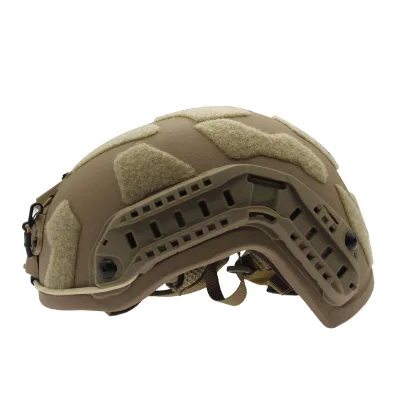
Combat Outdoor Helmet Security Tactical Helme Protection Tactical Helmet
$103.38 - $110.58
MOQ: 500 Pieces


Tactical Helmet-Tactical Vest-Protective Helmet-Composite Armour Vest Law Enforcement Helmet
$100.00 - $350.00
MOQ: 500 Pieces


Comprehensive Sourcing Guide
Polyester Lining Hunting Helmet Sourcing Guide
Procuring a hunting helmet with a polyester lining requires distinguishing between general tactical gear and specialized outdoor equipment. While the supplied data confirms the availability of helmets with specific materials like ABS, PC, and Aramid Fiber, it does not explicitly list polyester lining as a standard feature for all models. Buyers must verify if the internal padding or liner material matches their specific comfort and moisture-wicking requirements, as some listed items feature rubber chin straps or self-adhesion pylons that may not include the desired textile lining.
The observed product range includes models with varying weights, from 440g to 1.5kg, and diverse applications ranging from chemical handling to transportation. When sourcing for hunting, the buyer should prioritize models with impact resistance and inner ventilation systems, as these are critical for safety in outdoor environments. It is essential to cross-reference the listed material properties with the specific need for a polyester liner, ensuring the selected helmet offers the necessary breathability and fit adjustment for extended wear in the field.
Product Scope and Observed Listing Signals
The current market signals indicate a broad spectrum of helmet types, including tactical models with camouflage elements and industrial variants designed for chemical or transportation sectors. Some listings specify a "Fashion Element" of camouflage, which aligns with hunting aesthetics, yet the core material is often listed as Aramid Fiber or ABS rather than a composite with a specific polyester lining. Buyers must carefully inspect the product description to confirm if the internal comfort layer utilizes polyester, as the external shell material does not guarantee the composition of the interior lining.
Observed specifications reveal significant variation in head size adjustments, ranging from 0-25mm for width to 0-65mm for overall size, alongside hoop sizes between 51-64cm. These adjustable features are vital for ensuring a secure fit during active hunting scenarios where movement is frequent. However, the packing dimensions and unit weights vary widely, suggesting that the internal construction, including the lining, differs significantly between models. Procurement teams should request detailed material breakdowns to confirm the presence of polyester in the liner before finalizing orders for specific hunting applications.
Technical Specifications to Verify
Technical verification must focus on the structural integrity and fit mechanisms of the helmet, particularly the mounting locks and adjustment systems. The data highlights universal dismantled structures and dovetail grooves of 21mm, which are crucial for attaching accessories like night vision or communication gear often used in hunting. Buyers should confirm that the multi-function back fixed holes and head size adjustments are compatible with the specific hunting gear they intend to mount, ensuring the helmet remains stable during physical activity.
Weight and ventilation are critical technical parameters for hunting gear, as the supplied facts note weights ranging from 440g to 1.5kg and features like inner ventilation systems. A lighter helmet with effective airflow is generally preferred for long-duration hunts to reduce fatigue. Buyers must verify that the specific model selected offers the optimal balance between protection and weight, and confirm that the ventilation system functions effectively even when the helmet is lined with polyester or other moisture-managing fabrics.
Compliance and Safety Documentation
Safety compliance is paramount, with the supplied data referencing standards such as GA296-2001 and certifications including ISO, CE, and FCC. While these certifications indicate a baseline of quality and safety, buyers must ensure that the specific helmet model meets the regulatory requirements for hunting in their target region. The presence of impact resistance and wearproof functions is noted, but the specific testing protocols for outdoor hunting environments may differ from industrial or tactical standards.
Documentation should explicitly confirm that the helmet's liner material, such as polyester, does not compromise the overall safety rating or fire resistance properties. Some listed items carry CE and FCC certifications, which are valuable for electronic integration, but the structural safety standards like GA296-2001 are more relevant for physical protection. Procurement teams should request test reports that validate the helmet's performance under conditions typical of hunting, ensuring that the combination of shell material and liner meets all necessary safety thresholds.
Cost Drivers and Commercial Terms
Cost drivers in this category are heavily influenced by the choice of shell material, with Aramid Fiber and ABS representing different price points and performance levels. The observed price range of 0.8 to 350 USD suggests a vast disparity between basic industrial models and high-performance tactical gear. Buyers should anticipate that helmets featuring specialized polyester linings, advanced ventilation systems, and custom camouflage patterns will likely fall toward the higher end of this spectrum due to the added manufacturing complexity.
Commercial terms such as MOQ and lead times vary significantly, with observed MOQs ranging from 1 to 2000 units. The packing specifications, which include carton dimensions and unit counts, also impact shipping costs and logistics planning. Buyers must negotiate clear terms regarding customization, as the data confirms customization is available, but the cost implications of adding specific polyester linings or custom colors should be explicitly defined in the contract to avoid unexpected expenses.
Supplier Qualification and Quality Control
Supplier qualification should prioritize manufacturers with a proven track record in producing helmets that meet international standards like ISO and specific industry standards. The data indicates origins in Zhejiang and Wuhan, China, regions known for manufacturing diverse protective gear. Buyers should verify the supplier's quality control processes to ensure consistency in the application of the polyester lining and the durability of the impact-resistant shell, as these are critical for user safety.
Quality control checks must include visual inspections of the stitching and adhesion of the liner, as well as functional tests of the adjustment mechanisms. The supplied facts mention universal self-adhesion pylons and rubber chin straps, which require precise application to ensure they do not fail under stress. Procurement teams should implement a rigorous inspection protocol that validates the material composition of the liner and the structural integrity of the helmet before accepting any shipment.
Long-Term Procurement Checks
Long-term procurement success depends on establishing a reliable supply chain that can consistently deliver helmets with the specified polyester lining and safety features. Buyers should monitor supplier performance regarding lead times and the ability to maintain quality standards over multiple production runs. The availability of customization suggests that suppliers should be capable of adapting to changing requirements, but this flexibility must not come at the expense of product consistency or safety compliance.
Regular audits and re-verification of product specifications are essential to ensure that the helmets continue to meet the original procurement criteria. As the market evolves, new standards or material technologies may emerge, requiring buyers to stay informed and update their specifications accordingly. Maintaining open communication with suppliers regarding any changes in material sourcing or manufacturing processes will help mitigate risks and ensure a steady supply of high-quality hunting helmets.
FAQs
What materials are used for the helmet construction?
The helmet is constructed using ABS and PC materials to ensure durability. Some variants also utilize Aramid Fiber for enhanced protection. These materials provide impact resistance and are suitable for chemical and transportation applications.
Can the helmet size be adjusted for different users?
Yes, the helmet features adjustable head width and size mechanisms. The head width adjustment ranges from 0 to 25mm, while the head size adjustment spans 0 to 65mm. This ensures a secure fit for various adult head sizes.
Which certifications does the helmet product hold?
The product holds ISO certification and meets the GA296-2001 standard. Some models also carry CE and FCC certifications. These credentials verify compliance with safety and quality requirements for industrial and tactical use cases.
How is the helmet packed for shipping?
Packaging varies by model but typically includes carton boxes or polybags. One common configuration packs nine pieces per carton with dimensions of 81.5 by 35 by 86 centimeters. Customized packing is also available according to customer requirements.
What is the weight of the standard helmet model?
The standard helmet model weighs approximately 1.5 kilograms. Another variant is significantly lighter at 440 grams. These weights reflect the specific material composition and design intended for different operational environments.
Where is the helmet manufactured?
The helmets are manufactured in Zhejiang and Wuhan, China. These locations serve as the primary production origins for the listed products. Buyers can expect consistent quality from these established manufacturing regions in China.
Is customization available for the helmet design?
Customization is available for the helmet design and color. Buyers can request specific colors like green or black, or opt for camouflage fashion elements. Customized packing and specifications are also supported to meet unique procurement needs.