Source Portable LPG Composite Gas Cylinder for New Energy, Food, and Electronic
Explore 30 listings for Portable LPG Composite Gas Cylinder options from Chinese manufacturers. Compare specifications like water capacity, working pressure, and material to find suitable units for new energy, food, and electronic applications.
Key considerations
Products List


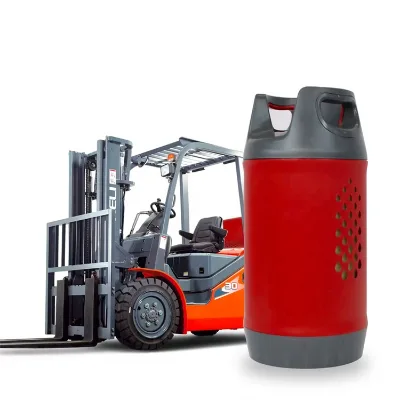
Universal Hot Product Good Sale Portable Gas Cylinder 12.5kg LPG Gas Cylinder
$15.00 - $58.00
MOQ: 2000 Pieces

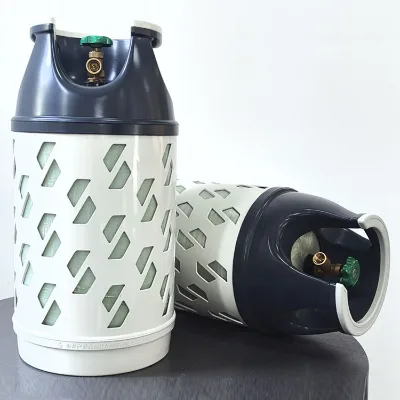
12.5kg LPG Composite Gas Cylinder LPG Portable Glass Fiber Gas Cylinder for Cooking
$29.00 - $33.00
MOQ: 100 Pieces


Portable LPG Composite Gas Cylinder for Barbecue and Home Cooking with High Safety Assurance
$29.00 - $33.00
MOQ: 100 Pieces


$50.00 - $60.00
MOQ: 1000 Pieces




Comprehensive Sourcing Guide
Strategic Sourcing Guide for Portable LPG Composite Gas Cylinders
Understanding the Product Landscape and Technical Definitions
When sourcing portable LPG composite gas cylinders, buyers must first distinguish between the specific material composition and the intended application profile. The core keyword "composite" often implies a fiber-wound construction designed for weight reduction and high-pressure safety. However, the available market data reveals a significant presence of steel-based solutions, specifically carbon steel and general steel constructions, which serve as the baseline for many portable units. These vessels are engineered primarily for the storage and transport of liquefied petroleum gas (LPG), including propane and butane, across various pressure regimes.
The technical specifications observed in the current market indicate a diverse range of capacities and pressure ratings. Buyers will encounter models ranging from small 3kg units to larger 24.5L and 30.5L water capacity cylinders. The pressure levels vary significantly, with some units classified as low pressure (0.1MPa≤p<1.6MPa) and others operating at medium pressure (1.6MPa≤p<10.0MPa). A critical observation in the data is the presence of high-pressure gas cylinder attributes, suggesting that some "portable" units are designed for more demanding industrial applications rather than simple domestic cooking. The working pressure for specific models is noted at 20bar, with corresponding hydrostatic test pressures reaching 30bar. This disparity in pressure ratings necessitates a rigorous verification process to ensure the selected cylinder matches the specific gas handling requirements of the end-user.
The physical dimensions and weight are equally critical for logistics and portability. For instance, a 30.5L water capacity cylinder has a length of 680mm (without valve) and weighs 12.5kg without the valve or cap. In contrast, a 24.5L model measures 570mm in length and weighs 7.5kg. These dimensional constraints directly impact packaging efficiency and shipping costs. The outer diameter for specific models is recorded at 307mm, which is a vital metric for container loading calculations. Furthermore, the filling medium is explicitly identified as LPG steel cylinders, with specific capacity limits for propane (10kg) and butane (12kg). Buyers must align these physical constraints with their logistical networks to avoid overloading or underutilizing shipping containers.
Compliance, Certification, and Regulatory Verification
Navigating the regulatory landscape for LPG cylinders requires a deep understanding of international standards and local compliance mandates. The provided data highlights several executive standards that serve as benchmarks for quality and safety. Specifically, the EN12245:2009 standard is explicitly cited as an executive standard for certain models, indicating compliance with European norms for gas cylinders. Additionally, general references to ISO certifications are present, suggesting that manufacturers may adhere to ISO 9001 quality management systems, though specific ISO standards for cylinders like ISO 11439 or ISO 9809 are listed as background knowledge rather than confirmed attributes for every listed product.
Buyers must exercise extreme caution when interpreting certification claims. While "ISO" is listed as a certification attribute, the specific type of certification (e.g., ISO 9001 for management vs. ISO 11439 for composite cylinders) must be verified on a per-supplier basis. The data also mentions "Quter Diameter" as a product standard, which appears to be a typographical error for "Outer Diameter," yet it underscores the importance of dimensional precision in standard compliance. The presence of "En12245" without the year suffix in some records suggests that buyers should verify the exact version of the standard being applied, as standards evolve to incorporate new safety protocols.
The manufacturing method is described as "Controlled gas cylinders," implying a regulated production process. However, the term "Controlled" is not a standard industry certification itself but rather a descriptor of the production environment. Buyers should request specific test reports, such as hydrostatic test certificates and burst pressure data, to validate that the cylinder meets the claimed pressure ratings of 20bar working pressure and 30bar test pressure. Without these specific documents, the "ISO" or "EN" claims remain unverified assertions. The origin of these products is predominantly China, with specific mentions of Anhui as a production hub. This geographic concentration can influence the supply chain but does not inherently dictate quality; rather, it highlights the need for rigorous third-party inspection to ensure that the manufacturing controls in the region meet the buyer's specific safety requirements.
Cost Drivers and Pricing Dynamics
The pricing structure for portable LPG cylinders is influenced by a complex interplay of material costs, manufacturing complexity, and order volume. The observed price range in the market spans from $7 to $60 USD per unit. This wide variance is not arbitrary but reflects differences in capacity, wall thickness, and pressure ratings. For example, a 3kg cylinder with a wall thickness of 1.5mm will naturally command a different price point than a 30.5L cylinder with a higher pressure rating and potentially thicker walls. The material composition is a primary cost driver; while the data lists "Carbon Steel" and "Steel," the distinction between standard steel and composite materials (if available) significantly impacts the final price. Composite cylinders, which utilize fiber reinforcement, typically cost more due to the advanced manufacturing processes involved, whereas steel cylinders rely on established, lower-cost rolling and welding techniques.
Minimum Order Quantity (MOQ) is another critical factor affecting the effective unit cost. The observed MOQ range is extensive, spanning from 50 to 100,000 units. Small buyers or those testing the market may find suppliers willing to accept orders as low as 50 units, but this often comes with a higher per-unit price. Conversely, bulk purchasers targeting the upper end of the MOQ range can leverage economies of scale to reduce costs significantly. The data indicates that packaging options vary from standard container loading to "Based on Customer's Request," which can introduce variable costs. Customization of the cylinder color and specific valve configurations also adds to the base price. Buyers must balance the desire for customization against the budget constraints, as custom colors and non-standard packing methods can increase the unit cost and extend lead times.
The weight of the cylinder, ranging from 7.5kg to 12.5kg depending on the model, directly influences shipping costs. Heavier cylinders require more robust packaging and incur higher freight charges, especially for air freight or expedited sea shipping. The "40hq" (40-foot high cube) container is mentioned as a packing standard, which suggests that large-scale orders are optimized for containerization. However, for smaller orders, the cost per unit may be inflated by the inefficiency of partial container loads. Buyers should calculate the total landed cost, including freight, insurance, and duties, rather than focusing solely on the FOB price. The "Max Filling Quality" of 3kg to 10kg also dictates the internal volume and material usage, further correlating with the price point.
Typical Applications and Industry Use Cases
The versatility of portable LPG cylinders is evident in their diverse application fields. While the primary function is gas storage, the data indicates usage in New Energy, Food, and Electronic sectors. In the food industry, these cylinders are commonly used for portable cooking equipment in catering, street food vending, and outdoor events. The 3kg and 10kg models are particularly suited for domestic and small commercial applications where portability is key. The 30.5L and 24.5L models, with their larger water capacities, are better suited for industrial heating, welding, and cutting operations where a higher volume of gas is required over extended periods.
The "New Energy" application is an interesting segment, suggesting that these cylinders may be used in hybrid systems or as backup power sources for renewable energy installations. In the electronic sector, LPG cylinders might be utilized for specialized manufacturing processes requiring controlled heat, such as soldering or drying. The "Reaction Pressure Vessel" and "Separation Pressure Vessel" functions listed in the data suggest that some of these units are not merely storage tanks but are integrated into chemical or processing systems. This dual functionality requires buyers to ensure that the cylinder design supports the specific pressure and temperature conditions of the application.
The "Working Pressure" of 20bar and the "Pressure Level" classifications (Low, Medium, High) determine the suitability of the cylinder for different gases. Propane and butane have different vapor pressures depending on the ambient temperature, and the cylinder must be rated to handle the maximum expected pressure safely. The "Filling medium type" is explicitly stated as LPG steel cylinders, confirming their primary use for liquefied gases. However, the mention of "High pressure gas cylinder" attributes suggests that some models may be capable of handling other gases or higher pressure applications than standard LPG. Buyers must verify the compatibility of the cylinder with the specific gas mixture they intend to use, as using a cylinder rated for one gas with another can lead to safety hazards.
Supplier Evaluation and Quality Assurance Protocols
Evaluating suppliers for portable LPG cylinders requires a multi-faceted approach that goes beyond simple price comparison. The "Customization" attribute being available indicates that suppliers are flexible, but this flexibility must be managed through clear specifications. Buyers should prioritize suppliers who can provide detailed documentation of their manufacturing processes, including the "Controlled gas cylinders" method mentioned in the data. This suggests a focus on process control, which is essential for maintaining consistent quality across large batches.
Quality control should be a central pillar of the supplier evaluation process. Buyers must request evidence of the "Hyd Test Pressure" (30bar) and "Working Pressure" (20bar) verification for each batch. The "Wall Thickness" of 1.5mm is a specific parameter that should be verified through non-destructive testing (NDT) methods such as ultrasonic thickness gauging. The "Weight(Without Valve/Cap)" is another critical metric; deviations from the specified weight (e.g., 7.5kg or 12.5kg) can indicate manufacturing defects or material inconsistencies. The "Valve" is listed as a key part, and its compatibility with the cylinder thread and pressure rating must be confirmed.
The "Certification" status, particularly the ISO certification, should be verified through independent audits. While the data lists "ISO" as a certification, it does not specify the type. Buyers should request copies of the actual certificates and verify their validity with the issuing body. The "Executive Standard" of EN12245:2009 should be cross-referenced with the product documentation to ensure the cylinder meets the specific requirements of that standard. The "prod_packing" method, whether "Container" or "Based on Customer's Request," should be inspected to ensure that the packaging protects the cylinder during transit and prevents damage to the valve or body.
Long-Term Procurement and Lifecycle Management
Sourcing portable LPG cylinders is not a one-time transaction but a long-term commitment that involves lifecycle management and maintenance considerations. The "Condition" of the products is listed as "New," but buyers must consider the service life of the cylinder. Steel cylinders are subject to corrosion and fatigue, and regular inspections are required to ensure continued safety. The "Water Capacity" and "Propane Capacity" ratings are fixed, but the physical integrity of the cylinder can degrade over time. Buyers should establish a schedule for periodic re-qualification and testing, adhering to the standards applicable in their region.
The "Customization" option allows for branding and specific design features, which can be beneficial for long-term brand identity. However, customization should not compromise the structural integrity of the cylinder. The "Color" being customizable is a common feature, but the paint or coating used must be resistant to corrosion and UV degradation to ensure the cylinder's longevity. The "Length" and "Outer Diameter" dimensions are fixed for each model, so buyers must ensure that their storage and handling equipment is compatible with these dimensions throughout the product's lifecycle.
Lead times and supply chain stability are also critical long-term considerations. The "MOQ" range suggests that suppliers may have varying production capacities. Buyers should assess the supplier's ability to scale production in response to demand fluctuations. The "prod_origin" in China offers a large manufacturing base, but geopolitical factors and logistics can impact lead times. Establishing a relationship with a supplier who can provide consistent quality and timely delivery is essential for maintaining operational continuity. The "Parts" availability, particularly for valves and caps, should be secured to ensure that maintenance and replacement are feasible in the long term.
Conclusion and Strategic Recommendations
In conclusion, sourcing portable LPG composite gas cylinders requires a balanced approach that integrates technical specifications, regulatory compliance, cost analysis, and supplier evaluation. The market offers a wide range of options, from small 3kg units to large 30.5L cylinders, with varying pressure ratings and material compositions. Buyers must carefully verify the "Executive Standard" and "Certification" claims to ensure safety and compliance. The cost drivers, including material, MOQ, and packaging, must be analyzed to optimize the total cost of ownership. By focusing on quality control, lifecycle management, and supplier reliability, buyers can secure a supply of high-quality LPG cylinders that meet their specific application needs while maintaining safety and operational efficiency. The data provided offers a solid foundation for decision-making, but continuous verification and due diligence remain essential in this critical industry.
FAQs
What is the working pressure for these portable LPG cylinders?
The working pressure is 20bar with a hydrostatic test pressure of 30bar. Some models operate at medium pressure levels between 1.6MPa and 10.0MPa, while others are rated for low pressure applications.
Which materials are used to manufacture these gas cylinders?
These cylinders are primarily constructed from carbon steel and general steel. The specific wall thickness is often 1.5mm, ensuring durability for storing liquefied petroleum gas like propane and butane.
Can I request custom colors and specific packing methods?
Yes, customization is available for cylinder colors and packing methods based on customer requests. Standard packing often involves containers, but specific logistics needs can be accommodated upon agreement.
What are the typical water capacities and weights for these units?
Available models include 30.5L, 24.5L, and 7.3L water capacities with weights ranging from 7.5kg to 12.5kg without the valve. Specific dimensions vary, such as a 680mm length for the 30.5L model.
Which executive standards do these cylinders comply with?
Many units comply with the EN12245:2009 executive standard for gas cylinders. Manufacturers also hold ISO certifications, though specific test reports should be verified to confirm compliance with safety protocols.
What is the minimum order quantity for these gas cylinders?
The minimum order quantity ranges from 50 to 100,000 units depending on the supplier and customization level. Smaller orders may incur higher per-unit costs compared to bulk purchases.
Where are these portable LPG cylinders manufactured?
These products originate from China, with specific production hubs noted in Anhui. The geographic concentration allows for efficient supply chains but requires rigorous quality verification for international buyers.