Find Portable Manual Coffee Maker for home, office, and travel
Source 30 Portable Manual Coffee Maker options from verified Chinese suppliers. Buyers can compare features like USB power, housing materials, and brewing procedures to select the ideal unit for home, office, or travel use.
Key considerations
Products List


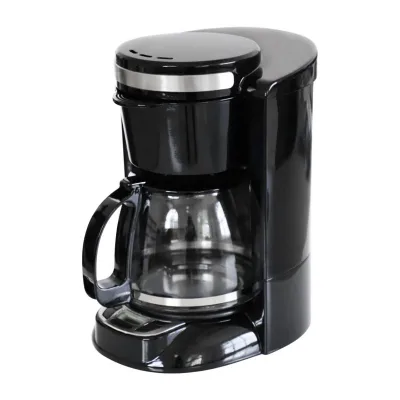


Portable Automatic Espresso Coffee Machine Mini Electric Household Coffee Maker
$11.17 - $14.35
MOQ: 50 Pieces


Comprehensive Sourcing Guide
Strategic Sourcing Guide for Portable Manual Coffee Makers
Understanding the Technical Landscape of Portable Brewing Equipment
The global market for portable manual coffee makers has evolved significantly, driven by the demand for high-quality brewing experiences in mobile and outdoor settings. When sourcing these devices, buyers must first distinguish between the various operational mechanisms available. The supplied product data reveals a diverse technical ecosystem, ranging from simple manual lever systems to more complex units integrating grinding and brewing functions. A critical observation in the current catalog is the presence of products labeled with specific model identifiers such as "911-#1005" and "911-#9775," which often denote distinct functional configurations.
One of the primary technical differentiators is the power source. While traditional manual brewers rely solely on human force, the observed inventory includes units with "USB" power sources and others utilizing "Battery, Electric" systems, with specific references to a "Battery (7800mAh)" capacity. This hybridization allows for versatility; a buyer might select a purely manual unit for rugged outdoor use or a battery-assisted model for convenience in a vehicle or office. Furthermore, the "Working Principle" varies, with "Hydrocone Type" mechanisms appearing in the data, suggesting specific pressure-based extraction methods that differ from standard percolation.
The material composition is another vital technical specification. The housing materials observed include both "Stainless steel" and "Plastic." Stainless steel units typically offer superior durability and heat retention, essential for maintaining brewing temperatures in cold environments. Conversely, plastic housings may offer weight advantages and cost reductions, though they may lack the thermal mass of metal alternatives. The "Processlng Material" data indicates compatibility with "Coffee Bean" and "Coffee Pill" forms, suggesting that some units are designed as all-in-one grinders and brewers, while others may be optimized for pre-ground coffee or capsules. Buyers must verify if the specific model they intend to source supports their preferred bean type, as the "Appropriate Types" field explicitly lists "Powder/Capsule" for certain configurations.
Compliance Verification and Certification Standards
In the B2B procurement of electronic and mechanical appliances, compliance is not merely a formality but a prerequisite for market access and consumer safety. The supplied product facts highlight "CE" and "RoHS" certifications as observed attributes for specific models. The CE marking indicates conformity with health, safety, and environmental protection standards for products sold within the European Economic Area. For buyers targeting markets in Europe, verifying the presence of valid CE documentation is non-negotiable. Similarly, RoHS (Restriction of Hazardous Substances) compliance ensures that the product does not contain specific hazardous materials like lead, mercury, or cadmium, which is a standard requirement for electronic components found in battery-operated coffee makers.
However, the data also notes that certifications may vary by model. While some entries list "CE,RoHS," others do not explicitly mention these standards in the provided text. This variance necessitates a rigorous due diligence process where the buyer requests current, valid certification certificates from the supplier for the exact model number being ordered. It is crucial to understand that "Certification" is an attribute that applies to specific production batches and models, not necessarily the entire supplier catalog.
Beyond the listed certifications, buyers should verify the "prod_standard" values. The data references standards such as "40g" and dimensional standards like "10.0 cm * 12.0 cm * 24.0 cm." While these appear to be product-specific dimensions or capacity metrics rather than international safety standards (like ISO or UL), they serve as critical quality control benchmarks. A deviation from the stated standard dimensions or weight in a received shipment could indicate a manufacturing defect or a counterfeit product. Buyers must ensure that the "Single Color Box Packing Size" and the physical dimensions of the unit match the declared specifications to avoid logistical issues and customer dissatisfaction.
Cost Drivers and Pricing Dynamics
The pricing structure for portable manual coffee makers is influenced by a complex interplay of factors, including material costs, power system complexity, and customization capabilities. The observed price range in the market spans from $4.27 to $120 USD, a significant variance that reflects the diversity of the product line. The lower end of this spectrum likely corresponds to basic manual units with plastic housings and no integrated power systems. In contrast, the higher price points are associated with features such as "USB" or "Battery (7800mAh)" power sources, "Stainless steel" construction, and multifunctional capabilities like built-in grinders.
The "MOQ" (Minimum Order Quantity) range of 1 to 2000 units further impacts the effective unit cost. Suppliers offering "Small Orders: Accepted" with an MOQ of 1 allow for low-risk sampling and testing, which is ideal for startups or retailers with limited capital. However, these transactions often carry a higher per-unit price. Conversely, buyers committing to larger volumes, potentially up to 2000 units, can negotiate better pricing tiers, though the absolute cost will still be dictated by the technical specifications of the chosen model.
Customization is another significant cost driver. The data explicitly states that "Customization: Available" for certain products. This can include branding, color variations (with "Black" and "Red" observed), and specific packaging requirements. Customizing the "prod_model" or adding unique features will invariably increase the unit cost and may extend the lead time. Buyers must balance the desire for a unique product identity against the budget constraints, ensuring that the customization does not render the product uncompetitive in the target market.
Typical Applications and Usage Scenarios
The versatility of portable manual coffee makers allows them to serve a wide array of applications, from domestic use to commercial settings. The "Usage" attribute in the data explicitly lists "Home Use" and "Commercial," indicating that these devices are not limited to a single niche. For home users, the "Portable" nature of the product is a key selling point, enabling coffee brewing in apartments, during travel, or in outdoor settings where traditional espresso machines are impractical. The "Small Orders: Accepted" policy suggests that these products are also suitable for individual consumers or small gift shops.
In commercial contexts, the "Usage: Commercial,Home Use" designation implies durability and efficiency suitable for high-volume environments. Models with "Full-Automatic" procedures and "6 Levels" of control might be particularly attractive for cafes or office breakrooms where speed and consistency are paramount. The "Type: Espresso Coffee Maker" classification further narrows the application to venues requiring high-pressure extraction, such as specialty coffee shops or high-end hospitality venues.
The "Capacity" of the units is another critical factor in determining application suitability. The data shows capacities ranging from "<5 Cups" to "5-10 Cups." Smaller capacity units are ideal for individual consumption or small households, while larger capacity models are better suited for serving groups or commercial service. Additionally, the "Bean Warehouse Capacity" of "18g" suggests that some units have integrated storage, which is a valuable feature for users who need to brew multiple cups without frequent refilling. Understanding these usage scenarios helps buyers select the right mix of products to meet the diverse needs of their customer base.
Supplier Evaluation and Operational Capabilities
When evaluating potential suppliers for portable manual coffee makers, buyers must look beyond the basic product specifications and assess the supplier's operational flexibility and reliability. The origin of the products is consistently listed as "China," a major manufacturing hub for consumer electronics and appliances. While this provides access to a vast supply chain, it also requires careful vetting of the specific factory's capabilities.
Key evaluation criteria include the supplier's ability to handle "Small Orders" while maintaining quality standards. The fact that some suppliers accept orders as low as one unit indicates a flexible production line, but buyers must ensure that this flexibility does not compromise quality control. The "After Sale: 1" attribute suggests that some suppliers offer basic after-sales support, but buyers should clarify the scope of this support, including warranty terms, replacement policies, and technical assistance.
Furthermore, the "Customization: Available" attribute indicates that the supplier has the capacity for OEM (Original Equipment Manufacturer) and ODM (Original Design Manufacturer) services. Buyers should inquire about the supplier's experience with custom projects, including their ability to modify the "Style: Italian" or other aesthetic elements to match brand identity. The presence of multiple model numbers, such as "KF-JN-01-#7723" and "KF-JN-01-#5563," suggests a robust product portfolio, but buyers must verify that the supplier can consistently deliver the specific model required without stockouts or production delays.
Quality Control and Long-Term Procurement Considerations
Ensuring product quality is paramount in the sourcing of portable coffee makers, especially given the mechanical and electrical components involved. The "Weight of Single Product" varies between 350g and 425g, which serves as a quick check for consistency. Significant deviations from these weights could indicate missing components or substandard materials. Buyers should implement a quality control protocol that includes random sampling to verify the "Housing Material" (Stainless steel vs. Plastic) and the integrity of the "Working Principle" (Hydrocone Type).
For long-term procurement, buyers should consider the lifecycle of the product. The "Procedure" types, ranging from "Manual" to "Full-Automatic," imply different maintenance requirements. Manual units generally require less maintenance but rely on user skill, while automatic units with battery systems may require battery replacement or charging infrastructure. The "Power Supply: Battery (7800mAh)" specification highlights the importance of battery longevity and safety. Buyers should request test reports or performance data regarding battery cycles and charging safety to ensure the product meets long-term reliability expectations.
Finally, the "Single Color Box Packing Size" and overall packaging dimensions are critical for logistics planning. Consistent packaging ensures efficient shipping and storage, reducing the risk of damage during transit. Buyers should establish clear communication channels with suppliers to confirm that the packaging standards align with the "prod_standard" values observed in the data. By maintaining strict quality control and fostering a collaborative relationship with suppliers, buyers can ensure a steady supply of high-quality portable manual coffee makers that meet the demands of their customers.
FAQs
Can I order small quantities of portable manual coffee makers?
Yes, small orders are accepted for these products with a minimum order quantity starting from just one unit. This allows buyers to test the market or fulfill small business needs without committing to large bulk purchases immediately.
What certifications do these portable coffee makers hold?
Some models in the catalog carry CE and RoHS certifications to ensure safety and environmental compliance. Buyers should verify specific certification documents for the exact model number they intend to purchase as standards may vary by batch.
Which power sources are available for these devices?
Available power sources include USB, battery, and electric options, with some units featuring a 7800mAh battery capacity. The choice depends on whether you need a purely manual operation or a battery-assisted system for convenience in various settings.
What materials are used for the housing of these makers?
Housing materials observed in the product range include stainless steel and plastic options. Stainless steel units typically offer better durability and heat retention, while plastic models may provide weight advantages and cost reductions for specific use cases.
How much does a single portable coffee maker weigh?
The weight of a single product ranges from 350 grams to 425 grams depending on the specific model and material. This variation helps buyers select units that fit their portability requirements while ensuring the device is robust enough for intended use.
Can these coffee makers brew both beans and capsules?
Yes, certain models are designed to process coffee beans, powder, and coffee pills or capsules. Buyers must check the specific model's appropriate types field to confirm compatibility with their preferred coffee form before placing an order.
What is the typical capacity range for these units?
Capacity options range from less than five cups to five to ten cups per brew cycle. This allows selection of compact units for individual home use or larger capacity models suitable for commercial settings or serving small groups.