Source Portable Salon Microdermabrasion Machine for Spas, Clinics, and Home
Find 30 Portable Salon Microdermabrasion Machine options with varying voltages, packing types, and customization availability. Buyers can compare models like LB197 and LB249 for deep cleaning and skin rejuvenation needs.
Key considerations
Products List


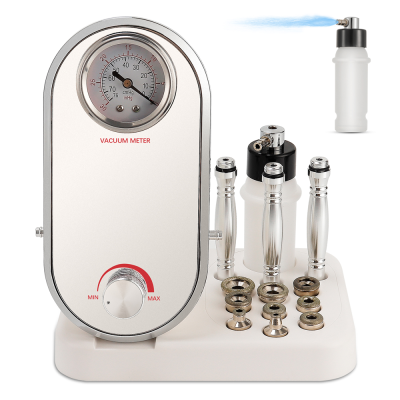


14 in 1 Diamond Peeling Facial Care Microdermabrasion Dermabrasion Machine
$1000.00 - $1500.00
MOQ: 1 Pieces


Comprehensive Sourcing Guide
Strategic Sourcing Guide for Portable Salon Microdermabrasion Equipment
Understanding the Product Landscape and Application Scope
When sourcing a Portable Salon Microdermabrasion Machine, buyers must first navigate the specific terminology and application contexts defined by the current market data. The core keyword "Portable Salon Microdermabrasion Machine" implies a device designed for professional beauty environments, yet the observed product attributes reveal a nuanced spectrum of mobility. While the search intent focuses on portability, the supplied facts indicate that the market contains distinct categories: units explicitly labeled as "Non Portable" and others defined as "Portable." This distinction is critical for procurement strategy. A buyer seeking a machine for a fixed salon station may find a "Non Portable" unit with a robust build more suitable, whereas a mobile aesthetician requires a device explicitly tagged as "Portable" with specific packaging like an "Air Case" to ensure transit safety.
The primary application for these devices is consistently identified as "Salon," with some models extending their utility to "Home" use. This dual-application capability suggests a design philosophy that balances professional-grade performance with user-friendly interfaces. The technology employed is predominantly "Vacuum Dermabrasion," a method that utilizes suction to exfoliate the skin. The target treatment areas are specific, focusing on the "Face, Nose, and Forehead," with a functional goal of "Facial Deep Cleaning" and "Blackhead Removal." Understanding these application parameters ensures that the selected equipment aligns with the specific service menu of the purchasing entity, whether it is a high-volume salon or a specialized spa.
Technical Specifications and Operational Parameters
Evaluating the technical specifications of microdermabrasion machines requires a close examination of voltage requirements, physical dimensions, and material composition. The supplied data highlights a critical variable in global procurement: voltage compatibility. Multiple product entries list "110V/220V" or "AC110V/220V 50-60Hz" as standard specifications. This dual-voltage capability is a significant advantage for international buyers, as it reduces the need for external transformers. However, the specific plug types vary, with listings mentioning "Au, UK, EU, Us, Cn, Jp, Za." Buyers must verify that the specific unit they procure includes the correct plug adapter for their local grid infrastructure to ensure safety and operational continuity.
Physical dimensions and weight are equally vital, particularly for the "portable" subset of the market. The data presents a wide range of standard sizes. For instance, one model is listed with a standard size of "242610cm," while another, likely a more comprehensive unit, measures "33.52613cm." A larger multi-functional unit is recorded at "463043cm" with a weight of "8kg," and another entry notes a size of "583046cm." These variations indicate that "portable" in this context is relative; a machine weighing 8kg may be portable for a salon with a trolley but less so for a mobile practitioner. The material composition is consistently noted as "ABS," a durable plastic that offers resistance to impact and chemical exposure, which is essential for equipment subjected to frequent cleaning and sanitization.
The suction power is another defining technical metric. One specific entry cites a suction power range of "65-68cmhg." This numerical range provides a baseline for performance expectations. Buyers should verify if other models in the catalog meet or exceed this suction capability, as insufficient suction can compromise the efficacy of the exfoliation process. Furthermore, the packaging type serves as a proxy for the machine's fragility and intended transport method. Options range from a standard "Carton Package" to a specialized "Air Case," with the latter offering superior protection for high-value or delicate equipment during transit.
Compliance, Certification, and Safety Standards
In the beauty equipment sector, compliance and certification are not merely administrative hurdles but essential indicators of product safety and market legitimacy. The supplied facts explicitly list "CE" certification as a standard attribute for several models. The CE mark indicates conformity with health, safety, and environmental protection standards for products sold within the European Economic Area. While "RoHS" and "ISO13485" are mentioned in the background context, the provided product facts do not definitively confirm their presence on every listed unit. Therefore, buyers must treat these certifications as verification points rather than guaranteed inclusions.
When evaluating a supplier, the procurement team should request current, valid certification documents that match the specific model number being purchased. The presence of a CE mark on the product label is a positive signal, but it must be backed by a certificate of conformity issued by a recognized body. For equipment intended for use in medical or semi-medical settings, additional verification of standards such as ISO13485 (Quality Management Systems for Medical Devices) is prudent, even if the product is marketed primarily for salon use. The "After-Sales Service" attributes, including "Free Spare Parts," "Video Technical Support," and "Online" assistance, also serve as indirect indicators of a supplier's commitment to compliance and long-term support. A supplier willing to provide video support and spare parts is more likely to maintain rigorous quality control standards.
Cost Drivers and Procurement Economics
The pricing landscape for microdermabrasion machines is influenced by a complex interplay of features, packaging, and customization options. The observed price range in the market data spans from $20.88 to $1,846. This vast disparity suggests that the market is segmented by functionality and build quality. The lower end of the spectrum likely corresponds to basic, single-function units with minimal packaging, while the higher end encompasses "Multi-Functional Beauty Equipment" or "6 in 1 Hydro Facial Machines" that integrate technologies like RF (Radio Frequency) alongside vacuum dermabrasion.
The "Customization: Available" attribute is a significant cost driver. Buyers seeking branded units, custom packaging, or specific voltage configurations should anticipate a premium over standard off-the-shelf models. The "Brand Name" attribute, such as "Yingcai," indicates that some suppliers offer branded solutions, which may command higher prices due to perceived brand equity and established reputation. Additionally, the "Warranty" terms, with a specific mention of "2 Years," represent a long-term cost factor. A longer warranty period often correlates with higher initial unit costs but reduces the total cost of ownership by mitigating repair expenses.
The Minimum Order Quantity (MOQ) is another economic factor. The data shows an MOQ range of 1 to 9 units. An MOQ of 1 set allows for low-risk testing of a supplier's product quality and logistics capabilities, which is ideal for small salons or startups. Conversely, an MOQ of 9 units may be required for bulk procurement, potentially unlocking volume discounts that are not immediately visible in the unit price. Buyers must calculate the total landed cost, including shipping and customs duties, which can vary significantly depending on the "Place of Origin" (e.g., "Guangdong, China" vs. general "China") and the weight of the unit.
Supplier Evaluation and Quality Assurance Protocols
Selecting a reliable supplier requires a rigorous evaluation process that goes beyond the initial product listing. The "Place of Origin" is consistently listed as "China," with specific mentions of "Guangdong" and "Guangzhou." While these regions are hubs for manufacturing, buyers should not assume uniform quality across all suppliers from these locations. The evaluation should focus on the supplier's ability to provide consistent product attributes, such as the "Vacuum Dermabrasion" technology and the "ABS" material construction.
Quality control should be a collaborative effort between the buyer and the supplier. Given the "After-Sales Service" options like "Video Technical Support," buyers should request a live demonstration of the machine's operation before finalizing the order. This allows for the verification of the "Suction Power" and the functionality of the "Plugs Type." Furthermore, the "Product Name" and "Model Number" (e.g., "LB197," "LB249," "LB039") must be clearly documented in the purchase order to ensure the correct specifications are delivered. Discrepancies between the ordered model and the received unit can lead to operational delays and additional costs.
Buyers should also assess the supplier's responsiveness to "Customization" requests. If a specific packaging requirement, such as an "Air Case" instead of a "Carton Box," is necessary, the supplier must confirm their ability to fulfill this request without compromising the structural integrity of the unit. The availability of "Free Spare Parts" is a critical quality assurance metric, indicating that the supplier anticipates wear and tear and is prepared to support the equipment throughout its lifecycle.
Long-Term Procurement and Operational Considerations
Sourcing a microdermabrasion machine is an investment that extends beyond the initial purchase. The "2 Years" warranty period provides a baseline for expected product longevity, but the actual service life depends on usage frequency and maintenance. For a "Salon" environment, where the machine may be used multiple times daily, the durability of the "ABS" casing and the reliability of the vacuum pump are paramount. Buyers should consider the availability of replacement parts, such as nozzles or filters, which are essential for maintaining the "Facial Deep Cleaning" function.
The "Feature" set, including "Exfoliators," "Skin Revitalizer," and "Skin Rejuvenation," defines the machine's value proposition. Over time, the efficacy of these features may degrade if the machine is not properly maintained. Therefore, procurement strategies should include a plan for regular maintenance and calibration. The "Online" support channel mentioned in the data suggests that suppliers are moving towards digital service models, which can be more efficient for troubleshooting than traditional on-site visits.
Finally, buyers must remain agile in their procurement strategy. The market data shows a wide variety of models, from the "Small Bubble Machine" to the "3 in 1 Diamond Microdermabrasion Beauty Machine." As technology evolves, new models with enhanced features may emerge. A flexible procurement approach that allows for the acquisition of new models as they become available can help salons stay competitive. By focusing on the core technical specifications, verifying certifications, and establishing a strong relationship with a supplier that offers robust after-sales support, buyers can ensure a successful and sustainable sourcing outcome for their portable salon microdermabrasion equipment.
Comparative Analysis of Key Product Attributes
To facilitate decision-making, the following table summarizes the key attributes observed in the market data, highlighting the variations that buyers must consider.
| Attribute Category | Observed Variations | Procurement Implication |
|---|---|---|
| Portability | Portable vs. Non Portable | Verify if the unit fits the intended workflow (fixed vs. mobile). |
| Voltage | 110V/220V, 50-60Hz | Confirm plug type (Au, UK, EU, etc.) matches local infrastructure. |
| Dimensions | 242610cm to 583046cm | Assess space requirements and transport logistics. |
| Weight | Up to 8kg | Determine if manual handling is feasible or if a trolley is needed. |
| Packaging | Carton Box, Air Case, Box | Select packaging based on shipping distance and fragility needs. |
| Technology | Vacuum Dermabrasion, RF | Ensure the technology aligns with the desired treatment outcomes. |
| Certification | CE (Confirmed), RoHS/ISO (Unconfirmed) | Request documentation for all claimed certifications. |
| Warranty | 2 Years (Specific) | Verify terms and conditions for spare parts and support. |
| MOQ | 1 Set to 9 Units | Align order quantity with budget and storage capacity. |
| Customization | Available | Plan for potential lead time increases and cost adjustments. |
This comparative analysis underscores the importance of detailed specification verification. The diversity in attributes means that a "one-size-fits-all" approach to sourcing is ineffective. Buyers must meticulously match their specific operational needs with the precise specifications of the product, ensuring that the chosen microdermabrasion machine delivers the expected performance and longevity in a salon environment. By adhering to these evidence-based procurement guidelines, buyers can mitigate risks and secure high-quality equipment that supports their business growth.
FAQs
What voltage options are available for portable salon microdermabrasion machines?
Most units support dual voltage of 110V/220V at 50-60Hz to ensure global compatibility. Buyers must verify that the specific model includes the correct plug type for their region, such as EU, US, or UK standards.
Which certifications are confirmed for these beauty equipment models?
CE certification is explicitly listed as a standard attribute for several models in the current catalog. While other standards like RoHS or ISO13485 appear in background notes, buyers should request valid certificates for specific units before purchasing.
How does the suction power compare across different machine models?
One specific model lists a suction power range of 65-68cmhg for effective facial deep cleaning. Buyers should verify if other models meet this baseline, as insufficient suction can compromise the efficacy of the exfoliation process.
Can buyers request customization for packaging and branding on these machines?
Customization is available for branding, packaging, and specific voltage configurations on many units. Buyers seeking branded solutions or specialized packaging like an Air Case should anticipate a premium over standard off-the-shelf models.
What is the typical warranty period for these salon beauty devices?
A warranty period of 2 years is explicitly mentioned for certain models in the product data. This coverage often correlates with higher initial costs but reduces the total cost of ownership by mitigating repair expenses.
Which materials are used to construct the main body of these machines?
The main body is consistently constructed from ABS material, which offers resistance to impact and chemical exposure. This durable plastic is essential for equipment subjected to frequent cleaning and sanitization in professional salon environments.
What is the minimum order quantity for purchasing these microdermabrasion units?
The minimum order quantity ranges from 1 set to 9 units depending on the supplier and model. An MOQ of 1 set allows for low-risk testing, while higher quantities may unlock volume discounts for bulk procurement.