Source Portable USB Air Humidifier for Car, Home, and Office
Find and compare 30 Portable USB Air Humidifier options from verified manufacturers. Evaluate features like ultrasonic mist discharge, USB power types, and capacities ranging from 60ml to 400ml for car, home, and industry applications.
Key considerations
Products List


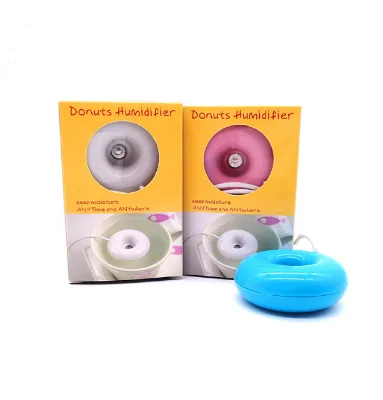


Personal USB Mini Cool Mist Humidifier Portable Air Humidifier with Light
$4.60 - $5.40
MOQ: 100 Pieces


Ultrasonic Air Humidifier USB Portable Water Bottle Humidifier with Night Light
$6.74 - $7.34
MOQ: 100 Pieces


Mini Portable Air Humidifier Rechargeable USB Battery 360 Degrees Rotation
$20.00 - $28.00
MOQ: 100 Pieces

USB Mini Humidifier Air Purifier Essential Oil Fragrance Aroma Diffuser
$11.42 - $16.97
MOQ: 200 Pieces

Comprehensive Sourcing Guide
Portable USB Air Humidifier Sourcing Guide
Sourcing portable USB air humidifiers requires a nuanced understanding of the intersection between consumer electronics and home appliance categories. These devices are primarily designed to increase ambient moisture levels through ultrasonic mist discharge, making them suitable for personal use in cars, homes, and small office environments. The core value proposition lies in their compact form factor and low power consumption, which allows them to operate via standard USB power sources rather than requiring dedicated wall outlets. Buyers must recognize that while the fundamental mechanism is consistent, the specific implementation varies significantly based on capacity, material composition, and intended usage environment.
The procurement landscape for these items is characterized by a wide range of product capacities and power ratings, which directly influence the unit’s performance and physical dimensions. Observed listings indicate a product count of 30 distinct items, with prices ranging from $0.51 to $34.80 USD. This broad spectrum suggests that buyers can source from budget-oriented promotional items to higher-end, feature-rich units. However, the variance in price often correlates with differences in certification levels, material quality, and packaging standards. Understanding these distinctions is critical for aligning procurement strategies with specific market segments, whether targeting mass-market retail or premium niche channels.
Product Scope and Observed Listing Signals
The product scope for portable USB air humidifiers encompasses a variety of designs, primarily categorized by their water capacity and power type. Common capacities observed in the market include 60ml, 120ml, 220ml, and 400ml units, each serving different use cases. Smaller capacities like 60ml are ideal for travel or single-desk use, while larger capacities such as 400ml are better suited for home or industry applications where longer runtime is required. The power type is predominantly USB, operating at DC5V, which ensures compatibility with power banks, car chargers, and computer ports. This versatility is a key selling point, allowing consumers to use the device in multiple settings without being tethered to a specific power source.
In addition to capacity and power, other critical attributes include the humidification method, aromatherapy capabilities, and style. Most units utilize an ultrasonic method for mist discharge, which is efficient and quiet. Many models also support aromatherapy, allowing users to add essential oils to enhance the sensory experience. The style is generally described as portable or tabletop, with dimensions typically ranging from compact cubes to slightly larger rectangular units. For instance, some models measure approximately 7.8x7.8x13cm, while others are larger at 11.3x11.3x17cm. Buyers should carefully evaluate these physical specifications to ensure the product fits their target market’s spatial and aesthetic requirements.
Technical Specifications to Verify
When evaluating technical specifications, the power rating and current draw are primary indicators of performance and safety. Units vary in power consumption, with observed ratings including 1.5W, 4W, and 12W. Lower power units, such as those at 1.5W, are energy-efficient and suitable for continuous use in small spaces, while higher power units may offer faster humidification but consume more energy. The rated current for some models is specified at 400mA, which buyers should verify against their USB power source capabilities to ensure stable operation. It is also important to check the voltage requirements, as most units operate at DC5V, but some may have different electrical needs that require specific adapters or power management.
Another critical technical aspect is the humidity control mechanism and safety features. Some units feature automatic humidity control, which adjusts mist output based on ambient conditions, while others rely on manual control. Safety features such as water shortage power-off protection are essential to prevent damage to the device and ensure user safety. Buyers should verify that the units include this feature, as it is a standard expectation for modern humidifiers. Additionally, the material composition, often ABS+PP or PP, affects durability and aesthetic appeal. Understanding these technical details helps buyers select products that meet both performance expectations and safety standards.
Compliance and Safety Documentation
Compliance and safety documentation are non-negotiable for importing portable USB air humidifiers, particularly when targeting regulated markets. The most commonly observed certifications include CE, RoHS, and various international safety standards. CE marking indicates conformity with health, safety, and environmental protection standards for products sold within the European Economic Area. RoHS compliance ensures that the product is free from specific hazardous materials, which is crucial for environmental and consumer safety. Buyers must verify that the supplier provides valid certification documents, as counterfeit or expired certificates are a common risk in the electronics supply chain.
Beyond CE and RoHS, other certifications such as EMC, LFGB, UR, SASO, GS, CB, CSA, and UL may be required depending on the destination market. For instance, UL and CSA are critical for the North American market, while SASO is mandatory for Saudi Arabia. The presence of multiple certifications, such as CB, Ce, EMC, Emf, GS, LFGB, RoHS, Saso, UL, and UR, indicates a higher level of compliance and quality assurance. Buyers should request test reports and certificates from accredited laboratories to validate these claims. Ensuring that the product meets all local regulatory requirements is essential to avoid customs delays, fines, or product recalls.
Cost Drivers and Commercial Terms
The cost of portable USB air humidifiers is influenced by several factors, including material quality, certification levels, and packaging complexity. Basic models with minimal features and standard packaging tend to be on the lower end of the price spectrum, while units with advanced features, premium materials, and customized packaging command higher prices. The observed price range of $0.51 to $34.80 USD reflects this variability. Buyers should consider the total cost of ownership, including shipping, duties, and potential returns, rather than focusing solely on the unit price. Higher-priced items may offer better durability, safety, and compliance, which can reduce long-term risks and enhance brand reputation.
Commercial terms such as MOQ (Minimum Order Quantity) and lead times also play a significant role in procurement decisions. MOQs can range from 1 to 1000 pieces, with some suppliers requiring higher volumes for custom orders. Buyers should negotiate MOQs that align with their inventory management strategies and market demand forecasts. Additionally, lead times can vary based on production capacity and customization requirements. It is advisable to establish clear communication with suppliers regarding production schedules and delivery timelines to ensure timely receipt of goods. Understanding these commercial terms helps buyers plan their supply chain more effectively and avoid disruptions.
Supplier Qualification and Quality Control
Supplier qualification is a critical step in ensuring the reliability and consistency of portable USB air humidifiers. Buyers should conduct thorough due diligence on potential suppliers, including verifying their business licenses, production capabilities, and quality management systems. Suppliers with a history of exporting to regulated markets and holding relevant certifications are generally more reliable. It is also important to assess their ability to handle customization requests, such as logo printing, packaging design, and product modifications. Suppliers that offer customizable options can help buyers differentiate their products in the market.
Quality control measures should be implemented throughout the production process to ensure that the final products meet specified standards. Buyers should request samples for evaluation before placing bulk orders to verify product quality, functionality, and compliance. During production, third-party inspection services can be engaged to monitor manufacturing processes and conduct pre-shipment inspections. These inspections should cover visual checks, functional tests, and packaging verification. Establishing a robust quality control framework helps minimize defects, reduce returns, and maintain customer satisfaction.
Long-Term Procurement Checks
Long-term procurement success depends on continuous monitoring of supplier performance and market trends. Buyers should establish key performance indicators (KPIs) to track supplier reliability, including on-time delivery rates, product quality metrics, and responsiveness to issues. Regular audits and performance reviews can help identify areas for improvement and strengthen the supplier relationship. Additionally, staying informed about changes in regulatory requirements and market demands is essential for adapting procurement strategies. Buyers should proactively engage with suppliers to discuss future product developments and potential collaborations.
Sustainability and ethical sourcing are increasingly important considerations in the procurement of consumer electronics. Buyers should inquire about the supplier’s environmental policies, waste management practices, and labor standards. Choosing suppliers that adhere to sustainable practices can enhance brand image and meet the growing consumer demand for eco-friendly products. Furthermore, building a diversified supplier base can mitigate risks associated with single-source dependencies. By maintaining a strategic and proactive approach to procurement, buyers can ensure a steady supply of high-quality portable USB air humidifiers that meet their business objectives and customer expectations.
FAQs
How does the humidification method work for this device?
The device uses mist discharge via ultrasonic technology to generate cool mist. This method ensures efficient humidification without heating the water, making it safe for continuous operation in various environments like cars and homes.
What power type is required to operate this humidifier?
This unit operates on USB power with a DC5V input. It consumes 1.5W of actual power and draws a rated current of 400mA, allowing it to run conveniently from standard USB ports or power banks.
Can I customize the packaging for bulk orders?
Yes, customization is available for both the product and its packaging. Buyers can request specific packing configurations, such as corrugated boxes with CMYK printing, to meet their branding or logistical requirements.
Which certifications does the product hold for safety?
The product holds multiple certifications including CE, RoHS, LFGB, SASO, GS, and UL. These approvals ensure compliance with international safety and environmental standards for use in various global markets.
How is humidity control managed during operation?
Humidity control can be either automatic or manual depending on the specific model selected. Some units feature automatic regulation while others allow manual adjustment to suit different environmental needs.
What is the water capacity range for these models?
Available models feature water capacities ranging from 60ml to 400ml. The larger 400ml unit is suitable for extended use, while smaller options like the 60ml version offer portability for travel.
Does the device have protection against low water levels?
Yes, the humidifier includes water shortage power-off protection. This safety feature automatically shuts down the unit when the water level is too low to prevent damage to the internal components.