Source Powder and Granule Paddle Mixer for Food and Chemical
Find and compare 30 Powder and Granule Paddle Mixer options from China. Evaluate models like WZL and TDWK for viscous fluids, daily chemicals, and industrial applications. Check specifications including 1000L+ capacity, stainless steel construction, and CE/ISO certifications to select the right continuous operating equipment.
Key considerations
Products List


Double Continuous Paddle Mixer Double Shaft Continuou Mixer Paddle Mixer
$5000.00 - $50000.00
MOQ: 1 Pieces


Shaft Paddle Mixer Single/Double Shaft Paddle Mixer Powder Mixing Machine
$55000.00 - $60000.00
MOQ: 1 Pieces


Wet Dry Liquid Powder Groove Type Blender Double Paddle Mixer Machine
$3600.00 - $6000.00
MOQ: 1 Pieces

Twin Shaft Paddle Non-Gravity Mixer for Superior Mixing Performance
$36000.00 - $38000.00
MOQ: 1 Pieces

Double Shaft Paddle Mixer for Animal Feed Production
$3000.00 - $15000.00
MOQ: 1 Sets
LIAONING XINLAI INTELLIGENT EQUIPMENT MANUFACTURING CO LIMITED
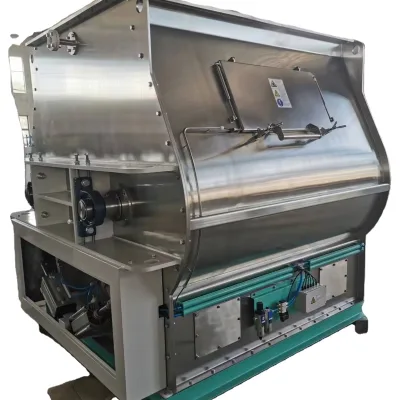
Comprehensive Sourcing Guide
Powder and Granule Paddle Mixer Sourcing Guide
Selecting the right Powder and Granule Paddle Mixer requires a careful balance of mechanical design, material compatibility, and operational efficiency. These machines are primarily designed for the homogeneous blending of dry materials, ranging from fine powders to coarse granules, making them indispensable in industries such as food processing, daily chemicals, and general industrial manufacturing. The paddle mixer operates on a horizontal layout, utilizing rotating paddles to lift, tumble, and shear the material within a stationary drum. This mechanical action ensures that ingredients are thoroughly mixed without causing excessive degradation or particle breakage, which is critical for maintaining the integrity of sensitive granular products. Buyers must understand that while the basic principle is simple, the specific configuration of the paddles, the speed of rotation, and the drum geometry significantly influence the final blend quality and throughput.
The procurement process for these mixers involves navigating a wide range of specifications, from small-scale laboratory units to large industrial systems with capacities exceeding 1000 liters. The observed market data indicates a diverse product landscape, with models ranging from the WZL series to the TDW and TDWK variants, each tailored to different volume and viscosity requirements. While the core function remains consistent, the power consumption, speed control mechanisms, and stirring types vary considerably. For instance, some units operate at single speeds with lower power ratings, while others offer variable speed controls and higher power outputs to handle more challenging material properties. Understanding these distinctions is essential for aligning the equipment with your specific production needs, ensuring that you do not over-specify for simple tasks or under-specify for complex blending requirements.
Product Scope and Observed Listing Signals
The current market for powder and granule paddle mixers presents a broad spectrum of options, primarily originating from China, with many suppliers based in key manufacturing hubs like Shanghai. The observed product listings reveal a strong emphasis on horizontal layout mixers that are suitable for continuous operation, catering to both industrial and agricultural applications. The application scope is notably diverse, covering viscous fluids, liquids with suspended solids, powders, and granules, which suggests that many of these units are versatile enough to handle multi-phase mixing tasks. This versatility is a significant selling point for buyers who require a single piece of equipment to manage different stages of production or varying product formulations. However, buyers should verify the specific suitability of each model for their exact material characteristics, as the presence of suspended solids or high viscosity may require specialized paddle designs or higher torque motors.
Packing and shipping considerations are also prominent in the observed data, with suppliers offering wooden cases, plywood wooden cartons, or polywood cases to ensure safe transit. This attention to packaging reflects the robust nature of the machinery, which often weighs significantly and requires protection against impact and moisture during international shipping. The condition of the equipment is consistently listed as new, indicating that the market is dominated by fresh manufacturing rather than refurbished units. Additionally, customization is widely available, allowing buyers to tailor the mixer to specific site constraints or process requirements. This flexibility is crucial for facilities with limited space or unique hygiene standards, as it enables the integration of custom features such as removable mixing paddles or specific safety interlock systems. Buyers should leverage this customization option to ensure the mixer integrates seamlessly into their existing production line.
Technical Specifications to Verify
When evaluating technical specifications, the mixing capacity is a primary determinant of the mixer’s suitability for your production volume. The observed data highlights models with capacities ranging from 200 liters to 2000 liters, with some units capable of handling 1000 liters and above. It is essential to match the mixer’s capacity to your batch size requirements, ensuring that the drum is neither underutilized nor overloaded, which can lead to inefficient mixing or mechanical stress. The stirring type is another critical factor, with paddle and no-gravity options available. Paddle mixers are ideal for gentle mixing of free-flowing powders, while no-gravity mixers offer more aggressive blending for difficult-to-mix materials. Buyers should carefully assess the flow characteristics of their materials to select the appropriate stirring mechanism, as an incorrect choice can result in poor blend uniformity or excessive energy consumption.
Speed control and power requirements are equally important technical parameters that influence the mixer’s performance and operational cost. The observed speed ranges vary from less than 30 R/min to 30-39 R/min, with some units offering variable speed control while others are limited to single-speed operation. Variable speed control provides greater flexibility, allowing operators to adjust the mixing intensity based on the material properties and desired blend time. Power ratings also vary, with observed ranges from 10-15 KW to 15-20 KW, reflecting the different torque requirements of various models. Buyers should verify the power supply compatibility at their facility and consider the energy efficiency of the motor. Additionally, the working method, whether it is a shear mixer or a high-speed mixer, should align with the specific mixing action required for your product, ensuring that the mechanical forces applied are sufficient to achieve the desired homogeneity without damaging the product structure.
Compliance and Safety Documentation
Compliance with international standards is a non-negotiable aspect of sourcing industrial mixing equipment. The observed listings frequently mention CE certification and ISO 9001 standards, indicating that many suppliers adhere to European safety and quality management systems. The CE mark is particularly important for buyers operating in or exporting to regions that require conformity with health, safety, and environmental protection standards. It signifies that the mixer has been designed and manufactured in accordance with relevant EU directives, reducing the risk of regulatory non-compliance. However, buyers should not assume that all listed products automatically meet these standards; it is crucial to request valid certification documents and verify their authenticity with the issuing bodies. This due diligence ensures that the equipment meets the legal requirements of your target market and provides a baseline level of safety and quality assurance.
Safety features are another critical component of the documentation and design review process. The observed data highlights specific features such as timer control, safety interlock systems, and removable mixing paddles, which contribute to operational safety and maintenance efficiency. Safety interlock systems are particularly important, as they prevent the mixer from operating when the drum is open or when other safety conditions are not met, thereby protecting operators from potential injuries. Buyers should verify the presence and functionality of these safety features during the pre-purchase inspection or through detailed product specifications. Additionally, the warranty terms, typically listed as one year, provide a layer of financial protection against manufacturing defects. Understanding the scope of the warranty, including what components are covered and the process for claiming repairs, is essential for managing long-term maintenance costs and ensuring uninterrupted production.
Cost Drivers and Commercial Terms
The cost of a Powder and Granule Paddle Mixer is influenced by several key factors, including mixing capacity, power rating, material construction, and the level of customization required. The observed price range is substantial, spanning from $850 to $60,000, reflecting the diversity in size and complexity of the available units. Smaller, single-speed units with lower power ratings tend to be at the lower end of the spectrum, while large-capacity, variable-speed mixers with advanced safety features and stainless steel construction command higher prices. Buyers should carefully analyze the cost structure to ensure that they are paying for features that are necessary for their specific application, avoiding unnecessary expenditures on high-end specifications that may not be utilized. It is also important to consider the total cost of ownership, including energy consumption, maintenance requirements, and potential downtime, rather than focusing solely on the initial purchase price.
Commercial terms such as minimum order quantity (MOQ) and packaging options also play a significant role in the procurement process. The observed MOQ is consistently listed as 1, indicating that suppliers are willing to accommodate single-unit purchases, which is beneficial for small-scale operations or pilot projects. This flexibility allows buyers to test the equipment before committing to larger orders. Packaging is typically handled through wooden cases or custom requirements, which adds to the overall cost but is necessary for protecting the equipment during transit. Buyers should negotiate clear terms regarding packaging standards and shipping responsibilities to avoid unexpected costs or damage upon delivery. Additionally, the availability of customization services may incur additional fees, so it is important to clarify these costs upfront and ensure that the customization aligns with your specific operational needs.
Supplier Qualification and Quality Control
Supplier qualification is a critical step in ensuring the reliability and quality of the purchased mixer. Buyers should prioritize suppliers who hold valid ISO 9001 certifications, as this indicates a commitment to quality management systems and consistent manufacturing processes. The presence of CE certification further suggests that the supplier adheres to international safety standards, which is a positive indicator of their technical competence. However, certifications alone are not sufficient; buyers should also conduct a thorough review of the supplier’s production capabilities, quality control procedures, and after-sales support services. Requesting detailed product specifications, technical drawings, and test reports can provide valuable insights into the mixer’s design and performance. Additionally, verifying the supplier’s reputation through customer reviews or industry references can help mitigate the risk of dealing with unreliable vendors.
Quality control measures should be implemented throughout the procurement process, from initial supplier selection to final delivery. Buyers should consider conducting pre-shipment inspections to verify that the mixer meets the agreed-upon specifications and quality standards. This may include checking the material construction, such as the use of stainless steel for main components, to ensure durability and hygiene. Inspecting the mechanical components, such as the paddles and motors, for any signs of defects or poor craftsmanship is also essential. Furthermore, buyers should establish clear communication channels with the supplier to address any issues that may arise during production or delivery. Having a comprehensive quality control plan in place helps to minimize the risk of receiving substandard equipment and ensures that the mixer performs as expected in your production environment.
Long-Term Procurement Checks
Long-term procurement success depends on establishing a robust maintenance and support strategy for the Powder and Granule Paddle Mixer. The one-year warranty provided by many suppliers offers initial protection, but buyers should plan for long-term maintenance needs, including spare parts availability and technical support. Regular maintenance, such as lubricating moving parts and inspecting the paddles for wear, is essential to extend the lifespan of the mixer and maintain optimal performance. Buyers should also consider the availability of replacement parts, such as motors, bearings, and seals, to minimize downtime in case of failure. Establishing a relationship with the supplier for ongoing support and training can help ensure that your operational team is equipped to handle any maintenance or troubleshooting issues that may arise.
Continuous improvement and adaptation are also key aspects of long-term procurement. As your production needs evolve, you may need to upgrade or modify your mixer to accommodate new products or increased volumes. The availability of customization services and variable speed controls can facilitate these changes, allowing you to adapt the equipment to new requirements without replacing the entire unit. Buyers should regularly review the mixer’s performance and efficiency, identifying opportunities for optimization or upgrades. Additionally, staying informed about industry trends and technological advancements in mixing equipment can help you make informed decisions about future procurement. By maintaining a proactive approach to equipment management and supplier relationships, you can ensure that your Powder and Granule Paddle Mixer continues to deliver value and support your production goals over the long term.
FAQs
What materials are used for the mixing drum?
The mixing drum is constructed from stainless steel to ensure durability and hygiene. This material choice supports applications in food and daily chemical sectors while resisting corrosion during the mixing process.
Which certifications do these mixers typically hold?
Most units carry ISO and CE certifications to meet international safety and quality standards. These certifications verify that the machinery complies with required operational norms for industrial and agricultural usage.
Can the mixer handle viscous fluids and powders?
Yes, the equipment is designed to process viscous fluids, powders, granules, and liquids with suspended solids. This versatility makes it suitable for various industrial mixing requirements across different material types.
What is the standard warranty period for the machine?
The standard warranty period provided is one year for the equipment. This coverage ensures protection against manufacturing defects and supports reliable long-term operation in continuous operating environments.
How is the product packed for shipping?
Products are packed in wooden cases or according to specific buyer requirements. This flexible packaging approach ensures safe transport and allows for customization based on the destination and logistics needs.
What is the power range for these mixers?
The power consumption ranges from 10 to 20 kilowatts depending on the specific model. This range accommodates different mixing capacities, from smaller units to larger industrial systems exceeding 1000 liters.
Is customization available for the mixer specifications?
Customization is available to meet specific production needs and operational constraints. Buyers can request tailored solutions for capacity, speed, or layout to align with their unique facility requirements.