Source Powder Coat Outdoor Mailbox for Villa, Office, and Garden
Explore 30 listings for Powder Coat Outdoor Mailbox options tailored for villas, offices, and gardens. Buyers can compare specifications like material, size, and locking mechanisms to find the right solution for letter receiving needs.
Key considerations
Products List
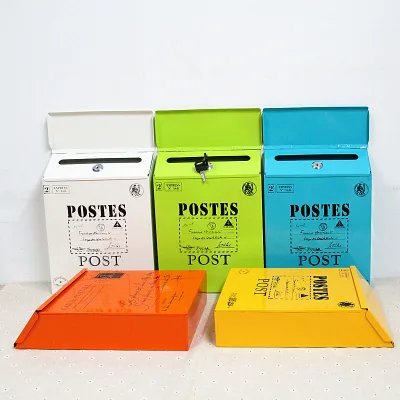


OEM Custom Storage Metal Box Parcel Mailbox Post Mail Box for Letter
$1099.00 - $1599.00
MOQ: 10 Pieces


Floor Ground Mounted Metal Powder Coated Parcel Delivery Mailbox Post Box
$42.00 - $49.00
MOQ: 50 Pieces


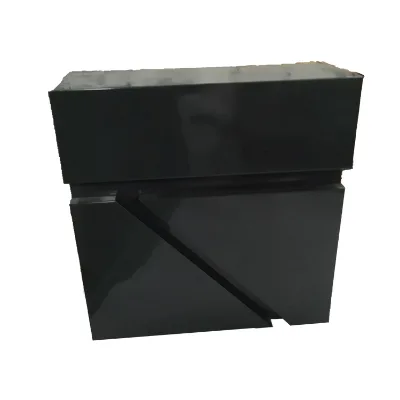


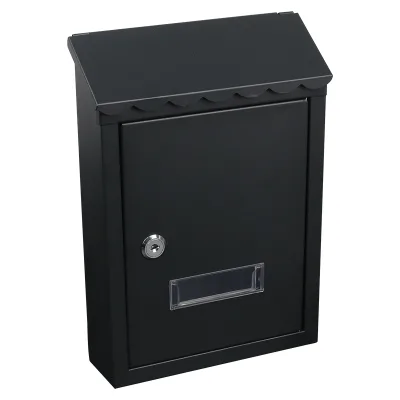


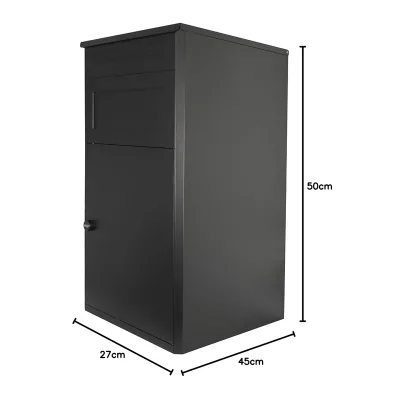
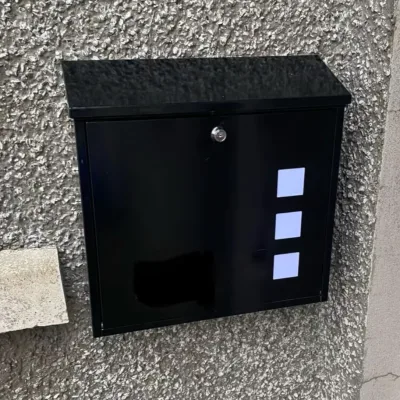

Metal Parcel Box Modern Parcel Drop Box Outdoor Mailbox Parcel Delivery Box
$50.99 - $70.99
MOQ: 100 Pieces

Modern Mailbox Newspapers Outdoor Wall Mounted Mail Post Box Mailboxes Residential
$18.99 - $20.99
MOQ: 100 Pieces

OEM Custom Metal Parcel Box Modern Parcel Drop Box Outdoor Mailbox Parcel Delivery Box
$50.99 - $70.99
MOQ: 100 Pieces
Comprehensive Sourcing Guide
Strategic Sourcing Guide for Powder Coat Outdoor Mailboxes
Procuring a Powder Coat Outdoor Mailbox requires a disciplined approach that balances aesthetic customization with rigorous environmental durability. The market for these units is diverse, ranging from standard residential models to complex, OEM-fabricated systems for large apartment complexes and office buildings. Buyers must navigate a landscape where material composition, finishing processes, and structural design vary significantly between suppliers. This guide outlines the critical technical and commercial factors necessary to secure high-quality outdoor mailboxes that withstand the elements while meeting specific branding and functional requirements.
Technical Specifications and Material Composition
The foundation of a reliable outdoor mailbox lies in its material selection and dimensional specifications. While the core keyword emphasizes the "powder coat" finish, the substrate material is equally critical for longevity. In the current market, products are frequently described as being made from "tin" or "metal," with specific references to steel mailboxes and stainless steel letter boxes. For outdoor applications, the material must offer high resistance to corrosion and structural integrity against physical impact.
Dimensions are a primary consideration for procurement. Standard units often adhere to specific size profiles, such as 30236cm, though the market also supports fully customizable sizes ranging from thin gauges up to 12mm thickness. Buyers should verify the "Single package size" and "Single gross weight" to ensure logistics compatibility; for instance, a typical unit may weigh 1.500 kg with a package size of 35X35X10 cm. The structural design is often categorized as a "Single Mailbox" with a "Close" or "Ringent" open type, depending on the security and access needs of the end-user.
The mounting configuration is another vital technical specification. Options include "Wall-mounted" styles suitable for apartment complexes or "Garden" and "Post" styles for individual residences. The "Position" attribute confirms suitability for outdoor environments, though some listings may also mention indoor capabilities, requiring careful verification to ensure the specific unit is rated for exterior exposure. The inclusion of "mounting screws" as standard accessories simplifies installation, but the quality of these fasteners must be compatible with the mailbox material to prevent galvanic corrosion.
Finishing Processes and Durability Standards
The "powder coating" process is the defining characteristic of the requested product, serving as the primary defense against weathering. This finishing method involves applying a dry powder which is then cured under heat to form a hard, durable finish. The supplied data indicates that suppliers may offer a range of finishing techniques, including "Oxidization" and "Electrophoresis," in addition to the standard powder coating. These variations can significantly impact the final product's resistance to UV radiation, moisture, and temperature fluctuations.
Color customization is a major driver in this sector. While "Color Customerized" and "Customizable Color" are standard offerings, buyers must ensure that the powder coating process used is specifically rated for outdoor exposure. The "Feature: Durable" attribute suggests that the finish is designed to resist chipping and fading, but this should be validated through supplier documentation. The "Surface" treatment is explicitly noted as powder coating in high-confidence facts, reinforcing its prevalence in the category.
When evaluating the finish, buyers should look for consistency in the application. The thickness of the coating, while not always explicitly stated in general product titles, is often linked to the overall material thickness, which can range from 0.1mm to 12mm. A thicker substrate generally supports a more robust finish. The "Condition: New" status implies that the products are manufactured to current standards, but the specific "Standard" compliance, such as "EN" or "GB," should be verified to ensure the coating meets regional safety and performance benchmarks.
Compliance, Certification, and Regulatory Checks
Navigating the regulatory landscape for outdoor metal products requires attention to both material safety and environmental standards. The supplied context mentions "EN" and "GB" as potential standards, which refer to European and British standards respectively. These standards often dictate requirements for material composition, coating adhesion, and environmental resistance. However, the data also notes that the "Standard" can be "Customized," meaning buyers cannot assume a specific certification applies to every listing without explicit confirmation.
For international procurement, verifying the "Place of Origin" is essential. Many products originate from "Guangdong, China," a major hub for sheet metal fabrication. Buyers should request proof of compliance with the specific standards claimed, such as EN or GB, rather than relying on general product descriptions. The "Service" attribute mentions "Sheet Metal Fabrication with Integration Service," which implies a level of manufacturing capability that may include quality control processes aligned with international norms.
Certification status is not explicitly detailed in the provided facts, so buyers must treat all claims as observations requiring verification. When sourcing for large projects, such as "Postal Service" or "Office Building" applications, compliance with local building codes and fire safety regulations is mandatory. The "Standard: Customized" option allows for tailored compliance, but this necessitates a clear definition of requirements in the purchase order. Buyers should also check for any environmental certifications related to the powder coating process, such as VOC (Volatile Organic Compound) compliance, to ensure the product meets sustainability goals.
Cost Drivers and Commercial Terms
The pricing of powder coat outdoor mailboxes is influenced by several variables, including material thickness, customization level, and order volume. The observed price range in the market spans from 1 to 1599 USD, reflecting the vast difference between a single standard unit and a bulk order of custom-fabricated systems. The "MOQ: Low MOQ Acceptable" attribute suggests flexibility for smaller buyers, while the "MOQ range: 1-500" indicates that larger orders may trigger different pricing tiers or production constraints.
Lead times are a critical commercial factor. The data specifies a "Delivery Time" of 15 days for samples and 30 days for mass production. These timelines are subject to the "Customized" nature of the product; complex designs or specific color requests may extend these periods. The "Selling Units: Single item" attribute indicates that individual units are available, but bulk purchasing is often more cost-effective for "Apartment, Villa, Office Building" projects.
Packaging is another cost driver. Options include "Dongji Design or Customized" packaging, with "Per Customer Request" being a common requirement. Proper packaging is essential to prevent damage during transit, especially for powder-coated surfaces which can be susceptible to scratching. The "Single gross weight" of 1.500 kg per unit affects shipping costs, and buyers should factor this into their total landed cost calculations. Additionally, the "Feature: OEM Support" indicates that custom branding and design services are available, which may incur additional costs but are often necessary for corporate or municipal projects.
Typical Applications and Usage Scenarios
Powder coat outdoor mailboxes serve a wide array of applications, from residential to commercial sectors. The "Usage" attribute lists "Letter Receiving" as the primary function, but the specific contexts include "Apartment, Villa, Office Building, Postal Service." This versatility allows buyers to source a single product line for multiple use cases, provided the specifications match the environmental demands of each location.
In residential settings, such as "Villa" or "Garden" applications, the aesthetic appeal of the "Modern" or "Classic" style is paramount. The "Style: Wall-mounted" or "Mail Box Post" configurations are common here, offering a blend of functionality and curb appeal. For commercial environments like "Office Building" or "Postal Service," durability and security become the primary concerns. The "Lock: Key Lock" feature is standard, ensuring that mail is secure from unauthorized access.
The "Application" field explicitly mentions "Post Box Postbox Mail Box Mailbox," highlighting the product's core identity. Buyers should consider the "Position: Outdoor" requirement carefully, as some listings may also mention "Indoor" capabilities, which might indicate a lower-grade finish unsuitable for exterior use. The "Structure: Single Mailbox" design is ideal for individual units, while larger complexes may require multi-compartment systems, though the provided data focuses on single units.
Supplier Evaluation and Quality Control
Selecting a reliable supplier is crucial for ensuring product consistency and long-term performance. The "Service: Sheet Metal Fabrication with Integration Service" attribute suggests that suppliers should have in-house manufacturing capabilities rather than acting merely as traders. This integration allows for better control over the "Finishing" process, including "Powder Coating, Oxidization, Electrophoresis."
Buyers should evaluate suppliers based on their ability to meet "Customized" requirements. The "Customization: Available" and "Feature: OEM Support" attributes indicate that suppliers should be capable of tailoring products to specific needs. Verification of the "Place of Origin" and "Prod Origin: China" should be done to ensure the supplier is located in a region with a robust manufacturing infrastructure, such as Guangdong.
Quality control measures should be a prerequisite for any order. Buyers must request samples to test the "Feature: Durable" claim and verify the "Color" consistency. The "Thickness: 0.1mm-12mm / Customized" specification should be measured to ensure it matches the order requirements. Additionally, the "Open Type" and "Lock" mechanisms should be tested for smooth operation and security. The "Condition: New" status should be confirmed upon delivery to ensure no prior damage or defects exist.
Long-Term Procurement Considerations
Sourcing outdoor mailboxes is not just a one-time transaction but a long-term investment in property management and security. The "Customized" nature of the product means that future replacements or expansions should be seamless. Buyers should ensure that the supplier can maintain consistency in the "Color" and "Material" over time, as variations can lead to aesthetic mismatches in large complexes.
The "Lead Time" of 30 days for mass production should be factored into project timelines to avoid delays. For ongoing maintenance, the availability of spare parts, such as "mounting screws" or replacement locks, is essential. The "Package: Dongji Design or Customized" option allows for branding that can be maintained across future orders.
Finally, buyers should consider the environmental impact of the "Powder Coating" process. While generally more eco-friendly than liquid paints, the specific "Standard" compliance should be verified to ensure the product meets local environmental regulations. By focusing on these long-term factors, buyers can secure a reliable supply chain that supports their operational needs for years to come.
Comparative Analysis of Product Attributes
To assist in decision-making, the following table summarizes key attributes observed in the market for powder coat outdoor mailboxes. This comparison highlights the variability in specifications and helps buyers identify the features most relevant to their specific project requirements.
| Attribute Category | Standard Observation | Customization Options | Verification Requirement |
|---|---|---|---|
| Material | Tin, Metal, Steel | Stainless Steel, Custom Gauge | Verify material grade and thickness (0.1mm-12mm) |
| Finish | Powder Coating | Oxidization, Electrophoresis | Confirm outdoor durability rating and color fastness |
| Style | Modern, Classic | Custom Design | Ensure style matches architectural context |
| Mounting | Wall-mounted, Post | Custom Brackets | Check compatibility with installation surface |
| Security | Key Lock | Custom Locking Mechanisms | Test lock mechanism and key availability |
| Origin | Guangdong, China | Custom Origin | Verify supplier location and production capacity |
| Standards | EN, GB (Optional) | Customized | Request specific certification documentation |
| MOQ | Low MOQ Acceptable | 1-500 Units | Confirm minimum order quantity and pricing tiers |
This structured approach ensures that buyers can navigate the complexities of the Powder Coat Outdoor Mailbox market with confidence, focusing on evidence-based criteria rather than marketing claims. By adhering to these guidelines, procurement professionals can secure high-quality products that meet both functional and aesthetic demands.
FAQs
How is the powder coat finish applied to these mailboxes?
The finish is applied using a powder coating process that creates a durable, weather-resistant surface. This method is often combined with oxidation or electrophoresis for enhanced protection against outdoor elements.
What material is used to construct the mailbox body?
The mailbox is constructed from metal, specifically described as tin or steel in various listings. This material choice ensures structural integrity and resistance to physical impact in outdoor environments.
Which customization options are available for color and size?
Buyers can request customized colors and sizes to match specific branding or installation needs. The standard thickness ranges from 0.1mm to 12mm, allowing for tailored structural requirements.
Can I order a low quantity for a small residential project?
Yes, low minimum order quantities are acceptable for smaller projects. The observed MOQ range starts at 1 unit, making it suitable for individual villas or small apartment complexes.
How long does it take to receive samples and mass production?
Samples typically require 15 days for delivery, while mass production takes approximately 30 days. These lead times apply to standard orders but may vary based on customization complexity.
What standards do the manufacturers claim to follow?
Manufacturers may claim compliance with EN and GB standards, though standards can also be customized. Buyers should verify specific certification documents before placing large orders for commercial use.
Where are these mailboxes manufactured and shipped from?
The products originate from Guangdong, China, a major hub for sheet metal fabrication. Shipping logistics are managed from this location, with packaging designed to protect the powder-coated surface during transit.