Source Precision Cabinet Conditioner for Hospitals, Industry, Marine
Compare 30 Precision Cabinet Conditioner units with cooling and heating capabilities for hospitals, industry, and marine applications. These electrical DC-powered systems offer customizable airflow and filtration options with CE and RoHS certifications.
Key considerations
Products List


2023 Cost-Effective Precision Air Conditioner for Server Room Cooling
$9800.00 - $10010.00
MOQ: 2 Pieces


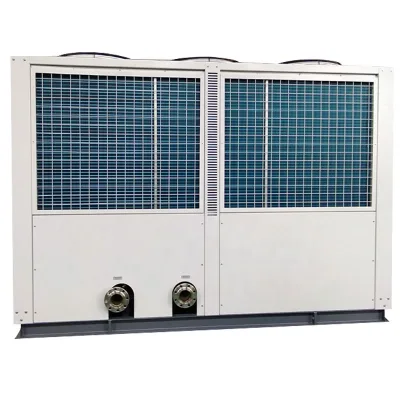

Custom Air Conditioner with Water Cooling Condensing Unit for Refrigeration
$600.00 - $1500.00
MOQ: 1 Pieces

Comprehensive Sourcing Guide
Strategic Sourcing Guide for Precision Cabinet Air Conditioners
Selecting the right precision cabinet air conditioner requires a rigorous understanding of technical specifications, environmental constraints, and supply chain reliability. In the B2B procurement landscape, these units are not merely cooling devices but critical infrastructure components designed to maintain strict thermal and humidity conditions for sensitive equipment. The market offers a diverse array of configurations, ranging from modular systems to compact, floor-standing units. Buyers must navigate a complex matrix of attributes, including airflow capacity, power requirements, and corrosion durability, to ensure the selected unit aligns with specific operational needs. This guide provides a structured approach to evaluating precision cabinet air conditioners based on verified product attributes and industry standards.
Technical Specifications and Performance Parameters
The core of any precision cabinet air conditioner selection process lies in the detailed analysis of technical specifications. These units are engineered to handle specific thermal loads, often in environments where standard HVAC systems would fail to maintain stability. A primary observation in the current market is the variation in airflow capacity, which ranges significantly from 1000 to 178,000 CMH (Cubic Meters per Hour). This wide spectrum indicates that procurement strategies must be tailored to the specific room size and heat dissipation requirements of the application. For instance, smaller, localized cooling needs may be met by units with lower airflow, while large-scale industrial applications require high-volume air movement.
Power delivery is another critical technical dimension. The observed product data indicates a preference for DC power types in certain configurations, while others operate on standard electrical sources with specific voltage requirements. Buyers should verify that the operating voltage matches the facility's infrastructure, as observed ranges include 230 VAC and 380/400 VAC. The selection of the motor type is equally vital; the market features units equipped with IE3 or IE5 motors, which denote high energy efficiency and reliability. Furthermore, the condenser fans are typically axial or centrifugal, a design choice that influences noise levels and airflow dynamics.
Noise control is a frequently overlooked but essential specification, particularly for applications in hospitals or office environments. The observed noise levels for indoor machines range between 36 and 49 dB, which is considered relatively quiet for industrial equipment. However, some units are categorized as having "ordinary" noise levels, necessitating careful placement or acoustic mitigation strategies. The cooling and heating capabilities are standard in modern precision units, with most systems offering dual functionality to manage temperature fluctuations year-round. The capacity of these units often falls within the 18,000 to 24,000 BTU range for specific models, though larger capacities exist for heavy-duty applications.
Compliance, Certification, and Regulatory Standards
Navigating the regulatory landscape is a non-negotiable aspect of sourcing precision air conditioning equipment. Compliance ensures that the unit meets safety, environmental, and performance standards required by local and international authorities. The most prominent certifications observed in the current product listings are CE and RoHS. The CE marking indicates conformity with health, safety, and environmental protection standards for products sold within the European Economic Area, while RoHS restricts the use of specific hazardous materials in electrical and electronic equipment. Buyers must verify that the specific unit they intend to purchase carries these certifications, as they are not universally present on all models.
In addition to product certifications, energy efficiency standards play a crucial role in long-term operational costs. The data indicates adherence to China Energy Efficiency Standards, with specific units rated as "Level Condition: New." This suggests that newer models are designed to meet or exceed current efficiency benchmarks. However, buyers should not assume that all units in a category meet the same standard. It is imperative to request documentation confirming the energy efficiency rating of the specific model under consideration.
Furthermore, the construction materials and durability features must align with environmental standards. The observed use of galvanized sheet for air tube materials highlights a focus on corrosion resistance, which is critical for units operating in humid or chemically aggressive environments. Some units boast "ultrahigh" corrosion durability, while others are rated as "higher." This variance requires buyers to assess the specific environmental conditions of their installation site. If the unit is destined for marine, offshore, or industrial settings, the "ultrahigh" durability rating is likely a prerequisite. The standard for the product itself, such as "small footprint" or capacity-based standards, also influences the physical integration of the unit into existing facilities.
Cost Drivers and Procurement Economics
Understanding the cost drivers behind precision cabinet air conditioners is essential for budgeting and total cost of ownership (TCO) analysis. The observed price range in the market is vast, spanning from $0.69 to $15,000. This extreme variance is not indicative of quality differences alone but reflects the diversity of product types, from small components or accessories to complete, high-capacity industrial systems. Buyers must be cautious not to equate a lower price point with a lower quality unit, as the $0.69 figure likely refers to a specific component or a minimal entry-level item, whereas the $15,000 figure represents a fully integrated, high-specification system.
The Minimum Order Quantity (MOQ) is another significant economic factor. The observed MOQ ranges from 1 to 500 units. This flexibility allows small businesses to procure single units for pilot projects or critical replacements, while large enterprises can leverage bulk purchasing to negotiate better terms. However, the MOQ is often tied to the customization level of the product. Units with "customized" packing or specific configurations may have higher MOQs or longer lead times compared to standard "crates" or "wooden case" packaged items.
Packaging and delivery methods also impact the final cost. The market offers delivery in sections, flat-packed configurations, or crates. Flat-packed options may reduce shipping volume and costs but require more on-site assembly time. Conversely, delivery in sections might be more expensive but ensures faster installation. The "customized" packing option suggests that buyers can tailor the packaging to their logistical needs, potentially reducing damage risks during transit. When evaluating costs, buyers should consider the "assigned brand" of electric parts, as high-quality components from reputable brands can increase the initial purchase price but reduce long-term maintenance and replacement costs.
Typical Applications and Industry Use Cases
Precision cabinet air conditioners are deployed across a wide array of industries, each with unique environmental and operational requirements. The observed application fields include hospitals, industry, marine and offshore sectors, and medicine. In hospital settings, the "Room" usage type and strict noise requirements (36-49 dB) are paramount to ensure patient comfort and the reliability of sensitive medical equipment. The "Medicine" application field further emphasizes the need for precise temperature and humidity control to preserve pharmaceuticals and biological samples.
Industrial applications often demand robust performance and high durability. The "Industry" and "Marine and Offshore" use cases require units with "ultrahigh" corrosion durability and the ability to withstand harsh environmental conditions. The "Modular/Compact Configurable/Residential" AHU types suggest that these systems can be adapted for various industrial layouts, from small server rooms to large manufacturing floors. The "Cabinet Air Conditioner" type is particularly suited for localized cooling in control rooms or equipment enclosures where centralized HVAC systems are impractical.
The geographical reach of these products is global, covering Asia, Oceania, America, and Europe. This wide distribution indicates that the units are designed to meet diverse climatic conditions. However, buyers must verify that the specific model is suitable for their local climate. For example, units operating in high-humidity regions may require enhanced dehumidification capabilities, while those in cold climates might need robust heating elements. The "Ventilation Mode" being "mechanical ventilation" is a standard feature that ensures consistent air exchange, which is critical for maintaining air quality in enclosed spaces.
Supplier Evaluation and Quality Assurance
Evaluating suppliers for precision cabinet air conditioners requires a focus on technical capability, after-sales support, and product consistency. The observed "After Warranty Service" options include online and on-site technical support. This distinction is crucial; on-site support is often necessary for complex industrial installations where immediate troubleshooting is required to prevent downtime. Buyers should prioritize suppliers who offer comprehensive on-site services, especially for critical applications in hospitals or offshore facilities.
The "Customization" availability is a key indicator of a supplier's flexibility. Suppliers that offer customization in packing, model configuration, and component selection are better equipped to meet specific buyer requirements. The "Easy Installation/Ultimate Flexibility" feature further supports this, suggesting that the supplier designs their units for ease of deployment. However, buyers must verify that customization does not compromise the unit's certification or standard compliance.
Quality control should be a central part of the supplier evaluation process. The "Condition: New" attribute is a baseline requirement, but buyers should also inquire about the manufacturing standards and testing protocols. The "Lifetime" of the units varies, with some models rated for 10-15 years and others exceeding 20 years. This disparity highlights the importance of selecting a supplier with a proven track record of durability. The "High-Quality Components" such as heat recovery systems, humidifiers, and filters (including HEPA and carbon filters) are indicators of a robust design. Buyers should request detailed specifications for these components to ensure they meet the required performance standards.
Long-Term Procurement and Lifecycle Management
Long-term procurement considerations extend beyond the initial purchase to include maintenance, energy efficiency, and lifecycle management. The "Lifetime" of the unit is a critical factor; a unit rated for over 20 years offers a significantly lower TCO compared to one with a 10-15 year lifespan, provided the maintenance costs are comparable. Buyers should analyze the energy efficiency of the unit over its entire lifecycle, considering the impact of the "IE3/IE5" motor efficiency and the "China Energy Efficiency Standard" compliance.
Maintenance requirements are another long-term consideration. The "Filter Type" options, including panel, bag, pleat, carbon cylinder, and HEPA filters, indicate varying levels of maintenance effort. HEPA filters, for instance, may require more frequent replacement but offer superior air quality. The "Filter Bypass" class F9 rating suggests a specific level of filtration efficiency that must be maintained to ensure optimal performance. Buyers should establish a maintenance schedule that aligns with the manufacturer's recommendations to maximize the unit's lifespan.
The "Installation Type" options, such as ceiling, horizontal, or vertical mounting, also influence long-term operational costs. Units with "Floor Standing" mounting may be easier to access for maintenance but require more floor space. Conversely, ceiling-mounted units may save floor space but require specialized equipment for installation and maintenance. Buyers should consider the accessibility of the unit for future repairs and filter replacements when selecting the installation type.
Comparative Analysis of Key Product Attributes
To facilitate decision-making, the following table summarizes the key attributes observed in the market for precision cabinet air conditioners. This comparison highlights the variability in specifications and helps buyers identify the features most relevant to their specific needs.
| Attribute Category | Observed Range/Options | Relevance to Procurement |
|---|---|---|
| Certification | CE, RoHS | Mandatory for EU and global compliance; verify specific model status. |
| Power Type | DC, Electrical | Determines compatibility with facility power infrastructure. |
| Airflow Capacity | 1000 - 178,000 CMH | Critical for matching thermal load and room size requirements. |
| Operating Voltage | 230 VAC, 380/400 VAC | Must match local grid voltage to prevent equipment damage. |
| Noise Level | 36-49 dB (Indoor), Ordinary | Essential for hospital and office environments; verify dB rating. |
| Corrosion Durability | Higher, Ultrahigh | Critical for marine, offshore, and industrial applications. |
| Filter Types | Panel, Bag, Pleat, Carbon, HEPA | Determines air quality and maintenance frequency. |
| Lifetime | 10-15 years, >20 years | Impacts long-term TCO and replacement planning. |
| Installation Type | Ceiling, Horizontal, Vertical, Floor Standing | Affects space utilization and maintenance accessibility. |
| Application Fields | Hospitals, Industry, Marine, Medicine | Guides selection based on environmental and regulatory needs. |
In conclusion, sourcing precision cabinet air conditioners requires a meticulous approach that balances technical specifications, compliance requirements, and long-term operational goals. By leveraging the observed data and adhering to the principles of evidence-based procurement, buyers can make informed decisions that ensure reliability, efficiency, and cost-effectiveness. The diversity of options available in the market allows for tailored solutions, but it also demands a rigorous evaluation process to select the unit that best fits the specific application.
FAQs
What certifications do precision cabinet air conditioners typically have?
Most units carry CE and RoHS certifications to ensure safety and environmental compliance. These marks confirm the equipment meets European health standards and restricts hazardous materials, which is essential for global procurement.
How is the noise level of indoor machines measured?
Indoor machine noise typically ranges between 36 and 49 dB for quieter operation. Some units are rated as having ordinary noise levels, so buyers must verify specific acoustic performance for hospital or office environments.
Which power types and voltages are available for these units?
Products operate on DC power or standard electrical sources with voltages of 230 VAC and 380/400 VAC. Buyers must match the operating voltage to their facility infrastructure to ensure proper functionality and safety.
Can these air conditioners be customized for specific needs?
Customization is available for packing, configuration, and component selection to meet unique requirements. This flexibility allows buyers to tailor units for specific applications like marine, offshore, or medical settings without compromising core performance.
What is the expected lifetime of a precision cabinet air conditioner?
The lifetime varies from 10 to 15 years for standard models to over 20 years for high-durability units. Selecting a model with a longer lifespan depends on the specific component quality and environmental conditions.
How does the capacity range affect the selection process?
Capacity ranges from 18,000 to 24,000 BTU for specific models, with airflow up to 178,000 CMH. Buyers must select the correct capacity based on the room size and heat dissipation requirements of the application.