Source Precision Circlip Pliers Set for Automotive, HVAC, and Machinery Repair
Explore 30 verified listings for a Precision Circlip Pliers Set designed for diverse mechanical tasks. Buyers can compare models like HC504 and 11515, evaluating features such as crimping and cutting functions alongside origin details from China to find the right tool for their needs.
Key considerations
Products List


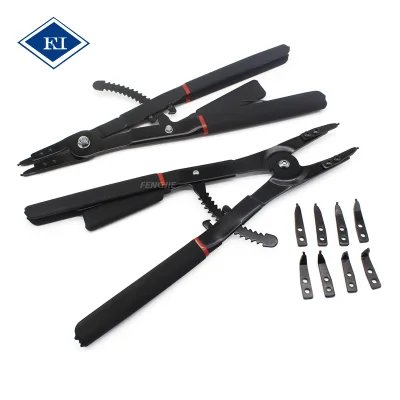


Professional Stainless Steel Multifunctional Tool Multitool Pliers Folding Pliers
$12.16 - $13.20
MOQ: 200 Pieces


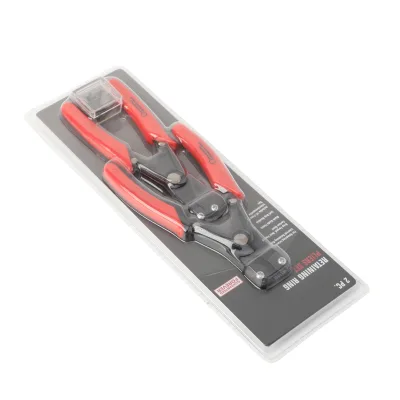


Professional 8-Inch Multi-Functional Pliers Set with Interchangeable Heads
$9.93 - $10.38
MOQ: 1000 Pieces


Comprehensive Sourcing Guide
Strategic Sourcing Guide for Precision Circlip Pliers Sets
The procurement of precision circlip pliers sets represents a critical decision point for industrial buyers, maintenance teams, and assembly line managers. These specialized hand tools are designed for the installation and removal of retaining rings, also known as circlips, which secure components within mechanical assemblies. Unlike standard pliers, precision circlip pliers require exact tip geometries to engage the internal or external grooves of retaining rings without damaging the component or the tool itself. Sourcing these tools effectively requires a disciplined approach that balances technical specifications, material integrity, and supplier reliability. This guide outlines the essential factors for evaluating potential suppliers and ensuring the acquisition of high-performance tooling that meets rigorous operational standards.
Technical Specifications and Functional Requirements
When evaluating a Precision Circlip Pliers Set, the primary focus must be on the functional capabilities and dimensional accuracy of the tools. The core function of these pliers is to manipulate retaining rings with precision, often in confined spaces where standard tools cannot reach. Buyers should verify that the product attributes align with specific application needs, such as the ability to perform twisting and cutting operations if the set includes multi-functional variants. The shaft style is a critical design element; options may include straight shafts for general access or arched shafts for navigating around obstructions. The handle color and material also play a role in user ergonomics and safety, with colorful handles often indicating specific grip types or safety ratings.
The material composition of the pliers is paramount for durability and performance. High carbon steel and carbon steel are common materials observed in the market, offering the necessary hardness to withstand the high torque required to compress or expand retaining rings. The surface treatment, such as ash nickel plating, is essential for corrosion resistance and ensuring a smooth operation in various environments. Buyers must also consider the jaw capacity and torque capacity, which define the maximum size of the circlip the tool can handle. For instance, some industrial-grade tools may boast a jaw capacity of 1 7/8 inches and a maximum torque capacity of 2000 lb-ft, though these figures vary significantly by model. The size of the pliers, ranging from 5 to 18 inches or specific measurements like 6, 7, and 8 inches, must match the scale of the components being serviced.
Compliance, Certification, and Safety Standards
Ensuring that sourced tools meet international safety and quality standards is a non-negotiable aspect of B2B procurement. While specific certification claims for every product in a catalog may vary, buyers should prioritize suppliers who can demonstrate adherence to recognized standards. The CE mark is a widely recognized standard indicating conformity with health, safety, and environmental protection standards for products sold within the European Economic Area. Additionally, for tools used in explosive environments, features such as anti-explosion and anti-magnetic properties are critical. These attributes ensure that the tools do not generate sparks or magnetic interference that could compromise safety in hazardous locations.
Buyers should also verify compliance with specific industry standards, such as the American Type standard, which dictates the dimensional and functional requirements for pliers used in North American markets. While background knowledge suggests standards like IEC 60900 for electrical safety, the primary verification should focus on the specific product documentation provided by the supplier. It is essential to request proof of compliance rather than relying on general market assumptions. The product standard, whether listed as "4 in 1" or specific length standards like 180mm / 7", must be clearly defined in the product specifications to ensure the tool fits the intended application.
Cost Drivers and Pricing Structures
The cost of precision circlip pliers sets is influenced by a complex array of factors, including material quality, manufacturing complexity, and customization options. The observed price range in the market spans from $0.50 to $128.50, reflecting the vast difference between basic, single-purpose tools and high-end, multi-functional sets. Several key drivers impact the final price. First, the material grade, such as high carbon steel versus standard carbon steel, directly affects durability and cost. Second, the level of customization, including OEM and ODM support, adds value but also increases the unit price. Third, the packaging method, whether carton, double blister, or half double blister, influences logistics costs and the perceived value of the product.
Minimum Order Quantity (MOQ) is another significant cost driver. The market observes MOQs ranging from 50 to 100,000 units. For small to medium enterprises, an MOQ of 50 units may be manageable, whereas large industrial buyers might leverage economies of scale by ordering closer to the 100,000-unit threshold. Buyers must analyze their total cost of ownership, factoring in not just the unit price but also shipping, tariffs, and the potential cost of tool failure. Investing in higher-quality tools with better surface treatments and material grades often results in lower long-term costs due to reduced replacement frequency and improved efficiency.
Typical Applications and Industry Use Cases
Precision circlip pliers sets are indispensable in a wide range of industries, from automotive manufacturing to building decoration and general DIY projects. The application age for these tools is typically listed as "Adult," indicating they are designed for professional use rather than consumer hobbyist markets. In the automotive sector, these tools are used to install and remove retaining rings on axles, gears, and suspension components. The "Building Decoration" application highlights their use in securing fixtures and mechanical parts in construction projects.
The working mode of these tools is predominantly manual, requiring skilled operators to apply the correct force and technique. The folded or unfolded state of the pliers can also be a consideration for storage and transport, with unfolded models offering immediate readiness. For specialized applications, such as those requiring anti-explosion features, the tools are essential in oil and gas, chemical processing, and mining industries. The versatility of the tools, with types ranging from crimping pliers to combination pliers and stripping pliers, allows them to serve multiple functions within a single set, reducing the need for multiple tool purchases.
Supplier Evaluation and Sourcing Strategy
Selecting the right supplier is as important as selecting the right tool. Buyers should prioritize suppliers with a clear origin, such as Jiangsu, China (Mainland), which is a known hub for hand tool manufacturing. The brand name, such as "Mc," can serve as an indicator of market presence, but buyers should conduct due diligence to verify the supplier's reputation and track record. The availability of customization support, including OEM and ODM services, is a strong indicator of a supplier's flexibility and ability to meet specific client requirements.
When evaluating suppliers, buyers should request detailed product data sheets that confirm the model numbers, such as HC504, 11515, 11511, 11503, P1701, P601, P201, P701, MC-3005, and P401. These model numbers often correspond to specific features, sizes, and standards. A comparison of these models can help buyers identify the most suitable tool for their needs. Additionally, buyers should assess the supplier's ability to provide consistent quality across large orders, as evidenced by their production capacity and quality control processes.
Quality Control and Long-Term Procurement Considerations
Implementing a robust quality control process is essential to ensure that the sourced tools meet the required specifications. Buyers should verify that the tools undergo rigorous testing for material hardness, surface treatment integrity, and functional performance. The "Not Rated" thickness specification for some models suggests that buyers must request specific dimensional data to ensure compatibility with their applications. Long-term procurement considerations include the availability of spare parts, the supplier's lead time, and the consistency of product quality over time.
The structure of the pliers, such as the box joint design, contributes to their strength and longevity. Buyers should also consider the performance characteristics, such as the ability to perform twisting and cutting operations, which are critical for maintaining operational efficiency. By focusing on these technical and operational factors, buyers can build a reliable supply chain that supports their production needs and minimizes downtime.
Comparative Analysis of Tool Models
To facilitate informed decision-making, the following table compares key attributes of common precision circlip pliers models found in the market. This comparison highlights the diversity in specifications, materials, and standards available to buyers.
| Model Number | Primary Function | Material | Shaft Style | Standard | Size Range |
|---|---|---|---|---|---|
| HC504 | Crimping | High Carbon Steel | Straight | CE | Common |
| 11515 | Crimping | Carbon Steel | Plastic or | 4 in 1 | Common |
| 11511 | Crimping | Carbon Steel | Arched | 180mm / 7" | Common |
| 11503 | Crimping | High Carbon Steel | Straight | CE | Common |
| P1701 | Cutting, Wire Stripping | Carbon Steel | Arched | American Type | 5-18 Inch |
| P601 | Combination | Carbon Steel | Arched | American Type | 6" 7" 8" |
| P201 | Stripping | Carbon Steel | Arched | American Type | 6" 7" 8" |
| P701 | Combination | Carbon Steel | Arched | American Type | 6" 7" 8" |
| MC-3005 | Crimping | High Carbon Steel | Straight | CE | Common |
| P401 | Combination | Carbon Steel | Arched | American Type | 6" 7" 8" |
This table illustrates the variation in model numbers, materials, and standards. Buyers should use this data to cross-reference their specific requirements with the available options, ensuring that the selected tools meet the necessary technical and safety criteria. By carefully analyzing these attributes, procurement teams can make data-driven decisions that optimize performance and cost-effectiveness.
FAQs
Can these pliers be customized for specific brand requirements?
Yes, customization support including OEM and ODM services is available for these tools. Buyers can request specific branding or design modifications to meet unique operational needs.
What material is used to construct the high-performance pliers?
The tools are constructed from high carbon steel or carbon steel to ensure durability. This material selection provides the necessary hardness to withstand high torque during twisting and cutting operations.
Which certification standards do these hand tools comply with?
Many models comply with the CE standard for safety and environmental protection. Some specific variants also adhere to the American Type standard for dimensional and functional requirements in North American markets.
How does the packaging method affect the product presentation?
Products are available in carton, double blister, or half double blister packaging options. The chosen packaging method influences logistics costs and the perceived value of the final product for the buyer.
What is the typical minimum order quantity for these tools?
The minimum order quantity ranges from 50 to 100,000 units depending on the supplier and model. Small enterprises can start with lower quantities while large buyers leverage economies of scale.
Which shaft styles are available for different access requirements?
Available shaft styles include straight, arched, and plastic or metal variations. Straight shafts offer general access while arched styles help navigate around obstructions in confined mechanical assemblies.
Can these tools be used for building decoration applications?
Yes, the tools are explicitly designed for use in building decoration and general construction projects. They are suitable for securing fixtures and mechanical parts in various industrial and commercial settings.