Source Premature Baby Incubator for NICUs, Hospitals, and Clinics
Explore 30 verified options for the Premature Baby Incubator designed for neonatal care. Buyers can compare technical specifications, certifications, and pricing to find suitable units for hospitals, clinics, and transport applications; compare the available evidence and request quotations based on your requirements.
Key considerations
Products List

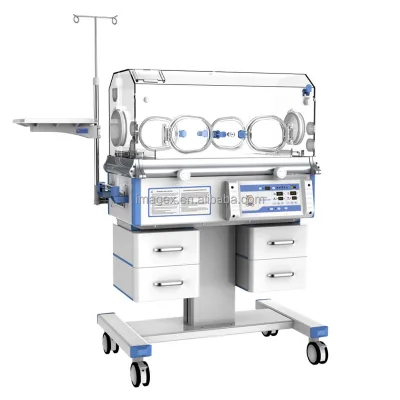


High-Performance Hospital Baby Comprehensive Treatment Clinical Premature Infant Incubator
$1550.00 - $1850.00
MOQ: 1 Pieces


High Quality Newborn Premature Baby Incubator Medical Infant Incubator for Hospital
$500.00 - $2000.00
MOQ: 1 Pieces

Transport Incubator Infant Hospital Incubator for Infant Care Baby Infant Incubator
$500.00 - $1500.00
MOQ: 1 Pieces


Medical Hospital Neonatal Incubator / Baby Infant Incubator for Premature Babies
$500.00 - $1500.00
MOQ: 1 Pieces

Infant Incubator Newborn Baby Incubator Price Care Baby Incubator Infant Care Equipment
$500.00 - $1500.00
MOQ: 1 Pieces

Infant Care ICU Emergency Hospital Incubator Premature Baby Infant Incubator
$780.00 - $790.00
MOQ: 1 Pieces

Being Medical Premature Baby Incubator Infant Incubator Neonatal Incubators
$700.00 - $760.00
MOQ: 1 Pieces


CE Certification Factory Direct Cheap Hospital Baby Incubator Infant Incubator
$1100.00 - $1350.00
MOQ: 1 Pieces


Newborn Nursery Baby Incubator ICU Baby Incubator Premature Baby Care Equipment
$21500.00 - $23000.00
MOQ: 1 Pieces


Comprehensive Sourcing Guide
Premature Baby Incubator Sourcing Guide
Procuring a Premature Baby Incubator requires a rigorous evaluation of clinical performance, regulatory compliance, and supplier reliability. These devices are critical for maintaining the thermal environment of neonates, particularly those born before full term, who lack the ability to regulate their own body temperature. Buyers must prioritize equipment that offers precise temperature control and stable humidity levels to prevent hypothermia or hyperthermia, which can lead to severe complications. The selection process involves analyzing technical specifications such as air mode and skin mode temperature ranges, ensuring the unit meets the specific needs of the intended patient population.
Beyond technical specs, the commercial and logistical aspects of sourcing these medical devices demand careful attention. Buyers should assess the supplier’s ability to provide consistent quality, valid certifications, and adequate after-sales support. Understanding the total cost of ownership, including maintenance, spare parts availability, and warranty terms, is essential for long-term operational success. This guide outlines the key factors to consider when evaluating premature baby incubators, helping procurement teams make informed decisions that balance clinical efficacy with commercial viability.
Product Scope and Observed Listing Signals
The market for premature baby incubators includes various models designed for different clinical settings, ranging from basic units to advanced systems with digital displays and customizable features. Observed listings indicate a wide price range, reflecting differences in technology, brand reputation, and included accessories. Buyers should note that some units are marketed as large-scale equipment, while others may be more compact. The presence of LCD displays and specific control modes, such as AC 220V-230V or AC 110V-120V, suggests a variety of electrical requirements that must match the local infrastructure.
Packaging and origin are also significant signals in product listings. Many incubators are shipped in standard export packing boxes or individually in OPP bags, indicating careful handling to prevent damage during transit. The origin of these devices is predominantly China, which offers competitive pricing but requires thorough verification of quality standards. Buyers should look for models with specific identifiers, such as NL080302A-100 or BIN3000B, to ensure they are comparing equivalent specifications. Understanding these listing signals helps in filtering suppliers and identifying products that align with specific procurement needs.
Technical Specifications to Verify
When evaluating technical specifications, buyers must verify the accuracy of temperature sensors and the stability of the incubator’s internal environment. Key metrics include the accuracy of the skin temperature sensor, which should be within ±0.2°C, and the air control accuracy, typically ≤0.5°C. The air mode temperature range is often specified as 25-37°C, with an over-temperature alarm set below 38°C. These parameters are critical for maintaining a safe thermal environment for premature infants, who are highly sensitive to temperature fluctuations. Buyers should also check the noise level inside the hood, which should be ≤45dB(a) to minimize stress on the patient.
Humidity control and mattress temperature uniformity are additional technical aspects that require verification. The humidity display range is typically 0%Rh to 99%Rh, allowing for precise environmental management. The mattress temperature uniformity should be ≤0.8°C to ensure even heat distribution. Some models offer both air mode and skin mode temperature ranges, with skin mode typically set between 34-37°C. Buyers should also consider the inclination of the bassinet, which may be adjustable to ±12°, and the power consumption, which should be efficient to reduce operational costs.
Compliance and Safety Documentation
Compliance with international standards is non-negotiable when sourcing premature baby incubators. Buyers must verify that the supplier holds relevant certifications, such as CE, FDA, and ISO 13485, which indicate adherence to quality management and safety regulations. The medical device regulatory type should be clearly stated, often as Type 1, which defines the risk classification and regulatory requirements. Documentation should include detailed safety standards, such as ISO 13485, which ensures consistent quality in the manufacturing process. Buyers should request copies of these certificates to validate the supplier’s claims.
In addition to certifications, buyers should review the supplier’s compliance with electrical safety standards. The electrical requirements, such as 220V 50Hz or 230V 60Hz, must match the local power supply to ensure safe operation. The power consumption, typically ≤450va, should be clearly documented to assess energy efficiency. Buyers should also verify that the incubator meets specific safety standards for noise and temperature alarms, ensuring that the device provides adequate warnings in case of malfunctions. Comprehensive documentation is essential for regulatory approval and safe clinical use.
Cost Drivers and Commercial Terms
The cost of a Premature Baby Incubator is influenced by several factors, including the level of technology, certification status, and supplier reputation. Advanced models with LCD displays, precise temperature control, and additional features like humidity management tend to be more expensive. Buyers should also consider the cost of packaging and shipping, as these devices require careful handling to prevent damage. The observed price range varies significantly, so buyers should request detailed quotes that break down the cost of the unit, accessories, and any additional services.
Commercial terms, such as MOQ and warranty, also impact the total cost of ownership. The MOQ for these devices is typically low, ranging from 1 to 5 units, which allows for flexible purchasing. Buyers should negotiate for a warranty period, often 12 months, to protect against defects. It is also important to clarify the terms for spare parts and maintenance services, as these can add to the long-term costs. Buyers should ensure that the supplier provides clear information on lead times and delivery schedules to avoid operational disruptions.
Supplier Qualification and Quality Control
Supplier qualification is a critical step in the procurement process, ensuring that the chosen vendor can deliver high-quality medical devices. Buyers should assess the supplier’s manufacturing capabilities, quality control processes, and track record in the medical device industry. Verification of certifications, such as CE and ISO 13485, is essential to confirm compliance with international standards. Buyers should also review the supplier’s customer feedback and references to gauge their reliability and service quality. A qualified supplier should have a robust quality management system in place.
Quality control measures should be clearly defined and communicated by the supplier. Buyers should request information on the testing procedures used to ensure the incubator’s performance and safety. This includes checks on temperature accuracy, noise levels, and electrical safety. Buyers should also verify the supplier’s ability to provide consistent quality across batches, which is crucial for large-scale procurement. Establishing a clear communication channel with the supplier can help address any quality issues promptly and ensure that the delivered products meet the specified requirements.
Long-Term Procurement Checks
Long-term procurement checks involve monitoring the performance and reliability of the incubators over time. Buyers should establish a system for tracking maintenance records, repair history, and any recurring issues. This data can help identify potential problems early and ensure that the devices remain in optimal condition. Regular audits of the supplier’s quality control processes can also help maintain high standards. Buyers should also stay updated on any changes in regulatory requirements or industry standards that may affect the use of the incubators.
Additionally, buyers should evaluate the supplier’s ability to provide ongoing support, including technical assistance and spare parts availability. A reliable supplier should have a responsive customer service team that can address issues quickly and efficiently. Buyers should also consider the scalability of the procurement process, ensuring that the supplier can meet increased demand if needed. By conducting regular long-term checks, buyers can ensure that their investment in premature baby incubators continues to deliver value and support patient care effectively.
FAQs
What certifications do premature baby incubators have?
These devices typically hold FDA, ISO, CE, and SGS certifications. Some models also include EEC and MSDS documentation. Buyers should verify specific certification lists for each unit to ensure compliance with local medical regulations and safety standards before procurement.
Can I customize the specifications of this incubator?
Customization is available for many models, though some units are non-customized. Buyers can request specific features like LCD displays or tailored control modes. Always confirm the customization options with the manufacturer to ensure the final product meets your exact clinical requirements.
What is the accuracy of the skin temperature sensor?
The skin temperature sensor accuracy is typically plus or minus 0.2 degrees Celsius. This high precision ensures reliable monitoring for infants. The system also maintains air control accuracy within 0.5 degrees Celsius to provide a stable thermal environment for premature babies.
How is the product packed for shipping?
Packaging options include individually OPP bags, paper poly bags, or standard export packing boxes. Some units are shipped in cartons. The specific packing method depends on the model and order quantity, ensuring safe transport during international logistics operations.
What is the noise level inside the incubator hood?
The noise inside the hood is generally less than or equal to 45 decibels. Some models may reach up to 55 decibels. This low noise level is critical for maintaining a quiet environment that supports the rest and development of premature infants.
Which temperature ranges are supported by the air mode?
The air mode temperature range spans from 25 to 37 degrees Celsius. High temperature modes can extend up to 39 degrees Celsius. The system triggers alarms if temperatures exceed 38 degrees Celsius to ensure safety and prevent overheating of the infant.
What is the warranty period for these medical devices?
The standard warranty period is 12 months for the incubator units. This coverage typically includes manufacturing defects and component failures. Buyers should review the specific warranty terms provided by the supplier to understand the scope of support and service availability.