Source PVC Window Corner Welding Machine for Doors, Frames, and Profiles
Compare 30 listings for the PVC Window Corner Welding Machine, featuring CNC and semi-automatic models with varying power and dimensions. Buyers can evaluate specifications like welding height, cleaning functions, and voltage options from Jinan, China suppliers.
Key considerations
Products List


CNC UPVC Window Corner Cleaning PVC Window Welding Machine for Window Door Machine
$28570.00 - $57100.00
MOQ: 1 Pieces

UPVC Corner Welding Machine Price One Head PVC Window Welding Machine
$2000.00 - $2500.00
MOQ: 1 Pieces


PVC Window-Door Equipment Four Corner PVC Window Welding Machine for PVC Window Frame
$5000.00 - $6500.00
MOQ: 1 Pieces

PVC Window-Door Equipment Four Corner CNC UPVC Window Welding Plastic Window Welding Machine
$21900.00 - $33900.00
MOQ: 1 Pieces
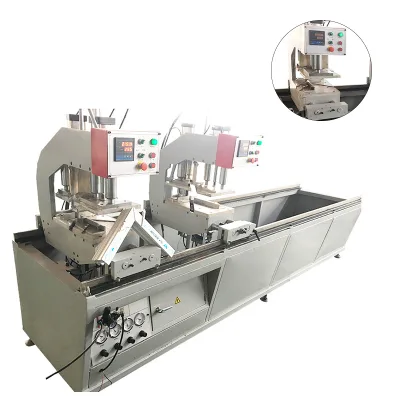


Window Machine Seamless Two Corner Welding Machine /UPVC Window Machine
$2000.00 - $12000.00
MOQ: 1 Pieces


UPVC Four Head Corner Seamless Welding Machine for Window and Door Profile Window PVC Welder Machine
$8800.00 - $9500.00
MOQ: 1 Pieces

UPVC Welding Machine Four Point PVC Window Welding Machine for Sale
$29900.00 - $33800.00
MOQ: 1 Pieces


CNC Window Door UPVC Welding Machine Welding Machine for PVC Window Frame
$28000.00 - $29600.00
MOQ: 1 Pieces

Comprehensive Sourcing Guide
Strategic Sourcing Guide for PVC Window Corner Welding Machines
Selecting the correct corner welding equipment is a critical decision for manufacturers producing UPVC and PVC window and door profiles. The welding process determines the structural integrity, thermal insulation, and aesthetic finish of the final product. In the current market, buyers encounter a spectrum of machinery ranging from semi-automatic single-head units to fully automated CNC four-corner welding and cleaning centers. This guide synthesizes available product data and industry standards to help procurement professionals navigate technical specifications, compliance requirements, and cost structures without relying on unverified supplier claims.
Technical Specifications and Operational Capabilities
The primary differentiator among PVC welding machines is their automation level and functional scope. High-end models, such as the Hrwf-CNC-14022003000, represent the pinnacle of automation, featuring CNC capabilities designed for high-volume production. These machines typically operate on a 380V power supply with an input power of 9.5 Kw, ensuring consistent thermal performance for large-scale operations. The welding height for such automated units generally spans from 20 mm to 140 mm, accommodating a wide variety of profile thicknesses. The maximum welding range can extend up to 2200 mm by 3000 mm, allowing for the processing of large window frames in a single cycle.
In contrast, semi-automatic options like the AWCL-100C or the WFH-1 offer different operational profiles. The AWCL-100C, for instance, is classified as a semi-automatic unit with a single head configuration. It is designed for specific welding heights, often capped at 120 mm, and may operate on different voltage standards, such as 220V, depending on the specific configuration. While these machines may lack the full CNC automation of their larger counterparts, they are often sufficient for smaller batch productions or specialized tasks. The input power for cleaning functions in advanced centers can vary significantly; some models list a welding power of 9.5 Kw paired with a cleaning power of 5 Kw, while others may require up to 10.5 Kw for the cleaning component.
Buyers must carefully evaluate the welding width and cleaning height specifications. Standard welding widths observed in the market include 110 mm and 120 mm, which dictate the maximum profile width the machine can handle. Cleaning heights are equally critical, with ranges typically observed between 30 mm and 140 mm. The ability to perform seamless welding, with tolerances as tight as 0.2 mm, is a key performance indicator for high-quality output. When assessing a machine, verify whether the listed specifications apply to the welding head, the cleaning station, or the entire integrated system, as discrepancies here can lead to production bottlenecks.
Compliance, Certification, and Safety Standards
Ensuring that machinery meets international safety and quality standards is non-negotiable for B2B procurement. The most frequently cited certifications for PVC welding equipment include CE and ISO. These marks indicate that the machine has undergone rigorous testing for electrical safety, mechanical integrity, and operational reliability. However, the presence of a certification mark on a product listing should be verified against the specific model number, as compliance is not always uniform across a manufacturer's entire product line.
Beyond general certifications, buyers should look for adherence to specific dimensional and operational standards. For example, the physical footprint of a machine is often defined by standard dimensions, such as 5100 mm by 4500 mm by 1650 mm for larger units, or 13500 mm by 5500 mm by 1850 mm for comprehensive welding and cleaning centers. These dimensions are critical for factory floor planning and logistics. Additionally, the machine's origin, such as Jinan, China, is a known hub for this type of industrial equipment, but the specific origin should be confirmed to ensure it aligns with trade agreements or sourcing preferences.
When evaluating compliance, do not assume that all listed attributes apply to every unit. For instance, while some models may boast a "Lifetime Maintenance Service," this is a specific service agreement rather than a universal industry standard. Similarly, the condition of the machine is typically listed as "New," but buyers must confirm the status of any refurbished or second-hand units. The voltage supply is another critical compliance factor; while 380V 50Hz is standard for industrial machinery in many regions, some units may be configured for 220V, requiring specific electrical infrastructure adjustments at the installation site.
Cost Drivers and Pricing Structures
The pricing of PVC window corner welding machines is influenced by a complex interplay of factors, including automation level, power consumption, and included features. The observed price range in the market spans from approximately $1,793.55 to $61,200. This wide variance reflects the difference between basic single-head units and fully integrated CNC centers with advanced cleaning capabilities.
Several key drivers influence the final cost. First, the degree of automation is a primary cost factor. CNC machines with four-corner welding and cleaning functions command a premium due to their higher efficiency and reduced labor requirements. Second, the power input and voltage requirements impact the cost of the electrical components and the overall build quality. Machines with higher input power, such as those requiring 9.5 Kw for welding and additional power for cleaning, often involve more robust internal components. Third, the weight and material construction of the machine affect shipping and installation costs. Weights can range from 300 kg for smaller units to over 5,000 kg for large automated centers, significantly impacting freight charges.
Buyers should also consider the packaging and shipping standards. Some units are packed in a single 20-foot general purpose (GP) container, while others may require a full container load (FCL) or be shipped in a plywood case suitable for less than container load (LCL) shipments. These logistical details can add hidden costs to the procurement process. Furthermore, the availability of customization, such as machine color or specific voltage configurations, may incur additional charges. It is essential to request a detailed breakdown of costs, including the machine price, packaging, and estimated freight, to avoid budget overruns.
Typical Applications and Production Scenarios
PVC welding machines are primarily designed for the manufacturing of UPVC window and door profiles. The specific application dictates the choice of machinery. High-volume production facilities typically require CNC four-corner welding and cleaning centers, which can process large frames with high precision and speed. These machines are ideal for manufacturers producing standard window sizes up to 2200 mm by 3000 mm. The ability to perform both welding and cleaning in a single cycle ensures a seamless finish, which is crucial for the aesthetic and functional quality of the final product.
For smaller workshops or specialized production runs, semi-automatic machines may be more appropriate. These units, such as the WFH-1, are often used for single-head welding tasks where the volume does not justify the investment in a full CNC system. They are suitable for producing custom or non-standard window sizes that do not require the high-speed throughput of automated lines. The cleaning height and welding height ranges must be matched to the specific profile types being produced. For example, a machine with a welding height of 20-120 mm may not be suitable for profiles requiring 140 mm height, necessitating a careful review of the technical specifications against the production requirements.
Supplier Evaluation and Quality Control
Evaluating a supplier requires a focus on verifiable data rather than marketing claims. When assessing potential vendors, buyers should prioritize suppliers who provide clear documentation of their product specifications, including model numbers, dimensions, and power requirements. The presence of certifications like CE and ISO should be confirmed through official documentation, not just product listings. Additionally, the supplier's ability to provide customization options, such as specific machine colors or voltage adjustments, is a strong indicator of their flexibility and customer service capability.
Quality control should be a central part of the procurement process. Buyers must verify the machine's condition, ensuring it is new and free from defects. The weight of the machine, which can range from 300 kg to 5,000 kg, is a useful metric for assessing build quality; heavier machines often indicate the use of more robust materials and better construction. Maintenance services, such as lifetime maintenance support, should be clearly defined in the contract to ensure long-term operational reliability.
Long-Term Procurement Considerations
Sourcing a PVC welding machine is a long-term investment that requires careful consideration of future needs and operational sustainability. The machine's ability to adapt to changing production demands is crucial. For instance, a machine with a wide welding height range (20-140 mm) offers greater flexibility for future product lines. Similarly, the availability of spare parts and technical support is essential for minimizing downtime. Buyers should inquire about the supplier's track record in providing after-sales service and the availability of replacement parts.
The environmental impact and energy efficiency of the machine are also becoming increasingly important. Machines with optimized power consumption, such as those with a 9.5 Kw input for welding, can reduce operational costs over time. Additionally, the packaging and shipping methods should be evaluated for their environmental footprint. Selecting a supplier that offers eco-friendly packaging or efficient logistics can contribute to a more sustainable procurement strategy.
Comparative Analysis of Machine Models
To facilitate decision-making, the following table summarizes key specifications observed in the market for PVC window welding machines. This comparison highlights the differences between high-end CNC models and semi-automatic units, aiding buyers in selecting the right equipment for their specific needs.
| Feature | CNC Four-Center (e.g., Hrwf-CNC) | Semi-Automatic Center (e.g., AWCL-100C) | Single Head Unit (e.g., WFH-1) |
|---|---|---|---|
| Automation Grade | Automatic | Semi-Automatic | Semi-Automatic |
| CNC Capability | Yes | No | No |
| Voltage | 380V | 220V | Not Specified |
| Input Power | 9.5 Kw | Welding: 9.5 Kw, Cleaning: 5 Kw | Not Specified |
| Welding Height | 20-140 mm | 20-140 mm | 120 mm |
| Welding Width | 110 mm | 120 mm | Not Specified |
| Max Welding Range | 2200*3000 mm | Not Specified | Not Specified |
| Weight | 3000-4500 Kgs | 300 Kgs | 5000 Kgs |
| Standard Dimensions | 510045001650 mm | 1350055001850 mm | 90011001800 mm |
| Certification | CE, ISO | CE, ISO | CE, ISO |
| Maintenance | Lifetime Service | Not Specified | Not Specified |
This table illustrates that while all models share common certifications, their operational capabilities and physical dimensions vary significantly. Buyers must align these specifications with their production capacity, facility constraints, and budget to make an informed decision. By focusing on verified data and avoiding unverified claims, procurement professionals can secure machinery that meets their quality standards and operational requirements.
FAQs
What automation levels are available for PVC window corner welding machines?
Available automation levels range from semi-automatic single-head units to fully automatic CNC four-corner welding centers. High-end models like the Hrwf-CNC-140*2200*3000 offer full CNC capabilities, while units like the WFH-1 operate as semi-automatic systems for smaller batch productions.
Which certifications should I verify for these welding machines?
You should verify that the machine holds CE and ISO certifications to ensure compliance with international safety and quality standards. These marks indicate rigorous testing for electrical safety and mechanical integrity, though you must confirm compliance for the specific model number rather than assuming it applies to the entire product line.
How does the voltage supply affect machine selection?
Most industrial units operate on a 380V 50Hz power supply, but some semi-automatic models may be configured for 220V. You must check the specific voltage requirements of the machine to ensure your facility has the correct electrical infrastructure, as mismatches can lead to installation issues or operational failures.
Can these machines handle large window frame dimensions?
Yes, automated CNC models can process frames up to 2200 mm by 3000 mm in a single cycle. Smaller semi-automatic units may have more limited ranges, so you must verify the maximum welding range and height specifications against your specific production requirements before purchasing.
What is the typical price range for these welding machines?
The observed price range spans from approximately 1,793.55 USD to 61,200 USD depending on the model and features. Basic single-head units cost less, while fully integrated CNC centers with advanced cleaning capabilities command a premium due to higher efficiency and reduced labor requirements.
Which packaging methods are used for shipping these machines?
Machines are typically packed in a single 20-foot GP container, a full container load, or a plywood case for less than container load shipments. The packaging method depends on the machine size and weight, which can range from 300 kg to over 5,000 kg, affecting freight costs significantly.