Source PVDF Coated Fireproof Aluminium Coil for Decorations, Door & Window, Transportation Tools
Compare 30 PVDF Coated Fireproof Aluminium Coil options from verified suppliers in China. Buyers can evaluate thickness, coating types like PE and PVDF, and alloy grades including AA3003 and AA3004 for applications in decorations, door and window systems, and transportation tools.
Key considerations
Products List




Comprehensive Sourcing Guide
Strategic Sourcing Guide for PVDF Coated Fireproof Aluminium Coil
Understanding the Product Definition and Core Characteristics
When sourcing PVDF Coated Fireproof Aluminium Coil, buyers must first distinguish between the base material properties and the functional coating system. The product is fundamentally an aluminium alloy coil, often identified by grades such as the 3000 Series, which includes specific alloys like AA1100, AA3003, AA3004, and AA3105. These alloys provide the necessary structural integrity while maintaining workability for various industrial applications. The "fireproof" designation in this context typically refers to the non-combustible nature of the aluminium substrate and the specific fire-retardant properties of the coating system, rather than the material being a fire-resistant structural beam.
The core technical identity of this product is defined by its surface treatment. The coil undergoes a color coating process, with Polyvinylidene Fluoride (PVDF) being the premium option among available coatings like PE, HDPE, and SMP. PVDF coatings are selected for their superior resistance to UV radiation, chemical corrosion, and weathering, making them ideal for long-term exterior applications. The physical form of the product is generally a flat coil, though it can be processed into profiles for specific decorative or structural uses. The technique used to produce the base metal often involves cold drawing, which ensures the material meets specific temper requirements ranging from O (annealed) to H112 (strain-hardened). This range allows procurement teams to select the exact balance of formability and strength required for their specific project, whether it involves complex forming or rigid structural support.
Technical Specifications and Dimensional Parameters
Precision in technical specifications is critical when ordering aluminium coils to ensure compatibility with manufacturing lines and architectural designs. The dimensional parameters for these coils vary significantly based on the supplier's production capabilities and the specific alloy grade. Observed data indicates that thickness ranges typically span from 0.125mm up to 2.0mm, with common industrial ranges falling between 0.25mm and 1.5mm. Buyers must verify the exact thickness tolerance, as the standard specification often notes a maximum width constraint. While some listings indicate a maximum width of 2000mm, others specify a range of 20mm to 1800mm, or more specific industrial bands like 600mm to 1250mm.
The coating thickness is another vital specification that dictates the longevity and performance of the product. For PVDF systems, the top coating typically ranges from 10 to 25 microns, with a normal standard often cited between 10 and 12 microns. The back coating, which protects the underside of the coil, generally ranges from 5 to 12 microns, with a standard of 5 to 7 microns. These micron-level specifications are not merely cosmetic; they directly influence the warranty period, which can extend from 5 to 15 years depending on the coating quality and thickness.
| Specification Parameter | Typical Observed Range | Critical Verification Point |
|---|---|---|
| Alloy Grade | 3000 Series (AA1100, AA3003, AA3004, AA3105) | Confirm specific alloy for corrosion resistance needs |
| Thickness | 0.125mm - 2.0mm (Common: 0.25-1.5mm) | Verify tolerance and flatness for forming processes |
| Width | 20mm - 2000mm (Common: 600-1250mm) | Ensure compatibility with existing machinery |
| Top Coating | 10-25 Microns (Normal: 10-12 mic) | Confirm PVDF percentage for weathering warranty |
| Back Coating | 5-12 Microns (Normal: 5-7 mic) | Check for adequate protection against condensation |
| Temper | O - H112 | Select based on required formability vs. strength |
Compliance, Certification, and Regulatory Standards
Navigating the certification landscape is essential for ensuring that the sourced aluminium coil meets international safety and quality benchmarks. The market for these products is characterized by a variety of certifications, including CE, ISO, RoHS, and various ASTM standards. Specific observations indicate that products may carry certifications such as EN, ASTM B, ASTM, JIS, and GB/T. The presence of ISO and RoHS certifications is particularly relevant for environmental compliance and the restriction of hazardous substances, which is a growing requirement in global supply chains.
Buyers must be vigilant in verifying the specific standard numbers associated with the product. While general standards like ASTM D2247 or ISO9001:2000 are often referenced in the broader industry, the specific product data highlights compliance with material standards such as ASTM B and EN standards. It is crucial to distinguish between the certification of the manufacturing facility and the certification of the specific product batch. The "fireproof" claim requires rigorous verification against local building codes, as the aluminium substrate itself is non-combustible, but the coating system's fire rating depends on the specific formulation. Procurement teams should request test reports that explicitly confirm the fire performance of the coated system, rather than relying solely on the general certification labels.
Cost Drivers and Economic Factors in Procurement
The pricing of PVDF coated aluminium coil is influenced by a complex interplay of raw material costs, coating technology, and order volume. The base cost is driven by the price of aluminium alloys, which fluctuates based on global market conditions. However, the PVDF coating itself represents a significant value-add compared to standard PE or SMP coatings due to the higher cost of the fluoropolymer resins and the more complex application process. This premium is justified by the extended warranty periods, often cited as 5 to 15 years, which reduces the total cost of ownership for building owners.
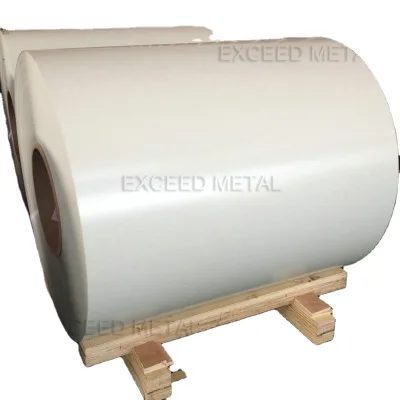
Order volume is a primary determinant of the final unit price. The Minimum Order Quantity (MOQ) varies widely in the market, with observed ranges spanning from small quantities of 1 unit to large industrial orders of 600 units or even 5 tons. Buyers purchasing in bulk can often negotiate better pricing, but they must balance this against storage costs and project timelines. The packaging method also impacts logistics costs; products are typically shipped on wooden pallets with eye-to-wall or eye-to-sky configurations, sometimes wrapped in waterproof paper. This specialized packaging is necessary to prevent damage during transit but adds to the overall freight cost. Buyers should also consider the lead time implications of custom orders, as customization options for color, thickness, and coating type can extend the production schedule.
Typical Applications and Performance Requirements
The versatility of PVDF coated aluminium coil makes it suitable for a diverse array of applications, ranging from architectural facades to transportation components. The primary application category is decorations, where the aesthetic appeal and color retention of the PVDF coating are paramount. These coils are extensively used in curtain walls, glass walls, and door and window systems where long-term exposure to the elements is expected. The high resistance to UV degradation ensures that the color remains vibrant for decades, a critical factor for commercial and residential buildings.
Beyond architectural uses, the material finds significant application in transportation tools, where weight reduction and corrosion resistance are vital. The specific alloy grades, such as the 3000 series, offer an excellent strength-to-weight ratio, making them ideal for vehicle body panels and interior components. Additionally, the product is utilized in heat sink applications, where the thermal conductivity of the aluminium is leveraged alongside the protective coating. The "fireproof" aspect is particularly relevant in high-safety zones, such as elevator shafts, emergency exits, and industrial facilities where fire codes mandate non-combustible cladding. Buyers should align the specific alloy temper and coating thickness with the mechanical and environmental demands of the intended application to ensure optimal performance.
Supplier Evaluation and Quality Control Protocols
Selecting a reliable supplier requires a thorough evaluation of their production capabilities and quality assurance processes. The origin of the product is a key factor, with many suppliers based in regions like Anhui, China, known for their aluminium processing industries. However, geographic origin alone does not guarantee quality. Buyers should verify the supplier's adherence to international standards and their ability to provide traceable test results for each batch. The presence of certifications like CE, ISO, and RoHS is a positive indicator, but direct verification of the specific test reports is necessary.
Quality control should be a continuous process, starting from the raw material intake to the final packaging. Suppliers should demonstrate control over the coating thickness, ensuring it meets the specified micron ranges for both the top and back coatings. The hardness of the coil, ranging from soft to full hard, must be consistent with the order specifications to prevent issues during forming or installation. Packaging integrity is also a critical quality metric; the use of wooden pallets and waterproof paper must be robust enough to withstand international shipping. Buyers should request a sample of the product to verify the color consistency, surface finish, and coating adhesion before committing to a large order. Additionally, the supplier's ability to handle customization requests, such as specific paint brands like PPG or Akzo, should be assessed to ensure they can meet unique project requirements.
Long-Term Procurement and Lifecycle Management
Sourcing PVDF coated aluminium coil is not just a transactional purchase but a strategic decision that impacts the long-term maintenance and lifecycle of a project. The warranty period, which can range from 5 to 15 years based on the coating, is a key indicator of the supplier's confidence in their product. However, the validity of this warranty often depends on proper installation and maintenance practices. Buyers should ensure that the supplier provides clear guidelines on handling, storage, and installation to prevent premature failure of the coating.
The environmental impact of the product is another long-term consideration. The use of PVDF coatings, which are durable and resistant to degradation, reduces the need for frequent repainting or replacement, thereby lowering the carbon footprint over the building's life. The recyclability of the aluminium substrate also contributes to sustainability goals. Procurement teams should evaluate the supplier's commitment to sustainable practices, including the use of eco-friendly packaging and efficient manufacturing processes. Finally, maintaining a relationship with a supplier who offers consistent quality and reliable after-sales support is essential for future maintenance needs or expansion projects. By focusing on these long-term factors, buyers can ensure that their investment in PVDF coated aluminium coil delivers value well beyond the initial installation phase.
FAQs
What certifications are available for this aluminium coil?
The product carries CE, ISO, RoHS, ASTM, EN, JIS, and GB/T certifications. These ensure compliance with international safety and quality standards for both the alloy and the coating system used in the manufacturing process.
Which thickness range is standard for this coated coil?
Standard thickness ranges from 0.125mm to 2.0mm, with common industrial specifications falling between 0.25mm and 1.5mm. Buyers must verify specific tolerance requirements to ensure compatibility with their forming processes.
Can I customize the coating type and paint brand?
Yes, customization is available for coating types including PE, PVDF, and HDPE, as well as paint brands like PPG and Akzo. This allows buyers to select specific formulations that meet their project's aesthetic and durability needs.
What is the typical warranty period for the coating?
The warranty period ranges from 5 to 15 years, depending on the specific coating applied. Longer warranties are typically associated with higher-grade coatings like PVDF that offer superior resistance to UV radiation and weathering.
How is the product packaged for international shipping?
Products are packed on wooden pallets with waterproof paper and configured as eye-to-wall or eye-to-sky. This specialized packaging prevents damage during transit and ensures the coil arrives in pristine condition for installation.
What are the minimum order quantity requirements?
MOQs vary significantly, ranging from 1 unit to 600 units or 5 tons depending on the supplier. Buyers should confirm specific volume thresholds early to align procurement plans with production capacity and logistics constraints.
Which alloy grades are commonly used for this coil?
Common alloy grades include AA1100, AA3003, AA3004, and AA3105 from the 3000 Series. These alloys provide the necessary structural integrity and workability required for applications ranging from decorations to transportation tools.