Source Quick Install Expandable Container for Dormitories, Offices, Hotels
Compare 30 listings for Quick Install Expandable Container units designed for dormitories, temporary offices, and hotels. These prefabricated structures offer fast assembly, wind resistance, and thermal insulation for various applications.
Key considerations
Products List




Comprehensive Sourcing Guide
Strategic Sourcing Guide for Quick Install Expandable Container Solutions
Understanding the Core Product Architecture and Technical Specifications
When sourcing Quick Install Expandable Container solutions, buyers must first distinguish between the various terminologies often used interchangeably in the market, such as "expandable house," "foldable house," "collapsible container house," and "flat pack container house." These terms generally refer to prefabricated structures designed for rapid deployment, yet their mechanical configurations and logistical advantages differ. The fundamental architecture of these units typically relies on a steel structure framework, which provides the necessary rigidity to support the folding or expanding mechanisms. The material composition is critical; observed data indicates the use of sandwich panels for wall construction, which are essential for thermal insulation and structural integrity.
The physical dimensions of these units vary significantly based on the specific model and intended application. Standard configurations often include sizes such as 2.438m by 6.058m or 2.438m by 12.192m. Other models are available in standard shipping container lengths, specifically 20FT and 40FT, with some manufacturers offering special sizes up to 2.9 meters in width. The wall thickness is another critical specification, with observed values ranging from 50mm to 65mm, directly influencing the thermal performance and acoustic isolation of the unit. For buyers requiring specific dimensions, the availability of customized sizes is a key feature to verify, as many suppliers offer tailored solutions to meet unique site requirements.
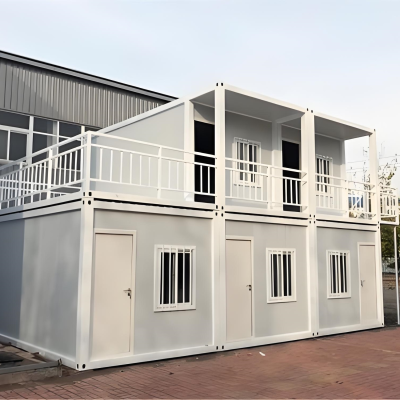
The design style of these units has evolved to meet modern aesthetic standards, with a prevalent "Modern" design approach that integrates seamlessly into various environments. The structural capability of these expandable units is a primary concern for safety. High-performance models demonstrate seismic resistance capacities exceeding Grade 8 and wind resistance capacities greater than 220km/h. These metrics are not merely marketing claims but are essential specifications for deployment in regions prone to extreme weather events or seismic activity. The ability to combine units flexibly allows for the creation of larger complexes, making them suitable for both single-unit deployments and large-scale housing projects.
Compliance, Certification, and Regulatory Standards
Navigating the regulatory landscape is a critical step in the procurement of expandable container houses. Buyers must verify that the products adhere to recognized international standards to ensure safety and quality. The supply chain data indicates that many units are manufactured in compliance with ISO standards, and some suppliers hold certifications from recognized bodies such as BV (Bureau Veritas). Additionally, specific models may carry CE certification, which is often required for entry into European markets. It is imperative for buyers to request current certification documents rather than relying on general assertions, as compliance status can vary between production batches and specific product lines.
The origin of the manufacturing facility plays a significant role in determining the applicable regulatory framework. Most observed production originates from major industrial hubs in China, specifically Shanghai, Hebei, and Hengshui. While these regions are known for robust manufacturing capabilities, buyers must ensure that the specific factory meets the export requirements of their destination country. The standardization of the product is also evident, with many units adhering to specific model numbers like SH101, SH-Expandable Container House, ZX-CH1, and zxh1001. These model identifiers often correspond to specific sets of technical specifications and compliance certifications.
For buyers operating in regulated industries, the verification of fire safety, structural integrity, and environmental standards is non-negotiable. The observed features of these units include being waterproof, leak-proof, moisture-proof, and eco-friendly. These attributes suggest a level of compliance with environmental regulations regarding material usage and waste reduction. However, buyers should explicitly request test reports for these claims, particularly regarding the thermal insulation properties and the structural load-bearing capacity under extreme conditions. The presence of a warranty card, often cited as a 1-year warranty, indicates a manufacturer's confidence in their product, but the specific terms and coverage of this warranty must be clearly defined in the procurement contract.
Cost Drivers and Logistics Optimization Strategies
The total cost of ownership for expandable container houses is influenced by several factors beyond the initial unit price. One of the most significant cost drivers is the transportation efficiency. The observed data highlights a "Cost Effective Transportation" feature where four units can be bundled into a single 20GP container. This packing density significantly reduces the freight cost per unit compared to traditional shipping methods. Conversely, other configurations, such as those requiring a 40HQ container for a single unit, will incur higher logistics costs. Buyers must analyze the trade-off between the initial purchase price and the shipping volume to determine the most economical option for their specific project scale.
The ease of assembly is another critical factor affecting the overall project budget. Products marketed with "Easy Built" attributes claim that a single unit can be assembled in just four hours. This rapid installation capability reduces labor costs and accelerates the project timeline, which is particularly valuable for temporary housing needs. The "Fast Installation" feature is a direct cost saver, minimizing the duration of on-site work and the associated overheads. However, buyers should verify the complexity of the assembly process and the skill level required for the on-site team to ensure that the claimed timeframes are achievable in their specific operational context.
Customization is a double-edged sword in terms of cost. While the availability of "Customized" options allows for tailored solutions, it often introduces additional expenses related to design, tooling, and production time. The standard models, such as the SH101 or ZX-CH1, are likely to be more cost-effective due to economies of scale. The "Productivity" of the supplier, observed at 30 sets per month, provides insight into their capacity to handle large orders without significant delays. Buyers should consider the lead time implications of ordering customized units versus standard stock items. Furthermore, the "Flat Pack Shipping" option offers a balance between transport efficiency and on-site assembly requirements, allowing for compact shipping while maintaining the benefits of rapid deployment.
Typical Applications and Operational Use Cases
The versatility of Quick Install Expandable Container solutions makes them suitable for a wide range of applications. The primary use case observed is for dormitories, catering to the housing needs of workers in remote or temporary construction sites. These units provide a safe, comfortable, and quickly deployable living environment. Beyond dormitories, the application extends to temporary offices, providing immediate workspace solutions for project management teams. The "Office" application is distinct from residential use, often requiring different internal layouts and connectivity options, but the structural integrity remains the same.
In the hospitality sector, these units are increasingly used as hotels and residential hostels. The "Modern" design style and the ability to combine units flexibly make them an attractive option for eco-tourism projects or temporary accommodation in high-demand areas. The "Eco-Friendliness" feature aligns with the growing demand for sustainable construction solutions, allowing for the reuse and relocation of the units at the end of a project. The "Easily Movable" attribute ensures that these structures can be relocated as project needs change, maximizing the asset utilization rate.
The specific application also dictates the required specifications. For instance, a dormitory for construction workers may prioritize durability and thermal insulation, while a temporary office might focus on aesthetic appeal and interior finishing. The "Modified Container House" and "Prefabricated Container" variants offer different levels of customization, allowing buyers to select the exact configuration needed for their specific use case. The ability to handle applications ranging from residential hostels to hotels demonstrates the adaptability of these systems. Buyers should carefully assess the intended usage to ensure that the selected model meets the specific functional requirements of the project.
Supplier Evaluation and Quality Assurance Protocols
Evaluating a supplier for expandable container houses requires a rigorous assessment of their manufacturing capabilities and quality control processes. The origin of the product, whether from Shanghai, Hebei, or Hengshui, should be verified against the supplier's claimed capabilities. Buyers should look for evidence of a consistent production capacity, such as the observed productivity of 30 sets per month, to ensure the supplier can meet project deadlines. The presence of multiple product models, including SH101, ZX-CH1, and others, indicates a diverse product line and the ability to cater to different market segments.
Quality assurance should be a central part of the supplier evaluation. Buyers must request detailed information on the manufacturing process, including the quality of the steel structure and the sandwich panels used. The observed features such as "Waterproof," "Thermal Insulation," and "Earthquake Resistant" must be backed by tangible evidence, such as test reports or third-party certifications. The "ISO" and "BV" certifications are strong indicators of a supplier's commitment to quality, but buyers should verify the validity and scope of these certifications. The "Warranty Card" offering a 1-year warranty is a positive sign, but the terms and conditions should be scrutinized to understand the extent of the coverage.
The supplier's ability to provide "Customized" solutions is also a key differentiator. Buyers should assess the supplier's design team and their ability to translate specific requirements into feasible product configurations. The "Fast Installation" and "Easy Built" attributes should be validated through site visits or video demonstrations to ensure that the claims are accurate. The "Productivity" of 30 sets per month suggests a steady production flow, but buyers should confirm the supplier's ability to scale up production for larger orders. Finally, the supplier's location and logistics capabilities should be evaluated to ensure they can deliver the units efficiently to the project site.
Long-Term Procurement Considerations and Lifecycle Management
Procuring expandable container houses is not just a one-time transaction but a long-term investment that requires careful lifecycle management. The "Eco-Friendliness" and "Easily Movable" attributes suggest that these units are designed for repeated use and relocation. Buyers should consider the end-of-life scenario for these units, including the potential for recycling or repurposing. The "Steel Structure" and "Sandwich Panel" materials are durable, but their longevity depends on proper maintenance and care.
The "Warranty Card" offering a 1-year warranty is a starting point, but buyers should plan for long-term maintenance costs. Regular inspections and repairs may be necessary to maintain the "Waterproof," "Leak Proof," and "Moisture Proof" features over time. The "Thermal Insulation" properties may degrade if the sandwich panels are damaged, so buyers should establish a maintenance protocol to address any issues promptly. The "Flexibly Combinable" nature of the units allows for future expansion or reconfiguration, which can extend the useful life of the investment.
Buyers should also consider the resale value of these units. The "Modern" design and the ability to be relocated make them attractive assets in the secondary market. However, the condition of the units at the time of resale will depend on the maintenance history. The "Cost Effective Transportation" feature ensures that the units can be moved economically, which is a significant advantage for long-term asset management. By planning for the entire lifecycle, from initial procurement to eventual relocation or disposal, buyers can maximize the value of their investment in expandable container solutions.
Comparative Analysis of Product Configurations
To assist buyers in making informed decisions, the following table compares key attributes of different expandable container configurations based on the observed data. This comparison highlights the variations in size, packing, and application that influence the procurement strategy.
| Feature | Expandable House (SH101) | Foldable House (ZX-CH1) | Flat Pack Container (zxh1001) | Modified Container House |
|---|---|---|---|---|
| Primary Size | 2.438m * 6.058m / 12.192m | 20FT / 40FT | 11800 * 6200 * 2480mm | 20FT / 40FT |
| Packing Density | 4 Units in One Bundle (20GP) | 4 Units in One Bundle | 1 Unit in 40HQ | Varies |
| Wall Thickness | 50#/65 | 50#/65 | 50#/65 | 50#/65 |
| Main Application | Dormitories | Dormitories, Temporary Offices | Hotel, Residential Hostel | Office, Dormitories |
| Installation Time | ~4 Hours per Unit | Fast Installation | Fast Installation | Fast Installation |
| Certification | ISO, BV | ISO, CE | ISO, CE | ISO |
| Origin | Shanghai | Hebei | Hengshui | China |
This table illustrates that while the core features remain consistent across different models, the specific dimensions and packing configurations vary. Buyers should select the configuration that best aligns with their logistical constraints and application requirements. The "4 Units in One Bundle" configuration offers the best transport efficiency, while the "40HQ Hold 1 Units" option may be necessary for larger or more complex units. Understanding these differences is crucial for optimizing the procurement process and ensuring the successful deployment of the expandable container solutions.
FAQs
How fast can I assemble a Quick Install Expandable Container unit?
You can assemble a single unit in just four hours. This rapid installation capability is designed to minimize labor costs and accelerate project timelines for temporary housing needs.
What is the standard wall thickness for these container houses?
The wall thickness typically ranges from 50mm to 65mm. This dimension directly influences the thermal performance and acoustic isolation of the structure for various applications.
Which certifications do these expandable container houses usually hold?
Many units are manufactured in compliance with ISO standards and some hold BV certifications. Specific models may also carry CE certification for entry into regulated markets.
Can I customize the size of the expandable container house?
Yes, customization is available for tailored solutions to meet unique site requirements. Standard models exist, but suppliers offer specific dimensions like 2.9 meters width upon request.
How many units fit into one standard shipping container for transport?
Four units can be bundled into a single 20GP container for cost-effective transportation. This packing density significantly reduces the freight cost per unit compared to traditional methods.
What is the seismic resistance capacity of these structures?
High-performance models demonstrate seismic resistance capacities exceeding Grade 8. This ensures safety for deployment in regions prone to extreme weather events or seismic activity.