Source Warehouse Storage System for Warehouses, Supermarkets, and Cold Storage
Compare 30 Warehouse Storage System options including selective pallet racking, drive-in racking, and ASRS systems. Buyers can evaluate steel construction, load capacities, and customization features for industrial, food, and beverage applications; compare the available evidence and request quotations based on your requirements.
Key considerations
Products List


High Density Warehouse Automatic Storage System with Shelving Rack (AS/RS)
$1000.00 - $10000.00
MOQ: 1 Sets


China Customized Warehouse Use Heavy Duty Industrial Racking Storage System
$1350.00 - $1450.00
MOQ: 10 Tons


Hot Sale Various Type Warehouse Management System of Automatic System
$3800.00 - $230000.00
MOQ: 1 Pieces


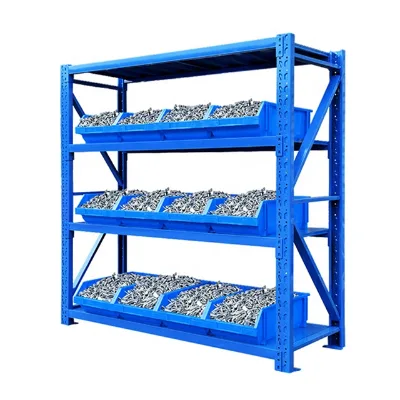

Comprehensive Sourcing Guide
Warehouse Storage System Sourcing Guide
Buyers must first distinguish between static and dynamic configurations when evaluating warehouse storage systems, as the observed market offers both conventional layer frames and mobile solutions. The data indicates a clear split between single-face selective racking designed for high accessibility and drive-in systems optimized for density. Understanding whether your operation requires a fixed structure or a mobile unit is the primary decision that dictates the entire procurement strategy and subsequent layout design.
Procurement teams should also assess the specific material composition and load capacity requirements before engaging with suppliers. The available listings highlight steel construction using grades like Q235B and Q235D, with load capacities ranging from 1.5 tons to 3 tons per pallet. Verifying that the selected system matches your specific pallet dimensions, which typically fall between 1200mm and 1600mm in width, ensures structural integrity and prevents costly mismatches during the installation phase.
Product Scope and Observed Listing Signals
The market presents a diverse range of product models, from standard selective pallet racking to advanced ASRS systems, each serving distinct operational needs. Buyers should note that while some units are designed for general warehouse use, others are specialized for food, beverage, or clothing industries, requiring specific hygiene or accessibility features. The presence of adjustable heights between 5 and 15 meters suggests that vertical space utilization is a critical factor in the product scope available to international buyers.
Observations of the listing signals reveal significant variation in customization options and packaging standards. Some suppliers offer export packing as a standard, while others provide fully customized packaging solutions to meet specific logistical constraints. The mobility attribute varies from fixed structures to mobile units, and the entry type ranges from two-way access to four-way configurations. Buyers must carefully map these signals to their specific workflow requirements to avoid selecting a system that limits operational efficiency.
Technical Specifications to Verify
Technical verification must begin with the structural integrity of the rack, specifically the material grade and the maximum load capacity per level. Buyers should confirm that the steel used meets the required standards, such as Q235B or SS400, and verify the net weight of the components to ensure shipping costs align with the budget. The pallet dimensions provided in listings, typically 800mm to 1200mm in length, must be cross-referenced with your existing inventory to guarantee a perfect fit within the racking bays.
Operational parameters such as temperature tolerance and battery types for mobile units require strict validation against your facility's environmental conditions. The observed operating temperature range of -10 to 45 degrees Celsius is suitable for common warehouses but may require special consideration for cold storage applications. Additionally, the maximum speed of 1.4m/s for mobile systems and the specific battery technology, such as Lithium Iron Phosphate, must be evaluated to ensure they meet the safety and performance demands of your daily operations.
Compliance and Safety Documentation
Safety compliance is non-negotiable, and buyers must demand documentation proving adherence to recognized international standards like CE, ISO, and TUV. The presence of these certifications on product listings indicates a baseline level of quality and safety, but verification of the specific test reports is essential before finalizing any purchase. Relying solely on the mention of a certificate without reviewing the associated documentation can expose the buyer to significant liability and operational risks.
Beyond general certifications, specific industry standards for warehouse racking, such as EN 15512, should be requested to ensure the system meets rigorous engineering requirements. While some background data mentions these standards, buyers must explicitly ask suppliers to provide the relevant test results and compliance certificates for the specific model being ordered. This due diligence ensures that the storage system can safely support the intended loads and withstand the dynamic forces of a busy warehouse environment.
Cost Drivers and Commercial Terms
Cost drivers in this sector are heavily influenced by the level of customization, the complexity of the structure, and the specific material grades selected. Buyers should anticipate that customized sizes and specialized finishes will increase the base price, while standard configurations may offer more competitive rates. The observed price range of 0.9 to 230,000 USD reflects this vast disparity, making it crucial to define the exact scope of work to obtain accurate and comparable quotes from multiple suppliers.
Commercial terms regarding minimum order quantities and lead times are equally critical for supply chain planning. The data shows an MOQ range from 1 to 1000 units, with production times typically spanning 7 to 15 days for a standard 20-foot container. Buyers must negotiate these terms early to align with their project timelines, ensuring that the delivery schedule accommodates any potential delays in manufacturing or shipping without disrupting warehouse operations.
Supplier Qualification and Quality Control
Supplier qualification should focus on verifying the origin of the products and the consistency of their manufacturing processes. The listings indicate origins in Nanjing and Dongtai of Jiangsu, China, regions known for steel fabrication, but buyers must confirm the specific factory capabilities and quality control protocols. Requesting a detailed audit of the production line and the supplier's track record with similar projects helps mitigate the risk of receiving substandard goods.
Quality control measures must extend beyond the initial inspection to include pre-shipment verification and on-site installation support. Buyers should insist on a clear inspection plan that covers material thickness, weld quality, and surface treatment before the goods leave the factory. Establishing a direct line of communication with the supplier's quality team ensures that any deviations from the agreed specifications are identified and resolved promptly, protecting the investment in the storage system.
Long-Term Procurement Checks
Long-term procurement success depends on establishing a robust framework for ongoing maintenance and future scalability. Buyers should verify the availability of spare parts and the supplier's commitment to providing technical support for the lifespan of the system. The adjustable nature of the racks allows for some flexibility, but a clear plan for future expansion or reconfiguration is necessary to adapt to changing inventory needs without requiring a complete system overhaul.
Regular performance reviews and safety audits are essential to maintain the integrity of the storage system over time. Buyers must schedule periodic inspections to check for wear and tear, ensuring that the load capacity remains within safe limits and that the structural components have not degraded. This proactive approach to maintenance not only extends the life of the equipment but also ensures continuous compliance with safety regulations and operational efficiency standards.
FAQs
What materials are used for warehouse storage systems?
Steel is the primary material used for these systems. Common grades include Q235B, Q235D, and SS400. These materials provide the necessary structural integrity for heavy loads. The steel is often treated to resist corrosion. This ensures long-term durability in various warehouse environments. Custom sizes are available to fit specific pallet dimensions.
Can warehouse storage systems be customized for specific needs?
Yes, customization is available for most configurations. Buyers can adjust dimensions to match their pallet sizes. Load capacities can be tailored to specific inventory weights. Layout designs are often free to optimize space. Packaging can be customized for safe export shipping. This flexibility ensures the system fits unique operational requirements perfectly.
What certifications do warehouse storage systems typically have?
Systems often carry CE, TUV, ISO, and SGS certifications. These standards ensure compliance with international safety and quality norms. CE marking indicates conformity with health, safety, and environmental protection. ISO certification verifies quality management processes. These credentials help buyers verify supplier reliability and product safety for global deployment.
How long is the production time for these systems?
Production typically takes seven to fifteen days for a standard twenty-foot container. This timeline covers manufacturing, quality checks, and packing. Lead times may vary based on order volume and customization. Early planning helps align delivery with warehouse readiness. Buyers should confirm specific schedules with suppliers to avoid delays in installation.
What is the load capacity of standard racks?
Standard racks often support loads up to 1.5 tons per level. Some systems can handle loads ranging from zero to three thousand kilograms. Capacity depends on the specific design and material thickness. Proper load distribution is essential for safety. Buyers should verify capacity requirements with suppliers to ensure the selected system meets their storage needs.
Where are these warehouse storage systems manufactured?
Manufacturing often occurs in regions like Nanjing and Dongtai in China. These areas have established industrial clusters for steel fabrication. Proximity to ports facilitates efficient export logistics. Buyers can trace origins to ensure quality control standards. Knowing the origin helps in calculating shipping costs and lead times accurately for international orders.