Source Radial Off Road ATV Tire for Mud, Sand, and Desert Use
Compare 30 Radial Off Road ATV Tire options from verified manufacturers. Buyers can evaluate tire sizes, tread patterns, and certifications for all-terrain applications.
Key considerations
Products List


ATV Tires Used on Existing off-Road UTV Accessories for off-Road Worcraft Brand
$5.66 - $5.88
MOQ: 100 Pieces

Rubber Tire ATV UTV Tires Sport ATV 25X10-12 ATV Tire with Mud -Terrain Pattern
$5.66 - $5.88
MOQ: 100 Pieces
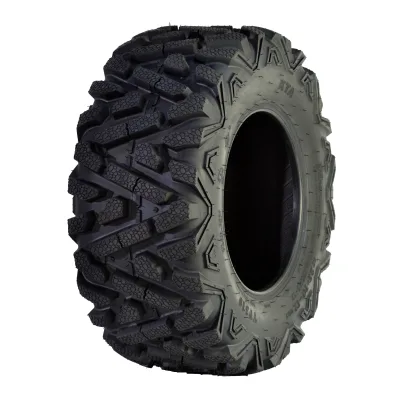


Reliable High Performance ATV Tire Size 25X10-12 for All Terrain Adventures
$9.99 - $99.99
MOQ: 1 Pieces


Comprehensive Sourcing Guide
Strategic Sourcing Guide for Radial Off-Road ATV Tires
Understanding the Technical Landscape of Off-Road ATV Tires
The procurement of radial off-road ATV tires requires a nuanced understanding of the specific technical attributes that distinguish high-performance units from standard inventory. While the market often groups tires by vehicle type, the core keyword "radial off-road atv tire" points to a specific construction and performance profile. Buyers must first recognize that the supply chain for these components is diverse, with manufacturers offering a wide array of specifications that cater to different terrains and vehicle classes. The observed product data indicates a significant variation in tire sizes, ranging from compact 18-inch models like 18*11-8 to larger 30-inch variants such as 30X10-14. This variance is not merely cosmetic; it dictates the load-bearing capacity and the specific suspension geometry required for the vehicle.
A critical technical observation from the available data is the prevalence of specific tire patterns and series names, such as the "Ar30 Bruiser Vt." This suggests that tread design is a primary differentiator in this category. The data further highlights that tires are engineered for specific surface conditions, including "All Terrain," "Mud," "Soft," "Sand Surface," "Hard Pack," "Loose Loam," "Grass," "Gravel," and "Desert." When sourcing, buyers should not assume a single tire model satisfies all these conditions. Instead, the procurement strategy must align the tire's tread pattern and compound with the intended operational environment. For instance, a tire designed for "Sand" will likely have a different void ratio and lug angle compared to one optimized for "Hard Pack" or "Gravel."
Furthermore, the construction type is a vital technical parameter. While the search term specifies "radial," the supplied facts explicitly mention "Bias" as a tire design option in the dataset. This discrepancy highlights a common market reality where suppliers may list radial and bias tires under the same category. Buyers must verify the ply construction, as the data references "6pr and 8pr" (6-ply and 8-ply) ratings. The ply rating directly correlates with durability and resistance to punctures, which is essential for off-road applications where debris and sharp rocks are common. The "Excellent Cut Resistance" attribute noted in the product facts is a key performance indicator that should be validated through technical datasheets rather than assumed based on marketing claims. Additionally, the tire width specifications, observed in the range of 235-255mm, and rim sizes, such as 635mm, must match the vehicle's wheel hub and suspension clearance to ensure safe operation.
Compliance, Certification, and Regulatory Standards
Navigating the compliance landscape for ATV tires is essential for international trade, particularly when importing from major manufacturing hubs like China. The supplied product facts list several critical certifications, including CCC (China Compulsory Certification), CE (Conformité Européenne), ISO (International Organization for Standardization), and DOT (Department of Transportation). These certifications are not merely marketing badges; they represent adherence to specific safety and quality standards required by different global markets. For instance, the presence of DOT certification implies compliance with US safety standards, while CE indicates conformity with European health, safety, and environmental protection standards.
When evaluating potential suppliers, buyers must treat these certifications as mandatory verification points rather than optional features. The data indicates that some products carry the "CCC" mark, which is a prerequisite for selling within the Chinese domestic market and often a baseline for export quality. However, for markets in North America or Europe, the absence of DOT or CE certification could lead to customs delays or legal liabilities. The "ISO" certification mentioned in the facts suggests that the manufacturer has a certified quality management system, which is a strong indicator of consistent production processes.
It is important to note that the "prod_standard" field in the data lists specific rim and size standards, such as "30X10R14 30X10R15 32X10R14 32X10R15." These alphanumeric codes represent industry-standard sizing conventions that ensure interchangeability and fitment. Buyers should verify that the supplier's documentation explicitly maps their products to these standard codes. Furthermore, the "Reference Codes" field, which lists "123" in the data, likely refers to internal or cross-reference codes used by distributors. While these are useful for inventory management, they do not replace the need for official certification documents.
The "Warranty" attribute of "1 Year" found in the product facts is another compliance-related metric. A standard one-year warranty suggests a baseline expectation of product longevity. However, buyers should scrutinize the terms of this warranty to understand what constitutes a defect versus normal wear and tear. In the context of off-road tires, "wear" is a complex variable depending on the terrain. Therefore, the warranty should be reviewed in conjunction with the "Condition: New" status to ensure that the product is indeed brand new and not a refurbished or remanufactured item.
Cost Drivers and Pricing Dynamics
The pricing structure for off-road ATV tires is influenced by a complex interplay of factors, including size, construction, certification, and order volume. The observed price range in the market data spans from $2 to $799.99 USD. This wide disparity is not indicative of a single product type but rather reflects the diversity of the category, ranging from small, low-profile tires for utility vehicles to large, heavy-duty radial tires for high-performance ATVs. The "Best Price" attribute listed in the data is a common supplier claim that requires careful interpretation; it often implies a competitive rate for a specific configuration rather than a universal low price for all SKUs.
Volume is a primary cost driver in this sector. The Minimum Order Quantity (MOQ) data reveals a range from 1 unit to 1000 units, with specific mentions of "1X20gp/40hq (Mixed Sizes)" and a fixed "MOQ: 30." This indicates that suppliers offer flexibility for smaller buyers but provide significant cost advantages for bulk purchasers. The "Mixed Sizes" option within a 20-foot or 40-foot high cube container is a strategic procurement approach that allows buyers to optimize container space and reduce per-unit shipping costs. However, this flexibility often comes with a higher base price per tire compared to ordering a single size in bulk.
Material costs also play a significant role. The "Material: Rubber" specification is fundamental, but the quality of the rubber compound, the presence of reinforcing materials, and the complexity of the tread pattern all influence the final price. Tires with "Excellent Cut Resistance" and higher ply ratings (8pr vs. 6pr) will naturally command a higher price point due to the increased material usage and manufacturing complexity. Additionally, the "Customization: Available" attribute suggests that buyers can request bespoke designs, which typically incurs additional tooling and setup costs.
Packaging is another variable cost factor. The data lists multiple packaging options, including "Unpacked or Wrapped by Film," "Carton Package," and "No Packaging/Customer Requirements." While "No Packaging" might seem cost-effective, it increases the risk of damage during transit, potentially leading to higher replacement costs. "Carton Package" is generally the standard for retail-ready units, while film wrapping is often used for bulk industrial shipments. Buyers should factor the cost of packaging into their total landed cost calculations, especially when shipping to markets with strict import regulations regarding packaging materials.
Typical Applications and Vehicle Compatibility
The versatility of off-road ATV tires is evident in the wide range of applications and vehicle types supported by the supply data. The "Application" field explicitly lists "All Terrain," "Mud," "Soft," "Sand Surface," "Hard Pack," "Loose Loam," "Medium," "Grass," "Gravel," and "Desert." This broad spectrum indicates that these tires are designed for extreme versatility, catering to both recreational users and commercial operators. The "Series" data further categorizes these tires into "ATV Sport" and "ATV Utility," suggesting that performance-oriented models exist alongside heavy-duty utility models.
Vehicle compatibility is a critical consideration for buyers. The "Vehicles" attribute lists "ATV, UTV, Muv, Orv, Powersport Quad," confirming that these tires are not limited to traditional ATVs but are also suitable for Utility Task Vehicles (UTVs) and other off-road recreational vehicles. The "Usage: Tricycle Loading" attribute introduces a specific niche application, indicating that some of these tires are engineered for three-wheeled utility vehicles used in agricultural or industrial settings. This highlights the importance of matching the tire's load index and speed rating to the specific vehicle's requirements.
The "Tire Size" and "prod_model" data provide concrete examples of compatibility. Sizes such as "25x8-12," "25x10-12," "217-10," and "2010-10" cover a vast range of wheel diameters and widths. The "Diameter: 25-28inch" specification suggests that the larger tires in the catalog are designed for high-clearance vehicles, likely used in rugged terrain where ground clearance is paramount. The "Rim Size: 635" corresponds to a 25-inch rim, which is a common size for larger ATVs. Buyers must ensure that the tire's inner diameter matches the rim size of their fleet to avoid fitment issues.
Furthermore, the "Tire Design: Bias" and "Type: TUBELESS" attributes indicate that the market offers both bias-ply and tubeless options. Tubeless tires are generally preferred for modern ATVs due to their ability to hold air pressure better and their resistance to sudden deflation. However, bias-ply tires are still common in utility applications where sidewall stiffness is more important than ride comfort. The "Purpose: for replace/repair" attribute suggests that these tires are often sourced as replacement parts for existing fleets, making accurate size matching even more critical.
Supplier Evaluation and Manufacturing Capabilities
Selecting the right supplier is a pivotal step in the procurement process, especially for a product as specialized as off-road ATV tires. The data identifies the "Company Type" as "Manufacturer," which is a significant advantage for buyers seeking direct pricing and quality control. The "Brand" names "Haulking/Worcraft" and "KTA" are mentioned, indicating that there are established brands in the market, though buyers should remain open to OEM (Original Equipment Manufacturer) options if branding is not a primary requirement.
Geographic location is another key factor. The "prod_origin" and "Place of Origin" fields consistently point to "China Mainland" and "Jinagsu, China." This concentration of manufacturing in specific regions suggests a mature supply chain with established logistics networks. However, buyers should verify the specific factory location to ensure it aligns with their ethical sourcing policies and to assess the logistics lead times. The "Single package size" of "70X32X70 cm" and "Single gross weight" of "15.0 kg" provide essential data for calculating shipping costs and container loading efficiency.
When evaluating suppliers, buyers should look for evidence of the "Customized" capability. The "Customization: Available" attribute suggests that suppliers can adapt products to specific client needs, such as custom tread patterns or branding. This flexibility is valuable for buyers looking to differentiate their product offerings. However, customization often requires a higher MOQ and longer lead times, which must be factored into the procurement timeline.
The "Condition: New" attribute is a basic but essential requirement. Buyers must ensure that the supplier has a robust quality assurance process to guarantee that all units are brand new and not refurbished. The "Warranty: 1 Year" is a standard offering, but the terms should be clearly defined in the contract. Additionally, the "Certification" list (CCC, CE, ISO, DOT) should be verified with current, valid certificates to ensure ongoing compliance.
Quality Control and Long-Term Procurement Considerations
Maintaining quality in the off-road tire sector requires a proactive approach to quality control (QC). The "Excellent Cut Resistance" attribute is a key performance metric that should be validated through third-party testing or sample inspection. Buyers should request test reports that demonstrate the tire's ability to withstand punctures and abrasion in real-world conditions. The "Ply: 6pr and 8pr" specification is another area where QC is critical; the actual ply count must match the stated rating to ensure the tire can handle the intended load.
Long-term procurement considerations involve building a sustainable relationship with the supplier. The "MOQ: 1X20gp/40hq (Mixed Sizes)" option allows for flexible ordering, which is beneficial for managing inventory levels and reducing storage costs. However, buyers should also consider the "Lead Time" implications of customization and bulk orders. While specific lead times are not provided in the data, the complexity of producing custom tires suggests that lead times may vary significantly.
The "Main Market: Africa/South America/Asia" data indicates that these tires are popular in developing markets, which may have different regulatory requirements and infrastructure challenges. Buyers targeting these regions should ensure that the tires meet local standards and are suitable for the specific road conditions. The "Reference Codes: 123" may be useful for tracking and inventory management, but buyers should establish their own internal coding systems to ensure seamless integration with their supply chain.
Finally, the "Type: TUBELESS" and "Tire Design: Bias" attributes highlight the need for technical expertise in the procurement team. Understanding the differences between these designs and their implications for vehicle performance is essential for making informed purchasing decisions. By focusing on these technical details, compliance requirements, and supplier capabilities, buyers can navigate the complex market for off-road ATV tires and secure a reliable supply of high-quality products.
FAQs
What certifications do radial off road atv tires typically have?
These tires often carry CCC, CE, DOT, and ISO certifications. Buyers should verify specific documents for their target region, as DOT is required for US markets while CE applies to Europe.
Which tire sizes are available for ATVs and UTVs?
Available sizes range from 18*11-8 to 30X10-14 inches. Common models include 25x8-12 and 25x10-12, fitting various rim sizes like 635mm for different vehicle classes.
Can I customize the tire pattern and packaging?
Customization is available for tread patterns and packaging requirements. Suppliers offer options like film wrapping or carton packages, though custom designs may involve additional tooling costs.
What is the minimum order quantity for these tires?
MOQs vary from single units to 1000 pieces depending on the supplier. Some vendors accept mixed sizes in a 20-foot container, while others require a minimum of 30 units.
How long is the warranty period for these tires?
The standard warranty period is typically one year. This covers defects but excludes normal wear and tear, so buyers must review specific terms regarding off-road usage conditions.
Which terrains are these tires designed to handle?
Tires are engineered for all terrains including mud, sand, gravel, and hard pack. Specific patterns like Ar30 Bruiser Vt optimize performance for loose loam, desert, and grass surfaces.
What materials and construction types are used?
These tires are made of rubber with bias or tubeless construction. Ply ratings of 6pr and 8pr provide excellent cut resistance, ensuring durability for heavy off-road applications.