Source Raincoat for workers, riding, and walking applications
Compare 30 Raincoat options from verified factories in China. These products feature quick-dry and waterproof materials suitable for workers, riding, and walking, with customizable sizes and certifications like CE and REACH available for bulk sourcing.
Key considerations
Products List


PVC Breathable Coating Safety Rainsuit Waterproof Rainwear Raincoat Rain Coat
$3.50 - $4.30
MOQ: 2000 Pieces


Raincoat Adult Men Women Windproof Waterproof Rain Poncho Rain Coat with Backpack
$4.00 - $10.00
MOQ: 1000 Pieces


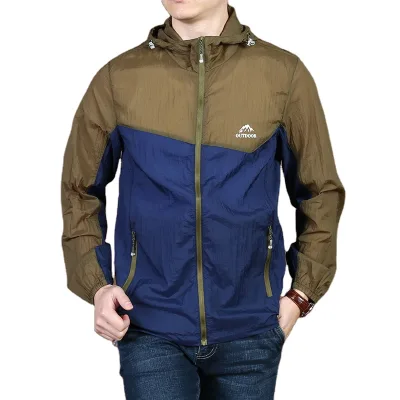


Comprehensive Sourcing Guide
Strategic Sourcing Guide for Industrial and Protective Raincoats
Procuring raincoats in a B2B context requires a nuanced understanding of the divergence between consumer-grade apparel and industrial-grade protective gear. The market presents a wide spectrum of products, ranging from lightweight, quick-dry worker raincoats to heavy-duty, specialized equipment for extreme environments. Buyers must navigate a complex landscape where material composition, certification standards, and functional specifications dictate the suitability of a product for specific applications. This guide outlines the critical factors for sourcing raincoats, focusing on the technical realities observed in the current supply chain, particularly regarding polyester and PVC constructions, and the rigorous verification processes required to ensure compliance and performance.
Material Composition and Functional Specifications
The foundation of any Raincoat procurement strategy lies in the material selection, which directly influences durability, weather resistance, and cost. The market data indicates a clear bifurcation between polyester-based and PVC-based raincoats. Polyester variants are frequently characterized by features such as "Quick Dry" and "Waterproof" capabilities, making them suitable for general worker applications. These garments often feature an "Open Fronted" structure and are designed with "Reflective Strips" to enhance visibility in low-light conditions. The weight of these materials is a critical specification, with observed ranges falling between 180-300G/M², suggesting a balance between protection and wearer comfort.
In contrast, PVC materials offer a different set of properties, often associated with higher impermeability and specific industrial applications. The data highlights PVC usage in contexts requiring robust protection, with tensile strength specifications noted as greater than 2000N. This high tensile strength is essential for environments where the garment may be subjected to abrasion or heavy mechanical stress. Furthermore, the chemical composition of the material must be verified; observed pH levels for certain fabrics range from 4 to 7.5, and formaldehyde content is strictly controlled, typically remaining below 75 units. These chemical parameters are vital for ensuring the safety of workers who may have prolonged skin contact with the material.
Buyers should also consider the "Applicable Thickness," which is observed as "Middle Thickness Material" for certain worker raincoats. This specification implies a material density that provides adequate insulation and wind resistance without being overly cumbersome. Additionally, the "Yarn Count" is a customizable attribute, with examples ranging from 400d to 900d, allowing suppliers to tailor the fabric density to specific client requirements. The presence of "Cordura Fabric" in some listings indicates a premium tier of durability, suitable for high-wear scenarios. When evaluating suppliers, procurement teams must verify that the stated material properties align with the intended operational environment, as a mismatch can lead to premature failure or safety hazards.
Compliance, Certification, and Safety Standards
In the B2B sector, certification is not merely a formality but a prerequisite for market access and liability protection. The observed supply chain includes products certified under CE, GS, ENSASO, and REACH standards. These certifications indicate that the products have undergone testing for safety, health, and environmental requirements. CE marking, for instance, is a mandatory conformity mark for products sold within the European Economic Area, signifying that the Raincoat meets EU safety, health, and environmental protection requirements. GS certification, a German mark, further validates the product's safety for general use.
However, buyers must exercise caution when interpreting certification claims. The data shows that while some raincoats feature "Reflective Strips," others are listed as "Without Reflective Strip." This distinction is critical for applications involving road work or low-light industrial zones where visibility is a legal requirement. Procurement teams must explicitly verify the presence of reflective elements and ensure they meet relevant safety standards, such as EN ISO 20471, rather than relying solely on the general "CE" label. Similarly, the "Formaldehyde" content limit of <75 is a specific chemical constraint that must be validated through third-party testing reports to ensure compliance with textile safety regulations.
The "prod_standard" field in the data often lists dimensions or model numbers rather than safety standards. For example, one entry lists "1270x610x1550mm" as a standard, which appears to be a packaging or dimensional specification rather than a safety norm. Buyers should not confuse dimensional standards with safety certifications. Instead, they must request specific test reports for the claimed certifications. For products intended for use in specific industries, such as construction or chemical handling, additional certifications like REACH (Registration, Evaluation, Authorisation and Restriction of Chemicals) are essential to ensure the materials do not contain harmful substances.
Cost Drivers and Pricing Dynamics
The pricing of raincoats is influenced by a complex interplay of material costs, customization levels, and order volume. The observed price range in the market spans from $0.95 to $2,000, a variance that reflects the diversity of products from basic disposable or lightweight models to high-tech, specialized industrial gear. The lower end of the spectrum likely corresponds to simple polyester or PVC raincoats with minimal features, while the higher end may include garments with advanced features like integrated heating elements, specialized coatings, or custom branding.
Minimum Order Quantity (MOQ) is another significant cost driver. The observed MOQ range is 1 to 3,000 units. Suppliers offering an MOQ of 1 are typically catering to small businesses or prototyping needs, often at a higher per-unit cost. Conversely, suppliers requiring an MOQ of 3,000 units are likely operating on a mass-production model, offering lower per-unit prices but requiring significant capital commitment. The "prod_packing" specification, such as "30PCS / Carton," also impacts logistics costs. Buyers must calculate the total landed cost, including shipping, which is heavily dependent on the volume and packaging density.
Customization is a key factor in pricing. The "Customization: Available" attribute suggests that buyers can request changes to size, color, or branding. However, these customizations often incur additional tooling or setup costs. The "Yarn Count" being customizable (e.g., 400d, 900d) further illustrates how material specifications directly affect the final price. Buyers should request detailed cost breakdowns to understand the premium associated with specific features like "Cordura Fabric" or "Reflective Strips." Additionally, the "Condition: New" and "Drive: Electric" attributes in the data suggest that some listings may include powered equipment or accessories, which would significantly inflate the price compared to standard passive raincoats.
Typical Applications and Operational Requirements
The application of raincoats varies widely, from general outdoor work to specialized industrial tasks. The data indicates that these garments are applicable for "Workers," "Tent," "Diving Suit," "Jacket," "Hat," "Shoes," and "Raincoat" uses. This broad applicability suggests that the term "Raincoat" in the B2B context often encompasses a range of protective clothing items. For "Workers," the "Style: Worker Raincoat" and "Gender: Unisex" attributes highlight the need for versatile, durable garments suitable for various body types and work environments.
Specific applications may require unique features. For instance, the "Usage: For Riding, For Walking" attribute points to mobility requirements, suggesting that the cut and flexibility of the garment are crucial for active workers. In contrast, applications involving "Diving Suits" or "Tents" may require materials with higher waterproofing capabilities and resistance to harsh chemical or biological environments. The "The Highest Temperature: up to 700°C" specification, while seemingly extreme for a Raincoat, indicates that some products in the supply chain are designed for high-heat environments, possibly as part of a larger protective ensemble or for specific industrial processes.
Buyers must align the product's "Applicable Thickness" and "Material" with the specific operational risks. For example, a "Middle Thickness Material" might be suitable for general construction work, whereas a high-tensile strength PVC Raincoat might be necessary for chemical handling. The "Control: Pedal" and "Power Requirements: AC 220V 50/60Hz" attributes suggest that some listings include powered components, which would be relevant for specialized equipment rather than standard raincoats. Procurement teams should clearly define the operational environment to avoid purchasing products with unnecessary or insufficient features.
Supplier Evaluation and Quality Control
Evaluating suppliers requires a rigorous assessment of their production capabilities and quality control systems. The data indicates that the "Workplace: Factory" is a standard attribute, implying that the products are manufactured in industrial settings rather than by small workshops. This is a positive indicator for consistency and scale. However, buyers should verify the specific location of the factory, as the data lists origins in "Zhejiang, China (Mainland)," "Taizhou, China," and generally "China." Different regions may have varying levels of expertise and quality control standards.
Quality control should focus on verifying the consistency of the "prod_standard" and "prod_model" numbers. For example, the model "TR2018041905" and "ZY-HA01A" represent specific product lines that should be traceable. Buyers should request samples to test the "Tensile Strength," "pH," and "Formaldehyde" levels against the claimed specifications. The "Weight: 180-300G/M²" range should be confirmed through physical measurement to ensure the material density matches the order requirements. Additionally, the "prod_packing" details, such as "Carton" or "30PCS / Carton," should be inspected to ensure that the packaging protects the product during transit.
Suppliers should also demonstrate their ability to handle "Customization" requests effectively. This includes the ability to adjust "Yarn Count," "Size" (S-4XL), and the inclusion of "Reflective Strips." A reliable supplier will have a clear process for managing these customizations without compromising the integrity of the product. Buyers should also check for "Certification" validity, ensuring that the CE, GS, or REACH marks are current and applicable to the specific product batch.
Long-Term Procurement Considerations
Long-term procurement of raincoats involves more than just the initial purchase; it requires a strategic approach to inventory management, supplier relationships, and product lifecycle. The "Disposable: Non-Disposable" attribute suggests that these products are designed for repeated use, which implies a need for durability and ease of maintenance. Buyers should consider the total cost of ownership, including replacement frequency and maintenance costs, rather than just the initial unit price.
The "Size: S-4XL" range indicates a need for a diverse inventory to accommodate different body types. Procurement teams should analyze historical usage data to determine the optimal size distribution to minimize waste and ensure all workers are adequately protected. The "Speed: 123m/Min" and "Compressed Air: 0.350.5 MPa" specifications, while seemingly unrelated to raincoats, may indicate that some suppliers offer integrated systems or equipment that requires ongoing support and maintenance.
Finally, buyers should establish clear communication channels with suppliers to ensure timely delivery and responsiveness to quality issues. The "Lead Time" and "MOQ" values observed (1-3000 units) suggest that flexibility is key. Suppliers who can accommodate smaller, frequent orders may be more suitable for businesses with fluctuating demand, while those requiring high MOQs may be better for large-scale, long-term contracts. By focusing on these long-term factors, buyers can build a resilient supply chain that ensures consistent access to high-quality protective gear.
FAQs
What certifications do the raincoats have?
The raincoats hold CE, GS, ENSASO, and REACH certifications. These marks indicate compliance with safety and environmental standards required for European and other international markets, ensuring the products meet rigorous health and safety regulations.
Which materials are used for the raincoats?
The raincoats are constructed from Polyester and PVC materials. Polyester variants offer quick-dry and waterproof features with a weight range of 180-300G/M², while PVC options provide high tensile strength exceeding 2000N for heavy-duty industrial protection.
Can I customize the size and yarn count?
Yes, customization is available for size and yarn count. Buyers can select sizes from S to 4XL and request specific yarn counts such as 400d or 900d to tailor the fabric density and durability to their specific operational requirements.
How much is the minimum order quantity?
The minimum order quantity ranges from 1 to 3000 units. Suppliers offering an MOQ of 1 cater to small prototyping needs, while those requiring 3000 units typically operate on a mass-production model with lower per-unit pricing.
What is the price range for these raincoats?
The observed price range spans from 0.95 to 2000 USD. This variance reflects the diversity of products, with lower prices for basic models and higher prices for specialized gear featuring advanced coatings or custom branding.
Where are the factories located?
The factories are located in Zhejiang and Taizhou, China. These regions are known for their manufacturing capabilities, producing goods that meet international standards for industrial and protective rainwear applications.