Source Rear Wing Car Spoiler for Universal Fitment, Body Protection, and Styling
Explore 30 listings for Rear Wing Car Spoiler options made from ABS or carbon fiber. Buyers can compare universal applications, installation features, and customization services for various car models.
Key considerations
Products List
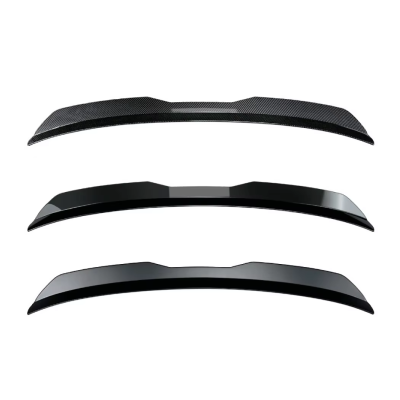
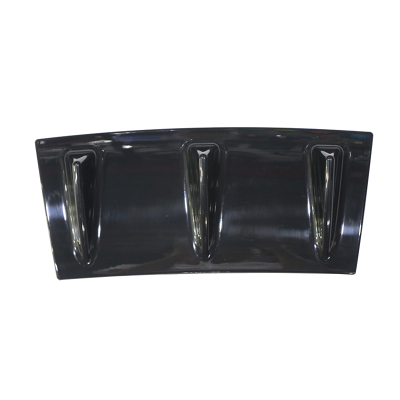


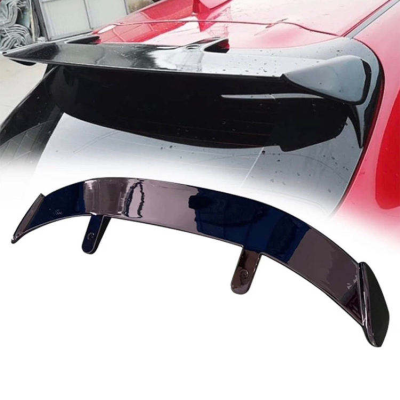
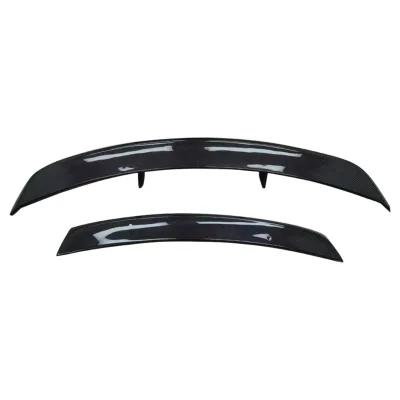



Comprehensive Sourcing Guide
Strategic Sourcing Guide for Rear Wing Car Spoilers
The global automotive aftermarket sector continues to demand high-performance aesthetic and functional components, with the Rear Wing Car Spoiler emerging as a critical category for both performance enthusiasts and commercial fleet operators. Sourcing these components requires a disciplined approach that balances aesthetic customization with structural integrity and regulatory compliance. Buyers must navigate a complex supply chain where product attributes vary significantly between generic universal fits and vehicle-specific retrofits. This guide provides a comprehensive framework for evaluating rear wing spoilers, focusing on material science, technical specifications, certification verification, and supplier reliability, ensuring that procurement decisions are grounded in verifiable data rather than marketing assertions.
Material Composition and Structural Integrity
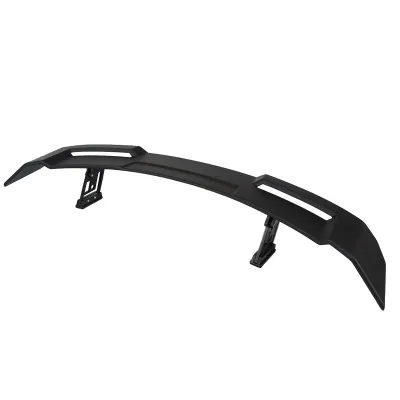
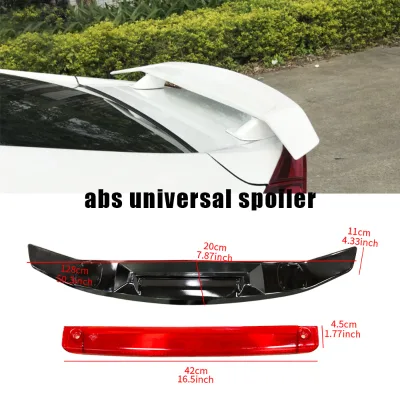
The foundation of any reliable rear wing spoiler lies in its material composition, which dictates durability, weight, and installation methods. The market currently presents a dichotomy between high-strength plastic composites and advanced carbon fiber solutions. Analysis of available product data indicates that Acrylonitrile Butadiene Styrene (ABS) is a prevalent material choice, offering a balance of impact resistance and cost-effectiveness for universal applications. ABS components are frequently described as "High-Quality" and are suitable for general aesthetic upgrades where extreme weight reduction is not the primary objective.
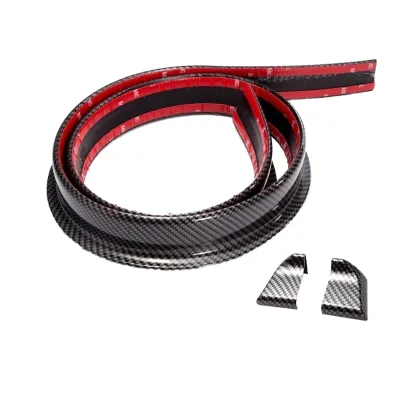
Conversely, for buyers seeking premium performance enhancements, Carbon Fiber is the superior material option. Products listed with Carbon Fiber construction often feature a distinct visual pattern, such as "Carbon fiber pattern" or "Piano black," which mimics the woven texture of genuine carbon while potentially utilizing a composite layup for structural rigidity. The distinction is critical; a "Carbon Fiber pattern" on an ABS base differs fundamentally from a molded carbon fiber unit in terms of tensile strength and heat resistance. Buyers must verify the specific material claim against the product specification. Furthermore, the backing material is a crucial, often overlooked component. Many units utilize "Self Adhesive Tape" as the primary mounting mechanism, which simplifies installation but requires careful surface preparation to ensure long-term adhesion. The presence of "Self Adhesive Tape" suggests a non-invasive retrofit process, ideal for vehicles where drilling into the bodywork is prohibited or undesirable.
Technical Specifications and Dimensional Standards
Precision in technical specifications is paramount when sourcing rear wings, as a mismatch in dimensions can lead to installation failure or aerodynamic inefficiency. The product landscape reveals a wide variance in standardization. Some items are defined by specific model numbers, such as "three section front spoiler," while others are categorized by universal fitment for "Famous Cars" or specific model years like "2014-". Dimensional data varies significantly across listings, with some products specifying exact measurements like "125x12x25" or "123cm," while others offer customizable standards such as "1.5m3.5cm2cm" or "1.5m or customize."
This variability necessitates a rigorous verification process before placing an order. Buyers should not assume that a "Universal" designation implies a one-size-fits-all solution. Instead, the term often indicates compatibility with a broad range of vehicle platforms, provided the mounting points align. The "Fitting Position" is another critical specification; while some wings are designed for the "Rear Fender" or "Trunk," others may be intended for the "Bonnet" or "Hatch Gate." The "Application" field often lists multiple potential locations, such as "Trunk, Roof, Bonnet, Hatch Gate," indicating a versatile design that may require specific mounting hardware not included in the standard package.
To manage this complexity, buyers should maintain a comparison matrix of potential suppliers. The following table illustrates how to categorize key dimensional and fitment attributes based on observed market data:
| Attribute Category | Observation A (ABS/Universal) | Observation B (Carbon/Custom) | Verification Requirement |
|---|---|---|---|
| Material | ABS, Matte Black | Carbon Fiber, Black/Carbon Fiber Black | Request material sample or certificate |
| Dimensions | 125x12x25, 123cm | 1.5m3.5cm2cm, Customizable | Confirm exact fitment for target vehicle |
| Mounting | Self Adhesive Tape | Self Adhesive Tape (Backing) | Verify tape strength and surface prep needs |
| Fitment | Universal, Rear Fender | Universal Side Skirts, Rear Front | Check vehicle-specific mounting points |
| Packaging | One Roll in One Small Box | Roll, OPP | Inspect for damage during transit |
Compliance, Certification, and Regulatory Checks
In the B2B procurement of automotive accessories, compliance with safety and quality standards is non-negotiable. The presence of certifications such as "CCC" (China Compulsory Certification) and "CE" (Conformité Européenne) in product listings signals that the manufacturer has undergone specific testing protocols. However, the mere mention of these certifications in a product description does not guarantee that every unit in a specific batch meets the standard. Buyers must treat these as claims that require independent verification.
The "Quality" attribute is often listed as "High-Quality," but this is a subjective descriptor rather than a technical standard. To substantiate quality claims, procurement teams should request test reports or third-party validation documents that align with the stated certifications. For instance, if a supplier claims CE certification, the buyer should verify the specific directive under which the product was certified, as automotive parts may fall under different regulatory frameworks depending on the region of import. Additionally, the "Condition" of the product is universally listed as "New," but buyers should clarify the manufacturing origin to ensure that the "New" status refers to a fresh production run rather than refurbished or overstock inventory.
The "Place of Origin" is frequently cited as "China" or more specifically "Guangdong, China." While this provides geographical context, it does not inherently define quality levels. Buyers should investigate the specific manufacturing capabilities of the facility in Guangdong, as this region hosts a dense network of automotive part manufacturers with varying levels of technological sophistication. The "Service" attribute often includes "OEM&ODM," indicating that the supplier can produce custom designs or private-label products. This capability is valuable for buyers looking to create a unique brand identity, but it introduces additional complexity regarding intellectual property rights and quality control consistency across custom batches.
Cost Drivers and Pricing Dynamics
Understanding the cost structure of rear wing spoilers is essential for budgeting and margin analysis. The observed price range in the market spans from $1 to $1,080 USD, a disparity that reflects differences in material, customization, and volume. The lower end of the spectrum typically corresponds to universal ABS units with standard finishes like "Small black" or "Black," which are mass-produced with minimal customization. In contrast, the higher price points are associated with Carbon Fiber construction, custom sizing, and specialized finishes such as "Piano black" or "Matte black."
The "MOQ" (Minimum Order Quantity) is another significant cost driver, with observed ranges extending from 1 to 1,000 units. For buyers seeking to test the market or fulfill small fleet orders, suppliers offering an MOQ of 1 are critical. However, larger orders often unlock tiered pricing structures that can significantly reduce the unit cost. The "Customized" attribute and "Customization: Available" options introduce variable costs based on the complexity of the design changes. Buyers should be aware that custom orders may incur additional tooling fees or longer lead times, which should be factored into the total cost of ownership.
Pricing should also be evaluated against the "prod_packing" specifications. Products packaged as "One Roll in One Small Box" or "30 Small Boxes in One C" may have different shipping costs compared to bulk "Roll" packaging. The "Standard" dimensions, such as "12.883cm" for smaller components or "1.5m" for larger rolls, directly impact freight charges. Buyers must calculate the landed cost, including shipping and duties, rather than focusing solely on the unit price.
Supplier Evaluation and Service Capabilities
Evaluating a supplier for rear wing spoilers requires a holistic view of their capabilities beyond the product listing. The "Brand Name" "JFCEDDY" appears in the data, but buyers should not limit their search to a single brand. Instead, the focus should be on the supplier's ability to deliver "OEM&ODM" services. This capability suggests that the supplier has the engineering resources to adapt designs to specific vehicle models, such as the "Soul 2015+" mentioned in the specifications.
The "Purpose" of the product is often listed as "for retrofit/upgrade," indicating that the supplier understands the needs of the aftermarket sector. However, the "Usage" description, such as "Installed on the front bumper" or "Protection Car Body," highlights a potential discrepancy in product categorization. Buyers must ensure that the supplier's product matches the intended application. For example, a "Front shovel" or "Front Spoiler" is functionally different from a "Rear Roof Spoiler" or "Rear Wing." Confusion in these categories can lead to procurement errors.
Supplier reliability is further indicated by the "Features" listed, such as "Easy Installation." This feature is particularly important for B2B buyers who may be supplying parts to repair shops or DIY enthusiasts. If the installation process is complex, it may increase labor costs for the end-user, potentially affecting the resale value of the product. The "Year" attribute, listed as "2014-", suggests that the product line has been in production for several years, which can be a proxy for stability and market acceptance. However, buyers should verify if the design has been updated to meet current aerodynamic standards or safety regulations.
Quality Control and Long-Term Procurement Strategy
Implementing a robust quality control (QC) strategy is vital for maintaining brand reputation in the automotive aftermarket. Given the "Customized" nature of many orders, buyers should establish clear acceptance criteria before production begins. This includes verifying the "Material" consistency, ensuring that "Carbon Fiber" products are genuine and not merely patterned ABS, and confirming that the "Self Adhesive Tape" meets industry standards for adhesion strength.
Long-term procurement considerations should focus on the scalability of the supply chain. The "Standard" production capacity, indicated by packaging like "30 Small Boxes in One C," suggests that the supplier can handle moderate to large volumes. However, buyers should assess the supplier's ability to maintain quality consistency during peak demand periods. The "Quality" attribute being listed as "High-Quality" is a starting point, but continuous monitoring is required. Buyers should implement a sampling protocol for incoming shipments, checking for defects in the "Color" (e.g., "Black/Carbon Fiber Black" uniformity) and structural integrity.
Furthermore, the "Application" versatility, covering "Trunk, Roof, Bonnet, Hatch Gate," offers opportunities for product diversification. A strategic procurement plan might involve consolidating orders with a single supplier who can provide a range of applications, thereby reducing administrative overhead and shipping costs. However, this strategy must be balanced against the risk of supply chain concentration. Diversifying suppliers for critical components, such as the "Backing Material" or "Tape," can mitigate the risk of production delays.
In conclusion, sourcing rear wing car spoilers requires a meticulous approach that integrates technical verification, compliance checks, and strategic supplier evaluation. By focusing on material authenticity, dimensional precision, and regulatory adherence, buyers can navigate the complex landscape of the automotive aftermarket. The observed data highlights a market rich in options, from universal ABS units to custom carbon fiber solutions, but success depends on the buyer's ability to discern quality from marketing claims and to build a supply chain that supports long-term growth and customer satisfaction.
FAQs
What materials are used for rear wing car spoilers?
Rear wing car spoilers are primarily constructed from ABS plastic or Carbon Fiber. ABS offers high impact resistance for universal applications, while Carbon Fiber provides superior weight reduction and structural rigidity for premium performance upgrades.
Can I find universal fitment rear wing car spoilers?
Yes, universal fitment rear wing car spoilers are available for various vehicle models. These units often feature self-adhesive tape for installation and are designed to fit multiple platforms without requiring specific drilling or custom brackets.
Which certifications should I verify for rear wing car spoilers?
Buyers should verify CCC and CE certifications for rear wing car spoilers. These standards indicate the manufacturer has undergone specific testing protocols, though independent validation is recommended to ensure batch compliance with safety regulations.
How does the MOQ vary for rear wing car spoilers?
The minimum order quantity for rear wing car spoilers ranges from 1 to 1000 units depending on the supplier. Lower MOQs allow for market testing, while larger orders often unlock tiered pricing and better shipping rates.
What is the price range for rear wing car spoilers?
The price range for rear wing car spoilers spans from 1 to 1080 USD. Lower costs typically cover universal ABS units, while higher prices reflect carbon fiber construction, custom sizing, and specialized finishes like piano black.
Where are rear wing car spoilers manufactured?
Rear wing car spoilers are manufactured in China, specifically in the Guangdong region. This area hosts a dense network of automotive part manufacturers offering OEM and ODM services for various customization needs.
How are rear wing car spoilers packaged for shipping?
Rear wing car spoilers are packaged as rolls in small boxes or individually in OPP bags. Bulk shipments may contain 30 small boxes in one container, requiring careful inspection to prevent damage during transit.