Source Rectangular DuPont Connector for PCB Audio & Video
Find 30 Rectangular DuPont Connector options from Chinese manufacturers with customizable features. Compare specifications including contact resistance, insulation resistance, and operating temperature for applications in PCB, microwave, and automobile industries.
Key considerations
Products List


High-Quality 0.6mm Connectors for Reliable Terminal Connections and Durability
$0.03 - $0.04
MOQ: 5000 Pieces


Electrical Connector Wire Connectors Circular Connector Electric Connectors
$1.00 - $360.00
MOQ: 500 Pieces

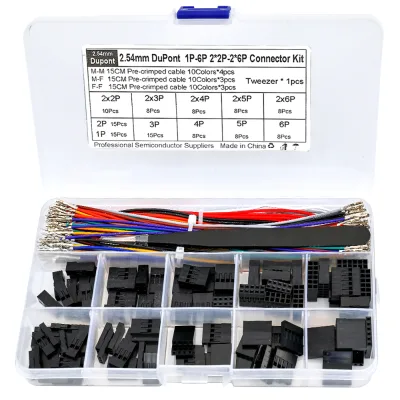


Comprehensive Sourcing Guide
Strategic Sourcing Guide for Rectangular Dupont Connectors
The global market for interconnect components is vast, yet the specific segment of rectangular Dupont connectors presents unique challenges for B2B procurement professionals. These components, often utilized for low-voltage signal transmission and power distribution in consumer electronics and industrial automation, require a nuanced understanding of their technical limitations and supply chain dynamics. When sourcing these items, buyers must navigate a landscape where product attributes vary significantly between listings. The following guide synthesizes available market data to provide a disciplined approach to procurement, ensuring that specifications, compliance, and quality metrics align with operational requirements without relying on unverified claims.
Technical Specifications and Attribute Verification
The primary challenge in sourcing rectangular Dupont connectors lies in the variability of technical attributes across different suppliers. While the core keyword suggests a specific form factor, the actual product data reveals a diverse range of configurations. Buyers must verify the gender of the connector, as the market offers Female, Male, and combinations of Male and Female units. The choice of gender directly impacts the assembly design and mating compatibility of the final product. Furthermore, the housing material is a critical determinant of durability and environmental resistance. Available data indicates the use of Aluminum Alloy for certain high-power applications, while others may utilize thermosetting plastics for the insulator component.
Electrical performance is another area requiring rigorous verification. Contact resistance values observed in the market range from 3.8mΩ to 7.3mΩ. These figures are not universal; a specific model may boast lower resistance, while another might operate at the higher end of this spectrum. Insulation resistance is equally critical, with specifications noting values of not less than 3000mΩ or 5000mΩ under normal conditions. Procurement teams must demand test reports that confirm the specific unit meets the required insulation thresholds for their application environment. Additionally, the contact plating, often Gold or Copper Alloy Gold Plating, dictates the longevity and corrosion resistance of the connection. The operating temperature range is another vital specification, with some units rated for a broad span of -55°C to 125°C, which is essential for applications exposed to extreme thermal cycling.
Compliance, Certification, and Standard Adherence
Navigating the regulatory landscape is essential for any B2B procurement strategy involving electronic components. The supply chain for rectangular Dupont connectors includes products that adhere to international standards such as ISOCE and RoHS. These certifications indicate that the materials used are compliant with environmental regulations regarding hazardous substances and meet specific quality management system criteria. However, buyers must not assume that every listed product carries these certifications. Verification is required on a per-supplier basis to ensure that the specific batch of connectors being purchased meets the necessary compliance standards for the target market.
In addition to general environmental certifications, specific military and industrial standards may apply depending on the application. The market data references standards such as Mil-26482, which governs the design and performance of circular connectors, though similar rigorous standards may be applied to rectangular variants in high-reliability sectors. For custom applications, standards may be labeled as "Customizable," indicating that the supplier is willing to tailor the product to meet specific project requirements rather than adhering to a rigid off-the-shelf standard. Buyers should explicitly request documentation proving adherence to these standards, particularly if the end product is destined for automotive, aerospace, or medical markets where regulatory non-compliance can result in significant liability.
Cost Drivers and Pricing Dynamics
The pricing structure for rectangular Dupont connectors is influenced by a complex interplay of factors, including material costs, customization levels, and order volume. The observed price range in the market spans from $0 to $360 USD, a wide variance that reflects the difference between basic, high-volume components and specialized, low-volume custom solutions. The lower end of the spectrum typically corresponds to standard configurations with minimal customization, while the higher prices often correlate with complex housing materials like Aluminum Alloy, specialized plating, or custom cable lengths.
Minimum Order Quantity (MOQ) is a significant cost driver. The market exhibits an MOQ range from 1 unit to 5,000 units. Suppliers offering low MOQs often charge a premium per unit to cover setup and handling costs, whereas high-volume orders benefit from economies of scale. Buyers must balance the need for inventory flexibility against the cost benefits of bulk purchasing. Additionally, the complexity of the product, such as the inclusion of specific sealing ratings like 0.2MPa or custom cable lengths of 500mm, will inherently increase the unit cost. Understanding these drivers allows procurement teams to negotiate more effectively and forecast budget requirements with greater accuracy.
Typical Applications and Usage Scenarios
Rectangular Dupont connectors serve a multitude of industries, each with distinct performance requirements. The observed application data highlights usage in Automobile, Microwave, UHF, and FPC (Flexible Printed Circuit) environments. In the automotive sector, these connectors must withstand vibration, temperature fluctuations, and potential exposure to moisture, necessitating robust housing and sealing capabilities. Microwave and UHF applications demand precise impedance control and low signal loss, making the contact resistance and plating quality critical factors.
Beyond high-frequency applications, these connectors are also used in general-purpose scenarios such as conducting electricity in terminal applications. The market data mentions products with specific shapes, such as Square, and colors like Red, Blue, and Yellow, which are often used for color-coding in wiring harnesses to prevent connection errors. The service life of these components is another key consideration, with some units rated for 500 insert and unplugs. This metric is vital for applications requiring frequent maintenance or reconfiguration. Buyers should map their specific application requirements against the observed performance data to ensure the selected connector can withstand the operational stresses of the intended environment.
Supplier Evaluation and Selection Criteria
Selecting the right supplier requires a methodical evaluation of their capabilities and reliability. The product origin is consistently listed as China, indicating a concentrated manufacturing base. Buyers should verify the supplier's capacity to handle the required production volume, given the wide range of MOQs observed. A supplier capable of fulfilling an order of 5,000 units may have different lead times and quality control processes compared to one specializing in small batches of 1 unit.
The availability of customization is a key differentiator among suppliers. The market data confirms that customization is available, allowing buyers to specify details such as cable length, housing material, and contact plating. However, the extent of this customization varies. Some suppliers may offer standard modifications, while others may require significant lead times for fully custom designs. Buyers should assess the supplier's engineering support capabilities to ensure they can assist with design validation and troubleshooting. Additionally, the packaging method, whether Tray, Box, Carton, or specific dimensions like 460x360x320, can impact logistics and storage efficiency. A supplier with optimized packaging solutions can reduce shipping costs and minimize the risk of damage during transit.
Quality Control and Long-Term Procurement Considerations
Ensuring consistent quality is paramount in the long-term success of any procurement strategy. The market data provides specific metrics for quality verification, such as contact resistance, insulation resistance, and operating temperature ranges. Buyers should implement a quality control protocol that includes incoming inspection of these parameters. For high-volume orders, requesting a Certificate of Conformance (CoC) or a test report for each batch is essential to verify that the products meet the specified standards.
Long-term procurement considerations also involve the stability of the supply chain. Given the wide range of MOQs and the potential for customization, buyers should establish relationships with suppliers who demonstrate reliability and consistency. The service life of the connector, rated at 500 insert and unplugs for some models, should be factored into the lifecycle cost analysis. If the application requires higher durability, buyers may need to seek out suppliers with specialized manufacturing processes or higher-grade materials. Furthermore, the sealing capabilities, such as the 0.2MPa rating observed, should be validated against the environmental conditions of the end product to prevent premature failure. By focusing on these quality and longevity factors, buyers can mitigate the risks associated with component failure and ensure the reliability of their final products.
Comparative Analysis of Connector Attributes
To facilitate decision-making, the following table summarizes key attributes observed in the market for rectangular Dupont connectors. This comparison highlights the variability in specifications and underscores the importance of verifying individual product data.
| Attribute | Observed Range / Options | Critical Verification Point |
|---|---|---|
| Gender | Female, Male, Male and Female | Ensure mating compatibility with existing harnesses. |
| Contact Resistance | 3.8mΩ to 7.3mΩ | Verify specific unit meets application current requirements. |
| Insulation Resistance | ≥3000mΩ to ≥5000mΩ | Confirm compliance with safety standards for voltage isolation. |
| Operating Temperature | -55°C to 125°C | Validate suitability for extreme thermal environments. |
| Housing Material | Aluminum Alloy, Thermosetting Plastics | Assess mechanical strength and environmental resistance. |
| Certification | ISOCE, RoHS, Customizable | Request proof of compliance for target markets. |
| MOQ | 1 to 5,000 Units | Balance inventory costs with order flexibility. |
| Sealing (Socket) | 0.2MPa | Verify protection against dust and moisture ingress. |
| Service Life | 500 Insert/Unplug Cycles | Determine suitability for maintenance-heavy applications. |
This table serves as a reference for buyers to compare different offerings and identify gaps between supplier claims and actual specifications. By systematically evaluating these attributes, procurement teams can make informed decisions that align with their technical and operational needs.
Conclusion
Sourcing rectangular Dupont connectors requires a disciplined approach that prioritizes technical verification, compliance, and supplier reliability. The market offers a wide array of options, from standard components to highly customized solutions, each with distinct performance characteristics. By focusing on the specific attributes observed in the supply chain, such as contact resistance, insulation resistance, and operating temperature, buyers can ensure that the selected components meet the rigorous demands of their applications. Furthermore, understanding the cost drivers, including MOQ and customization levels, allows for more effective budget management. Ultimately, a successful procurement strategy relies on thorough due diligence, continuous quality control, and the establishment of strong supplier relationships to secure a reliable supply of high-quality interconnect components.
FAQs
What certifications do rectangular dupont connectors have?
Some listed products carry ISOCE and RoHS certifications. Buyers must verify specific batches for compliance as not every item guarantees these standards.
Which contact resistance values are observed in the market?
Contact resistance ranges from 3.8mΩ to 7.3mΩ depending on the specific model. Procurement teams should request test reports to confirm the exact value for their application.
Can I find suppliers offering customization for these connectors?
Customization is available for specifications like cable length and housing material. Buyers should confirm the extent of customization and lead times with the specific supplier.
What is the typical service life for these connectors?
Some models are rated for 500 insert and unplugs. Applications requiring higher durability may need to select units with specialized manufacturing processes or materials.
Which operating temperature range is supported by these products?
Certain units operate within a range of -55°C to 125°C. This specification is critical for applications exposed to extreme thermal cycling or harsh environments.
How does the MOQ vary for rectangular dupont connectors?
Minimum Order Quantities range from 1 to 5000 units across different suppliers. Lower MOQs often carry higher per-unit costs compared to bulk purchasing options.
What housing materials are used for these connectors?
Housing materials include Aluminum Alloy and Thermosetting Plastics. The choice depends on the required mechanical strength and environmental resistance for the specific application.