Source Rectangular Cavity Speaker for PA, Education, and Multimedia
Find and compare 29 Rectangular Cavity Speaker options for public address, portable multimedia education, and commercial applications. Review specifications including impedance, power ratings, and certifications to select the right permanent magnetic speaker for your project needs; compare the available evidence and request quotations based on your requirements.
Key considerations
Products List


4ohm 3W Rectangular Cavity Speaker with Foam Diaphragm for Smart Device
$1.20 - $1.60
MOQ: 3000 Pieces


$11.50 - $12.50
MOQ: 1 Pieces


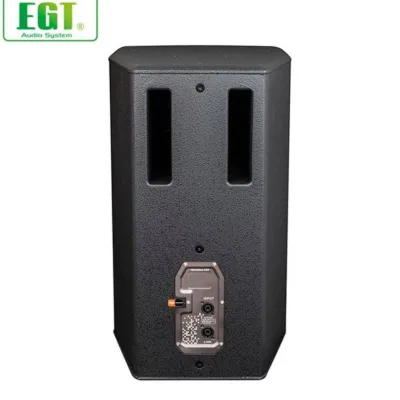

Comprehensive Sourcing Guide
Rectangular Cavity Speaker Sourcing Guide
Rectangular cavity speakers occupy a distinct niche in the audio component market, serving buyers who need compact, form-factor-driven transducers for public address systems, portable speakers, and multimedia education equipment. Unlike free-standing consumer loudspeakers, these components are typically integrated into an enclosure or product housing, which makes the cavity dimensions, mounting provisions, and acoustic interaction between the driver and the enclosure critical to final performance. Buyers sourcing this category should therefore treat the speaker and its intended cavity as a single acoustic system rather than as an isolated part.
This guide is written for procurement teams, product engineers, and sourcing agents evaluating suppliers of rectangular cavity speakers, particularly from manufacturing hubs in China, including Zhejiang and Hangzhou-based producers. It walks through the product scope visible in current listings, the technical parameters that deserve verification before sampling, the compliance documentation to request, the commercial levers that shape unit cost, and the qualification and long-term controls that protect a production program. The goal is to help buyers move from browsing listings to issuing specifications that suppliers can quote against accurately and consistently.
Product Scope and Observed Listing Signals
Current listings for rectangular cavity speakers span a wide range of formats and price points, from small raw transducers to finished passive cabinet systems. Small-format models in the listing data include rectangular permanent-magnetic drivers around 39.9mm × 19.9mm with 4-ohm impedance and 2W power, alongside compact box-type cavity units such as the 2040IVBOX-94(GP) at 57.5 × 23 × 14.5 and the 1635IBOX-52(GP) at 67.9 × 18 × 15, rated at 3.0W with 8-ohm impedance. Medium-size entries extend to models like the 4040IBOX-41(GP) at 100 × 50 × 24. These are positioned for portable speaker and multimedia education use.
At the upper end, listings include larger rectangular passive systems intended for commercial and home-commercial applications, such as models S-60 and S-401 with rated power of 45W and Hi-Fi positioning, plus the HG-520 and ZH-525 references. Listing attributes frequently flag customization as available, which is significant for buyers whose product housings demand non-standard cavity dimensions. Packing is typically carton-based, and origins concentrate in China. Prices observed across the category range widely, so buyers should anchor comparisons on specification match rather than headline pricing alone.
Technical Specifications to Verify
The most important verification task is dimensional conformity, because a cavity speaker's performance depends on exact fit within the target enclosure. Listing data shows model-level dimensions such as 39.9mm × 19.9mm for raw drivers and three-dimensional envelope figures like 57.5 × 23 × 14.5 for box-type units, but buyers should confirm whether these are external envelope, cutout, or mounting-hole dimensions, and request full engineering drawings with tolerances. Impedance is a second checkpoint: listings show both 4-ohm and 8-ohm variants, and mismatching amplifier output to speaker impedance will degrade output and can damage the driving stage.
Power handling must also be reconciled with the intended duty cycle. Observed ratings span 2W, 3.0W, and 5W for small portable units up to 45W for larger passive commercial systems. Buyers should clarify whether a stated power figure is rated, maximum, or peak input, and at what distortion level it was measured. For Hi-Fi-positioned models, listings cite THD below 0.005% and noise below 95dB; request the measurement conditions behind these figures. Transducer principle—permanent magnetic in the observed listings—should be confirmed along with magnet material and voice-coil specifications.
Compliance and Safety Documentation
Certification claims in current listings include ISO9001 quality-management certification and RoHS/Reach environmental compliance for the small transducer category, with CE and CCC cited for other entries. Buyers should not accept these labels at face value: request the actual certificate copies, verify they are current, confirm the certified scope covers the specific product family being purchased, and check that the issuing body is accredited. RoHS and Reach compliance in particular should be supported by recent third-party test reports on the actual materials, since restricted-substance rules are updated periodically and older reports may not reflect the current production bill of materials.
Market destination determines which marks are mandatory rather than optional. Products entering the European Union will need CE marking with supporting conformity documentation; China-bound goods reference CCC; and North American, UK, or other destinations may require additional approvals the buyer must identify based on the end product's classification. Because a cavity speaker is usually a component inside a larger device, clarify with your compliance team whether the component itself needs certification or whether compliance is demonstrated at the finished-goods level using component test data. Document either path in the purchase specification to avoid disputes at shipment.
Cost Drivers and Commercial Terms
Unit cost in this category is driven first by size and construction. Small permanent-magnetic drivers and compact cavity boxes sit at the low end of the observed price range, while larger passive Hi-Fi systems with metal speaker materials and higher rated power command substantially higher pricing. Customization is listed as available, but buyers should expect non-standard cavity dimensions, custom impedance, or modified mounting features to add tooling or engineering charges and to raise the minimum order quantity compared with catalog items. Material choices—plastic versus metal housings, magnet grade—also move cost meaningfully.
Commercial terms deserve equal scrutiny. Observed MOQs in the category range from as low as 1 unit to as high as 3,000, reflecting the split between sample-friendly transducer suppliers and volume-oriented finished-system producers; negotiate an MOQ that matches your pilot and ramp plan rather than accepting the first figure quoted. Observed prices range from roughly $0.40 to $2,200 across the category, so compare quotes on identical specifications, packing (carton packing is standard in listings), and Incoterms. Confirm what is included—tooling, samples, artwork, and after-sales support—and agree on price-validity periods before committing.
Supplier Qualification and Quality Control
Qualify suppliers against the requirements of your program, not against their marketing claims. Start with factory capability: verify in-house tooling for custom cavity dimensions, production capacity relative to your volume, and quality-system maturity—an ISO9001-certified operation is a reasonable baseline given its prevalence in category listings, but assess how the system is applied on the line. Review production samples against your engineering drawings, checking dimensional conformity, impedance, and power handling on received units. For suppliers of finished passive systems in Zhejiang and Hangzhou, clarify which processes are in-house and which are outsourced, since outsourced stages are where consistency most often slips.
Build incoming quality control around measurable parameters. Define an AQL sampling plan for each shipment, and specify acceptance tests covering dimensions, impedance at 1kHz or the agreed reference frequency, and functional sound output. Request golden samples approved by both parties and retained for reference. For higher-volume programs, consider pre-shipment inspection either internally or through a third party, and agree in advance how nonconforming lots will be handled—rework, replacement, or credit. Recording these controls in the quality agreement before the first purchase order prevents ambiguity when problems surface later in the relationship.
Long-Term Procurement Checks
Sustained supply depends on configuration control. Cavity speakers are sensitive to small changes in magnet supply, voice-coil sourcing, and housing tooling wear, so require the supplier to notify you before any material, component, or process change that could affect acoustics or dimensions. Maintain a version-controlled specification with the drawings, test methods, and approved samples referenced, and re-verify first articles after any engineering or tooling change. Over multiple production runs, periodically re-test retained samples to detect drift in impedance, sensitivity, or distortion before it reaches your customers.
Relationship and risk management matter just as much. Monitor the supplier's certification status annually, since ISO9001, RoHS, Reach, CE, and CCC credentials must remain current for your compliance chain to hold. Track delivery performance, defect rates, and responsiveness across orders, and use this data in periodic business reviews. For single-source parts—especially customized cavity designs with dedicated tooling—consider securing tool ownership or access rights contractually, and evaluate whether a second qualified source is feasible for high-volume items. These habits convert an initial successful purchase into a dependable, multi-year supply arrangement.
FAQs
How is a Rectangular Cavity Speaker typically packaged for shipping?
Rectangular cavity speakers are commonly packed in cartons or cartoon packaging to protect the enclosure during transit. Packaging style depends on unit size, since small and medium speakers need different carton dimensions. Buyers can request customized packing arrangements when ordering, and export-ready packaging should always be confirmed with the supplier before shipment is arranged.
What certifications are available for Rectangular Cavity Speaker products?
Available certifications on listed products include ISO9001, RoHS, Reach, CE, and CCC, though specific models may carry only a subset of these. Buyers should confirm which certifications apply to the exact model they intend to purchase, because compliance requirements differ by destination market and application, particularly for public address and multimedia education installations.
Which power ratings are offered for Rectangular Cavity Speaker models?
Listed Rectangular Cavity Speaker models show power ratings of 2W, 3.0W, and 5W, alongside one passive commercial speaker rated at 45W. The right rating depends on the intended usage, such as portable speakers, public address, or multimedia education. Buyers should match power output to the amplifier and coverage area requirements of their project.
Can Rectangular Cavity Speaker units be customized for a specific project?
Yes, customization is available on listed Rectangular Cavity Speaker products. Buyers can discuss modifications to specifications, speaker system configuration, and packaging with suppliers before placing an order. Customization terms, minimum order quantities, and any additional lead time should be confirmed in advance, since requirements vary between small portable units and larger passive commercial models.
What sizes do Rectangular Cavity Speaker models come in?
Rectangular cavity speakers are listed in small and medium sizes, with model dimensions such as 39.9mm x 19.9mm, 30.8mm x 28mm, 57.5x23x14.5, 100x50x24, and 67.9x18x15. Larger commercial units like the S-60 measure 98x77x590mm. Buyers should select size based on mounting space and acoustic requirements for their application.
Where are rectangular cavity speakers sourced from?
Listed Rectangular Cavity Speaker products originate from China, with some manufacturers located in Zhejiang and Hangzhou, Zhejiang. This region is known for audio component production, giving buyers access to a range of small and medium speaker models. Buyers should verify each supplier's exact location and shipping arrangements directly when sourcing.
Which impedance options apply to Rectangular Cavity Speaker products?
Impedance options on listed Rectangular Cavity Speaker models include 4ohm and 8ohm. Impedance must match the amplifier design of the host system to ensure proper power transfer and sound quality. Buyers should confirm the impedance specification of each model before ordering, especially when integrating speakers into public address or multimedia education equipment.
What usage scenarios suit a Rectangular Cavity Speaker?
Listed rectangular cavity speakers are used for public address, portable speaker applications, and multimedia education. Passive commercial models rated at 45W suit home and commercial installations, while small permanent magnetic speaker units fit compact portable devices. Buyers should confirm whether a model is active or passive and match its power and impedance to the intended system.