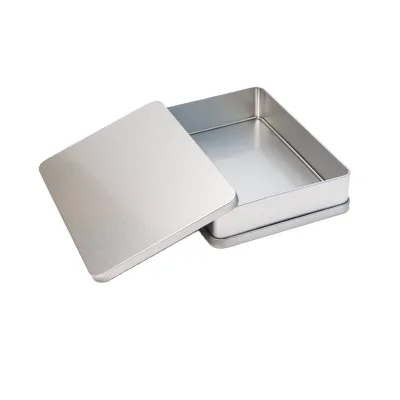
Source Rectangular Hinged Lid Tin Box for Food, Gifts, and Cosmetics
Compare 30 listings for the Rectangular Hinged Lid Tin Box, featuring tinplate construction and customizable printing options. Buyers can evaluate specifications like embossing, closure types, and packaging details to find the right solution for food, electronic, or cosmetic storage needs.
Key considerations
Products List

Rectangular Hinged Lid Empty Storage Tin Box Metal Iron Tin Package Box
$0.17 - $0.59
MOQ: 1000 Pieces


Rectangle Metal Tin Box Hinged Flip Lid Tinplate Custom Printing Package Box
$0.17 - $0.59
MOQ: 1000 Pieces

Rectangle Metal Tin Storage Box Hinged Tin Box with Offset Printed Logos
$0.17 - $0.59
MOQ: 1000 Pieces

Silver Metal Tin Square Rectangle Packaging Box Hinged Flip Tinplate Box Can
$0.17 - $0.59
MOQ: 1000 Pieces




Comprehensive Sourcing Guide
Strategic Sourcing Guide for Rectangular Hinged Lid Tin Boxes
Understanding Material Composition and Structural Integrity
When sourcing rectangular hinged lid tin boxes, the primary focus must be on the material composition, as this dictates the durability, barrier properties, and aesthetic finish of the final product. Based on available product data, the core material for these containers is consistently identified as tinplate or tin plate. This material is a steel sheet coated with a thin layer of tin, offering a robust balance between strength and formability. The observed specifications indicate a thickness of approximately 0.2mm for certain models, a dimension that is critical for ensuring the box can withstand stacking pressures without deforming while maintaining the integrity of the hinge mechanism.
The structural design is predominantly rectangular, with specific product models listed as having a "Rectangle" or "Rectangular" shape. This geometry is favored in B2B procurement for its efficient use of space in logistics and retail shelving. The hinge mechanism is a defining feature, often described as a "Flip Cover Type," which allows for repeated opening and closing without compromising the seal. The weight of these units is generally observed to be under 0.5 kg, making them suitable for a wide range of applications from heavy-duty industrial storage to delicate cosmetic packaging. Buyers should verify that the tinplate used meets specific grade requirements for the intended application, particularly regarding corrosion resistance, although specific alloy grades are not universally standardized in the provided data and require supplier confirmation.
Technical Specifications and Customization Capabilities
The technical landscape of rectangular hinged lid tin boxes is defined by a high degree of customization. The standard product models, such as THB-33, THB-68, and various alphanumeric codes like 24SEAN07-006, suggest a modular approach to manufacturing. A key technical attribute is the ability to customize the color, with options ranging from standard finishes like Silver, Black, White, and Gold to fully bespoke "Customized Color" requests. This flexibility is essential for brands requiring specific color matching for their packaging identity.
Printing capabilities are another critical technical specification. The observed data lists multiple printing methods, including Offset Printing, Silk Printing, and Labelling. The printing page count varies, with some products supporting "Single" page printing while others accommodate "Two-Sided" printing. This distinction is vital for buyers needing comprehensive branding on both the exterior and interior surfaces of the box. Furthermore, surface handling techniques such as Embossing are available, allowing for tactile differentiation and premium branding effects. The availability of "Customized Logo Acceptable" and "OEM/ODM" services indicates that suppliers are equipped to handle complex design requirements, from simple logo placement to full structural redesigns.
| Feature Category | Observed Specifications | Procurement Verification Point |
|---|---|---|
| Material | Tin Plate, Tinplate, Metal | Verify tin coating thickness and steel grade. |
| Shape | Rectangular, Rectangle | Confirm internal dimensions for product fit. |
| Thickness | 0.2mm (observed) | Request specific thickness tolerance data. |
| Printing | Offset, Silk, Labelling | Confirm ink adhesion and color fastness. |
| Surface | Embossing | Review embossing depth and tooling costs. |
| Closure | Flip Cover Type | Test hinge durability and latch security. |
| Packing | OPP, Carton, Packaging in Cartons | Verify internal cushioning for transit safety. |
Compliance, Certification, and Safety Standards
In the realm of packaging procurement, compliance is non-negotiable, particularly when the tin boxes are intended for food, cosmetics, or children's products. The provided data explicitly mentions the keyword "Child Proof Tin Box," which implies a specific safety standard regarding the closure mechanism to prevent accidental access by children. Buyers must rigorously verify that the hinge and latch design meet relevant regional safety regulations, such as those enforced by the Consumer Product Safety Commission (CPSC) in the United States or similar bodies in the European Union.
While background information suggests the existence of certifications like ISO9001, BSCI, and ROHS, these should not be assumed as standard for every listed product without explicit verification. The procurement strategy must include a request for current, valid certification documents from the supplier. For food applications, the tinplate must be certified as food-grade, ensuring that the internal coating does not leach harmful substances into the contents. The "Custom" standard noted in the product data suggests that some manufacturers may not adhere to a single universal standard but rather tailor their compliance to the buyer's specific market requirements. Therefore, the buyer should define the target market's regulatory framework early in the sourcing process and mandate that the supplier provides proof of compliance with those specific standards before production begins.
Cost Drivers and Economic Factors
The cost of rectangular hinged lid tin boxes is influenced by several variable factors, with the primary drivers being material costs, customization complexity, and order volume. The observed Minimum Order Quantity (MOQ) ranges from 100 to 10,000 units, indicating a significant variance in economic thresholds depending on the supplier and the level of customization. Lower MOQs may be available for standard models, but custom designs involving specific embossing, multi-color offset printing, or unique hinge mechanisms typically require higher volume commitments to amortize the cost of tooling and setup.
The printing method selected also impacts the unit price. Offset printing is generally more cost-effective for large runs due to lower per-unit costs, whereas silk printing or specialized labelling might be more expensive but necessary for specific aesthetic effects. The choice of color and finish plays a role as well; standard silver or black finishes are typically the most economical, while custom colors or metallic finishes like gold may incur additional charges. Additionally, the packaging method, whether simple OPP bags or reinforced carton boxes, adds to the overall cost. Buyers should analyze the total landed cost, including shipping and duties, rather than focusing solely on the unit price, as the observed price range of 0.11 to 4.23 USD reflects a wide spectrum of product complexities.
Typical Applications and Market Segments
Rectangular hinged lid tin boxes serve a diverse array of industries, as evidenced by the broad application categories listed: Food, Electronics, Apparel, Cosmetics, and Household goods. In the food sector, these containers are utilized for storing confectionery, tea, coffee, and gourmet snacks, where the tin's barrier properties protect against moisture and light. The "Child Proof" attribute specifically targets the pharmaceutical and high-value food markets where safety is paramount.
For the cosmetics and personal care industry, the aesthetic appeal of the tin box is a significant driver. The ability to apply high-quality offset printing and embossing allows brands to create premium unboxing experiences. The rectangular shape is particularly advantageous for storing items like lip balms, solid perfumes, or small electronic accessories, where space efficiency is key. In the electronics sector, these boxes are often used for packaging small components, cables, or accessories, providing a durable alternative to cardboard. The versatility of the product allows it to function as both a functional storage solution and a marketing tool, with the "Gift Boxes" usage category highlighting its role in promotional and retail gifting.
Supplier Evaluation and Quality Control Protocols
Selecting a reliable supplier for tin boxes requires a thorough evaluation of their manufacturing capabilities and quality control systems. Given that the origin is primarily China, with specific mentions of Anhui as a production hub, buyers should conduct due diligence on the supplier's facility. Key evaluation criteria include the supplier's experience with the specific hinge mechanisms required, their capacity for high-volume production, and their track record with international clients.
Quality control should be a continuous process rather than a final inspection step. Buyers should request samples that match the exact specifications of the intended order, paying close attention to the hinge durability, the alignment of the lid, and the quality of the printing. The "Custom Order: Accept" attribute suggests that the supplier is flexible, but this flexibility must be managed through clear technical drawings and approved prototypes. A robust quality control plan should include checks for material thickness, coating adhesion, and print registration. For large orders, implementing a third-party inspection service during the production phase can mitigate the risk of defects. Buyers should also verify the supplier's ability to maintain consistency across batches, as variations in tinplate quality or printing ink can lead to significant issues in the final product.
Long-Term Procurement and Sustainability Considerations
Sourcing rectangular hinged lid tin boxes is not merely a transactional decision but a strategic move that impacts long-term supply chain stability and brand reputation. The metal nature of the product offers significant sustainability advantages over plastic alternatives, as tinplate is highly recyclable and often made from recycled content. Buyers should inquire about the supplier's sustainability practices, including the source of the tinplate and their waste management protocols.
Long-term procurement relationships should be built on clear communication regarding design changes and volume fluctuations. The "OEM/ODM" acceptance indicates that suppliers are capable of evolving with the buyer's needs, but this requires a structured approach to intellectual property protection and design ownership. As market trends shift towards eco-friendly packaging, tin boxes offer a durable solution that aligns with these values. However, buyers must remain vigilant about the environmental impact of the printing inks and coatings used, ensuring they comply with evolving global regulations regarding volatile organic compounds (VOCs). By establishing a partnership based on transparency, quality, and shared sustainability goals, buyers can secure a reliable supply of high-quality rectangular hinged lid tin boxes that meet their operational and brand objectives.
FAQs
Can I customize the color and logo on these tin boxes?
Yes, you can request customized colors and logos for these rectangular hinged lid tin boxes. Suppliers accept custom orders and offer options like silver, black, white, or bespoke shades. The printing methods include offset and silk printing to ensure your brand identity is clearly displayed on the metal surface.
What materials are used to make these rectangular tin containers?
These containers are primarily constructed from tin plate or tinplate, which is a steel sheet coated with a thin layer of tin. This material provides a robust balance between strength and formability. The observed thickness for specific models is around 0.2mm, ensuring durability while keeping the weight under 0.5 kg.
Which printing methods are available for these metal packaging boxes?
Multiple printing methods are available, including offset printing, silk printing, and labelling. You can choose between single-page or two-sided printing depending on your design needs. Surface handling techniques like embossing are also offered to add a tactile premium finish to the rectangular tin boxes.
What is the minimum order quantity for these tin can products?
The minimum order quantity ranges from 100 to 10,000 units depending on the supplier and customization level. Standard models may have lower thresholds, while complex designs with specific embossing or unique hinge mechanisms often require higher volumes. This range allows flexibility for both small trial orders and large-scale production runs.
How are these rectangular tin boxes packed for shipping?
These boxes are typically packed in carton boxes or OPP bags to ensure safety during transit. The specific packing method depends on the supplier and order size, with options ranging from simple OPP packaging to reinforced carton boxes. This ensures the rectangular hinged lid tin boxes arrive without damage and are ready for retail display.
Can these tin boxes be used for food storage applications?
Yes, these rectangular hinged lid tin boxes are suitable for food storage, cosmetics, and gift packaging. The tinplate material offers excellent barrier properties against moisture and light. However, buyers must verify that the specific supplier provides food-grade certification for the internal coating to ensure safety for direct food contact.
Where are these rectangular tin box manufacturers located?
The primary manufacturing locations for these products are in China, with specific hubs mentioned in Anhui. Suppliers from this region offer OEM and ODM services with varying lead times. Buyers should confirm the exact factory location and shipping terms to calculate the total landed cost for their specific procurement needs.