Source Refrigerant Capillary Copper Tube for AC, Freezer, and Refrigerator
Find 30 listings for Refrigerant Capillary Copper Tube suitable for commercial and home refrigeration systems. Compare specifications including wall thickness, length, and certifications like CE and ROHS from verified suppliers in China.
Key considerations
Products List


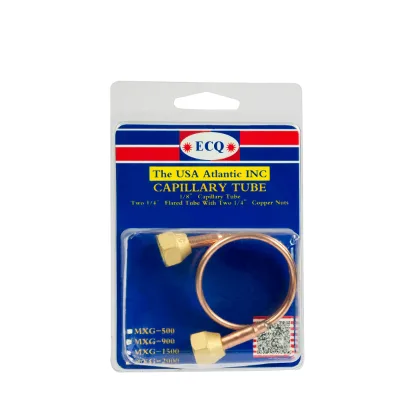


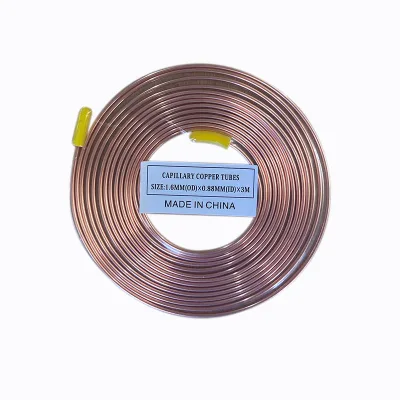
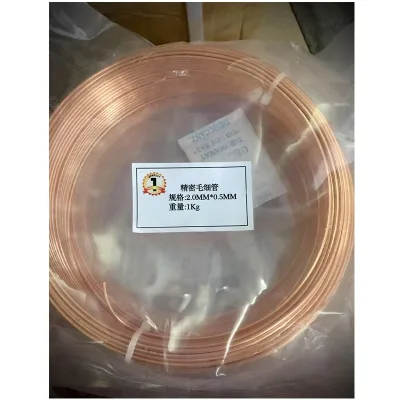


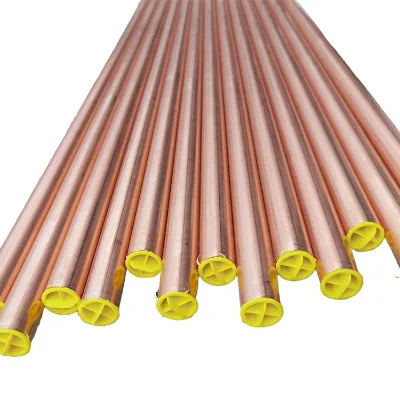
Air Conditioner Refrigerator Tube Flexible Coil Copper Tubes Capillary Tubing
$1.50 - $2.50
MOQ: 200 Pieces

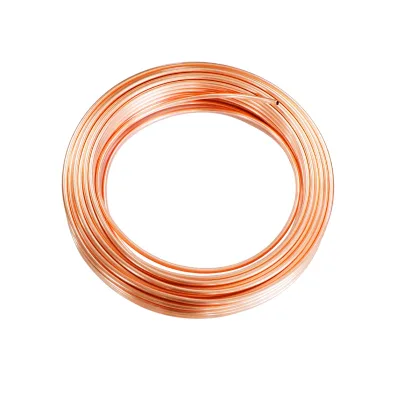
Comprehensive Sourcing Guide
Strategic Sourcing Guide for Refrigerant Capillary Copper Tube
Understanding Technical Specifications and Material Integrity
When sourcing Refrigerant Capillary Copper Tube, the primary objective is to secure components that maintain precise flow characteristics under extreme thermal conditions. The core material for these components is consistently identified as copper, specifically selected for its superior thermal conductivity and malleability. A critical observation in the current market is the "Soft Annealed" temper designation. This processing state is essential because it renders the tube pliable, allowing for the "Easy to Bend and Install" characteristics required during the assembly of refrigeration and air conditioning systems. Without this specific temper, the copper would be too rigid, leading to potential fractures during the coiling or routing processes common in compressor control applications.
The dimensional tolerances for these tubes are non-negotiable for system efficiency. The outer diameter (OD) is frequently available in standard increments such as 1/4", 3/8", 1/2", and 5/8", with a strict tolerance of ±0.5mm. This precision ensures a proper fit within the expansion valves and capillary tubes of the refrigerant lines. Furthermore, the wall thickness is a vital parameter, with observed specifications indicating a minimum requirement of ≥0.5mm. This thickness is crucial for maintaining structural integrity against the internal pressure of the refrigerant while preventing leaks. The internal cleanliness of the tube is equally paramount; the product must be "Oil and Dust Free" to prevent blockages that could compromise the cooling cycle. The surface finish is typically described as "Bright Clean," which not only aids in visual inspection but also suggests a lack of oxidation that could impede heat transfer.
Compliance, Certification, and Regulatory Standards
Navigating the regulatory landscape is a fundamental step in B2B procurement for industrial components. Buyers must verify that suppliers adhere to recognized international standards. The supplied data indicates that products often carry CE and ROHS certifications. The CE mark signifies conformity with health, safety, and environmental protection standards for products sold within the European Economic Area, while ROHS compliance ensures the restriction of specific hazardous materials, which is critical for modern environmental regulations. Additionally, ISO9001 certification is frequently cited, indicating that the manufacturer has a quality management system in place to ensure consistent product quality.
It is important to distinguish between the product standard and the manufacturing standard. While the product itself may be described simply as "standard" or adhere to specific model numbers like JS-08 or CT-466, the manufacturing process is often governed by broader standards such as ISO9001. Buyers should be cautious not to conflate these; the presence of a model number does not automatically guarantee compliance with international safety standards unless explicitly verified. The origin of the goods is predominantly noted as China, with specific manufacturing hubs in Ningbo and Zhejiang. While these regions are known for copper processing, the specific origin location should be verified against the certificate of origin to ensure it matches the supplier's declared capabilities.
Cost Drivers and Pricing Dynamics
The pricing structure for Refrigerant Capillary Copper Tube is influenced by several variables, including material costs, customization levels, and order volume. The observed price range in the market is extensive, spanning from $0.01 to $8,000 USD. This wide variance is not indicative of quality differences per se but rather reflects the scale of the transaction and the specific configuration of the order. A unit price at the lower end likely corresponds to small quantities of standard dimensions, whereas the higher end of the spectrum may represent bulk industrial orders, custom-length coils, or specialized configurations.
The Minimum Order Quantity (MOQ) is another significant cost driver, with observed ranges between 1 and 5,000 units. For buyers requiring small batches for prototyping or maintenance, suppliers offering an MOQ of 1 are essential. However, larger production runs benefit from economies of scale, often reducing the per-unit cost. Customization is a key factor; the "Thickness customized" option allows for tailored specifications but may incur higher costs compared to standard wall thicknesses. Additionally, the "Selling Units" are often listed as single items, which facilitates flexible purchasing for smaller projects. Buyers must also consider the "Leading Time," which is typically around 4 weeks. This lead time impacts the total cost of ownership, as longer wait times may necessitate higher safety stock levels, tying up capital.
Typical Applications and Usage Scenarios
The versatility of Refrigerant Capillary Copper Tube is evident in its diverse application scenarios. The primary usage is within the "Refrigeration and AC Refrigerant Lines" sector. Specifically, these tubes are integral to both "Commercial Refrigerator & Freezer" systems and "Home Refrigerator & Freezer" units. In commercial settings, the robustness of the tube is required to handle higher loads and continuous operation cycles. In residential applications, the focus shifts to ease of installation and reliability in compact spaces.
The "Usage Scenario" often involves "Air Conditioner Connection," where the tube serves as a critical link in the refrigerant circuit. The "Use" case is frequently identified as "Refrigerator Compressor Control," highlighting the tube's role in regulating the flow of refrigerant to the compressor. The "Working Temperature" range of -196°C to +250°C underscores the tube's capability to function in extreme environments, from deep-freeze applications to high-temperature industrial processes. This wide temperature tolerance is a direct result of the copper material and the soft annealed temper, ensuring that the tube does not become brittle in cold or lose strength in heat. The "Ventilation mode" is noted as mechanical ventilation, suggesting that these tubes are part of systems that rely on active airflow for thermal management.
Supplier Evaluation and Production Capabilities
Evaluating a supplier requires a deep dive into their production capabilities and logistical support. The "Common Length" of the tubes is typically 15m or 30m, which affects how the product is shipped and stored. Buyers should verify if the supplier can provide custom lengths, as the "Thickness customized" attribute suggests flexibility in production. The "End Cap" inclusion is a notable feature, with "Plastic Caps Included" protecting the tube ends from contamination during transit. This detail is often overlooked but is critical for maintaining the "Internal Cleanliness" of the product upon arrival.
Packaging standards vary, with options ranging from "Neutral Package" to "Carton Package," "Color Box," and "Standard Export Box." The "Oppbag" packaging is also mentioned, likely for smaller individual units. For international shipping, the "Export Standard Packin" is essential to prevent damage during long-haul transport. The "Parts" associated with these tubes often include the "Compressor," indicating that the tubes are sold as part of a broader assembly or as a direct replacement component. Buyers should assess the supplier's ability to provide "Free" samples, which allows for physical verification of the "High" quality claims before committing to a large order. The "After-Sales Service" of 1 year and a "Warranty" of more than 5 years are significant indicators of supplier confidence and product durability.
Quality Control and Long-Term Procurement Considerations
Quality control is the backbone of a successful procurement strategy for refrigerant components. The "Wall Tolerance" of ±5% and the "Od Tolerance" of ±0.5mm are metrics that must be rigorously tested. Buyers should request test results or certificates of analysis to verify that the delivered products meet these tolerances. The "Internal Cleanliness" requirement of being "Oil and Dust Free" must be validated through visual inspection or specific testing protocols, as any contamination can lead to system failure. The "Quality" attribute is generally described as "High," but this is a subjective claim that requires objective verification through third-party testing or on-site audits.
Long-term procurement considerations involve the stability of the supply chain and the consistency of the product. The "Standard" of "500pcs/set" suggests that some suppliers offer bundled solutions, which can simplify inventory management. However, buyers must ensure that the "prod_standard" aligns with their specific engineering requirements. The "Location" of the supplier, often in Ningbo or Zhejiang, provides insight into the logistical network. Proximity to ports in these regions can reduce shipping costs and lead times. Finally, the "Leading Time" of 4 weeks should be factored into the procurement timeline to avoid production delays. Buyers should also consider the "Warranty" period, as a warranty of more than 5 years indicates a long-term commitment to product reliability, reducing the risk of premature failure and associated replacement costs.
Comparative Analysis of Product Attributes
To facilitate decision-making, the following table summarizes the key attributes observed in the market for Refrigerant Capillary Copper Tube. This comparison highlights the variability in specifications and helps buyers identify the features most relevant to their specific needs.
| Attribute Category | Observed Specification | Relevance to Procurement |
|---|---|---|
| Material | Copper | Essential for thermal conductivity and corrosion resistance. |
| Temper | Soft Annealed | Ensures flexibility for bending and installation. |
| Outer Diameter | 1/4", 3/8", 1/2", 5/8" | Must match system design requirements. |
| OD Tolerance | ±0.5mm | Critical for fitting into expansion valves. |
| Wall Thickness | ≥0.5mm | Determines pressure rating and durability. |
| Working Temp | -196°C to +250°C | Defines operational limits for extreme environments. |
| Certification | CE, ROHS, ISO9001 | Required for regulatory compliance and quality assurance. |
| Packaging | Neutral, Carton, Export Box | Impacts protection during shipping and storage. |
| Lead Time | 4 Weeks | Influences inventory planning and production scheduling. |
| Warranty | >5 Years | Indicates long-term reliability and supplier confidence. |
This structured approach to sourcing ensures that buyers can make informed decisions based on verified data rather than marketing claims. By focusing on the technical specifications, compliance requirements, and supplier capabilities outlined above, organizations can secure high-quality refrigerant capillary copper tubes that meet the rigorous demands of modern refrigeration and air conditioning systems.
FAQs
What material is used for Refrigerant Capillary Copper Tube?
The core material is consistently identified as copper, selected for its superior thermal conductivity and malleability. This ensures the tube maintains precise flow characteristics under extreme thermal conditions while allowing for easy bending during installation.
Which outer diameter sizes are commonly available for these tubes?
Common outer diameters include 1/4, 3/8, 1/2, and 5/8 inches, with a strict tolerance of plus or minus 0.5mm. This precision ensures a proper fit within the expansion valves and capillary tubes of refrigerant lines.
Can the wall thickness be customized for specific applications?
Yes, wall thickness customization is available, with observed specifications indicating a minimum requirement of 0.5mm or greater. This flexibility allows buyers to tailor the tube's structural integrity against internal pressure while preventing leaks.
How long is the typical lead time for these products?
The typical lead time is approximately four weeks for production and delivery. Buyers must factor this duration into their procurement timeline to avoid production delays and ensure adequate safety stock levels are maintained.
What certifications do these copper tubes typically hold?
Products often carry CE and ROHS certifications, indicating conformity with safety and environmental standards. Additionally, ISO9001 certification is frequently cited, showing the manufacturer maintains a quality management system for consistent product quality.
What is the working temperature range for this tubing?
The working temperature range spans from negative 196 degrees Celsius to plus 250 degrees Celsius. This wide tolerance ensures the tube functions reliably in extreme environments, from deep-freeze applications to high-temperature industrial processes.
How are the tube ends protected during shipping?
Plastic caps are included to protect the tube ends from contamination during transit. This feature is critical for maintaining the internal cleanliness of the product, ensuring it remains oil and dust-free upon arrival.