Source Refrigerated Trailer Parking Air Conditioner for Trucks, Buses, RVs
Find 30 verified options for Refrigerated Trailer Parking Air Conditioner units suitable for trucks, buses, and recreational vehicles. Compare specifications including voltage, power, and cooling capacity from multiple suppliers to find the right fit for your fleet.
Key considerations
Products List

12V 24V Car Truck Parking Cooler Air Conditioner
$169.00 - $190.00
MOQ: 1 Pieces
Dezhou Chuangtao Mechanical and Electrical Equipment Co., Ltd.


12V 24V Parking Air Conditioner for Truck Trailers
$180.00 - $220.00
MOQ: 1 Pieces
Dezhou Chuangtao Mechanical and Electrical Equipment Co., Ltd.

Parking Cooler 12V Camping Air Conditioner Car
$240.00 - $280.00
MOQ: 1 Sets
Dezhou Chuangtao Mechanical and Electrical Equipment Co., Ltd.


12V 24V Split Parking Cooler for Truck Car Bus
$200.00 - $280.00
MOQ: 2 Pieces
Dezhou Chuangtao Mechanical and Electrical Equipment Co., Ltd.


Parking Air Conditioner Parking Cooler Wholesale Rates Economical Cooling
$300.00 - $400.00
MOQ: 1 Pieces


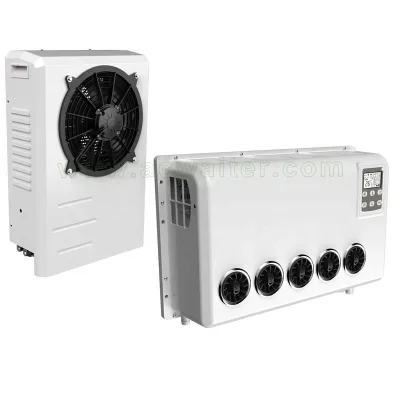


12V 24V Rooftop Truck Parking Air Conditioner for Truck RV Camper DC24V 12V
$180.00 - $280.00
MOQ: 10 Pieces

Parking Cooler Truck Cabin Air Conditioner 12V 24V Car Roof Air Conditioner
$210.00 - $360.00
MOQ: 10 Pieces


Comprehensive Sourcing Guide
Strategic Sourcing Guide for Refrigerated Trailer Parking Air Conditioners
The global logistics and transportation sectors increasingly rely on refrigerated trailers to maintain strict temperature controls for perishable goods during transit and parking. A critical component in this ecosystem is the parking air conditioner, a unit designed to maintain cabin and cargo temperatures when the primary vehicle engine is off. For procurement professionals, sourcing these units requires a disciplined approach that balances technical specifications, regulatory compliance, and supply chain reliability. This guide outlines the essential factors for evaluating refrigerated trailer parking air conditioners, drawing on observed market data and industry standards to ensure informed decision-making.
Technical Specifications and Performance Parameters
When evaluating a Refrigerated Trailer Parking Air Conditioner, the primary focus must be on the unit's ability to deliver consistent cooling capacity under varying load conditions. The observed market data indicates a wide range of power consumption and cooling outputs, which directly correlates with the size of the trailer and the thermal load of the cargo. Units in the current market spectrum demonstrate power ratings ranging from 800W to 1200W, with specific models operating at 800W. This variance suggests that buyers must match the unit's wattage to the specific electrical capacity of the trailer's auxiliary power system.
Cooling capacity is another pivotal metric. Data points show cooling capacities expressed in both watts and BTUs, with observed values including 2800W and 9600 BTU. These figures are not interchangeable without conversion, and buyers should verify the specific rating of the unit they are considering against the required cooling area, which is observed to be around 20 square meters for certain configurations. The refrigerant type is a critical technical constraint; R134A is a documented standard in the current supply pool, indicating a shift away from older, more environmentally harmful gases, though buyers must confirm the specific refrigerant charge and compatibility with the system's pressure ratings.
The structural design of the unit also dictates its suitability for different trailer types. The "Open Type" structure is a common observation, which may imply specific mounting requirements or airflow dynamics. Furthermore, the cooling style is predominantly "Air-cooled," distinguishing these units from water-cooled industrial systems. This distinction is vital for maintenance planning, as air-cooled units require regular cleaning of the radiator fins to prevent efficiency loss. The radiator core type, observed as "Bar and Plate," and the radiator type, noted as "Direct-flow," suggest a design optimized for high heat exchange efficiency in compact spaces. Buyers should verify that the chosen model's radiator configuration aligns with the available space on the trailer roof or side panel.
Voltage Compatibility and Power Supply Architecture
One of the most frequent points of failure in procurement is the mismatch between the vehicle's electrical system and the air conditioner's voltage requirements. The market data reveals a bifurcation in voltage standards, with units available for both 12V and 24V systems. This is particularly relevant for the transportation sector, where light-duty trucks often operate on 12V systems, while heavy-duty trucks and buses frequently utilize 24V architectures. The observed specifications list "12V/24V" as a combined attribute, suggesting that some manufacturers offer universal models or specific variants for each voltage class.
The power supply type is consistently listed as "DC," confirming that these units are designed to run on direct current from the vehicle's battery or a dedicated auxiliary power unit. The power source is identified as "Electricity," which necessitates a reliable connection to the vehicle's electrical grid. For buyers managing a mixed fleet, the ability to source units that match the specific voltage of each vehicle type is essential to avoid the need for expensive voltage converters, which can introduce efficiency losses and additional points of failure. The presence of "12V Car Air Conditioner" and "24V Truck Parking Air Conditioner" as distinct key words in the market highlights the importance of precise specification matching.
Compliance, Certification, and Regulatory Standards
Navigating the regulatory landscape is a non-negotiable aspect of sourcing industrial cooling equipment. The observed product data includes several critical certifications that serve as indicators of quality and safety compliance. "CE" certification is frequently cited, indicating conformity with health, safety, and environmental protection standards for products sold within the European Economic Area. Additionally, "RoHS" (Restriction of Hazardous Substances) is noted, which ensures that the unit does not contain specific hazardous materials like lead or mercury, a requirement for many international markets.
The data also references "ISOCE," which likely pertains to ISO standards for quality management or specific industry certifications, though buyers should verify the exact standard number (e.g., ISO 9001) through direct supplier communication. The product origin is listed as "Shandong" and "China," regions known for significant manufacturing output in this sector. While origin does not inherently dictate quality, it provides context for the supply chain geography. Buyers must ensure that the supplier can provide valid, up-to-date certification documents that are recognized by the destination country's regulatory bodies. The absence of specific test results in the general data underscores the need for buyers to request third-party test reports for cooling efficiency and safety before finalizing a purchase.
Cost Drivers and Economic Considerations
The pricing landscape for refrigerated trailer parking air conditioners is influenced by a combination of technical complexity, certification costs, and logistics. The observed price range in the market spans from 166 USD to 3000 USD. This significant variance is driven by factors such as cooling capacity, voltage compatibility, and the inclusion of advanced features like digital temperature sensors versus analog types. Units with higher cooling capacities (e.g., 9600 BTU) and those designed for larger commercial vehicles (e.g., bus or truck roof-mounted units) will naturally command prices at the higher end of this spectrum.
Minimum Order Quantity (MOQ) is another economic factor, with observed ranges between 1 and 10 units. This flexibility allows small operators to purchase single units for testing or immediate replacement, while larger fleets can leverage bulk purchasing to negotiate better terms. The packaging method, observed as "by Sea, Express, Railway," also impacts the final landed cost. Sea freight is typically the most cost-effective for large volumes but involves longer lead times, whereas express shipping is faster but more expensive. Buyers should calculate the total cost of ownership, including shipping, duties, and potential customs delays, rather than focusing solely on the unit's base price.
Typical Applications and Use Cases
The versatility of these units is evident in the diverse applications they serve. The market data categorizes these products under several key use cases, including "Truck Air Conditioner," "RV Air Conditioner," "Bus Air Conditioner," and "Electric Air Conditioning for Car." This breadth indicates that the technology is adaptable to various vehicle classes. For refrigerated trailers specifically, the "Parking Air Conditioner" is essential for drivers who need to rest in the cab or maintain cargo temperature during long stops without idling the main engine.
The "Roof Mounted Bus Air Conditioner" and "Truck Roof Air Conditioner" categories suggest that mounting location is a key design consideration. Roof-mounted units are generally preferred for their space-saving benefits and ability to distribute cool air evenly, but they require structural reinforcement of the trailer roof. The "Portable Air Conditioner" category implies that some units are designed for temporary or flexible deployment, which may be useful for smaller logistics operations. Buyers should assess their specific operational needs, such as whether the unit needs to be permanently installed or if portability is a requirement for multi-use vehicles.
Supplier Evaluation and Quality Control Protocols
Selecting a reliable supplier is paramount to ensuring the longevity and performance of the air conditioning system. The observed data highlights "Customization: Available" as a key attribute, indicating that suppliers are willing to tailor products to specific buyer requirements. This flexibility is a strong indicator of a mature supplier capable of handling complex orders. However, buyers must verify the supplier's capacity to deliver consistent quality across customized batches.
Quality control should extend beyond the initial inspection of the unit. Buyers should request information on the "Compressor Oil" type, with "Poe68" being a specific observation, to ensure compatibility with the refrigerant and system longevity. The "Water Temperature Sensor Type" is listed as both "Analog Type" and "Digital Type," suggesting that sensor technology varies by model. Digital sensors generally offer higher precision and easier integration with modern vehicle monitoring systems, making them preferable for high-value cargo.
Furthermore, the packaging standard, observed as "Neutral Packing" or specific dimensions like "431664" and "695929," provides insight into the supplier's attention to detail. Consistent packaging dimensions are crucial for logistics planning and storage efficiency. Buyers should evaluate the supplier's track record for on-time delivery and their ability to handle after-sales support, including the availability of spare parts and technical assistance.
Long-Term Procurement and Maintenance Strategy
Sourcing a parking air conditioner is not a one-time transaction but the beginning of a long-term relationship. The "Lead Time" and "MOQ" variability observed in the market suggests that buyers should plan for potential supply chain fluctuations. Establishing a relationship with a supplier that offers flexible MOQs can help manage inventory costs while ensuring a steady supply of replacement parts.
Maintenance is a critical component of the long-term strategy. The "Air-cooled" nature of these units requires regular cleaning of the cooling fins and radiators to prevent dust accumulation, which can significantly reduce efficiency. Buyers should verify that the supplier provides clear maintenance manuals and that the unit is designed for easy access to these components. The "Direct-flow" radiator type and "Bar and Plate" core design are specific engineering choices that may influence maintenance frequency and complexity.
In conclusion, sourcing a Refrigerated Trailer Parking Air Conditioner requires a comprehensive understanding of technical specifications, regulatory requirements, and supply chain dynamics. By carefully evaluating voltage compatibility, cooling capacity, and certification status, buyers can select units that meet their operational needs while ensuring compliance with international standards. The observed market data provides a solid foundation for these decisions, but continuous verification of supplier capabilities and product performance remains essential for long-term success.
FAQs
What certifications do refrigerated trailer parking air conditioners have?
These units typically carry CE and RoHS certifications to ensure safety and environmental compliance. Some products also list ISOCE standards, indicating adherence to quality management systems. Buyers should verify specific certification documents before purchase.
Which voltage options are available for these air conditioners?
Units are available for both 12V and 24V DC power supply systems. This flexibility supports light-duty trucks and heavy-duty buses respectively. Selecting the correct voltage is essential to match the vehicle's electrical architecture.
How is the cooling capacity measured for these units?
Cooling capacity is measured in both watts and BTUs, with observed values including 2800W and 9600 BTU. The cooling area for certain configurations is around 20 square meters. Buyers must match these figures to their specific thermal load requirements.
Can buyers request customization for these air conditioning systems?
Yes, customization is available for these products to meet specific operational needs. Suppliers may adjust specifications like sensor types or packing methods. This flexibility allows for tailored solutions for different vehicle classes and cargo requirements.
What refrigerant type is used in these cooling units?
The documented refrigerant type is R134A, which is a standard in the current supply pool. This gas is chosen for its environmental profile compared to older alternatives. Compatibility with system pressure ratings must be confirmed during procurement.
Where are these refrigerated trailer air conditioners manufactured?
Products originate from Shandong, China, a region known for significant manufacturing output in this sector. The origin provides context for the supply chain geography. Buyers should ensure suppliers can provide valid documentation for the destination country.