Source Remote Control Grab Bucket Crane for Bulk Handling
Find and compare 30 Remote Control Grab Bucket Crane options for bulk cargo, excavator attachments, and hoisting machinery. Evaluate hydraulic models, lifting capacities, and customization features from verified Chinese manufacturers to streamline your procurement process.
Key considerations
Products List


Easy Operation Electric Bridge Overhead Crane with Wasting Grab Bucket Crane
$10000.00 - $50000.00
MOQ: 1 Pieces


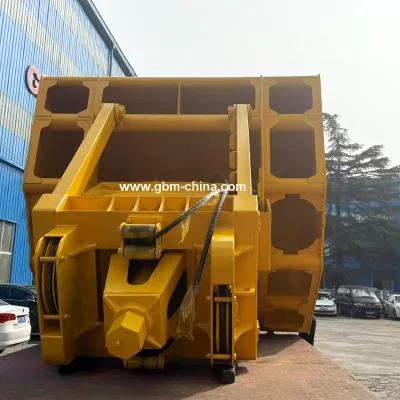


12-20cbm Wireless Remote Control Grab Bucket Cargo Grapple for Crane
$20000.00 - $50000.00
MOQ: 1 Pieces


Comprehensive Sourcing Guide
Remote Control Grab Bucket Crane Sourcing Guide
Sourcing a Remote Control Grab Bucket Crane requires a disciplined approach to aligning technical specifications with operational safety and commercial viability. These machines are specialized lifting equipment designed for handling bulk materials, combining the versatility of a grab bucket with the precision of wireless remote operation. Buyers must navigate a market where product configurations vary significantly based on origin, drive type, and structural design. The following guide provides evidence-based procurement strategies to help buyers evaluate listings, verify technical claims, and mitigate supply chain risks without relying on unverified marketing assertions.
The procurement process begins with a clear understanding of the product scope and the signals present in supplier listings. Buyers should treat observed data points as starting points for verification rather than guaranteed facts. This guide focuses on remote control grab bucket cranes, highlighting key attributes such as hydraulic driving models, wireless operation capabilities, and various structural forms like gantry or mobile configurations. By focusing on these core elements, buyers can filter out irrelevant listings and concentrate on suppliers who demonstrate technical competence and transparency in their product descriptions.
Product Scope and Observed Listing Signals
The market for remote control grab bucket cranes presents a wide range of product models and configurations, often indicated by diverse model codes such as RCB20.0-2.0, QS25-12, and QSHI-RCG001. These identifiers suggest a spectrum of capacities and designs, ranging from smaller units with capacities around 1.0 to 6.0 cubic meters to larger industrial systems. Buyers should note that observed listing signals include variations in dead weight, which can range from 4 to 8 tons for certain models, while others may weigh between 1.5 and 11 tons. This variance indicates that the equipment is not monolithic; rather, it is tailored to specific load requirements and structural constraints.
Listing signals also reveal significant diversity in packing methods and origin locations, which directly impact logistics and cost. Products are observed to be shipped in nude packing, export wooden boxes, or standard export packaging, with origins spanning Wuxi City, Henan, and Shandong provinces in China. The presence of "Nude Packing" for some items suggests they may be shipped as bare machinery, requiring additional protection during transit, while others come in robust wooden crates suitable for international shipping. Buyers must correlate these packing details with the product’s fragility and value to estimate total landed costs accurately.
Technical Specifications to Verify
Technical verification is critical when evaluating remote control grab bucket cranes, particularly regarding their driving mechanism and operational capacity. The supplied data indicates that many units utilize a hydraulic driving model, which is essential for providing the high torque and precise control needed for heavy bulk material handling. Buyers should verify the rated load capacity, which is observed to range from 3 to 30 tons, and the maximum lifting weight, which can extend up to 50 tons for specific heavy-duty models. Confirming these metrics ensures that the selected crane can handle the intended material density and volume without risking structural failure or operational inefficiency.
Another crucial technical aspect is the crane’s structural form and operational flexibility. Listings describe products as having a double girder main structure, which offers enhanced stability and load distribution compared to single girder designs. The operation form is noted to support both air operation and ground operation, providing versatility in different site conditions. Additionally, the maximum lifting height is observed to range from 30 to 40 meters, a key factor for projects requiring vertical clearance. Buyers must confirm that the specific model’s dimensions, such as the observed standard of 4.87.018.0 meters, fit within their facility’s spatial constraints and operational workflow.
Compliance and Safety Documentation
Compliance and safety documentation form the backbone of a secure procurement transaction, especially for machinery involving heavy lifting and remote operation. Buyers should insist on verification of certifications such as CE and ISO9001, which indicate adherence to international quality management and safety standards. The condition of the equipment is typically listed as "New," but buyers must ensure that the certification applies to the specific configuration being purchased. Remote control systems, in particular, require rigorous safety testing to prevent accidental activation or signal interference, making certification verification a non-negotiable step in the sourcing process.
Safety features extend beyond certification to include the design of the grab bucket and the remote control interface. The product name "Wireless Remote Control Hydraulic Grab Bucket" implies a separation between the operator and the hazardous lifting zone, a significant safety advantage. Buyers should verify that the wireless system includes fail-safe mechanisms and that the grab bucket’s hydraulic system is equipped with pressure relief valves and emergency stop functions. Additionally, the warranty period, often listed as one year, should be clearly defined in the contract, covering both mechanical components and the electronic remote control system to protect against early-life failures.
Cost Drivers and Commercial Terms
Cost drivers for remote control grab bucket cranes are influenced by material weight, structural complexity, and customization options. The dead weight of the equipment, ranging from 4 to 8 tons or more, directly impacts shipping costs, which can be substantial given the bulk and density of the machinery. Buyers should consider the trade terms offered, such as FOB (Free on Board) or CIF (Cost, Insurance, and Freight), to determine who bears the risk and cost of transportation. Understanding these terms is essential for accurate budgeting, as freight costs for heavy industrial equipment can vary significantly based on destination port and shipping method.
Commercial terms also include the minimum order quantity (MOQ) and lead times, which affect project scheduling and cash flow. Observed listings indicate an MOQ of 1 set, allowing for flexible procurement for individual projects. However, the delivery time is typically around 45 days, which buyers must account for in their project timelines. Customization is available for many models, including color options and specific dimensional adjustments, but these modifications may extend the lead time or increase the unit price. Buyers should negotiate clear delivery schedules and penalty clauses for delays to mitigate the risk of project downtime.
Supplier Qualification and Quality Control
Supplier qualification is a critical step in ensuring the reliability of the Remote Control Grab Bucket Crane supply chain. Buyers should prioritize suppliers who demonstrate transparency in their product origins, such as those located in Wuxi, Henan, or Shandong, regions known for heavy machinery manufacturing. Verification of the supplier’s production capacity and quality control processes is essential, as the complexity of hydraulic and electrical systems requires rigorous testing before shipment. Buyers should request detailed factory audit reports or third-party inspection results to confirm that the manufacturing facilities meet international quality standards.
Quality control measures should extend to the pre-shipment inspection of the specific unit being purchased. Buyers should verify that the hydraulic system is leak-free, the remote control signals are stable and secure, and the structural welds meet strength requirements. The packing method, whether nude or in an export wooden box, should be inspected to ensure that the equipment is protected against corrosion and physical damage during transit. Additionally, buyers should confirm that all necessary documentation, including operation manuals, spare parts lists, and certification copies, is included in the shipment to facilitate immediate installation and commissioning.
Long-Term Procurement Checks
Long-term procurement success depends on establishing a robust framework for after-sales support and maintenance planning. Buyers should verify the availability of spare parts, particularly for high-wear components like hydraulic seals, grab bucket teeth, and remote control batteries. A one-year warranty is a standard offering, but buyers should negotiate extended support options or service level agreements (SLAs) to ensure rapid response times in case of equipment failure. Proactive maintenance planning can significantly reduce downtime and extend the operational life of the crane, making supplier reliability a key performance indicator.
Furthermore, buyers should consider the scalability of their procurement strategy for future projects. As operational needs evolve, the ability to source compatible or upgraded models from the same supplier can simplify maintenance and training processes. Buyers should maintain open communication with suppliers to stay informed about technological advancements in remote control systems and hydraulic efficiency. By building a long-term relationship with qualified suppliers, buyers can leverage volume discounts, priority production slots, and enhanced technical support, ensuring that their investment in remote control grab bucket cranes delivers sustained value and operational efficiency.
FAQs
What customization options are available for remote control grab bucket cranes?
Customization is available for these hydraulic grab bucket cranes to meet specific operational needs. Buyers can request tailored specifications such as capacity ranging from 0.5 to 20 cubic meters or customized colors like orange. This flexibility ensures the equipment fits diverse industrial applications effectively.
Which certifications do these hydraulic grab bucket cranes typically hold?
These products commonly hold CE and ISO9001 certifications to ensure safety and quality standards. Some models also feature ISOCE and RoHS compliance for environmental safety. Buyers should verify specific certification documents for each model like RCB20.0-2.0 or QS25-12 before finalizing procurement.
How long is the delivery time for these crane units?
The standard delivery time for these units is approximately 45 days from order confirmation. This lead time applies to models originating from Wuxi City or Henan, China. Buyers should account for this duration when planning project schedules and logistics for their industrial operations.
What is the minimum order quantity for purchasing these cranes?
The minimum order quantity is one set for most models of remote control grab bucket cranes. This low MOQ allows buyers to test the equipment or fulfill small-scale project requirements without committing to large bulk orders. It applies to various specifications including hydraulic driving models.
Can these cranes be used for excavator applications?
Yes, specific models are designed with applications suitable for excavators and hoisting machinery. These units often feature hydraulic driving models and capacities ranging from 3 to 30 tons. They are engineered to handle bulk cargo and heavy lifting tasks efficiently in various industrial environments.
What packaging methods are used for shipping these cranes?
Packaging options include nude packing, export wooden boxes, or standard export packaging depending on the model. Some units are shipped in bulk packages to optimize container space and reduce shipping costs. Buyers should confirm the specific packing method required for their selected product model.
What is the warranty period for these hydraulic grab bucket cranes?
The standard warranty period provided for these new condition cranes is one year. This coverage applies to models like the Wireless Remote Control Hydraulic Grab Bucket. Buyers should review the specific warranty terms associated with their chosen supplier and product model for detailed protection.