Source Residential PV Mounting Support Frame for Home Commercial Industrial
Compare 30 available options for the Residential PV Mounting Support Frame designed for home, commercial, and industrial applications. Buyers can evaluate specifications like wind load, material, and customization features to find the right solution.
Key considerations
Products List




Comprehensive Sourcing Guide
Strategic Sourcing Guide for Residential PV Mounting Support Frames
Understanding Technical Specifications and Structural Integrity
When sourcing a Residential PV Mounting Support Frame, the primary objective is to identify components that ensure structural stability under varying environmental conditions while maintaining compatibility with specific roof types. The market offers a diverse range of configurations, from standard frames designed for general applications to customized solutions tailored for unique architectural requirements. Buyers must scrutinize the material composition, as the durability of the system is directly linked to the base alloy used. High-quality frames typically utilize Aluminum Alloy, which offers an optimal balance of weight, corrosion resistance, and structural strength. Some systems may also incorporate Galvanized Steel to enhance load-bearing capabilities, particularly in regions with heavy snow accumulation or high wind exposure.
The physical specifications of the frame are critical for ensuring safety and longevity. Buyers should verify the wind load capacity, which is a measure of the system's ability to withstand high-velocity winds without failure. In the current market, specific models demonstrate a wind load rating of 60m/s, while others are rated for 150 km/h. These figures represent the maximum operational limits and must be cross-referenced with local building codes and regional weather data. Similarly, snow load capacity is a vital metric for residential installations in colder climates. A standard rating observed in the industry is 1.4kn/M2, indicating the weight of snow the structure can support per square meter.
The surface treatment process is another technical factor that significantly influences the lifespan of the mounting frame. To prevent corrosion and extend the service life of the aluminum or steel components, manufacturers employ various finishing techniques. Common processes include Anodizing, which creates a hard, protective oxide layer, and Power Coating, which provides a durable, weather-resistant finish. Polishing is also available, particularly for chemical polishing of aluminum profiles, which can enhance aesthetic appeal while maintaining protective qualities. The specific application of these treatments should be confirmed for the intended installation environment, as coastal areas or industrial zones may require more aggressive protection against salt or chemical exposure.
Compliance, Certification, and Regulatory Standards
Navigating the regulatory landscape is essential for any B2B procurement of solar mounting systems. Residential installations are subject to strict safety and quality standards that vary by region. When evaluating potential suppliers, buyers must demand proof of compliance with recognized international certifications. The most frequently cited certifications in the current market include CE (Conformité Européenne), ISO (International Organization for Standardization), and TUV. These certifications indicate that the product has undergone rigorous testing for safety, quality management, and performance. Additionally, some suppliers may provide GB (Guobiao) certification, which is specific to Chinese standards but often aligns with international requirements for export markets.
It is important to distinguish between general certifications and specific product standards. While some background information may reference UL2703, a standard for solar mounting systems, buyers should verify if the specific product they are considering holds this certification or an equivalent local standard. Relying on unverified background data can lead to procurement errors. Instead, the focus should be on the explicit certification statements provided by the supplier, such as CE, ISO, TUV, and GB. These marks serve as a baseline for quality assurance but do not guarantee performance in every scenario. Buyers must ensure that the certification applies to the specific model and configuration being purchased, as certifications can sometimes be broad and not cover every variation of a product line.
Furthermore, the compliance of the mounting frame extends to the materials used. The standard for the product often dictates the allowable materials, such as Aluminum Alloy or Galvanized Steel. Buyers should verify that the material specifications align with the certified standards. For instance, if a product claims to meet a specific ISO standard for structural integrity, the aluminum alloy used must meet the corresponding temper and purity requirements. The temper of the aluminum, such as T3-T, is a specific metallurgical state that affects the material's strength and formability. Ensuring that the supplier provides documentation linking the material temper to the certification is a crucial step in the compliance verification process.
Cost Drivers and Pricing Dynamics
The pricing of residential PV mounting support frames is influenced by a complex interplay of factors, including material costs, customization requirements, and order volume. The observed price range in the market spans from $0.01 to $80 per unit, reflecting the vast diversity in product types, from simple brackets to complex, integrated tracking systems. However, this wide range should not be interpreted as a direct correlation between price and quality for a specific residential frame. Instead, the price is often a function of the specific configuration, such as the inclusion of specialized fasteners, the type of surface treatment, or the complexity of the design.
Material costs constitute a significant portion of the final price. Aluminum Alloy frames generally command a higher price point than standard steel alternatives due to the raw material costs and the energy-intensive processing required for anodizing or other surface treatments. Customization is another major cost driver. While standard frames are available at lower price points, the availability of customization allows buyers to tailor the frame to specific roof pitches, tile types, or structural constraints. This flexibility often incurs additional costs, which must be factored into the total procurement budget. Buyers should request detailed quotes that break down the cost of standard components versus custom modifications to understand the value proposition.
Order volume plays a critical role in determining the final unit price. The market exhibits a wide range of Minimum Order Quantities (MOQ), from as low as 1 unit to as high as 100,000 units. For residential projects, which may require smaller quantities, buyers might face higher per-unit costs compared to large-scale commercial installations. However, some suppliers offer flexible MOQs to accommodate smaller orders, which can be beneficial for pilot projects or smaller residential developments. Buyers should negotiate based on their projected volume, understanding that larger orders often unlock significant discounts. Additionally, the packaging method, whether it involves shrinking film, cartons, or wooden pallets, can impact shipping costs and, consequently, the total landed cost of the product.
Typical Applications and Installation Scenarios
Residential PV mounting support frames are designed to accommodate a variety of installation scenarios, ranging from standard rooftops to open fields. The primary application for these frames is the residential sector, where they are used to secure solar panels on sloped or flat roofs. The specific design of the frame often depends on the roofing material, such as metal, tile, or slate. For metal roofs, frames may utilize clamping mechanisms that do not require penetration of the roof membrane, preserving the integrity of the waterproofing layer. For tile roofs, frames might be designed to hook over existing tiles or require specific mounting points.
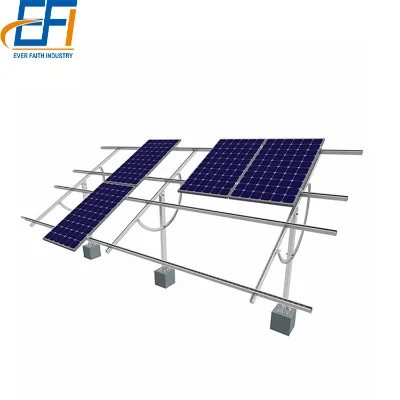
In addition to rooftop applications, some mounting systems are designed for ground mounting in open fields. These systems, often referred to as Ground Mounting Structures, require a different set of specifications compared to rooftop frames. They must be robust enough to withstand environmental loads without the support of a building structure. The installation site for these systems is typically an open field, where the frame can be anchored directly into the ground. The feature of "Quick Installation" is highly valued in these scenarios, as it reduces labor costs and minimizes the time required for deployment.
The versatility of the mounting frame is also evident in its ability to support different types of solar panels. While the primary focus is on residential systems, the same frames can often be adapted for commercial or industrial applications. The specification of the product, such as "Solar Panels Mounting" or "Frame," indicates its intended use. Buyers should verify that the frame is compatible with the specific dimensions and weight of the solar panels they intend to install. The tracking range of the system, if applicable, is another consideration. Some advanced systems offer a tracking range of 60 to +60 degrees, allowing for dynamic adjustment of the panel angle to maximize energy capture. However, for most residential applications, fixed-tilt frames are more common and cost-effective.
Supplier Evaluation and Selection Criteria
Selecting the right supplier for residential PV mounting support frames requires a rigorous evaluation process that goes beyond price comparison. Buyers should prioritize suppliers who demonstrate a clear understanding of the technical requirements and can provide comprehensive documentation. The origin of the product is a key factor, with many suppliers located in China, specifically in regions like Jiangsu and Fujian. These regions are known for their manufacturing capabilities in the solar industry, but buyers must verify the specific capabilities of the supplier rather than relying solely on the region.
The production capacity of the supplier is another critical criterion. The observed capacity range of 2-5kVA suggests that some suppliers may have limitations in their production output, which could impact lead times for large orders. Buyers should inquire about the supplier's ability to scale production to meet their specific project timelines. Additionally, the sample time, which is typically 3-5 days, is an indicator of the supplier's responsiveness and logistical efficiency. A shorter sample time can be advantageous for buyers who need to evaluate product quality quickly before committing to a larger order.
Quality control is paramount in the selection process. Buyers should ask for detailed information about the supplier's quality assurance processes, including in-house testing and third-party inspections. The availability of a warranty, such as a 10-year warranty, is a strong indicator of the supplier's confidence in their product's durability. However, the terms and conditions of the warranty should be carefully reviewed to ensure they cover the specific risks associated with the installation environment. Finally, the supplier's ability to provide customization is a valuable asset. The availability of customization allows buyers to address unique project requirements, but it also requires a supplier with the technical expertise to execute these changes accurately.
Quality Control and Long-Term Procurement Considerations
Ensuring the long-term reliability of residential PV mounting support frames requires a proactive approach to quality control. Buyers should implement a multi-stage verification process that includes pre-shipment inspections, material testing, and post-installation monitoring. The surface treatment of the frame, such as anodizing or power coating, should be inspected for uniformity and thickness to ensure adequate protection against corrosion. The mechanical properties of the aluminum alloy, including its temper and tensile strength, should be verified against the specified standards to confirm that the material meets the required performance criteria.
Long-term procurement considerations also involve the supply chain's resilience and the supplier's ability to provide ongoing support. Buyers should assess the supplier's track record for delivering products on time and maintaining consistent quality over multiple orders. The availability of spare parts and the ability to provide technical support for installation issues are crucial for maintaining the system's performance over its lifespan. Additionally, the packaging method, such as the use of cartons or iron pallets, should be evaluated to ensure that the products arrive at the installation site without damage. Proper packaging is essential for protecting the frames during transit, especially for international shipments.
Finally, buyers should consider the environmental impact of the mounting frames. The use of sustainable materials and manufacturing processes can contribute to the overall sustainability of the solar project. The choice of Aluminum Alloy, which is highly recyclable, is a positive step in this regard. However, buyers should also evaluate the energy consumption of the manufacturing process and the potential for waste reduction. By selecting suppliers who prioritize sustainability and quality, buyers can ensure that their residential PV installations are not only structurally sound but also environmentally responsible. This holistic approach to procurement helps mitigate risks and ensures the long-term success of the solar project.
FAQs
What certifications do residential pv mounting support frames typically have?
Products typically hold CE, ISO, TUV, and GB certifications. These marks indicate compliance with international safety and quality standards, ensuring the aluminum alloy or galvanized steel structures meet rigorous testing requirements for structural integrity and durability.
How much wind load can these mounting frames withstand?
Specific models demonstrate wind load ratings of 60m/s or 150 km/h. These figures represent the maximum operational limits, and buyers must cross-reference them with local building codes to ensure safety under high-velocity wind conditions.
Which materials are used for the frame construction?
Frames are constructed from Aluminum Alloy or Galvanized Steel. Aluminum Alloy offers an optimal balance of weight and corrosion resistance, while Galvanized Steel enhances load-bearing capabilities, particularly in regions with heavy snow accumulation or high wind exposure.
Can I customize the specifications of the mounting frame?
Customization is available for specifications and standard requirements. Buyers can tailor the frame to specific roof pitches or structural constraints, though this flexibility often incurs additional costs compared to standard frames with normal specifications.
What is the typical sample time for these products?
The sample time is typically 3-5 days. This duration indicates the supplier's responsiveness and logistical efficiency, allowing buyers to evaluate product quality quickly before committing to larger orders with minimum order quantities ranging from 1 to 100,000 units.
Where are these solar mounting systems manufactured?
Products originate from China, specifically in regions like Jiangsu and Fujian. These areas are known for their manufacturing capabilities in the solar industry, but buyers should verify specific supplier capabilities and production capacity rather than relying solely on the region.
What surface treatments are applied to the aluminum profiles?
Common surface treatments include Anodizing, Power Coating, and Chemical Polishing. These processes create protective oxide layers or durable finishes to prevent corrosion, which is essential for extending the service life of the mounting frame in various environmental conditions.