Source Respiratory Antigen Test for Hospitals, Labs, and Clinics
Source 30 Respiratory Antigen Test kits from verified manufacturers in Beijing. Compare specifications including sensitivity, storage conditions, delivery times, and application platforms for hospital diagnostics, research, and clinical screening applications today; compare the available evidence and request quotations based on your requirements.
Key considerations
Products List
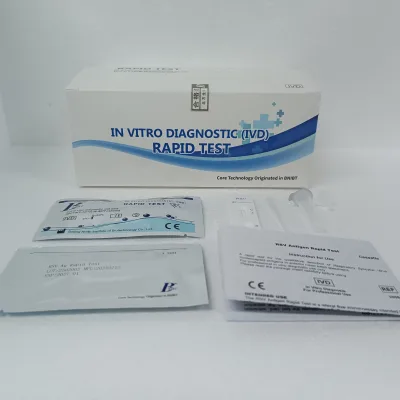


Respiratory Virus Rapid Antigen Test Kit Diagnostic Kit with CE Certifictae
$2.00 - $2.50
MOQ: 1000 Sets


Comprehensive Sourcing Guide
Respiratory Antigen Test Sourcing Guide
Procuring respiratory antigen tests requires a disciplined approach to verifying diagnostic accuracy and supply chain reliability. Buyers must navigate a market where product formats vary significantly, ranging from cassette-based rapid tests to strip-style assays designed for specific clinical or research applications. The core challenge lies in distinguishing between products intended for immediate point-of-care use and those suited for laboratory-based screening, ensuring that the selected kits align with the intended testing volume and operational environment.
This guide outlines the critical verification steps for sourcing these diagnostic tools, focusing on technical specifications, compliance documentation, and commercial terms. By adhering to evidence-based procurement practices, organizations can mitigate risks associated with inconsistent test performance or regulatory non-compliance. The following sections provide a structured framework for evaluating suppliers, validating product attributes, and establishing long-term procurement strategies that support consistent diagnostic outcomes.
Product Scope and Observed Listing Signals
The observed market for respiratory antigen tests reveals a diverse range of product configurations, including cassette formats, test strips, and tube-based systems. Listings frequently highlight applications in hospital settings, with specimens typically collected via nasal swabs or aspiration methods. Buyers should note that product attributes such as storage conditions vary, with some items requiring 2-10°C refrigeration while others may tolerate 2-30°C environments. This variability necessitates careful review of storage requirements to ensure cold chain integrity during transit and storage.
Sensitivity claims are a prominent feature in product descriptions, with some listings citing figures around 99.60%, though buyers must treat these as observed data points rather than guaranteed performance metrics. The format of the test, whether presented as a cassette or strip, often correlates with the result turnaround time, which is frequently advertised within 10-20 minutes. Understanding these operational characteristics is essential for matching product capabilities with the specific throughput and urgency requirements of the testing facility.
Technical Specifications to Verify
Technical verification begins with confirming the test format and application platform compatibility. Products are often described as suitable for Elisa, fluorescence, turbidity, or colloidal gold methods, indicating the underlying detection technology. Buyers must verify the specimen type compatibility, ensuring the kit accepts nasal swabs or aspiration samples as intended. Additionally, the physical appearance of the reagent, typically liquid, and its packaging, whether in bottles or cartons, should be confirmed to align with laboratory handling protocols and storage infrastructure.
The model number and kit size are critical identifiers for inventory management and reordering. Listings may reference specific models such as V409 or RJ-AET01, with kit sizes ranging from single items to bulk packs containing 50 tests per kit. Buyers should also assess the purity of components, with some reagents listed at 96% purity, and verify the sterilization method, such as ethylene oxide sterilization, to ensure safety for clinical use. These specifications directly impact the reliability and safety of the diagnostic process.
Compliance and Safety Documentation
Regulatory compliance is paramount when sourcing in vitro diagnostic reagents. Buyers must verify that products hold relevant certifications, such as CE marking, which indicates conformity with health, safety, and environmental protection standards for products sold within the European Economic Area. Some listings may also reference FDA approval or ISO standards, including ISO13485 for quality management systems. These certifications provide a baseline assurance of manufacturing quality and regulatory adherence, though buyers should always request current, valid certificates directly from the supplier.
Safety documentation should include clear information on sterilization status and shelf life. Products are often labeled as sterile, with ethylene oxide sterilization being a common method, and typically carry a shelf life of two years. Buyers must ensure that the quality guarantee period, often one or two years, is clearly stated and aligns with procurement contracts. Proper documentation of these safety and quality parameters is essential for maintaining regulatory compliance and ensuring patient safety in clinical settings.
Cost Drivers and Commercial Terms
Pricing for respiratory antigen tests varies widely, with observed ranges extending from minimal unit costs to higher values for specialized kits. The minimum order quantity (MOQ) is a significant commercial factor, with listings showing MOQs ranging from single units to thousands of kits. Buyers should negotiate terms that balance inventory costs with supply continuity, considering that larger orders may offer better unit pricing but require adequate storage capacity and faster turnover rates.
Delivery times and lead times are critical components of the commercial agreement. Suppliers often cite delivery windows of 7-10 days or one week, which impacts planning for stock replenishment. Buyers must clarify whether these timelines are consistent and what factors might cause delays, such as custom logo printing or specific packaging requirements. Understanding these commercial terms helps in forecasting costs and ensuring that supply chain disruptions do not compromise testing operations.
Supplier Qualification and Quality Control
Supplier qualification involves assessing the manufacturer's production capacity and quality control processes. Listings may indicate self-owned manufacturing facilities with significant output capacities, such as 500,000 units, which suggests the ability to handle large orders. Buyers should verify the manufacturer's location, with Beijing, China, being a common origin, and assess their ability to provide customization services, including logo printing and specific packaging configurations.
Quality control measures should be explicitly defined in the supplier agreement. Buyers must ensure that the supplier provides a robust after-sale service policy, including provisions for returns and exchanges in case of quality problems. The presence of a quality guarantee period, typically one or two years, offers additional protection. Verifying these quality assurance mechanisms is essential for maintaining consistent product performance and minimizing operational risks associated with defective batches.
Long-Term Procurement Checks
Establishing long-term procurement relationships requires ongoing monitoring of product performance and supplier reliability. Buyers should implement regular audits of supplier certifications and quality management systems to ensure continued compliance with regulatory standards. Tracking the consistency of delivery times and lead times is also crucial, as any deviations can impact testing schedules and inventory levels. Maintaining open communication with suppliers regarding any changes in product specifications or manufacturing processes helps in adapting to market changes.
Continuous evaluation of product attributes, such as sensitivity claims and storage requirements, ensures that the sourced tests remain suitable for evolving clinical needs. Buyers should periodically review the shelf life and quality guarantee periods to optimize inventory turnover and reduce waste. By maintaining a disciplined approach to supplier management and product verification, organizations can secure a reliable supply of high-quality respiratory antigen tests, supporting effective diagnostic operations and patient care.
FAQs
How long do test results take to read?
Results appear within 10 to 20 minutes after the specimen is added to the cassette or strip. Allow the full incubation window before reading to avoid false negatives, and do not interpret results after the stated read time. Nasal swab or aspiration specimens are suitable specimen types for these respiratory antigen tests.
What storage conditions are required for the kits?
Store the kits at 2 to 30 degrees Celsius, away from direct sunlight and moisture, until the printed expiry date. Some reagent components specify storage at 2 to 10 degrees Celsius, so always follow the label on each bottle. The shelf life is two years when storage instructions are observed.
Which specimen types can be used with the test?
Nasal swab and nasal aspiration specimens are the supported specimen types for these respiratory antigen tests. Collect the sample with the provided swab, process it according to the kit instructions, and apply it to the cassette or strip format. Confirm that the specimen remains within the validated collection-to-test interval.
Can the kits be customized for our brand?
Yes, customization is available, including logo printing on the packaging. Customized orders typically have higher minimum quantities than stock configurations, with a listed MOQ of 1000 units for some items. Discuss artwork requirements, packaging format, and order volume with the supplier before confirming a purchase order.
What quality standards do these products meet?
The products list ISO13485 as the safety standard, and CE certification is indicated for applicable items. Manufacturer self-owned production and quality guarantee periods of one to two years are stated on the product pages. Verify current certificates and applicable regulatory status for your destination market before ordering.
What is the delivery time after ordering?
The stated delivery time is 7 to 10 days, with some listings quoting a lead time of one week. Actual timing depends on order size, customization requirements, and shipping arrangements. Confirm the schedule with the supplier before payment, especially for carton-packed bulk orders requiring logo printing.
What formats and kit sizes are available?
Tests are supplied in cassette and strip formats, with kit standards such as 50 tests per kit and 25 kits per box. A multiple respiratory antigen combo test configuration is listed for broader panel coverage. Transport medium products are available in 5, 7, and 10 milliliter sizes for sample storage and transportation.