Source Retractable Skirt Rock Drill Bits for Mining, Quarrying, and Well Drilling
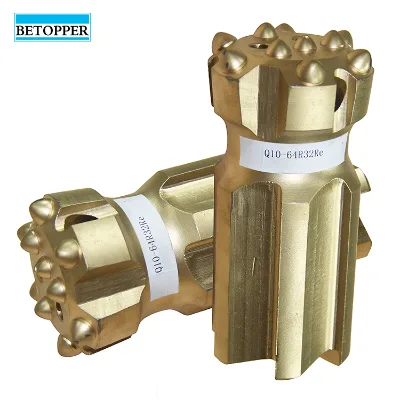
Find and compare 30 Retractable Skirt Rock Drill Bits designed for coal mining, quarry drilling, and well drilling applications. These tools feature tungsten carbide or alloy steel construction with various face and insert designs to suit specific geological conditions.
Key considerations
Products List


T45 Rock Drill Button Bit Retrac Skirt for Hard Rock Top Hammer Threaded Dill Bit
$50.00 - $1000.00
MOQ: 1 Pieces

T45 Rock Drill Button Bit Retrac Skirt for Hard Rock 89mm T45 Thread Retrac Button Bit
$50.00 - $1000.00
MOQ: 1 Pieces


64mm Thread Button Bit Retrac Skirt for Hard Rock Top Hammer Threaded Dill Bit
$50.00 - $1000.00
MOQ: 1 Pieces



Comprehensive Sourcing Guide
Retractable Skirt Rock Drill Bits Sourcing Guide
Procuring Retractable Skirt Rock Drill Bits requires a nuanced understanding of both the mechanical design and the specific geological conditions where these tools excel. These specialized bits are engineered to provide enhanced stability and directional control during drilling operations, particularly in complex rock formations where standard bits might wander or suffer from excessive vibration. The "retractable skirt" mechanism typically refers to a design feature that allows the bit body or stabilizing elements to adjust or retract, minimizing friction against the borehole wall while maintaining precise alignment. For procurement teams, this means evaluating not just the cutting structure but also the integrity of the moving or adjustable components that define the bit’s performance in hard rock environments.
The sourcing landscape for these bits is dominated by manufacturers in China, with significant production hubs in Shandong and Xiamen. Buyers will encounter a wide variety of models, ranging from standard DTH (Down The Hole) bits to more specialized configurations like center drill bits or button bits. The market offers significant customization options, including OEM and ODM services, allowing buyers to tailor bit designs to specific drill rig specifications or unique geological challenges. However, the diversity of available products also introduces complexity in verification, requiring buyers to rigorously cross-reference technical claims with physical specifications and certified documentation before committing to large orders.
Product Scope and Observed Listing Signals
The observed product listings reveal a broad spectrum of drill bit types, with prices ranging from $2 to $1,000 USD and minimum order quantities (MOQs) varying from 1 to 500 units. This wide price band suggests that the market includes everything from small, specialized masonry or center drill bits to large-scale DTH bits used in major mining and quarrying operations. Buyers should note that the term "retractable skirt" may not always be explicitly used in every listing; instead, it might be described through related features such as "standard/retrac/straight rac" bit body types or specific face designs like flat, convex, or concave. Understanding these synonymous or related terms is crucial for effective search and evaluation.
Material composition is a primary differentiator in the observed listings, with suppliers offering bits made from Tungsten Carbide, High Manganese Steel, and Alloy Steel. Tungsten Carbide is typically associated with high-wear applications and button bits, while Alloy Steel is often used for the bit body or shank. The processing type is predominantly forging, which generally indicates a robust structure capable of withstanding high impact loads. Buyers must carefully match the material and processing claims to their specific drilling medium, whether it is coal mining, ore mining, quarry drilling, or well drilling, as the wrong material choice can lead to premature failure and increased operational costs.
Technical Specifications to Verify
When evaluating Retractable Skirt Rock Drill Bits, the diameter range is a critical specification, with observed listings covering sizes from 28mm up to 1000mm. For smaller applications, such as masonry drilling or precise center drilling, diameters like 28mm, 30mm, 32mm, and up to 45mm are common. In contrast, large-scale DTH drilling for mining and well drilling may require bits with diameters starting at 76mm and extending to 1000mm. Buyers must verify that the selected bit diameter matches their drill rig’s capacity and the required borehole size, as mismatches can result in equipment damage or inefficient drilling performance.
The design of the bit face and inserts is equally important, with options including spherical, ballistic, or parabolic inserts, and face shapes such as flat, drop center, or uniface. The model numbers observed, such as R32, T38, DHD380, and ANBIT, often correspond to specific thread types or industry standards. For instance, T38 thread button bits are a common standard in certain regions, while other models may adhere to proprietary or regional standards. Buyers should verify the thread type and connection mechanism to ensure compatibility with their drill rods and hammer systems, as incorrect threading can lead to connection failures and safety hazards.
Compliance and Safety Documentation
Certification is a key indicator of manufacturing quality and regulatory compliance, with CE and ISO9001 being the most frequently cited certifications in the observed listings. Some suppliers also mention ISO2000 or SGS, which may relate to specific quality management systems or testing standards. Buyers should request valid certification documents to verify that the manufacturer adheres to recognized international standards for quality and safety. It is important to note that while certifications are a good starting point, they do not guarantee the performance of every individual unit, so they should be used as a baseline for supplier qualification rather than a sole determinant of product quality.
In addition to certifications, buyers should inquire about the specific standards the bits are manufactured to, such as AISI for alloy steel or other industry-specific standards. The observed listings mention standards like 76-1000mm, which likely refers to the diameter range rather than a technical standard, so buyers must clarify the exact technical specifications being followed. Understanding the standard ensures that the bit’s dimensions, material properties, and performance characteristics align with the buyer’s operational requirements and regulatory obligations in their target market.
Cost Drivers and Commercial Terms
The cost of Retractable Skirt Rock Drill Bits is influenced by several factors, including material quality, manufacturing complexity, and order volume. The observed price range of $2 to $1,000 USD reflects the diversity of products, with smaller, simpler bits being more affordable and larger, complex DTH bits commanding higher prices. Buyers should consider the total cost of ownership, which includes not only the purchase price but also the lifespan of the bit and its performance in the specific drilling conditions. Higher-quality materials, such as premium Tungsten Carbide, may result in a higher upfront cost but can offer better durability and efficiency, reducing long-term expenses.
Commercial terms such as MOQ, lead time, and payment conditions are also critical considerations. The observed MOQs range from 1 to 500 units, offering flexibility for both small-scale and large-scale procurement. Lead times are typically within 25 days after receipt of advanced payment, which buyers should factor into their project planning. Additionally, suppliers offer various packing options, including wooden boxes, plywood cases, and cartons, which can affect shipping costs and product protection. Buyers should negotiate terms that align with their cash flow and logistical capabilities, ensuring a smooth procurement process.
Supplier Qualification and Quality Control
Supplier qualification is essential for ensuring the reliability and consistency of Retractable Skirt Rock Drill Bits. Buyers should verify the supplier’s manufacturing capabilities, including their use of forging processes and surface treatments like spray-paint, which can affect the bit’s durability and corrosion resistance. The observed listings indicate that suppliers are located in Shandong and Xiamen, China, regions known for their industrial manufacturing bases. Buyers should conduct due diligence on these suppliers, checking their production facilities, quality control processes, and track record in the industry.
Quality control measures should be clearly defined and agreed upon before placing orders. Buyers should request samples for testing and evaluation, particularly for critical applications where bit performance is paramount. Inspections should cover dimensions, material composition, and structural integrity, ensuring that the bits meet the specified standards. Additionally, buyers should establish clear communication channels with suppliers to address any issues that may arise during production or delivery, fostering a collaborative relationship that supports long-term procurement success.
Long-Term Procurement Checks
Long-term procurement success depends on continuous monitoring of supplier performance and product quality. Buyers should establish key performance indicators (KPIs) such as delivery times, defect rates, and customer support responsiveness to evaluate suppliers over time. Regular audits and feedback loops can help identify areas for improvement and ensure that suppliers remain aligned with the buyer’s evolving needs. By maintaining a proactive approach to supplier management, buyers can mitigate risks and secure a reliable supply of high-quality Retractable Skirt Rock Drill Bits.
Furthermore, buyers should stay informed about industry trends and technological advancements in drill bit design and manufacturing. This includes monitoring changes in standards, materials, and drilling techniques that may impact the suitability of current products. Engaging with industry networks and attending relevant trade shows can provide valuable insights and opportunities to connect with new suppliers. By remaining adaptable and informed, buyers can optimize their procurement strategies and maintain a competitive edge in the drilling industry.
FAQs
What materials are used for Retractable Skirt Rock Drill Bits?
These bits are constructed from Tungsten Carbide and High Manganese Steel to ensure durability. Some variants also utilize Alloy Steel for specific applications. This material selection supports high performance in demanding environments like coal mining and quarry drilling.
Which certifications do these drill bits typically hold?
Products often carry CE and ISO9001 certifications to verify quality and safety standards. Some listings also reference SGS or ISO2000 certificates. These documents confirm the manufacturing process meets international requirements for industrial drilling equipment.
Can I request custom colors for the drill bits?
Yes, customization is available including specific color requests such as Red, Blue, Black, or Yellow. Buyers can also specify the face design as Flat, Convex, or Concave. This flexibility allows the equipment to match specific operational or safety color codes.
How long is the delivery time for these products?
Delivery is typically completed within 25 days after receipt of advanced payment. This lead time applies to standard orders processed by manufacturers in China. Buyers should confirm specific timelines based on their order volume and shipping method.
What are the available diameter specifications for these bits?
Diameters range from 28mm up to 1000mm depending on the specific model and application. Common sizes include 32mm, 38mm, and 45mm for various drilling tasks. Larger models support heavy-duty operations in well drilling and ore mining sectors.
Which industries can utilize these Retractable Skirt Rock Drill Bits?
These bits are designed for use in Coal Mining, Quarry Drilling, and Well Drilling. They are also applicable in Energy & Mining sectors and for Masonry Drilling tasks. The equipment supports diverse industrial needs ranging from small-scale to large-scale extraction.