Source Reusable Eco Conscious Grocery Tote for Shopping, Gifts, and Food
Find 30 options for a Reusable Eco Conscious Grocery Tote suitable for shopping, gifts, and food. Compare features like material, size, and customization to select the right supplier for your needs.
Key considerations
Products List


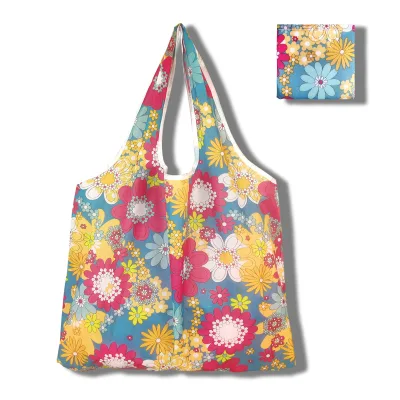
Standard Reusable Shopping Bag Eco Friendly Ripstop Nylon Foldable Grocery Tote
$1.33 - $1.53
MOQ: 500 pieces


Comprehensive Sourcing Guide
Strategic Sourcing Guide for Reusable Eco-Conscious Grocery Totes
The global shift toward sustainable packaging has elevated the demand for reusable grocery totes, transforming them from simple carry-alls into strategic brand assets. For procurement professionals, sourcing these items requires a nuanced understanding of material science, manufacturing processes, and supply chain logistics. The market offers a diverse array of options, ranging from woven polypropylene to non-woven fabrics, each with distinct performance characteristics. This guide synthesizes observed market data and technical specifications to provide a disciplined framework for evaluating suppliers and selecting the right product for specific operational needs.
Material Composition and Structural Integrity
The foundation of any eco-conscious tote lies in its material composition. Current market observations indicate a bifurcation between two primary material categories: PP Woven and Non-Woven fabrics. PP Woven materials are characterized by their high tensile strength and durability, making them suitable for heavy-duty applications such as carrying groceries, shoes, or electronic products. These bags often feature a "Safety Factor" that ensures structural integrity under load. In contrast, Non-Woven materials, frequently marketed as "Eco Non-Woven Bags," offer a softer texture and are often preferred for cosmetic, jewelry, or gift packaging. The observed data highlights that Non-Woven options are widely available with specific model numbers such as SU-FSB-013 and SU-FSB-007, suggesting a standardized production line for these items.
When evaluating material specifications, buyers must look beyond the generic label. The "Paper Type" attribute of Kraft Paper is sometimes observed in conjunction with other materials, indicating hybrid constructions or specific liner requirements. However, the core structural element remains the fabric. For heavy grocery use, the "PP Woven" classification is generally the superior choice due to its resistance to tearing. For lighter promotional use, "Non-Woven" provides a cost-effective solution. The "Weight" attribute observed in the market is consistently below 0.5 Kg, which is a critical constraint for logistics and shipping costs. Procurement teams should verify that the specific model selected aligns with the intended load-bearing requirements, as a bag designed for jewelry may fail under the weight of a full grocery run.
Customization Capabilities and Brand Integration
One of the primary drivers for sourcing reusable totes is brand visibility. The market data confirms that "Customization" is a standard available feature across the majority of suppliers. This extends to "Logo Printing," "Hot Stamping," and "Sewing" technologies. The "Surface Handling" process of Hot Stamping is particularly relevant for creating high-contrast, durable logos on non-woven surfaces. For buyers seeking a premium feel, the "Sewing" technology ensures that handles and seams are reinforced, preventing failure at stress points.
The "Logo" attribute is frequently listed as "Accept Customized Logo" or "With Logo Printing," indicating that most manufacturers can accommodate specific branding requests. However, the "Pattern Type" is often listed as "OEM," which implies that the supplier produces goods based on the buyer's design specifications rather than offering a proprietary design library. Buyers must be aware that while "Customized Size" is available, the "Standard" production often defaults to specific dimensions like 605040 mm or similar configurations. When requesting custom dimensions, it is essential to understand that this may impact the "MOQ" (Minimum Order Quantity). The observed "MOQ" range spans from 100 to 10,000 units, with specific models like LJN1020 showing an MOQ of 1000 PCS. Smaller orders, such as those starting at 100 units, are noted as "Accepted," offering flexibility for startups or limited-run promotional campaigns.
Technical Specifications and Functional Attributes
Understanding the technical specifications is vital for ensuring the tote meets functional requirements. The "Shape" of the product is predominantly "Square," which maximizes internal volume and stacking efficiency. The "Closure Type" is typically "Open," facilitating quick access to contents, while the "Type" is generally "Handled" or "Folded." The "Folded" attribute is particularly useful for storage and logistics, allowing the bags to be compacted when not in use.
The "Usage" attributes observed in the market are extensive, covering "Garment & Shoes," "Jewelry," "Electronic Products," "Food," "Cosmetic," and "Gifts." This versatility suggests that the same base product can be adapted for multiple verticals. For grocery applications, the "Eco-Friendly" feature is a non-negotiable selling point. Buyers should verify that the "Eco-Friendly" claim is supported by the material composition, such as the use of recyclable non-woven fabrics. The "Keyword" data, including "Shopping Non Woven Bag" and "Nonwoven T-Shirt Bag," further reinforces the product's intended application.
| Attribute Category | Observed Options | Procurement Consideration |
|---|---|---|
| Material | PP Woven, Non-Woven | Select based on load weight and durability needs. |
| Shape | Square | Optimizes volume and stacking; verify dimensions. |
| Closure | Open | Standard for grocery; consider zippers if security is needed. |
| Handle Type | Handled, Folded | Folded aids storage; Handled aids carrying comfort. |
| Surface | Hot Stamping, Logo Printing | Ensure print durability and color fidelity. |
| Origin | Wenzhou, China; Zhejiang, China | Verify logistics routes and lead times from specific hubs. |
Compliance, Certification, and Safety Standards
In the realm of eco-conscious products, compliance is as critical as functionality. While the supplied data lists "Safety Factor: Safety" and "Standard: Customized," it does not explicitly list third-party certifications such as ISO or specific environmental standards. Buyers must therefore treat the "Eco-Friendly" and "Safety" claims as observations that require verification. The "prod_standard" is noted as "customized," which implies that the product can be manufactured to meet specific regulatory requirements of the destination market.
For food-grade applications, such as carrying groceries, the material must be safe for contact with consumables. Buyers should request documentation confirming that the "Non-Woven" or "PP Woven" materials do not contain harmful chemicals or heavy metals. The "Brand Name" SuccessPromo is observed in the data, but this should not be interpreted as a universal endorsement of quality. Instead, it serves as an example of the branding landscape. Procurement teams should insist on a "Safety" assessment that aligns with local regulations, particularly regarding the "Hot Stamping" inks and adhesives used in the logo printing process.
Cost Drivers and Pricing Dynamics
The pricing for reusable grocery totes is influenced by several factors, including material type, customization level, and order volume. The observed price range in the market is 0.02 to 1.53 USD per unit. This wide variance reflects the difference between basic, unbranded non-woven bags and premium, custom-printed woven totes. The "MOQ" is a significant cost driver; orders at the lower end of the 100-10,000 range may carry a higher unit cost due to setup fees for printing and sewing. Conversely, larger orders often benefit from economies of scale.
The "Delivery Time" is typically listed as "Usually 30 days," which is a critical factor for supply chain planning. Buyers must account for this lead time when scheduling product launches or restocking. The "prod_packing" method, often "CTN" (Carton) or "Paper Box," also impacts the final landed cost. Paper box packaging may be preferred for retail-ready products, while cartons are more common for bulk industrial shipping. Buyers should calculate the total cost of ownership, including packaging, shipping, and potential duties, rather than focusing solely on the unit price.
Supplier Evaluation and Quality Control
Evaluating suppliers requires a rigorous approach to ensure consistency and reliability. The "prod_origin" data points to Wenzhou and Zhejiang, China, as key manufacturing hubs. These regions are known for their textile and packaging industries, but buyers should verify the specific capabilities of each supplier. The "Model Number" variations, such as SU-FSB-011, SU-FSB-006, and LJNV03, indicate a diverse product catalog. Buyers should request samples of these specific models to assess the "Surface Handling" quality and the durability of the "Sewing" seams.
Quality control should focus on the "Logo" application and the structural integrity of the "Handle." Since the "Pattern Type" is OEM, the consistency of the print across the batch is paramount. Buyers should establish a clear acceptance criteria for color matching and print placement. Additionally, the "Small Orders: Accepted" attribute suggests that some suppliers are flexible, but this flexibility should not come at the expense of quality. A robust quality control plan should include pre-production samples, in-process inspections, and final random sampling before shipment.
Long-Term Procurement and Sustainability Strategy
For long-term success, procurement strategies must align with sustainability goals. The "Eco-Friendly" attribute is a key differentiator, but it must be backed by verifiable practices. Buyers should inquire about the recyclability of the materials and the environmental impact of the manufacturing process. The "Customized" standard allows for innovation, such as using recycled content in the "Non-Woven" fabric.
The "Usage" data shows that these totes are versatile, serving not just for groceries but also for cosmetics, electronics, and gifts. This versatility allows for a unified procurement strategy where a single supplier can provide multiple product lines. However, buyers must ensure that the "Safety Factor" remains consistent across all variations. Long-term contracts should include clauses for continuous improvement, ensuring that the supplier stays updated on new eco-friendly materials and printing technologies. By maintaining a close relationship with suppliers and demanding transparency in the "Standard" and "Origin" details, buyers can build a resilient supply chain that supports both operational efficiency and environmental responsibility.
FAQs
What materials are used for reusable eco conscious grocery totes?
Reusable eco conscious grocery totes are primarily made from PP Woven or Non-Woven fabrics. PP Woven offers high tensile strength for heavy loads, while Non-Woven provides a softer texture suitable for lighter items like cosmetics or gifts.
Can I customize the logo and size of the tote bags?
Yes, customization is available for both logos and sizes. Suppliers accept customized logos using hot stamping or printing, and can produce bags in specific dimensions like 60*50*40 mm or other custom requests depending on the order volume.
What is the typical delivery time for these tote bags?
The typical delivery time is usually 30 days. This lead time applies to standard production runs, though it may vary slightly based on the specific model number and the complexity of the customization requested by the buyer.
Which minimum order quantities are accepted for these bags?
Minimum order quantities range from 100 to 10,000 units. Small orders starting at 100 pieces are accepted, making them suitable for startups, while larger orders often benefit from economies of scale and lower unit pricing.
Where are these bags manufactured and what is the origin?
These bags are manufactured in China, specifically in the Wenzhou and Zhejiang regions. These locations are key hubs for textile and packaging industries, offering a wide variety of models and production capabilities for international buyers.
How much do reusable eco conscious grocery totes cost per unit?
The price per unit ranges from 0.02 to 1.53 USD. This variance depends on the material type, customization level, and order volume, with basic unbranded bags costing less than premium custom-printed woven options.
Are these bags suitable for food and cosmetic packaging?
Yes, the bags are suitable for food, cosmetics, jewelry, and electronic products. Their usage spans multiple verticals, provided the material meets safety standards for direct contact with consumables and the specific application requirements.