Source reusable eco-friendly wine bottle bag for Promotional Gifts, Travel, and Shopping
Explore 30 verified listings for a reusable eco-friendly wine bottle bag suitable for promotional gifts, travel, and shopping. Buyers can compare canvas and non-woven options with customized sizes and logo printing capabilities from Zhejiang and Xiamen manufacturers.
Key considerations
Products List
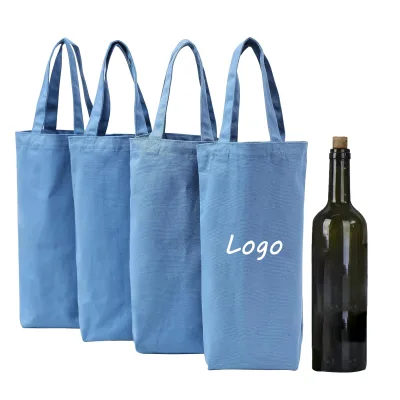


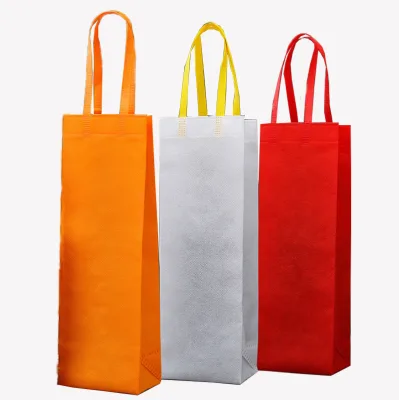
Customized Eco-Friendly Printed Wine Bags Wine Bottle Gift Packaging Nonwoven Bag
$0.17 - $0.30
MOQ: 500 Pieces
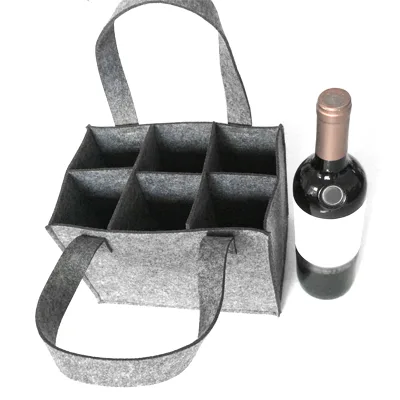
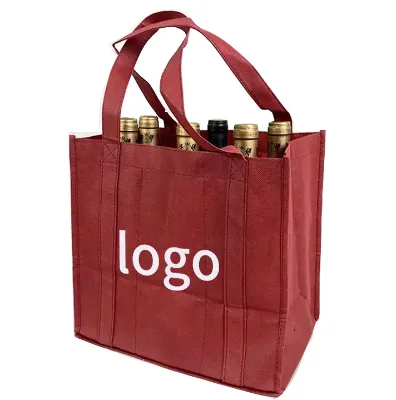


Promotional Custom Eco Friendly Non-Woven Fabric Reusable 4 Bottle Wine Carry Bag
$0.28 - $0.48
MOQ: 2000 Pieces


Wine Packaging Bag Eco Friendly Bags for Wine Bottle Non Woven Wine Bags with Logo
$0.50 - $0.70
MOQ: 5000 Pieces



Comprehensive Sourcing Guide
Strategic Sourcing Guide for Reusable Eco-Friendly Wine Bottle Bags
Understanding Product Variants and Core Specifications
When sourcing reusable eco-friendly wine bottle bags, buyers must first navigate a fragmented market defined by diverse material compositions and structural designs. The product category is not monolithic; it encompasses items ranging from simple canvas totes to specialized carriers designed for specific bottle counts. A critical observation from current market listings indicates that materials vary significantly between canvas and non-woven fabrics. Canvas options are often associated with a "Simple" style and "Handled" features, providing a sturdy, classic aesthetic suitable for promotional gifts. In contrast, non-woven variants may offer different tactile properties, such as "Soft" or "Medium Soft" hardness, which can influence the perceived quality and durability of the bag during transport.
The dimensional specifications are equally critical for functional procurement. Buyers should expect to encounter products categorized by size, ranging from "Small" (20-30cm) to "Medium" (30-50cm) and even larger configurations. Some listings explicitly define capacity by bottle count, such as carriers designed for 4 bottles, while others offer customizable sizes for 4, 6, or 8 bottles. The single package dimensions for these items often measure approximately 35x10x25 cm, with a single gross weight around 0.500 kg. It is essential to verify whether the "Size" attribute refers to a fixed standard or a "Customized" parameter, as this distinction dictates the flexibility of the order. Furthermore, the closure type is a vital functional specification; "Shoulder" closures are noted in certain models, offering hands-free convenience, whereas "Hand-Held" or "Handled" styles rely on manual carrying.
Technical Compliance and Certification Verification
In the realm of B2B procurement, technical compliance serves as the primary gatekeeper for market access and brand safety. While the product category is inherently "Eco-friendly" and "Reusable," these terms are marketing descriptors that require substantiation through objective standards. Current data indicates that some products in this sector are associated with the CE standard, a certification often required for products entering the European Economic Area. However, the presence of a CE label on a specific listing does not guarantee that every supplier or every batch of wine bags meets this standard. Buyers must treat such certifications as observations of specific items rather than universal attributes of the entire category.
Beyond specific standards, the "Eco-friendly" claim necessitates a rigorous verification process. Buyers should request documentation regarding the source of the raw materials, particularly for canvas and non-woven fabrics. The sustainability of the production process, including dyeing and printing methods, is paramount. For instance, "Offset Printing" is a noted process for logo application, but the environmental impact of the inks used in this process must be confirmed. Additionally, the "Waterproof" attribute is explicitly listed as "Not Waterproof" for certain models. This is a crucial technical limitation that procurement teams must communicate to end-users. If water resistance is a requirement for the intended application, such as beach use or outdoor events, buyers must specifically seek out products that deviate from the standard non-waterproof specification, as the default market offering often lacks this feature.
Cost Drivers and Pricing Dynamics
The pricing structure for reusable wine bottle bags is influenced by a complex interplay of material costs, customization levels, and order volume. The observed price range in the market spans from $0.07 to $1.86 per unit, a wide variance that reflects differences in material quality, size, and the extent of branding. Lower-priced items typically correspond to basic non-woven materials with minimal customization, often adhering to standard sizes like "Small" or "Medium." Conversely, higher-priced units are likely associated with premium canvas materials, larger capacities (e.g., 6 or 8 bottles), and complex customization requests.
Order Volume is a primary driver of unit cost. The Minimum Order Quantity (MOQ) for these products typically ranges from 50 to 10,000 units. Suppliers with lower MOQs, such as 100 pieces, may charge a premium per unit due to the setup costs associated with smaller production runs. As the order volume increases, the per-unit cost generally decreases, making bulk procurement more cost-effective. However, buyers must balance cost savings against inventory holding costs. The "Selling Units" are often listed as "Single item," which can complicate pricing for mixed orders. Additionally, the "Customization" availability, including "Customized Logo" and "Customized Pattern Type," adds a layer of cost. While some suppliers accept customized logos, others may offer "Without Logo Printing" as a standard option to reduce expenses. The choice between a generic product and a fully branded item will significantly impact the final landed cost.
Typical Applications and Usage Scenarios
The versatility of reusable wine bottle bags makes them suitable for a broad spectrum of applications, primarily driven by their dual function as protective carriers and promotional tools. The "Usage" attribute frequently lists "Promotional Gifts" and "Promotion" as primary functions. This makes the product an ideal vehicle for corporate branding, trade show giveaways, and event swag. The ability to accept a "Customized Logo" allows companies to imprint their brand identity directly onto the bag, turning a functional item into a mobile advertisement.
Beyond corporate promotions, the product specifications suggest utility in various lifestyle scenarios. The "Usage" list includes "Wine Bag," "Travel Bag," "Shopping Bag," "Gift Bag," and "Beach Bag." This diversity indicates that the bags are designed to meet the needs of consumers in different contexts. For example, the "Simple" style and "Handled" design make them suitable for shopping or travel, while the "Eco-friendly" nature appeals to environmentally conscious beachgoers. However, the "Not Waterproof" characteristic limits their suitability for wet environments unless specific protective measures are taken. Buyers must align the product's technical attributes with the specific needs of their target audience. A bag intended for a wine tasting event might prioritize aesthetic appeal and pattern types like "Letter" or "With Pattern," whereas a bag for a beach party might require a focus on durability and capacity for multiple bottles.
Supplier Evaluation and Operational Logistics
Selecting the right supplier requires a thorough evaluation of their operational capabilities, location, and logistical readiness. The supply chain for these products is heavily concentrated in China, with specific hubs identified as Zhejiang and Xiamen. These regions are known for their textile and packaging manufacturing expertise. When evaluating potential partners, buyers should verify the "100% manufacturer" status, as this can indicate better control over quality and pricing compared to trading companies. However, the presence of a manufacturer claim should be validated through site audits or third-party verification.
Logistical parameters are equally critical for supply chain planning. The "Port of dispatch" is typically listed as Ningbo or Shanghai, which are major shipping hubs with extensive global connectivity. Buyers must factor in the "Daytime" lead time, which is observed to be between 15 and 25 days for production. This timeline can vary based on the complexity of the customization and the current order volume of the factory. For urgent orders, the "Sample time" of 5-7 days is a crucial metric to consider. While sample approval is a necessary step, it adds to the overall project timeline. Shipping methods are diverse, including DHL, UPS, FedEx, EMS, and TNT, offering flexibility in delivery speed and cost. The "prod_packing" is generally done in "Cartons," which must be evaluated for their ability to protect the goods during transit, especially given the "Single gross weight" of 0.500 kg per item.
Quality Control and Long-Term Procurement Considerations
Ensuring consistent quality in reusable wine bottle bags requires a robust quality control (QC) framework. Since the product attributes include variations in "Hardness" (Soft to Medium Soft) and "Pattern" (With Pattern, Without Pattern, Letter, Customized), buyers must establish clear acceptance criteria. Visual inspections should verify the integrity of the "Handled" or "Shoulder" closures and the accuracy of the "Logo Printing." For products claiming to be "Eco-friendly," buyers should request evidence of material sourcing and production processes that align with sustainability goals.
Long-term procurement considerations extend beyond the initial order. The "Customization" capability of suppliers is a key factor in building a sustainable supply relationship. A supplier that can accommodate "Customized Pattern Type" and "Customized Logo" offers greater flexibility for future marketing campaigns and product line expansions. However, buyers must be aware that customization often involves higher MOQs and longer lead times. The "prod_model" numbers, such as TS-234, TP-WB063, AS-3421, LK-254, and TP-982, serve as unique identifiers for specific designs. Maintaining a consistent model number across orders can help ensure product consistency over time.
Furthermore, the "Standard" of the product, such as the CE certification mentioned in some listings, should be reviewed annually to ensure continued compliance with changing regulations. Buyers should also consider the "Waterproof" limitation in their long-term strategy. If market trends shift towards water-resistant products, suppliers must be able to pivot their material sourcing accordingly. Finally, the "Brand name" associated with the product, such as FAMULINFNG, should be evaluated for its market recognition and alignment with the buyer's brand identity. Building a partnership with a supplier that offers a balance of cost, quality, and flexibility will be essential for long-term success in this competitive market.
Comparative Analysis of Product Attributes
To facilitate decision-making, the following table summarizes key attribute variations observed in the market. This comparison highlights the trade-offs buyers must consider when selecting a specific product configuration.
| Attribute | Option A (Standard) | Option B (Premium/Custom) | Implication for Buyer |
|---|---|---|---|
| Material | Non-woven | Canvas | Canvas offers higher durability; Non-woven is often lower cost. |
| Size | Small (20-30cm) | Medium (30-50cm) or Custom | Larger sizes accommodate more bottles but increase shipping weight. |
| Pattern | Without Pattern / Letter | Customized Pattern | Custom patterns increase branding value but raise MOQ and cost. |
| Waterproof | Not Waterproof | (Variable/Verify) | Standard models lack water resistance; verify if needed for specific use. |
| Logo | Without Logo Printing | Accept Customized Logo | Custom logos require setup time and higher unit costs. |
| MOQ | 50 - 100 pcs | 1000 - 10000 pcs | Lower MOQs allow testing; higher volumes reduce unit price. |
| Origin | Zhejiang / Xiamen | (Same Region) | Both regions are established manufacturing hubs with similar logistics. |
| Lead Time | 15-25 Days | 15-25 Days | Production time is consistent; plan for sample time (5-7 days) separately. |
This analysis underscores that there is no single "best" product. The optimal choice depends on the specific application, budget constraints, and branding requirements of the buyer. By carefully evaluating these attributes against the core keyword of "reusable eco-friendly wine bottle bag," procurement teams can make informed decisions that align with their strategic objectives.
FAQs
Can I get a customized logo on these wine bags?
Yes, many suppliers accept customized logos for promotional gifts. This option is available for canvas and non-woven materials, though it may require a minimum order quantity and additional setup time for the printing process.
What is the typical lead time for production?
The standard production lead time ranges from 15 to 25 days. This duration applies to orders from manufacturers in Zhejiang or Xiamen, China, and may vary slightly depending on the complexity of the customization requested.
Which materials are commonly used for these bags?
The bags are primarily made from canvas or non-woven fabric. Canvas options often feature a simple style with handles, while non-woven variants may offer a softer texture and are frequently used for promotional purposes.
How many bottles can the different sizes hold?
Sizes vary from small bags holding one bottle to carriers designed for four bottles. Some models offer customizable dimensions to accommodate four, six, or eight bottles depending on the specific product model selected.
What is the minimum order quantity for these items?
The minimum order quantity typically ranges from 50 to 10,000 units. Specific suppliers may set a baseline of 100 pieces, with unit costs decreasing as the order volume increases significantly.
Are these bags waterproof for beach use?
Standard models are not waterproof, which limits their suitability for wet environments. Buyers requiring water resistance must verify specific product attributes, as the default market offering lacks this protective feature.
Which ports are used for shipping these products?
Products are typically dispatched from the ports of Ningbo or Shanghai in China. These major hubs facilitate global shipping via carriers like DHL, UPS, FedEx, EMS, and TNT for both sample and bulk orders.