Source Tactical Duty Belt with Key Holder for Security, Patrol, and Training
Compare 30 Tactical Duty Belt with Key Holder options from verified suppliers. Evaluate materials like aramid fiber and nylon, buckle types, and customization services to find the right gear for security, patrol, and training applications; compare the available evidence and request quotations based on your requirements.
Key considerations
Products List




Comprehensive Sourcing Guide
Tactical Duty Belt with Key Holder Sourcing Guide
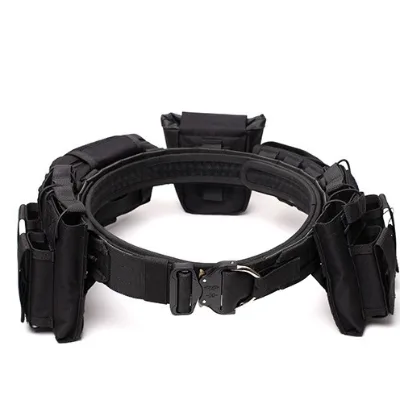
Procuring a tactical duty belt with a key holder requires distinguishing between general utility belts and specialized safety equipment designed for high-stress environments. The observed market data indicates a strong presence of products utilizing Aramid Fiber and Nylon materials, which are critical for durability and resistance to abrasion during active duty. Buyers must verify that the specific model selected, such as those identified by codes like GY-YD01 or LQ1021B01, aligns with the rigorous demands of law enforcement or security operations rather than casual wear.
The customization landscape for these items is extensive, with suppliers offering tailored lengths ranging from 125cm to 140cm and widths around 3.5cm to accommodate various body types and load requirements. While some listings explicitly state "No Accept Customized Logo," others confirm that customized logos and specific packing requirements are available, necessitating a clear definition of branding needs before engagement. Understanding these variations ensures the final procurement matches the operational identity and functional specifications of the purchasing organization.
Product Scope and Observed Listing Signals
The product scope for tactical belts in the current market spans from basic safety gear to complex systems featuring alloy buckles and specific weaving materials. Listings reveal a mix of styles, including German-inspired designs and generic tactical configurations, with some units explicitly categorized for safety use while others are marketed for casual matching. This divergence requires buyers to scrutinize the "Use" attribute carefully to ensure the belt is rated for the intended intensity of duty, as casual-grade belts may lack the structural integrity needed for heavy equipment loads.
Observations of packaging dimensions, such as 34.516.517.5cm or 18cm * 6cm * 3cm, provide indirect clues about the belt's complexity and the inclusion of accessories like key holders or extra straps. Some products are shipped as two pieces in a single polybag, suggesting a modular design that may facilitate easier transport and storage for field units. Buyers should correlate these physical dimensions with the stated belt length and width to confirm that the packaging accurately reflects the product's capacity to hold essential gear without excessive bulk.
Technical Specifications to Verify
Technical verification must begin with the belt material composition, as the presence of Aramid Fiber or Nylon directly impacts tensile strength and resistance to environmental wear. Buyers should confirm the specific weave density and the material of the buckle, which is often listed as Alloy or featuring a Buckle Needle mechanism, to ensure it can withstand the dynamic forces of rapid deployment and heavy tool attachment. The width of 3.5cm is a common standard, but verifying that the belt maintains this dimension under load is essential for consistent weight distribution across the hips.
Length specifications vary significantly, with observed standards ranging from 135cm to 140cm, and some models offering adjustable lengths up to 130cm or 125cm. It is critical to validate that the "Length (CM)" specification matches the actual usable length after accounting for the buckle mechanism and any key holder attachments. Additionally, the buckle color options, including Black, Gray, Brown, and Green, should be cross-referenced with the uniform requirements of the end-user to ensure operational camouflage and professional appearance are maintained.
Compliance and Safety Documentation
Compliance documentation for tactical gear often includes ISO 9001 certification, which signals a manufacturer's adherence to quality management systems rather than specific product safety testing. While some listings mention certifications like BSCI and Sedex, these primarily address social compliance and ethical labor practices rather than the mechanical safety of the belt itself. Buyers must request specific test reports for tensile strength and buckle retention to verify that the product meets the physical safety standards required for duty use, as the presence of a general ISO certificate does not guarantee the belt's performance under stress.
Safety documentation should also address the intended age group and gender specifications, which are typically listed as Adults and Unisex in the current market. However, relying solely on these broad categories is insufficient for tactical applications where fit and load-bearing capacity are paramount. Procurement teams should demand evidence that the belt's design accommodates the specific weight distribution needs of the intended user, ensuring that the "for Safety" designation is backed by engineering data rather than marketing terminology.
Cost Drivers and Commercial Terms
Cost drivers for tactical duty belts are heavily influenced by the material composition, with Aramid Fiber and specialized weaving techniques commanding higher prices than standard nylon. The production time of 50 days for customized orders and arrival times of 30 to 35 days for standard stock significantly impact the total cost of ownership, as longer lead times may necessitate higher inventory buffers or expedited shipping fees. Buyers must factor in these timelines when calculating the total procurement budget, as delays in production can disrupt operational readiness and increase logistical expenses.
Commercial terms regarding minimum order quantities (MOQ) and pricing structures vary widely, with observed ranges from 1 to 1000 units and prices spanning from $0.30 to $31.77. The availability of OEM and ODM services allows for significant customization but often introduces variable costs based on the complexity of the logo application and packaging requirements. Procurement strategies should focus on negotiating volume discounts while ensuring that the agreed-upon price includes all necessary customization fees and that the payment terms align with the extended production lead times.
Supplier Qualification and Quality Control
Supplier qualification should prioritize manufacturers with a proven track record in producing safety-critical gear, evidenced by their origin in regions like Zhejiang, China, which is known for textile and equipment manufacturing. The "Customer Oriented" service attribute suggests a willingness to adapt to specific needs, but buyers must verify this through direct communication regarding their ability to handle complex customization requests and maintain consistent quality across large batches. A supplier's ability to provide detailed product specifications and respond to technical queries is a strong indicator of their operational maturity and reliability.
Quality control processes must be explicitly defined before production begins, with a focus on verifying the consistency of the buckle hardware and the integrity of the belt material. Since some listings indicate "No Accept Customized Logo" while others accept it, the supplier's internal QC protocols for handling mixed production runs must be robust to prevent errors. Buyers should implement a pre-shipment inspection plan that specifically tests the buckle mechanism and material strength to ensure that every unit meets the rigorous standards required for tactical duty environments.
Long-Term Procurement Checks
Long-term procurement checks should focus on the durability of the belt under repeated use, particularly regarding the wear on the buckle and the stitching integrity of the Aramid Fiber or Nylon webbing. Regular audits of the supplier's production consistency are necessary to ensure that the "High Quality" claims remain valid over time, as material degradation or changes in manufacturing processes can compromise the safety of the equipment. Establishing a feedback loop with the end-users allows for the early detection of any performance issues that may not be apparent during initial sampling.
Sustainability and supply chain resilience are also critical factors for long-term partnerships, especially given the reliance on specific raw materials like Aramid Fiber. Buyers should monitor the supplier's ability to maintain production schedules despite external market fluctuations, as the 50-day production time indicates a complex manufacturing process that could be vulnerable to disruptions. Developing a contingency plan for alternative sourcing or inventory management ensures that the organization can maintain operational continuity even if the primary supplier faces unforeseen challenges.
FAQs
What materials are used for tactical duty belts?
Tactical duty belts are commonly constructed from durable Aramid Fiber or Nylon to ensure longevity and resistance to wear. Some models feature Alloy buckles for secure fastening. These materials provide the necessary strength for safety applications while maintaining flexibility for comfortable all-day wear by adults.
Can I customize the logo on these belts?
Yes, customization is available for many tactical belt models. Some suppliers accept customized logos to meet specific branding requirements. However, certain product lines may not accept custom logos, so it is essential to verify the specific customization options with the manufacturer before placing an order to ensure alignment with your needs.
What are the standard belt lengths available?
Standard belt lengths typically range from 125cm to 140cm, with specific models offering 135cm or 130cm options. These dimensions accommodate various waist sizes for unisex use. Buyers should select the length that best fits their operational requirements, ensuring the belt provides a secure and comfortable fit during daily tactical duties.
What certifications do these tactical belts hold?
Many tactical belts are certified under ISO 9001, BSCI, and Sedex standards. These certifications indicate adherence to quality management and ethical manufacturing practices. Buyers can rely on these credentials to ensure the products meet international standards for safety and quality, providing confidence in the reliability of the supply chain and product consistency.
How long is the production lead time?
Production times vary by model, with some items requiring up to 50 days for manufacturing. Other standard models may have an arrival time of 30 to 35 days. Buyers should plan their procurement schedules accordingly, considering these lead times to ensure timely delivery for their operational needs and inventory management requirements.
What is the minimum order quantity for these belts?
The minimum order quantity typically ranges from 1 to 1000 units, depending on the specific product model and supplier policies. This flexibility allows buyers to order small samples or bulk quantities. It is advisable to confirm the exact MOQ with the supplier to align with your budget and inventory requirements effectively.