Source Reusable Telescopic Lint Roller for Floor, Car, and Apparel
Explore 30 options for the Reusable Telescopic Lint Roller designed for floor, car, and apparel cleaning. Buyers can compare features like manual or roller styles, various materials including plastic and metal, and customization availability across different models and specifications.
Key considerations
Products List


$0.30 - $1.00
MOQ: 6000 Pieces

$1.00 - $2.00
MOQ: 6000 Pieces

$1.00 - $2.00
MOQ: 6000 Pieces


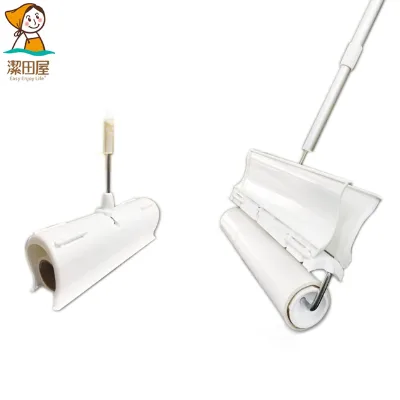
100 Sheets Tear Paper Cleaning Telescopic Extendable Handle Lint Roller Mop
$2.50 - $3.00
MOQ: 500 pieces


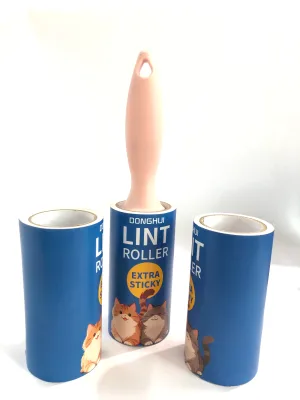
Promotional New Arrivals Inexpensive Classic Household Extra Sticky Dust Remover Lint Rollers
$0.30 - $0.50
MOQ: 2000 Pieces




Comprehensive Sourcing Guide
Strategic Sourcing Guide for Reusable Telescopic Lint Rollers
Understanding Product Variants and Core Specifications
The market for reusable telescopic lint rollers presents a diverse array of configurations, primarily distinguished by their handle materials, brush head compositions, and mechanical styles. When sourcing this category, buyers must first distinguish between manual and roller-based mechanisms. The available data indicates a split in product styles, with "Manual" and "Roller" variants both present in the supply chain. The "Roller" style is often associated with specific features such as being "Eco-Friendly," suggesting a design philosophy that prioritizes sustainability or reduced waste compared to disposable alternatives.
Material selection is a critical differentiator. The handle material is frequently observed as "Plastic" or "PP" (Polypropylene), which offers durability and cost-effectiveness. However, premium or specialized variants may utilize "Metal" components, potentially for enhanced structural integrity in telescopic mechanisms. The brush head material varies significantly, ranging from "Nylon" to "Sticky Paper" (though sticky paper is typically associated with disposable units, its presence in the data suggests specific hybrid or refillable designs). The product type is broadly categorized as a "Reomover" (Remover), designed for cleaning floors, cars, apparel, furniture, carpets, blankets, curtains, car seats, and pets.
Physical specifications are equally vital for logistics and storage. Observed product models include A0012, A0009, A0015, and various steel lint roller identifiers (01, 02, 03, 04). Dimensions vary widely, with standard sizes listed as 337.55cm and 13.563cm for compact units, while larger cartons measure 663653.5cm. Weight is another key variable, with individual unit weights observed at 230g, 70g, and a net weight of 160g for specific models. The gross weight for a full carton can reach 18kgs, with a net weight of 17kgs, indicating a packing density of approximately 100 pieces per carton. Buyers should verify the exact dimensions and weight of the specific model they intend to purchase, as these factors directly impact shipping costs and warehouse space utilization.
Technical Attributes and Customization Capabilities
A significant advantage in the current supply landscape is the availability of customization. The data confirms that "Customization" is available, and specific product lines are marked as "Customized." This extends to color options, with "Multicolor" and "Custom" color choices explicitly noted. For buyers seeking to align the product with brand identity, the ability to customize the color is a primary feature. Furthermore, the "OEM" (Original Equipment Manufacturer) capability is confirmed as "Yes," allowing suppliers to produce goods under the buyer's brand name.
The telescopic nature of the product is implied by the "telescopic" keyword in the search intent, though the provided data lists "Style" as "Manual" or "Roller." The presence of models like "SH1630-304" and "Daily use-041D" suggests a range of functional designs. The "Feature" attribute highlights "Easily Cleaned" and "Eco-Friendly" as key selling points. An "Eco-Friendly" classification is particularly relevant for reusable telescopic rollers, as it implies the product is designed to replace disposable lint rollers, thereby reducing long-term waste.
Packing standards are also customizable. The observed packing methods include "OPP+Carton" and "Cartons." The standard packing quantity is noted as 100 pieces per carton. However, for custom orders, the "Size" is listed as "Customized," suggesting that packaging dimensions can be adjusted to fit specific pallet configurations or retail requirements. The product origin is consistently listed as "China," which is a major manufacturing hub for this category, offering a wide range of suppliers but requiring careful vetting for quality consistency.
Compliance, Standards, and Certification Verification
When evaluating suppliers for reusable telescopic lint rollers, buyers must navigate a landscape of varying standards. The data lists several specific standard codes, including "GR91016," "GR9108W," "SH1630-304," and various "steel lint roller" identifiers (01, 02, 03, 04). These codes likely represent internal factory standards or specific product line identifiers rather than universal international safety certifications. It is crucial for buyers to understand that the presence of these codes does not automatically equate to compliance with international safety or environmental regulations.
Buyers should not assume that all listed products meet specific external certifications without explicit verification. The term "Customized" appears under "prod_standard" for model "Daily use-041D," indicating that standards can be tailored to the buyer's requirements. However, for products intended for export to markets with strict regulations (such as the EU or North America), buyers must independently verify if the product meets relevant safety standards for plastics, metals, and adhesives.
The "Eco-Friendly" feature mentioned in the data is an observation rather than a certified claim. To substantiate this claim, buyers should request documentation regarding the materials used, such as the recyclability of the PP plastic handles or the biodegradability of any adhesive components. Without specific certification data provided in the source material, the buyer must treat "Eco-Friendly" as a marketing attribute that requires validation through third-party testing or supplier declarations. Similarly, the "Metal" material used in some models should be verified for corrosion resistance and finish quality, especially if the product is intended for automotive or humid environments.
Cost Drivers and Pricing Dynamics
The pricing for reusable telescopic lint rollers is influenced by several factors, including material composition, customization level, and order volume. The observed price range in the market is between 0.1 and 15 USD. This wide range suggests that entry-level plastic models with standard specifications are available at the lower end, while premium metal-handled, fully customized, or OEM-branded units command higher prices.
The Minimum Order Quantity (MOQ) is another significant cost driver. The observed MOQ range spans from 10 to 10,000 units. For small businesses or startups, an MOQ of 10 allows for low-risk market testing. Conversely, large retailers or distributors may leverage the higher end of the MOQ spectrum to secure better unit economics. The payment terms observed include "Fob" (Free on Board), which is a standard international trade term. Buyers should be aware that Fob terms mean the supplier is responsible for costs until the goods are loaded onto the vessel, after which the buyer assumes responsibility for freight and insurance.
Customization adds a layer of cost complexity. While "Customization" is available, it often incurs additional setup fees or higher unit costs, particularly for custom molds, colors, or packaging. The "OEM" service confirms that branding is possible, but buyers should negotiate these costs explicitly. The weight of the product, ranging from 70g to 230g per unit, also impacts shipping costs. Heavier models with metal components will incur higher freight charges compared to lightweight plastic versions. Buyers should calculate the total landed cost, including the unit price, freight, and any customs duties, rather than focusing solely on the FOB price.
Typical Applications and Usage Scenarios
The versatility of reusable telescopic lint rollers is evident in their diverse application areas. The data lists usage for "Floor," "Car," "Apparel," "Furniture," "Carpet," "Blanket," "Curtain," "Car Seat," and "Pet." This broad applicability makes the product suitable for a wide range of industries, from household cleaning to automotive detailing and pet care.
For automotive applications, the telescopic handle is particularly valuable for reaching high surfaces like car roofs or hard-to-access areas in the cabin. The "Sticky Paper" or "Nylon" brush heads are designed to capture lint, dust, and pet hair without damaging delicate surfaces. In the home environment, the "Eco-Friendly" aspect appeals to consumers looking to reduce waste from disposable lint rollers. The "Easily Cleaned" feature ensures that the roller can be reused multiple times, maintaining its effectiveness over time.
The "Indoor" usage specification suggests that these products are primarily designed for interior environments, protecting against the elements that might degrade the adhesive or mechanical parts. The "Multicolor" and "Custom" options allow for aesthetic integration into home decor or corporate branding. For pet owners, the ability to clean carpets and car seats efficiently is a key selling point. The "Roller" style, specifically noted as "Eco-Friendly," is likely the preferred choice for these applications due to its reusability.
Supplier Evaluation and Quality Control Protocols
Selecting the right supplier requires a rigorous evaluation process. With 30 products observed in the market, buyers should not rely on a single data point but rather assess the supplier's overall capability. The presence of multiple product models (A0012, A0009, A0015, etc.) indicates a supplier with a diverse catalog, which can be advantageous for sourcing different variations of the same product.
Quality control should focus on the materials and construction. Buyers must verify the quality of the "Plastic" or "PP" handles to ensure they are not brittle and can withstand the telescopic extension and retraction cycles. For "Metal" components, checks should be performed for rust resistance and secure locking mechanisms. The "Brush Head Material" must be tested for adhesion strength and durability. The "Net Weight" and "Gross Weight" data provided (160g and 18kgs respectively) serve as benchmarks; deviations from these weights could indicate material substitution or quality issues.
Packaging integrity is also crucial. The standard packing of "OPP+Carton" or "Cartons" with 100 pieces per carton must be robust enough to prevent damage during transit. Buyers should request samples to inspect the packing quality, ensuring that the "Size/Carton" of 663653.5cm is accurate and that the units are securely packed to prevent shifting. The "Customized" packing option should be tested to ensure it meets the buyer's specific logistics requirements.
Long-Term Procurement and Supply Chain Considerations
For long-term procurement, buyers should consider the scalability of the supplier. The ability to handle MOQs up to 10,000 units suggests that the supplier can accommodate growth. However, buyers must also evaluate the lead times and production capacity, which are not explicitly detailed in the provided data. It is advisable to establish clear communication channels regarding production schedules and potential delays.
The "Customization" and "OEM" capabilities offer flexibility for brand building. Buyers should plan for the long-term relationship by negotiating terms that allow for incremental customization as the brand evolves. The "Fob" payment term is standard, but buyers should consider the implications of currency fluctuations and payment security.
Sustainability is a growing concern in procurement. The "Eco-Friendly" feature of the roller style aligns with global trends toward reducing plastic waste. Buyers should explore the supplier's commitment to sustainable practices, such as the use of recycled materials or energy-efficient manufacturing processes. This can enhance the brand's reputation and appeal to environmentally conscious consumers.
In conclusion, sourcing reusable telescopic lint rollers requires a balanced approach that considers technical specifications, customization options, cost drivers, and quality control. By leveraging the available data and conducting thorough due diligence, buyers can identify suppliers that meet their specific needs and contribute to a sustainable supply chain. The wide range of models and features available in the market provides ample opportunity for strategic sourcing, provided that buyers remain vigilant in verifying claims and maintaining high standards of quality.
FAQs
Can I customize the color of the Reusable Telescopic Lint Roller?
Yes, you can customize the color to match your brand identity. The product data confirms that multicolor and custom color options are available, and OEM services are supported for branding purposes.
What materials are used for the brush handle and head?
The brush handle is typically made of plastic or PP, while the head uses nylon or sticky paper. Some premium variants may feature metal components for enhanced structural integrity in telescopic mechanisms.
Which usage scenarios are supported by this product?
The product is designed for diverse applications including floors, cars, apparel, furniture, carpets, blankets, curtains, car seats, and pets. It is primarily intended for indoor cleaning environments.
How does the MOQ vary for different product models?
The minimum order quantity ranges from 10 to 10,000 units depending on the specific model and customization level. Small businesses can start with low MOQs, while large retailers can leverage higher volumes.
What is the standard packing quantity per carton?
The standard packing quantity is 100 pieces per carton. Packaging dimensions vary, with common carton sizes measuring 66*36*53.5cm, though custom packaging sizes are also available for specific requirements.
Can the product be classified as eco-friendly?
Yes, certain roller styles are marketed as eco-friendly, suggesting a design philosophy that prioritizes sustainability over disposable alternatives. However, this is an observation that may require third-party validation for specific claims.
What are the observed weight specifications for the units?
Individual unit weights are observed at 230g, 70g, and 160g net weight for specific models. A full carton typically has a gross weight of 18kgs and a net weight of 17kgs.