Source Reusable Surgical IBP Cable for Hospitals, Clinics, and Surgery
Explore 30 listings for the Reusable Surgical IBP Cable suitable for hospital and clinical monitoring. Buyers can compare specifications, materials like TPU and PVC, certifications, and delivery times from verified manufacturers in China.
Key considerations
Products List


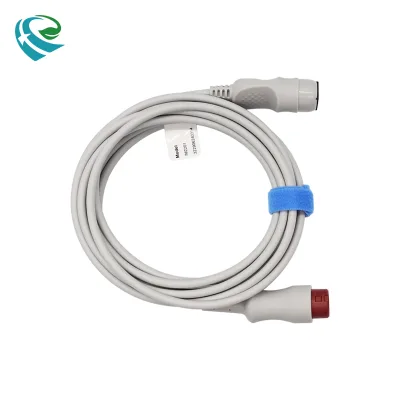
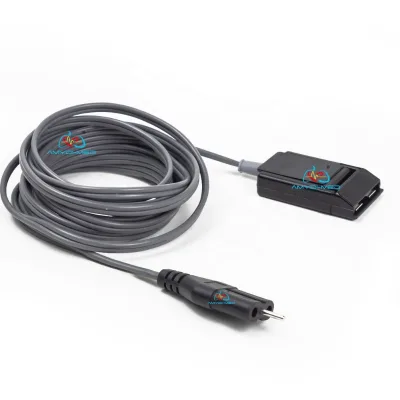
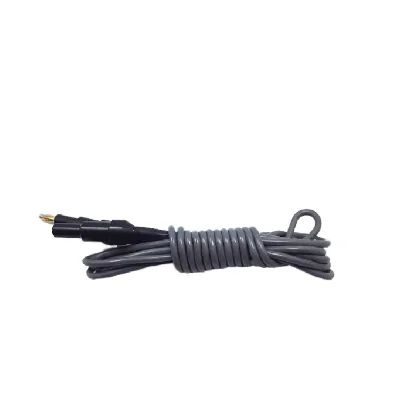
Mindray IBP Extended Cable with Dual-Receptacle Im2204 Pn 040-001029-00
$100.00 - $1000.00
MOQ: 1 Pieces




Comprehensive Sourcing Guide
Strategic Sourcing Guide for Reusable Surgical IBP Cables
Understanding the Technical Landscape of IBP Monitoring Cables
In the realm of clinical diagnostics and monitoring, the Invasive Blood Pressure (IBP) adapter cable serves as a critical conduit between the patient's arterial line and the monitoring system. When sourcing reusable surgical IBP cables, buyers must first distinguish between the various technical configurations available in the market. The product data indicates a diverse range of models, such as the J52I0080, J00I0120, and J52S002L, each designed for specific compatibility needs. These cables are not generic; they are engineered to bridge specific connector standards, such as the transition from Nihon Kohden 14-pin interfaces to Abbott systems, or from pH 12-pin configurations to Abbott adapters.
The physical construction of these cables is a primary determinant of their suitability for surgical environments. The observed material composition typically includes Medical PVC and TPU (Thermoplastic Polyurethane). TPU is particularly noted for its durability and flexibility, making it a preferred choice for reusable applications where the cable undergoes frequent bending and sterilization cycles. The cable color is often standardized to grey, which aids in visual identification within a cluttered surgical field. Furthermore, the length of the cable is a variable specification, with standards ranging from 3.2 meters to custom lengths, allowing procurement teams to match the exact distance requirements of their operating theaters.
A crucial technical distinction lies in the power and signal transmission capabilities. These are electric-powered devices that transmit physiological data without an integrated LCD display, relying entirely on the external monitor for visualization. The classification of these items falls under "Physiological Functions of Diagnosis and Monitoring Equipment," emphasizing their role in real-time hemodynamic assessment. Buyers must verify that the specific model selected matches the connector type of their existing monitoring infrastructure to prevent signal loss or equipment incompatibility during critical procedures.
Compliance, Certification, and Regulatory Verification
Navigating the regulatory landscape is paramount when sourcing medical consumables and accessories. The product attributes reveal a spectrum of certifications that buyers must validate to ensure market compliance. High-confidence data points indicate that many suppliers provide products certified under ISO 13485, a standard specifically for medical device quality management systems. Additionally, some listings reference ISO 9001, which addresses general quality management, and CE marking, which is essential for market access in Europe.
However, the presence of a certification claim on a product listing does not automatically guarantee that every unit in a batch meets the standard. Buyers must treat certification as a verification requirement rather than an inherent attribute of the product. The documentation should explicitly state the scope of the ISO 13485 certification, ensuring it covers the manufacturing of the specific cable model in question. It is also critical to verify the "Certificates" field, which may list both CE and ISO 13485, against the regulatory requirements of the destination country.
For surgical applications, the sterilization status is a non-negotiable compliance factor. The observed data specifies that these cables are typically "Non Sterilization" ready upon delivery. This means the buyer must have an in-house sterilization protocol or a validated reprocessing workflow if the cable is to be reused. The absence of a pre-sterilized state requires strict adherence to infection control protocols. Furthermore, the classification of the product as "Medical Materials & Accessories" or "Medical Consumables" dictates the regulatory pathway for importation. Buyers should confirm that the supplier's quality management system aligns with the specific regulatory body governing their region, whether it be the FDA in the United States or the relevant authorities in the European Union.
Cost Drivers and Pricing Structure Analysis
The pricing for reusable surgical IBP cables is influenced by a complex interplay of factors, including material quality, customization levels, and order volume. The observed market data shows a significant price range, spanning from $0.56 to $1,000 USD. This wide variance is not indicative of a single product tier but rather reflects the diversity of the catalog, which includes simple adapter cables to more complex, customized assemblies.
The primary cost driver is customization. The product attributes explicitly state that customization is available. Cables with custom lengths, specific connector configurations (e.g., 12-pin to Abbott), or specialized material blends will command a higher price point than standard off-the-shelf models. The standard length of 3.2 meters represents a baseline, while deviations from this standard incur additional engineering and manufacturing costs.
Order volume plays a decisive role in the final unit cost. The Minimum Order Quantity (MOQ) ranges from 1 to 5,000 units. Purchasing a single unit for immediate clinical needs will result in a higher per-unit cost compared to a bulk order of 5,000 units. Buyers should analyze their long-term consumption rates to determine the optimal order size that balances inventory holding costs with unit price reductions. Additionally, the origin of the product, primarily Guangdong and Shenzhen in China, influences logistics costs. While these regions are major manufacturing hubs, the final landed cost must account for shipping methods, which include DHL, FedEx, UPS, TNT, EMS, and sea freight. Sea freight is typically more economical for large bulk orders but extends the lead time, whereas air freight is faster but more expensive.
Typical Clinical Applications and Usage Scenarios
The application of reusable IBP cables is deeply rooted in clinical environments where continuous hemodynamic monitoring is essential. The primary usage category is identified as "Surgical Supplies," indicating their critical role in operating rooms during invasive procedures. These cables are indispensable for monitoring arterial pressure in real-time, providing vital data for anesthesiologists and surgeons to manage patient stability.
Beyond the operating theater, the application extends to hospital wards and clinics. The product attributes list "Hospital, Clinic" and "Clinical" as specific application areas. In these settings, the reusable nature of the cable is a key economic and operational advantage. Unlike single-use items, reusable cables can be processed and redeployed, reducing waste and long-term procurement costs. However, this reusability is contingent upon the cable's ability to withstand repeated cleaning and sterilization cycles without degrading the electrical integrity or the insulation properties of the TPU or PVC materials.
The specific models, such as the "Mindray Bare Copper Wire IBP Cable" or the "Mindray 12p to Abbott IBP Cables," suggest compatibility with major medical device brands. This interoperability is crucial for hospitals that utilize a mix of equipment from different manufacturers. The cables serve as the physical interface, ensuring that data from the patient's arterial line is accurately transmitted to the monitor, regardless of the monitor's brand. The "Style" is categorized as "Medical Cables," and the "Category" as "Medical Consumables," reinforcing their status as essential, high-frequency use items in clinical workflows.
Supplier Evaluation and Operational Capabilities
Selecting a reliable supplier for reusable surgical IBP cables requires a rigorous evaluation of their operational capabilities and logistical reliability. The product data highlights that the place of origin is predominantly Guangdong and Shenzhen, China. While these regions are known for robust manufacturing ecosystems, buyers must verify the specific factory's capacity and history. The "Delivery Time" varies, with some listings indicating 5 days and others 7 to 10 days. This discrepancy suggests that lead times are dependent on stock availability and the level of customization required.
Suppliers should be evaluated on their ability to meet the specific MOQ requirements. A supplier offering an MOQ of 1 is suitable for emergency procurement or small clinics, while a supplier with an MOQ of 5,000 is better suited for large hospital networks or distributors. The shipping options provided, including DHL, TNT, UPS, FedEx, EMS, Hongkong Post, and Aramex, indicate a mature logistics network. Buyers should assess which shipping method aligns with their urgency and budget constraints.
Furthermore, the packaging standards are a key indicator of supplier professionalism. The observed packing method of "1 PCS/Bag, Carton Package" or "Neutral" packing suggests a focus on protecting the product during transit. For reusable cables, packaging must ensure that the connectors remain clean and undamaged before the first use. Suppliers should also demonstrate a clear understanding of the shelf life, which is observed to be 2 years. This information is vital for inventory management to prevent the procurement of near-expiry stock.
Quality Control and Long-Term Procurement Considerations
Ensuring the quality of reusable IBP cables involves a multi-layered approach to quality control (QC) and long-term planning. The "Feature" of these cables is explicitly listed as "Reusable," which necessitates a rigorous QC process to verify that the cable can withstand the mechanical stress of repeated use. The material composition, specifically Medical PVC or TPU, must be tested for tensile strength, flexibility, and resistance to degradation from cleaning agents.
Buyers should implement a verification protocol that includes checking the "prod_standard" and "prod_model" against their internal specifications. The standard of 3.2M or custom lengths must be physically measured to ensure accuracy. Additionally, the electrical continuity of the bare copper wire must be tested to prevent signal interference or loss. The "Shelf Life" of 2 years provides a clear window for inventory rotation, but buyers must ensure that the storage conditions maintain the integrity of the materials during this period.
Long-term procurement considerations also involve the sustainability of the supply chain. Given the variability in lead times and the potential for customization, maintaining a relationship with a supplier who can consistently deliver high-quality products is essential. Buyers should establish a contract that includes clear terms for quality assurance, return policies for defective units, and a mechanism for handling supply disruptions. The "Classification" of the product as "Physiological Functions of Diagnosis and Monitoring Equipment" underscores the critical nature of these items; any failure in the cable could lead to inaccurate patient data, making quality assurance a non-negotiable aspect of the procurement strategy.
Comparative Analysis of Product Specifications
To facilitate informed decision-making, the following table summarizes the key technical and logistical attributes observed in the market for reusable surgical IBP cables. This comparison highlights the variability in models, materials, and certifications that buyers must navigate.
| Attribute | Model J52I0080 | Model J00I0120 | Model J52S002L | Model F1I4087 |
|---|---|---|---|---|
| Product Name | IBP Adapter Cable | Mindray Bare Copper Wire IBP Cable | pH 12 Pin to Abbott IBP Cable | (Specific Model Variant) |
| Material | TPU | Bare Copper Wire | TPU / PVC | Medical PVC or TPU |
| Cable Color | Grey | Grey | Grey | Grey |
| Standard Length | 3.2M / Custom | Custom | Custom | 13485 Standard |
| Certification | ISOCE | CE & ISO13485 | ISO13485 | ISO9001 |
| Sterilization | Non Sterilization | Non Sterilization | Non Sterilization | Non Sterilization |
| Origin | Guangdong, China | Guangdong, China | Shenzhen, China | Shenzhen, China |
| Delivery Time | 7~10 Days | 5 Days | 5 Days | 7~10 Days |
| Shelf Life | 2 Years | 2 Years | 2 Years | 2 Years |
| Packing | 1 PCS/Bag, Carton | Neutral | Neutral | Neutral |
This table illustrates that while the core function remains consistent, the specific model selection depends heavily on the required connector type, material preference, and certification needs. Buyers should use this data to filter suppliers based on their specific clinical requirements rather than relying on a single "best" option. The variability in origin (Guangdong vs. Shenzhen) and delivery times (5 vs. 10 days) further emphasizes the need for a tailored sourcing strategy that aligns with the hospital's operational tempo and budget constraints.
FAQs
What certifications do reusable surgical IBP cables typically have?
Many products carry ISO 13485 and CE certifications for medical device quality management. Some listings also reference ISO 9001 for general quality standards. Buyers must verify that the specific certificate scope covers the manufacturing of the exact cable model being purchased.
How long is the delivery time for these cables?
Delivery times typically range from 5 days to 10 days depending on stock availability. Standard models may ship within 5 days, while customized orders often require 7 to 10 days. Lead times vary based on the specific factory capacity and order volume.
Which materials are used to construct these IBP cables?
Cables are commonly constructed from Medical PVC or TPU (Thermoplastic Polyurethane). TPU is preferred for its durability and flexibility during repeated sterilization cycles. The cable color is frequently standardized to grey for easy visual identification in surgical settings.
Can these cables be customized for specific connector types?
Yes, customization is available for various connector configurations and cable lengths. Specific models exist for transitions like Nihon Kohden 14-pin to Abbott or pH 12-pin to Abbott adapters. Custom lengths can deviate from the standard 3.2 meters to fit exact operating theater needs.
What is the shelf life of these medical consumables?
The observed shelf life for these reusable cables is 2 years. This duration allows for adequate inventory management before the product expires. Buyers should ensure storage conditions maintain material integrity throughout this period to prevent degradation.
Are these cables sterilized upon delivery?
No, these cables are typically delivered in a non-sterilized state. Buyers must have an in-house sterilization protocol or validated reprocessing workflow before clinical reuse. This requirement ensures strict adherence to infection control standards during surgical procedures.
What is the minimum order quantity for these cables?
Minimum order quantities range from 1 unit to 5,000 units depending on the supplier. Single units are suitable for emergency needs, while bulk orders of 5,000 units offer better per-unit pricing. The MOQ is a key factor in balancing inventory costs with procurement needs.