Source Reusable Square Jute Shopping Bag for Decoration, Daily Use, and Promotion
Explore 30 listings for the Reusable Square Jute Shopping Bag, featuring woven cotton and non-woven options with customization. Buyers can compare models like MBD4 and SU-SHB-128 across various styles and usage scenarios including shopping and packing.
Key considerations
Products List


Hot Selling Good Quality Custom Printing Recycled Jute Shopping Grocery Bag
$0.80 - $1.50
MOQ: 500 Pieces


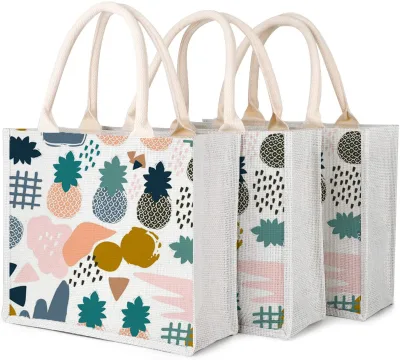


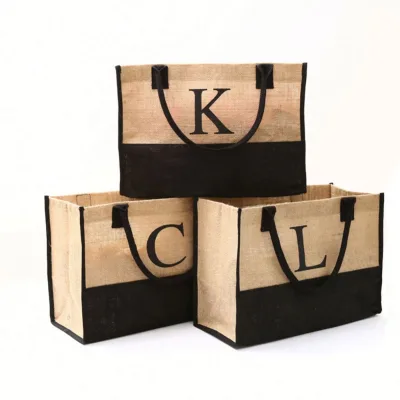
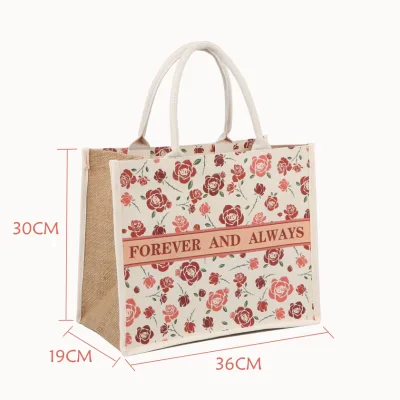
Comprehensive Sourcing Guide
Reusable Square Jute Shopping Bag Sourcing Guide
The Reusable Square Jute Shopping Bag represents a strategic procurement category where natural fiber durability meets modern branding requirements. Based on observed market data, these products are frequently engineered with specific weaving techniques to ensure structural integrity while maintaining an eco-friendly profile. Buyers should recognize that the "square" designation often refers to the base geometry, which allows for stable stacking and efficient packing, a feature explicitly noted in product attributes describing horizontal square designs. This geometry is particularly valuable for retail environments where shelf space and display stability are critical operational factors.
Procurement decisions for this category must account for the diverse customization landscape available in the current supply chain. The market offers extensive options for branding, with many suppliers explicitly welcoming ODM and OEM requests to integrate logos and specific design elements. This flexibility allows buyers to align the product with their brand identity, whether the goal is a fashion-forward accessory or a functional tool for daily use and decoration. The presence of features like stitching and eco-friendly claims suggests a market segment that values both aesthetic appeal and environmental responsibility, requiring buyers to verify these attributes against their specific sustainability goals.
Product Scope and Observed Listing Signals
The product scope for reusable square jute bags encompasses a wide range of applications, from daily use and decoration to shopping and promotional events. Observed listings indicate that these items are often categorized under fashion elements, with styles ranging from simple and leisure-oriented to more complex designs featuring stitching and novelty elements. The material composition is a primary differentiator, with some listings specifying cotton or non-woven alternatives alongside traditional jute, suggesting that buyers must carefully distinguish between pure jute products and blended or synthetic variations that may carry different performance characteristics.
Listing signals reveal significant variation in product models and specifications, with identifiers such as MBD4, MBD50, and SU-SHB series appearing across different supplier catalogs. These models often correlate with specific dimensions, such as the 55/56-inch width observed in woven variants, or distinct packing standards like carton and paper box configurations. Buyers should note that while some products are described as waterproof, others may rely on natural fiber properties, necessitating a clear understanding of the intended use case. The presence of "flagbank" and other specific model codes indicates a highly segmented market where precise model selection is essential to match functional requirements.
Technical Specifications to Verify
Technical verification begins with the fundamental construction metrics, specifically the number of yarns and the weaving technique. The observed "Multivessel" yarn configuration and "Woven" technics suggest a specific manufacturing process that impacts the bag's tensile strength and texture. Buyers must confirm that the actual weave density aligns with the intended load-bearing capacity, as the weight range of 9-220GSM indicates a vast spectrum of product heaviness, from lightweight promotional items to heavy-duty shopping carriers. Ensuring the correct GSM is critical, as a mismatch can lead to premature failure or an unprofessional appearance in the final retail environment.
Dimensional and structural specifications require rigorous validation against the buyer's logistical needs. The observed width of 55/56 inches and the "Horizontal Square" design point to specific geometric constraints that affect how the bag sits on shelves or in vehicles. Additionally, the closure type, often observed as "Open" or "Folded," and the hardness level, described as "Partial Hard," dictate the bag's ability to maintain its shape when filled. Buyers should verify that the internal material, such as cotton, and the external finish meet the required durability standards, especially if the product is intended for repeated use in high-traffic retail scenarios.
Compliance and Safety Documentation
Compliance verification for jute and natural fiber bags focuses heavily on material safety and environmental claims. While the observed attributes list "Eco-Friendly" as a feature, buyers must request specific documentation to substantiate this claim, such as certifications for organic farming or biodegradability testing. The absence of explicit certification names in the provided data means that procurement teams cannot assume compliance with international standards without direct supplier confirmation. It is essential to verify that the dyes and treatments used in the "Customized" or "With Logo" processes do not introduce hazardous substances that would violate import regulations in target markets.
Safety documentation must also address the physical integrity of the product, particularly regarding the "Partial Hard" structure and the "Stitching Bag" fashion element. Buyers should ensure that the stitching density and thread quality meet safety standards to prevent seam failure under load, which could pose a risk to consumers. Furthermore, if the product is marketed for "Daily Use" or "Decoration," it must comply with general product safety directives regarding flammability and chemical content. The "Customize" standard noted in the data implies that specific safety requirements may vary by order, making it imperative to define these parameters in the initial purchase agreement.
Cost Drivers and Commercial Terms
Cost drivers in the reusable square jute bag market are heavily influenced by the level of customization and the complexity of the weaving process. The observed MOQ range of 50 to 1000 units suggests that smaller orders may incur higher per-unit costs due to setup fees for custom logos and specific weaving patterns. The price range of 0.05 to 3.6 USD reflects the disparity between basic, unbranded items and those with complex features like waterproofing, specific GSM weights, or intricate stitching designs. Buyers should anticipate that requests for "Customized" models with specific dimensions or materials will shift the cost structure significantly compared to standard catalog items.
Commercial terms must be negotiated with a clear understanding of the packing and shipping logistics observed in the market. The data indicates varied packing methods, including "Carton," "CTN," and "Paper Box," each with different implications for shipping volume and protection. The standard dimensions of 605040 cm and 106040 cm for certain models highlight the importance of optimizing container space to reduce freight costs. Buyers should clarify whether the quoted price includes the cost of custom packaging or if these are separate line items, as the "Paper Box" option for certain models may add a premium to the overall landed cost.
Supplier Qualification and Quality Control
Supplier qualification for this category requires a deep dive into the manufacturing capabilities regarding weaving and customization. The presence of multiple product models and the "Multivessel" yarn attribute suggest that suppliers must have specialized loom equipment to produce the required weave structures. Buyers should verify that the supplier's facility in Suzhou or Zhejiang, China, has the capacity to handle the specific "Customized" requests, including the application of logos and the selection of specific colors like beige or white. The "ODM/OEM: Welcome" attribute indicates a willingness to collaborate, but the buyer must assess the supplier's track record in delivering consistent quality across different model numbers.
Quality control protocols must be established to ensure that the "Eco-Friendly" and "Waterproof" claims are met in every production batch. Given the variation in GSM and material composition, a robust QC plan should include random sampling for weight, tensile strength, and water resistance testing. The "Partial Hard" nature of the bags requires inspection of the structural rigidity to ensure they do not collapse under typical load conditions. Buyers should also implement a visual inspection process to verify the quality of the "Stitching" and the accuracy of the "With Logo" application, ensuring that the final product matches the approved samples in terms of style and finish.
Long-Term Procurement Checks
Long-term procurement success depends on maintaining consistent quality and supply chain reliability over multiple production cycles. Buyers should establish a system for periodic re-verification of the "Customized" attributes, ensuring that the logo placement, color accuracy, and material composition remain consistent with the original agreement. The "Fashion Element" and "Style" of the bags may evolve over time, requiring the supplier to adapt to new trends while maintaining the core structural integrity of the "Square" design. Regular audits of the supplier's production lines can help identify any drift in quality that might affect the "Eco-Friendly" status or the durability of the woven structure.
Strategic planning for long-term partnerships should also consider the scalability of the supplier's operations to meet fluctuating demand. The observed MOQ range of 50 to 1000 units suggests flexibility, but buyers should negotiate terms that allow for volume increases without significant lead time extensions. The "Place of Origin" in China offers a robust supply chain, but buyers must monitor geopolitical and logistical factors that could impact delivery times. Establishing a clear communication channel for feedback on product performance, particularly regarding the "Waterproof" and "Usage" aspects, will help refine future orders and ensure the product continues to meet the evolving needs of the retail market.
FAQs
What customization options are available for these bags?
Customization is available for these reusable square jute shopping bags. Buyers can request specific logos, eco-friendly features, and novelty designs. The products support ODM and OEM services to meet unique branding needs.
Which materials are used to construct these shopping bags?
The bags are primarily made from jute and cotton materials. Some variations include non-woven options for different usage scenarios. The inside material is specified as cotton to ensure durability and comfort during daily use.
How is the width of the woven fabric defined?
The width of the woven fabric is standardized at 55 or 56 inches. This specification applies to the multivessel yarn construction used in the production process. It ensures consistent sizing for various bag styles.
Can these bags be used for decoration and daily purposes?
Yes, these bags are designed for both decoration and daily use. They feature fashion elements like stitching and come in styles such as simple or leisure. The horizontal square design makes them versatile for shopping and promotion.
What is the weight range of the fabric used?
The fabric weight ranges from 9 to 220 GSM. This wide range allows for different levels of hardness and durability depending on the specific product model. Buyers can select based on their intended application needs.
Where are these products manufactured and shipped from?
These products originate from Suzhou and Zhejiang in China. The production location ensures access to established manufacturing capabilities for jute and cotton goods. Shipping is typically handled via carton or paper box packing.
What packaging methods are used for these bags?
Packaging methods include cartons, CTN, and paper boxes. The specific packing standard varies by product model, with some items sized at 60 by 50 by 40 centimeters. This ensures safe transport and storage for bulk orders.