Source Ring Die Poultry Feed Machine for Feed, Cereals, Wood
Find and compare 30 Ring Die Poultry Feed Machine options for processing mixed feed, cereals, and animal-derived feed. These units feature ring die pelleters with varying hole diameters and compression ratios suitable for granular and powder materials.
Key considerations
Products List

China Factory Customized High Productivity Poultry Feed Pellet Machine Ring Die
$400.00 - $4000.00
MOQ: 1 Pieces


Ring Die Spare Part Poultry Feed Pellet Mill Small Poultry Feed Pellet Machine
$23000.00 - $25000.00
MOQ: 1 Pieces


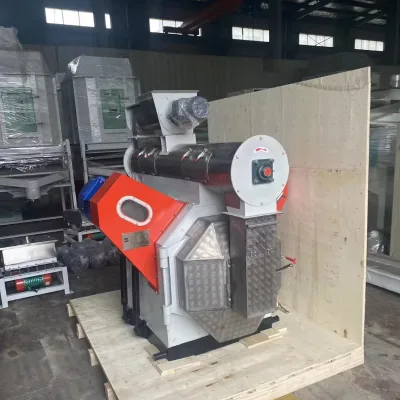

Animal Poultry Feeds Ring Die Feed Pellet Press Machine Pelletizer Machine
$14000.00 - $24000.00
MOQ: 1 Sets


Ring Die Poultry Feed Pellet Press Machine for Chicken Broiler Laying Hen Feed
$3000.00 - $8000.00
MOQ: 1 Sets


Ring Die Pressing Livestock Feed Granulator Machine
$8000.00 - $15000.00
MOQ: 1 Sets
LIAONING XINLAI INTELLIGENT EQUIPMENT MANUFACTURING CO LIMITED

Ring Die Pellet Machine with High Efficiency
$8000.00 - $15000.00
MOQ: 1 Sets
LIAONING XINLAI INTELLIGENT EQUIPMENT MANUFACTURING CO LIMITED

Ring Die Moulded Bird Feed Pellet Making Machine
$8000.00 - $15000.00
MOQ: 1 Sets
LIAONING XINLAI INTELLIGENT EQUIPMENT MANUFACTURING CO LIMITED

Automatic Ring Die Fishmeal Poultry Feed Press Machine
$8000.00 - $15000.00
MOQ: 1 Sets
LIAONING XINLAI INTELLIGENT EQUIPMENT MANUFACTURING CO LIMITED

Ring Die Aquacultural Feed Pellet Machine
$8000.00 - $15000.00
MOQ: 1 Sets
LIAONING XINLAI INTELLIGENT EQUIPMENT MANUFACTURING CO LIMITED


High Efficiency Ring Die Poultry and Livestock Feed Pellet Machine with CE
$1800.00 - $3000.00
MOQ: 1 Pieces

Durable Stainless Steel Ring Die for Poultry Feed Pellet Production Machine
$100.00 - $10000.00
MOQ: 100 Pieces


Comprehensive Sourcing Guide
Strategic Sourcing Guide for Ring Die Poultry Feed Machines
Understanding the Core Technology and Material Composition
When sourcing a Ring Die Poultry Feed Machine, the primary objective is to identify equipment capable of transforming raw agricultural inputs into high-quality, uniform feed pellets. The fundamental technology relies on a ring die pelleter mechanism, where raw materials are compressed through die holes under high pressure and temperature. The supplied data indicates that the raw materials processed by these machines typically include corn, soybean, and similar agricultural byproducts. The physical state of these inputs is critical; the equipment is designed to handle both granular and powder-shaped materials, suggesting versatility in the pre-processing stages.
A critical component of the ring die system is the die material itself. The provided facts highlight the use of X46cr13, a stainless steel alloy known for its durability and resistance to corrosion. This material choice is essential for maintaining the structural integrity of the die under the extreme conditions of the pelleting process. The surface hardness of this component is specified within a range of HRC52-56, a metric that directly correlates with wear resistance and the longevity of the die before replacement is required. Buyers must verify that the specific unit they are considering utilizes this hardness range to ensure it can withstand the abrasive nature of poultry feed ingredients.
The mechanical design also includes specific dimensions for the workpiece and the die wall. The outer diameter of the workpiece typically ranges from 300mm to 1200mm, while the inner diameter spans 200mm to 900mm. The wall thickness of the ring die itself varies between 15mm and 100mm, depending on the model and intended capacity. These dimensional specifications are not merely descriptive; they dictate the throughput capacity and the physical footprint of the machine. A larger diameter generally allows for higher production volumes, but it requires a more robust frame and motor system to operate efficiently.
Technical Specifications and Operational Parameters
The operational efficiency of a Ring Die Poultry Feed Machine is governed by several key technical parameters, including compression ratios, hole diameters, and the specific processing techniques employed. The compression ratio, which determines the density of the final pellet, is observed in the market data to range from 1:6 to 1:11 in some configurations, while others support a broader range of 1:9 to 1:20. This variation implies that different models are optimized for different feed types; a higher compression ratio is generally necessary for creating dense, durable pellets suitable for poultry, which often require high energy density.
The hole diameter of the ring die is another pivotal specification. The available data lists hole diameters ranging from 2.0mm to 5.0mm, with some models supporting a wider range of 2mm to 12mm. For poultry feed, the hole size is typically selected based on the age and size of the birds. Smaller holes (2.0mm-3.0mm) are often used for starter feeds, while larger holes (4.0mm-5.0mm) are suitable for grower or finisher feeds. The ability to customize the screen mesh is also a factor; some units are supplied without a screen mesh, while others include them, indicating that the granularity of the final product can be adjusted based on the specific production line requirements.
The processing technics employed by these machines often follow a "crushing-before-mixing" approach. This sequence ensures that raw materials are reduced to a fine particle size before being mixed and pelleted, which is crucial for achieving uniform nutrient distribution in the final feed. The processing objects listed include mixed feed, cereals, and animal-derived feed, confirming the machine's adaptability to various feed formulations. Additionally, the equipment may be integrated with grinding equipment such as roll crushers or feed hammer mills, which are essential for the initial size reduction of the raw materials. The bulking process is also a consideration, with options available for single screw or twin screw bulking machines to prepare the material for the pelleting stage.
Cost Drivers and Pricing Variables
The cost of a Ring Die Poultry Feed Machine is influenced by a complex interplay of factors, including the scale of production, the quality of materials used, and the level of customization required. The observed price range in the market spans from $25 to $25,000 USD, a wide spectrum that reflects the diversity of equipment available, from small-scale units to large industrial systems. The lower end of this range likely corresponds to smaller, less automated units or specific component replacements, while the higher end represents full-scale production lines with advanced automation and larger capacities.
Material costs are a significant driver of the final price. The use of high-grade stainless steel like X46cr13 for the ring die and the inclusion of premium motor brands, such as those labeled as "China Prime Quality," contribute to the overall cost. The weight of the equipment, which varies from 80kg to 300kg, also impacts shipping and handling expenses. Heavier machines typically require more robust foundations and specialized logistics, adding to the total cost of ownership.
Customization is another major cost factor. The data indicates that customization is available for these machines, allowing buyers to tailor specifications such as the compression ratio, hole diameter, and processing object to their specific needs. Custom orders often incur additional charges due to the specialized manufacturing processes and the time required for design and prototyping. Furthermore, the packing method, whether in a wooden case, wooden box, or iron frame, can affect the cost, particularly for international shipments where secure packaging is essential to prevent damage during transit.
Typical Applications and Production Scenarios
Ring die poultry feed machines are designed for a variety of applications within the feed industry, primarily focusing on the production of feed for poultry but also extending to other animal feed sectors. The primary application is the pelleting of wood and feed, making these machines versatile for facilities that produce feed for multiple species. The processing objects listed, including mixed feed, cereals, and animal-derived feed, highlight the machine's capability to handle a diverse range of ingredients.
In a typical poultry feed production scenario, the machine processes raw materials like corn and soybeans, which are first crushed and mixed. The resulting mixture is then fed into the ring die pelleter, where it is compressed into pellets. The expanding method used is typically dry expansion, which helps in achieving the desired density and texture of the feed. The machine's ability to handle granular and powder-shaped materials ensures that it can accommodate different stages of the feed production process, from initial ingredient preparation to final product formation.
The application of these machines extends beyond just poultry feed. They are also suitable for the production of feed for other animals, provided the raw materials and processing parameters are adjusted accordingly. The versatility of the machine allows feed mills to produce a wide range of products, from starter feeds for chicks to finisher feeds for mature birds, all on the same production line. This flexibility is a significant advantage for feed mills looking to maximize their production capacity and minimize equipment costs.
Supplier Evaluation and Quality Assurance
When evaluating suppliers for ring die poultry feed machines, buyers must focus on several key criteria to ensure the quality and reliability of the equipment. The origin of the product is a critical factor, with the majority of the data indicating that these machines are manufactured in China, specifically in the Jiangsu region. This region is known for its industrial base and expertise in manufacturing agricultural machinery. Buyers should verify the specific location of the supplier to ensure they are dealing with established manufacturers rather than trading companies.
The brand name "Double Crane" is observed in the data, suggesting that this is a recognized manufacturer in the market. However, buyers should not rely solely on brand names but should also evaluate the technical specifications and the quality of the components used. The motor brand, listed as "China Prime Quality," indicates that the motors are of a standard quality, but buyers should verify the specific brand and model to ensure compatibility and reliability.
Quality assurance is another critical aspect of supplier evaluation. The condition of the machines is listed as "New," which is a standard expectation for new equipment. However, buyers should request detailed information about the manufacturing process, quality control measures, and any testing procedures used to ensure the machine meets the required standards. The production standard is noted as "According to different type" or "Customerized," which implies that buyers should request specific quality certificates and compliance documents relevant to their region and industry.
Long-Term Procurement and Maintenance Considerations
Long-term procurement considerations for ring die poultry feed machines involve planning for maintenance, spare parts availability, and the overall lifecycle of the equipment. The data indicates that the machine includes worn spare parts such as hammers and screener components, with a specific mention of 16 hammers. This suggests that the hammers are a consumable part that will require regular replacement. Buyers should ensure that the supplier offers a reliable supply chain for these spare parts to minimize downtime during production.
The compression ratio and hole diameter are critical parameters that affect the wear rate of the ring die. A higher compression ratio may lead to faster wear, requiring more frequent maintenance. Buyers should work with the supplier to determine the optimal compression ratio for their specific feed formulation to balance production efficiency with equipment longevity. The surface hardness of the die, ranging from HRC52 to HRC56, is a key indicator of its durability, but buyers should also inquire about the expected lifespan of the die under normal operating conditions.
Packaging and shipping are also important considerations for long-term procurement. The data lists various packing methods, including wooden cases, wooden boxes, and iron frames. Buyers should ensure that the packaging is robust enough to protect the equipment during transit, especially for international shipments. The standard dimensions provided, such as L10W5.5H12m, give an indication of the space required for installation and operation. Buyers should plan their facility layout accordingly to ensure smooth installation and operation of the machine.
Comparative Analysis of Key Specifications
To assist buyers in making informed decisions, the following table summarizes the key specifications observed in the market data for ring die poultry feed machines. This comparison highlights the variability in technical parameters and helps buyers identify the features that are most relevant to their specific needs.
| Specification Category | Observed Range / Value | Relevance to Procurement |
|---|---|---|
| Raw Materials | Corn, Soybean, Mixed Feed | Determines pre-processing requirements |
| Die Material | X46cr13 Stainless Steel | Indicates corrosion resistance and durability |
| Surface Hardness | HRC52-56 | Critical for wear resistance and die lifespan |
| Hole Diameter | 2.0mm - 5.0mm (up to 12mm) | Dictates pellet size and feed type compatibility |
| Compression Ratio | 1:6 to 1:20 | Affects pellet density and production efficiency |
| Motor Brand | China Prime Quality | Indicates motor reliability and power source |
| Processing Object | Cereals, Animal-Derived Feed, Mixed Feed | Confirms versatility for different feed types |
| Machine Type | Ring Die Pelleter, Feed Hammer Mill | Defines the core technology and processing method |
| Weight | 80kg - 300kg | Influences shipping costs and foundation requirements |
| Origin | China (Jiangsu) | Affects lead times and logistics planning |
| Customization | Available | Allows for tailored specifications |
| Packing | Wooden Case, Iron Frame | Impacts protection during transit |
This table serves as a reference point for buyers to compare different models and suppliers. It is important to note that the ranges provided are based on observed data and may vary depending on the specific manufacturer and model. Buyers should verify these specifications with the supplier to ensure they meet their production requirements. By carefully evaluating these technical parameters, buyers can select a Ring Die Poultry Feed Machine that offers the best balance of performance, durability, and cost-effectiveness for their specific application.
FAQs
What raw materials can this machine process?
The machine processes corn, soybean, and similar agricultural byproducts. It handles both granular and powder-shaped materials for mixed feed, cereals, and animal-derived feed applications.
Which die material ensures durability for poultry feed?
The ring die is constructed from X46cr13 stainless steel alloy. This material provides a surface hardness of HRC52-56 to resist wear during the crushing and pelleting process.
Can the machine handle different pellet sizes?
Yes, the hole diameter ranges from 2.0mm to 5.0mm, with some models supporting up to 12mm. This allows customization for various poultry feed stages from starter to finisher.
What is the typical compression ratio for this equipment?
The compression ratio varies between 1:6 and 1:20 depending on the specific model configuration. Higher ratios produce denser pellets suitable for high-energy poultry feed requirements.
How are the machines packaged for shipping?
Units are packed in wooden cases, wooden boxes, or iron frames. This robust packaging ensures protection during transit, especially for international shipments from Jiangsu, China.
What spare parts are included with the machine?
Worn spare parts include hammers and a screener component. The system typically features 16 hammers which require regular replacement to maintain optimal crushing performance.