Source Rotary Atomization Centrifugal Spray Dryer for Herbs, Milk, and Cosmetics
Find 30 Rotary Atomization Centrifugal Spray Dryer units suitable for drying liquid materials into granules, powders, or pastes. Buyers can compare specifications including heating modes, atomization types, and material compatibility for pharmaceutical, chemical, and food applications.
Key considerations
Products List


High Speed Rotary Atomizer Spray Dryer, Airflow Atomizationspray Dryer, Centrifugal Spray Dryer
$3000.00 - $300000.00
MOQ: 1 set

LPG High Speed Atomizer Centrifugal Spray Dryer
$5000.00 - $200000.00
MOQ: 1 Sets
Shanghai Yiqi Pharmaceutical Machinery Group Company Limited


High Quality Centrifugal Atomization Spray Dryer for Chemical Catalyst
$400000.00 - $600000.00
MOQ: 1 Sets


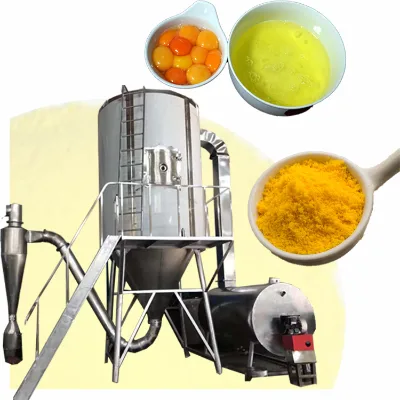

Centrifugal Atomization Spray Dryer with Customizable Design Options
$5200.00 - $91000.00
MOQ: 1 Pieces

Touch Screen Industrial Spray Dryer Centrifugal Atomization Machine
$5200.00 - $91000.00
MOQ: 1 Pieces

Advanced Centrifugal Atomization Industrial Spray Dryer with Touch Screen
$3700.00 - $6500.00
MOQ: 1 Pieces


High Efficiency Centrifugal Atomization Spray Dryer Dehydrator Machine
$5200.00 - $91000.00
MOQ: 1 Pieces

Certified Centrifugal Atomization Industrial Spray Dryer for Food Processing
$5200.00 - $91000.00
MOQ: 1 Pieces


Liquid Centrifugal Atomizer Spray Dryer Nozzle Spray Drying Equipment
$9800.00 - $75000.00
MOQ: 1 Pieces
Comprehensive Sourcing Guide
Strategic Sourcing Guide for Rotary Atomization Centrifugal Spray Dryers
Understanding Core Technical Specifications and Operational Mechanics
When evaluating rotary atomization centrifugal spray dryers, buyers must first distinguish between the specific mechanical configurations and operational parameters that define the equipment's capability. The core technology relies on high-speed rotation to atomize liquid feed into fine droplets, which are then dried by a heated gas stream. Based on available product data, the heating mode for these units can vary significantly, with observed configurations including dielectric heating, transmission-based heating, and electrical heating. The heat source itself is equally diverse, ranging from natural gas and coal gas to steam, electricity, and oil. This variability means that a single specification sheet cannot be assumed to apply to all units; instead, procurement teams must verify the specific heat source and mode for each candidate machine.
The atomization process is critical to the final product quality. In the observed market data, gas atomization is listed as a distinct attribute, while other entries highlight the "Centrifugal Spray" type. The rotary atomizer itself often operates at high rotational speeds, with specific data points indicating a capacity of 25,000 rpm. The diameter of the atomizer is a key specification, with examples showing a 50mm diameter. The flow pattern within the drying chamber is another decisive factor; systems may utilize parallel flow or contra-flow configurations. Parallel flow typically involves the air and material moving in the same direction, while contra-flow moves them in opposite directions, impacting the drying efficiency and residence time. Buyers must confirm which flow pattern aligns with their specific material properties and desired drying kinetics.
Furthermore, the material status of the input feed is a primary constraint. The equipment is designed to handle materials in bulk, strap, cream, solution, or powder forms, with a specific focus on drying liquid materials into granules, powders, or pastes. The final product characteristics are equally important, with observed data indicating a final moisture content range of 1.5% to 3% and a particle size distribution of 100-150 mesh. The inlet air temperature is a critical control parameter, with specific models citing an inlet temperature of 250°C, while the outlet air temperature is maintained between 90°C and 150°C to ensure product stability. These numerical ranges serve as benchmarks for verification rather than universal standards, and buyers should request detailed process profiles for their specific application.
Compliance, Certification, and Regulatory Standards
Navigating the regulatory landscape is essential for industrial procurement, particularly when the equipment is intended for pharmaceutical, chemical, or food applications. The observed product data highlights several key standards and certifications that buyers should verify. The GMP (Good Manufacturing Practice) standard is explicitly mentioned in the context of spray dryers used for pharmaceutical manufacturing, indicating that certain models are designed to meet strict hygiene and production quality requirements. Additionally, CE certification is noted in the background data, suggesting that European safety and compliance standards may apply to specific units, though buyers must confirm the current validity of such certifications for the specific model and region of import.
The construction materials of the machine are a primary driver of compliance. For applications involving food, pharmaceuticals, or sensitive chemicals, the steel material of the machine is often specified as SUS316 stainless steel. This material choice is critical for preventing corrosion and ensuring that the equipment does not contaminate the product. Buyers should verify that all product contact surfaces meet the required grade, as lower-grade steels may not satisfy GMP or food safety regulations. The filtration system is another area of regulatory importance. The data indicates the use of pre-filters, medium filters, and HEPA filters, which are necessary to maintain air purity and prevent cross-contamination, especially in pharmaceutical settings.
Beyond physical construction, the operational condition and customization capabilities play a role in compliance. All observed units are listed as "New," which is a baseline requirement for most industrial procurement to ensure reliability and warranty coverage. The ability to customize the equipment is a significant factor, with "Customization" and "Customized" listed as available attributes. This allows buyers to tailor the machine to specific regulatory environments, such as adjusting the exhaust system for local environmental laws or modifying the control interface for specific safety protocols. The computerized nature of the equipment, noted in the data, suggests advanced control systems that can help maintain consistent compliance with process parameters, reducing the risk of human error.
Cost Drivers and Economic Considerations
The economic landscape for rotary atomization centrifugal spray dryers is characterized by a wide variance in pricing and minimum order quantities (MOQ). The observed listed price range spans from 2,200 USD to 8,000,000 USD, reflecting the vast difference between small-scale laboratory units and large-scale industrial systems. This extreme range underscores the importance of defining the required evaporated capacity and production volume before requesting quotes. For instance, a unit with an evaporated capacity of 100kg is noted in the data, but larger industrial models likely command significantly higher prices. The MOQ for these units is consistently observed as 1, indicating that buyers can procure single units without being forced into bulk purchases, which is beneficial for pilot plants or initial production runs.
Several factors drive the cost of these dryers beyond the base unit price. The heating method is a primary cost driver; systems utilizing complex heating modes like dielectric or those requiring specialized fuel sources (natural gas, coal gas) may incur higher initial costs and ongoing operational expenses. The level of automation also influences price; "Computerized" systems with high precision controls are generally more expensive than manual or semi-automatic counterparts. The material of construction is another significant variable; machines built with SUS316 stainless steel for pharmaceutical or food-grade applications will cost more than those with standard carbon steel. Additionally, the packaging requirements, ranging from "Wooden Box" to "Strong Export Packaging" or "Standard Export Packing," can add to the total landed cost, especially for international shipments.
The final product output and efficiency also impact the cost-benefit analysis. Units capable of producing a final dry powder output of 10-25kg per batch or handling specific material types like aloe powder, milk, or herbs may be priced differently based on their specialized design. The inclusion of advanced filtration systems, such as HEPA filters, and the requirement for high-precision atomization (25,000 rpm) add to the engineering complexity and cost. Buyers should consider the total cost of ownership, including energy consumption based on the heating source, maintenance costs for the rotary atomizer, and the availability of after-sales service. The data mentions "24hrs*7 Online Service and Technical Support," which can be a valuable cost-saving feature by reducing downtime, but the cost of this service level may be reflected in the initial purchase price.
Typical Applications and Industry Suitability
Rotary atomization centrifugal spray dryers are versatile machines designed for a broad spectrum of industries, with specific applications highlighted in the product data. The primary function is drying liquid materials into granules, powders, or pastes, making them suitable for the pharmaceutical, chemical, and food industries. In the pharmaceutical sector, these dryers are used for manufacturing spray dryers specifically for drug production, where the ability to handle solutions and powders is critical. The GMP standard and the use of SUS316 steel are particularly relevant here, ensuring that the equipment meets the stringent hygiene requirements of drug manufacturing.
The food industry represents another major application area. The data explicitly mentions the drying of milk powder, herbs, and aloe, indicating that these units are capable of handling organic and food-grade materials. The "Aloe Powder Dryer" and "Herb Material Dryer" labels suggest specialized configurations for botanical processing, where preserving the integrity of the active ingredients is paramount. The ability to dry liquid materials into granules is also valuable in the food sector for creating instant powders or specific texture profiles. In the chemical industry, these dryers are used for processing chemical products, including pesticides and cosmetics. The "Spraying Equipment for Chemical Industry" and "for The Drying of Cosmetics" attributes highlight the machine's adaptability to various chemical formulations.
The versatility extends to the types of materials processed, ranging from bulk and strap forms to creams, solutions, and powders. The "Preparation Machinery" classification suggests that these units are often part of a larger production line, serving as a critical step in converting liquid feeds into solid final products. The specific application of drying liquid into granules or powders allows for flexibility in product formulation. For example, the same machine might be used to produce fine powders for pharmaceutical capsules or coarser granules for agricultural pesticides. The "High Precision" attribute ensures that the drying process can be finely tuned to meet the specific requirements of each application, whether it involves sensitive biological materials or robust industrial chemicals.
Supplier Evaluation and Quality Control Protocols
Selecting the right supplier for a Rotary Atomization Centrifugal Spray Dryer requires a rigorous evaluation process that goes beyond the initial product listing. Buyers should prioritize suppliers who can demonstrate a clear understanding of the specific technical requirements, such as the heating mode, flow pattern, and atomization speed. The data indicates that suppliers offer "Customization" and "Customized" options, which is a strong indicator of a supplier's ability to tailor the machine to the buyer's unique needs. A reputable supplier should be able to provide detailed engineering drawings, process flow diagrams, and a clear explanation of how the machine will handle the specific material status and final product specifications required.
Quality control is a critical aspect of the procurement process. Buyers must verify the condition of the equipment, with all observed units listed as "New." However, "New" should be confirmed through factory inspections or third-party quality audits to ensure that the machine has not been previously used or refurbished. The certification status, including CE and GMP, should be validated with original documentation. The use of specific materials like SUS316 steel and the inclusion of advanced filtration systems (Pre-Filter, Medium, HEPA) should be verified against the purchase order specifications. The supplier should also provide evidence of the machine's performance, such as test results for the final moisture content (1.5-3%) and particle size (100-150 mesh).
After-sales service is another key factor in supplier evaluation. The data mentions "24hrs*7 Online Service and Technical Support," which is a valuable asset for minimizing downtime and ensuring rapid resolution of technical issues. Buyers should assess the supplier's response time, the availability of spare parts, and the expertise of their technical support team. The location of the supplier, with origins noted in Henan and Shanghai, China, may impact logistics and lead times, but it should not be the sole determinant of supplier selection. Instead, the focus should remain on the supplier's technical competence, quality assurance processes, and commitment to long-term support.
Long-Term Procurement and Operational Sustainability
Long-term procurement considerations for rotary atomization centrifugal spray dryers involve planning for scalability, maintenance, and operational efficiency. The wide range of models, from the LPSD-2SS to the CSD series and LPG-100, suggests that buyers should consider their future production needs when selecting a unit. A machine that meets current capacity requirements may become a bottleneck as production scales up, so buyers should evaluate the potential for upgrading or expanding the system. The "Customized" nature of these units allows for future modifications, which can be a cost-effective way to adapt to changing production demands without replacing the entire machine.
Maintenance and operational sustainability are also critical. The high rotational speed of the atomizer (25,000 rpm) and the complex heating systems require regular maintenance to ensure optimal performance and longevity. Buyers should inquire about the availability of spare parts, the recommended maintenance schedule, and the training provided for their operational staff. The energy efficiency of the heating source (electricity, steam, oil, natural gas) will impact long-term operating costs, and buyers should analyze the energy consumption profiles of different models. The "Computerized" control systems can help optimize energy usage and maintain consistent product quality, contributing to long-term sustainability.
Finally, the environmental impact of the drying process should be considered. The filtration systems, including HEPA filters, play a crucial role in capturing particulate matter and ensuring that emissions meet environmental standards. Buyers should verify that the equipment complies with local environmental regulations and that the supplier can provide guidance on waste management and emission control. The "Strong Export Packaging" and "Standard Export Packing" options ensure that the machine is protected during transit, reducing the risk of damage and the need for costly repairs. By focusing on these long-term factors, buyers can ensure that their investment in a Rotary Atomization Centrifugal Spray Dryer remains a valuable asset for years to come.
Comparative Analysis of Key Specifications
To assist buyers in making informed decisions, the following table summarizes the key specifications observed in the market data. This comparison highlights the diversity of options available and the specific parameters that require verification during the procurement process.
| Specification Category | Observed Variations | Verification Requirement |
|---|---|---|
| Heating Mode | Dielectric, Transmission, Electrical | Confirm compatibility with facility utilities |
| Heat Source | Fuel, Natural Gas, Coal Gas, Steam, Electricity | Verify fuel availability and cost efficiency |
| Flow Pattern | Parallel Flow, Contra-Flow | Match to material drying characteristics |
| Atomization Type | Centrifugal Spray, Gas Atomization | Ensure required particle size distribution |
| Rotational Speed | 25,000 rpm (specific model) | Confirm speed range for material sensitivity |
| Inlet/Outlet Air | 250°C / 90-150°C (specific model) | Validate temperature control for product stability |
| Material Grade | SUS316 (specific model) | Verify for food/pharma compliance |
| Filtration | Pre-Filter, Medium, HEPA | Confirm efficiency for specific particulate matter |
| Final Moisture | 1.5-3% (specific model) | Test with actual feed material |
| Particle Size | 100-150 Mesh (specific model) | Verify sieve analysis requirements |
| Certification | CE, GMP | Check validity and scope for target market |
| Origin | Henan, China; Shanghai, China | Assess logistics and lead time implications |
This table serves as a checklist for buyers to ensure that all critical specifications are addressed during the supplier evaluation phase. By systematically verifying each parameter against the specific needs of their application, buyers can mitigate risks and select a spray dryer that delivers optimal performance and value.
FAQs
What heating modes are available for these dryers?
Available heating modes include dielectric, transmission, and electrical heating. The heat source can vary to natural gas, coal gas, steam, or electricity depending on the specific model configuration.
Which certifications apply to pharmaceutical spray dryers?
Pharmaceutical models often comply with GMP standards and carry CE certification. These units typically use SUS316 stainless steel to ensure hygiene and prevent product contamination during manufacturing.
Can the equipment be customized for specific needs?
Yes, customization is available for various product requirements. Buyers can request tailored packaging, specific atomizer diameters, or adjusted flow patterns like parallel or contra-flow to suit their process.
What is the typical final moisture content of the powder?
The final dry powder typically achieves a moisture content between 1.5% and 3%. This range ensures stability for materials like milk powder, herbs, and chemical products processed in the unit.
How fast does the rotary atomizer rotate?
The rotating speed can reach up to 25,000 rpm for high-precision atomization. This speed helps convert liquid feed into fine granules or powders with a particle size of 100-150 mesh.
What is the minimum order quantity for these machines?
The minimum order quantity is one unit for most listed models. This allows buyers to purchase single units for pilot plants or initial production runs without needing bulk commitments.
Which industries use this spray drying equipment?
These dryers are applied in pharmaceutical, chemical, and food industries. Specific uses include drying liquid into granules for cosmetics, milk powder manufacturing, and processing herb materials like aloe.