Find Rot Resistant WPC Decking Fastener for Outdoor, Commercial, Household
Source 30 verified options for Rot Resistant WPC Decking Fastener suitable for outdoor, commercial, and household applications. Compare specifications including waterproof, anti-static, and soundproof features from manufacturers in China.
Key considerations
Products List


$22.00 - $23.00
MOQ: 200 Square Meters

$22.00 - $23.00
MOQ: 200 Square Meters

$22.00 - $23.00
MOQ: 200 Square Meters

$22.00 - $23.00
MOQ: 200 Square Meters


Weather Resistant Durable WPC Decking Planks for Easy Installation
$15.00 - $16.00
MOQ: 300 Square Meters

Easy Installation Weather Resistant Decking Planks for Outdoor Use
$15.00 - $16.00
MOQ: 300 Square Meters

Mouldproof Easy Installation Decking Planks for Weather Resistant Outdoors
$15.00 - $16.00
MOQ: 300 Square Meters


Mouldproof Easy Installation Decking Planks for Durable Outdoor Use
$15.00 - $16.00
MOQ: 300 Square Meters


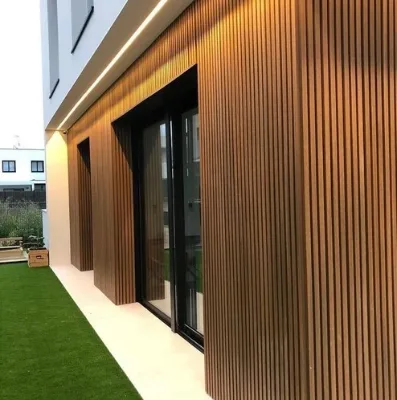


Crack-Resistant Durable Using WPC Decking Wood Mateirla and Deck Clips
$15.37 - $17.73
MOQ: 400 Square Meters


Hot Sales Anti Corrosive Weather Resistant Wood Composite WPC Decking
$18.50 - $23.80
MOQ: 500 Square Meters

Comprehensive Sourcing Guide
Strategic Sourcing Guide for Rot-Resistant WPC Decking Fasteners
Understanding the Material Ecosystem and Fastener Compatibility
Sourcing rot-resistant WPC (Wood-Plastic Composite) decking fasteners requires a deep understanding of the substrate materials to which they will be attached. The provided product data indicates a diverse range of WPC decking profiles, each with specific dimensional and functional requirements that dictate fastener selection. The observed product models, such as GK21-145, K22-135, and B10-140, reveal that decking dimensions vary significantly, with widths ranging from 135mm to 150mm and thicknesses between 21mm and 30mm. For instance, the K22-135 model specifies a thickness of 22mm, while the B-series offers lengths up to 3000mm. These physical variances mean that a single fastener type cannot universally satisfy all installation needs.
The fasteners must be compatible with the specific surface treatments and structural characteristics of the WPC. The supply chain data highlights surface treatments including sanded, brushed, wood grain, and embossed finishes. A fastener designed for a smooth, sanded surface may not perform optimally on a deeply embossed or wood-grain textured deck, potentially leading to poor aesthetic integration or compromised holding power. Furthermore, the functional attributes of the decking, such as being waterproof, anti-static, soundproof, and thermally insulating, suggest that the fastener system must not disrupt the material's integrity. For example, if the decking is designed to be soundproof, the fastener installation method must not create thermal bridges or acoustic transmission points that undermine this feature. Buyers must verify that the fastener material does not react chemically with the WPC matrix, which often contains plastic polymers and wood fibers, ensuring long-term rot resistance is maintained at the connection point.
Technical Specifications and Dimensional Precision
When evaluating fasteners for WPC decking, technical specifications must align precisely with the decking profile standards. The observed product standards indicate a high degree of customization in dimensions. For example, the standard width for some models is 145mm with a thickness of 21mm, while others like the SXS-GJ-007-2 specify 138mm by 23mm. The length specifications vary from 2.2m to 5.8m, with options for customized lengths. Fasteners must be selected based on the specific thickness of the decking to ensure adequate penetration depth without protruding through the bottom surface.
The following table outlines the critical dimensional parameters derived from the observed product data that should guide fastener selection:
| Product Model | Width (mm) | Thickness (mm) | Length Options (mm) | Surface Treatment |
|---|---|---|---|---|
| GK21-145 | 145 | 21 | 2200, 2900, 5800 | Sanded, Wood Grain |
| K22-135 | 135 | 22 | 2800, 2900, Custom | Brushed, Wood Grain |
| B10-140/B16-150 | 140-150 | 22-30 | 2200-3000 | Wood Grain |
| SXS-GJ-007-2 | 138 | 23 | Custom | Brushing, Emobossing |
Fasteners must also accommodate the specific accessories listed in the supply data, such as clips, WPC joists, skirting, and screws. The presence of "Clips" as a standard accessory suggests a hidden fastening system is a primary consideration for many buyers. Hidden clip systems often require specific spacing and groove dimensions that differ from traditional screw-down methods. Buyers should verify that the fastener system supports the "Customized" length options available in the decking, as non-standard lengths may require specialized fastening hardware to maintain structural integrity. Additionally, the "Wood Pallet & Plastic Film" or "Polywood Pallet" packaging indicates that the fasteners and accessories are often shipped in bulk, requiring careful inventory management to prevent damage to the fastener heads or threads during transit.
Compliance, Certification, and Environmental Standards
Ensuring compliance with international standards is paramount when sourcing WPC decking fasteners, particularly given the environmental claims associated with the decking itself. The product data explicitly lists certifications such as CE and ISO, alongside environmental standards like E0 and E-function ratings. While the fasteners themselves may not always carry the same environmental certification as the decking, they must not introduce hazardous elements that violate the "Eco-Friendly" character of the composite material.
The "E0" environmental standard mentioned in the context of the decking implies strict limits on formaldehyde emissions and other volatile organic compounds (VOCs). Fasteners, particularly those with coatings or plating, must be verified to ensure they do not leach harmful substances that could compromise the indoor air quality, especially for products intended for "Household" or "Commercial" use. The "CE" certification indicates conformity with health, safety, and environmental protection standards for products sold within the European Economic Area. Buyers should request documentation confirming that the fastener materials meet the CE requirements relevant to construction hardware.
Furthermore, the "Intertek and SGS" test reports cited for the decking suggest a rigorous quality assurance process. While these reports may focus on the decking, they set a precedent for the testing protocols buyers should expect for fasteners. Buyers should verify that fasteners have undergone similar testing for corrosion resistance, tensile strength, and load-bearing capacity. The "Waterproof" and "Anti-Static" functions of the decking necessitate fasteners that are equally resistant to moisture ingress and static buildup. In coastal or high-humidity environments, the fastener material must be selected to prevent galvanic corrosion, which can occur if dissimilar metals are used in contact with the WPC and the underlying joist structure.
Cost Drivers and Economic Considerations
The cost of sourcing rot-resistant WPC decking fasteners is influenced by several factors, including material composition, customization levels, and packaging requirements. The observed price range for the decking products is 0.15 to 35 USD, which reflects the variability in product models and specifications. While this range applies to the decking, the fasteners represent a significant portion of the total project cost, especially when considering hidden clip systems versus traditional screw-down methods.
Customization is a major cost driver. The data indicates that "Customization" is available for patterns, lengths, and packaging. Customized fastener profiles, such as specific clip geometries for non-standard decking thicknesses, will inherently carry a higher unit cost due to tooling and production setup fees. The "Limited 10 Years" guarantee on the decking suggests that buyers should be willing to invest in higher-quality fasteners that can match this longevity. Cheap, non-corrosive fasteners may lead to premature failure, negating the value of the 10-year guarantee on the decking itself.
Packaging also impacts the overall cost structure. The supply chain offers various packaging options, including "Wood Pallet & Plastic Film," "Polywood Pallet," "Carton Box," and "Woven Bag." Bulk packaging on pallets is generally more cost-effective for large commercial projects, while carton boxes may be necessary for smaller residential orders or to prevent damage during international shipping. The MOQ (Minimum Order Quantity) range of 1 to 1000 units allows for flexibility, but buyers should be aware that smaller order quantities may incur higher per-unit costs. Additionally, the origin of the products, primarily from Anhui, Shandong, and Zhejiang in China, influences logistics costs. Buyers should factor in freight charges and potential tariffs when calculating the total landed cost of the fasteners.
Typical Applications and Installation Scenarios
The versatility of WPC decking fasteners is evident in the diverse applications listed in the product data. The "Usage" attribute includes "Outdoor," "Household," and "Commercial" settings. This breadth of application requires fasteners that can perform reliably in varying environmental conditions. For "Outdoor" applications, the fasteners must withstand exposure to UV radiation, rain, and temperature fluctuations. The "UVproof" and "Waterproof" characteristics of the decking imply that the fastener system must also be UV-resistant to prevent degradation of the fastener head or the surrounding WPC material.
In "Commercial" settings, such as public parks or commercial plazas, the fasteners must support higher foot traffic and potential heavy loads. The "Soundproof" and "Thermal Insulation" features of the decking suggest that fasteners should be installed in a manner that maintains these acoustic and thermal properties. For example, using thermal break fasteners can help prevent heat transfer through the decking, maintaining the insulating value of the composite material. In "Household" applications, aesthetics are often a priority. Hidden clip systems are frequently preferred in residential settings to create a seamless, clean look without visible screw heads. The availability of "Skirting" and "Clips" as accessories indicates that a comprehensive fastening system is often required to complete the installation, ensuring that the edges and transitions are secure and visually appealing.
Supplier Evaluation and Quality Control Protocols
Evaluating suppliers for WPC decking fasteners requires a rigorous approach to quality control and verification of claims. The product data lists specific origins, including Anhui, Shandong, and Zhejiang, which are known manufacturing hubs in China. Buyers should verify the supplier's ability to provide consistent quality across these locations. The presence of "Intertek and SGS" test reports for the decking suggests that suppliers are capable of third-party validation. Buyers should request similar test reports for the fasteners, focusing on corrosion resistance, tensile strength, and dimensional accuracy.
The "Guarantee" of 10 years on the decking is a strong indicator of the supplier's confidence in their product. Buyers should inquire whether the fastener supplier offers a comparable warranty or guarantee. This is crucial for long-term procurement considerations, as fastener failure can lead to costly repairs and safety hazards. The "Customized" nature of the products means that suppliers must have the flexibility to adapt to specific project requirements. Buyers should assess the supplier's capacity for customization, including their ability to produce fasteners with specific dimensions, coatings, or materials.
Quality control should also extend to the packaging and shipping process. The varied packaging options, from "Wood Pallet" to "Carton Box," indicate that suppliers have different capabilities in protecting their products during transit. Buyers should verify that the packaging is robust enough to prevent damage to the fasteners, especially for hidden clip systems which may have delicate components. The "Limited 10 Years" guarantee also implies a need for traceability. Buyers should ensure that the supplier can provide batch numbers or lot codes for the fasteners, allowing for easy identification and replacement if any defects are discovered during installation or after the product has been in service.
Long-Term Procurement and Lifecycle Management
Procuring WPC decking fasteners is not just a one-time transaction but a strategic decision that impacts the lifecycle of the project. The "Limited 10 Years" guarantee on the decking sets a benchmark for the expected service life of the entire system. Buyers should select fasteners that are designed to last the full duration of this guarantee. This involves considering the material composition of the fasteners, ensuring they are compatible with the WPC material and resistant to the specific environmental conditions of the installation site.
Long-term procurement considerations also include the availability of replacement parts and the ease of maintenance. If a fastener system fails, the ability to source compatible replacements quickly is essential to minimize downtime and repair costs. Buyers should evaluate the supplier's inventory management and supply chain resilience to ensure a steady supply of fasteners over the long term. The "Customized" options available in the product data suggest that suppliers are willing to work with buyers on specific needs, but buyers should confirm that these customizations can be reproduced consistently in future orders.
Finally, buyers should consider the environmental impact of the fasteners. The "Eco-Friendly" character of the decking and the "E0" environmental standard suggest a commitment to sustainability. Fasteners should be sourced from suppliers who adhere to similar environmental principles, such as using recyclable materials or minimizing waste in the production process. By aligning the fastener procurement with the broader sustainability goals of the project, buyers can ensure a cohesive and responsible approach to construction and design.
FAQs
Which certifications are available for rot resistant wpc decking fasteners?
Fasteners should align with CE and ISO certifications found on the decking. Buyers must verify that the fastener materials do not violate these standards or introduce hazardous elements that compromise the eco-friendly character of the composite material.
How do I select fasteners for different decking thicknesses?
Select fasteners based on specific thicknesses like 21mm or 22mm found in models GK21-145 and K22-135. The fastener must penetrate adequately without protruding through the bottom surface to maintain structural integrity and aesthetic finish.
Can hidden clip systems be used with these decking profiles?
Yes, hidden clip systems are supported as clips are listed as standard accessories. Buyers should verify that the clip geometry matches the specific groove dimensions of the decking profile to ensure a secure and seamless installation.
What environmental standards apply to the fastener selection process?
Fasteners must comply with E0 environmental standards to prevent harmful emissions. They should not leach substances that violate the eco-friendly character of the decking, especially for household or commercial indoor applications requiring strict air quality.
Which surface treatments affect fastener aesthetic integration?
Fasteners must accommodate sanded, brushed, wood grain, or embossed surface treatments. A fastener designed for smooth surfaces may not perform optimally on textured decks, potentially leading to poor aesthetic integration or compromised holding power.
How does customization impact the cost of fasteners?
Customization increases unit costs due to tooling and production setup fees. Buyers should expect higher prices for specific clip geometries or non-standard lengths that differ from the standard 145mm width or 21mm thickness specifications.
What packaging options are available for bulk fastener orders?
Packaging includes wood pallets, polywood pallets, carton boxes, and woven bags. Bulk pallet packaging is cost-effective for large projects, while cartons may be necessary for smaller residential orders to prevent damage during international shipping.