Source Round Alloy Earrings for Wedding, Party, and Gift
Compare 30 Round Alloy Earrings from verified suppliers in China. Options include steel needle studs, copper designs, and various styles like star fashion and simple shapes suitable for girls and women.
Key considerations
Products List

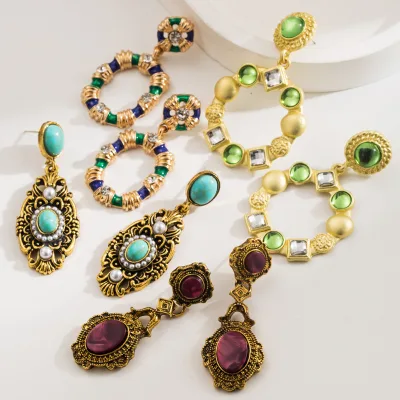
Exaggerated large circle twist earrings fashion woven design alloy earrings
$0.53 - $0.60
MOQ: 100 Pairs


Fashion Retro Exaggerated Large Circle C-Shape Pearl Earrings Hot Selling
$0.69 - $0.80
MOQ: 100 Pieces




Comprehensive Sourcing Guide
Round Alloy Earrings Sourcing Guide
Sourcing Round Alloy Earrings requires a disciplined approach that balances aesthetic appeal with rigorous safety and quality verification. The global market for this category is characterized by a high volume of listings, diverse price points, and varying degrees of manufacturing maturity. Buyers must navigate a landscape where "alloy" serves as a broad material descriptor, often masking significant differences in base metal composition, plating thickness, and finish durability. The visual consistency of round shapes offers a timeless appeal suitable for various demographics, but the underlying material integrity is the primary determinant of product longevity and wearer safety.
This guide provides evidence-based procurement strategies for buyers seeking Round Alloy Earrings. It focuses on interpreting observed market signals, verifying technical specifications, ensuring regulatory compliance, and managing commercial risks. By adhering to the structured verification steps outlined below, procurement teams can mitigate the risks associated with low-cost sourcing while maintaining high standards for product quality and supplier reliability. The objective is to transform raw listing data into actionable procurement criteria that protect brand reputation and ensure customer satisfaction.
Product Scope and Observed Listing Signals
The current market for Round Alloy Earrings exhibits a wide spectrum of pricing and minimum order quantities (MOQs), reflecting the diversity of supplier capabilities. Observed listing prices range from approximately $0.50 to $9.40 USD, indicating a market segmented by design complexity, plating quality, and packaging standards. Similarly, MOQs vary significantly, typically ranging from 1 to 200 pieces, which suggests that many suppliers cater to both small-batch custom orders and larger volume purchases. Buyers should interpret these ranges as indicators of supplier flexibility rather than fixed market rates, as final costs will depend heavily on customization requirements and order volume.
Product attributes observed in the market highlight a strong emphasis on customization and specific stylistic trends. Many suppliers offer OEM services and accept custom designs, with common styles including "Natural," "Star Fashion," and "Simple" aesthetics. The target demographic often includes youth and female consumers, with usage cases spanning decoration, gifts, and special occasions such as weddings and parties. Packaging varies from simple polybags to branded OPP boxes, which directly impacts the perceived value of the product. Buyers must align their sourcing strategy with these observed trends, ensuring that the selected supplier can meet specific stylistic and packaging requirements without compromising on material quality.
Technical Specifications to Verify
Material composition is the most critical technical specification to verify when sourcing alloy earrings. While listings often state "Alloy" as the material, this term is non-specific and can encompass a wide range of base metals, including zinc, copper, or brass. Buyers must request detailed material breakdowns to ensure the alloy meets specific durability and hypoallergenic requirements. For instance, some observed listings specify copper cores with gold plating, while others may use different base metals. Verifying the exact alloy composition is essential to prevent issues such as tarnishing, discoloration, or allergic reactions, which can lead to high return rates and negative customer feedback.
Dimensional and weight specifications provide additional insights into product quality and manufacturing precision. Observed standards include specific dimensions such as 6cm height, 4.5x3cm size, and weights ranging from 4.5g to 22.83g. These variations indicate that buyers should not assume uniformity across all Round Alloy Earrings. Instead, they must verify that the physical attributes of the ordered samples match the agreed-upon specifications. Discrepancies in weight or size can signal inconsistencies in the casting or plating process, which may affect the overall aesthetic and structural integrity of the earrings. Buyers should establish clear tolerance limits for these dimensions in their purchase agreements.
Compliance and Safety Documentation
Regulatory compliance is non-negotiable for alloy earrings, particularly those marketed to sensitive demographics or sold in regions with strict chemical regulations. Key certifications to verify include SGS, BV, and Intertek, which provide independent validation of product safety and quality. These certifications are crucial for demonstrating that the earrings meet international standards for heavy metals and other hazardous substances. Buyers should request current test reports from accredited laboratories to confirm that the products comply with relevant regulations, such as the US Standard or EU directives, depending on the target market.
Specific chemical restrictions are a primary concern in the alloy jewelry sector. Buyers must ensure that the earrings are free from lead, nickel, and cadmium, as these substances pose significant health risks. Observed listings often highlight "Lead Free, Nickle Free, Cadmium Free" attributes, but these claims must be substantiated by third-party testing. Additionally, verifying that the plating process adheres to eco-friendly standards can enhance the product's marketability. Buyers should include clauses in their contracts that require suppliers to provide updated compliance documentation for each production batch, ensuring ongoing adherence to safety standards.
Cost Drivers and Commercial Terms
Several factors influence the final cost of Round Alloy Earrings, including material costs, plating thickness, and packaging complexity. The base metal price fluctuates based on global market conditions, while the cost of precious metal plating, such as gold or silver, depends on the thickness and purity of the coating. Packaging choices, ranging from simple polybags to custom OPP boxes, also impact the unit cost. Buyers should analyze these cost drivers to understand the value proposition of each supplier quote and avoid selecting options based solely on the lowest price, which may compromise quality.
Commercial terms, including payment methods and shipping arrangements, play a significant role in the overall procurement strategy. Observed payment methods include T/T (Telegraphic Transfer), which is common for B2B transactions. Buyers should negotiate favorable payment terms, such as partial upfront payments and balance upon shipment, to mitigate financial risk. Additionally, understanding the supplier's shipping capabilities, including fast shipping options and large stock availability, can help optimize supply chain efficiency. Buyers should clarify lead times and shipping costs early in the negotiation process to avoid unexpected expenses and delays.
Supplier Qualification and Quality Control
Supplier qualification is a critical step in ensuring a reliable supply chain for Round Alloy Earrings. Buyers should assess suppliers based on their manufacturing capabilities, quality control processes, and track record. Observed listings often highlight attributes such as "High Quality Low Price, Large Stock, Fast Shipping," which indicate a supplier's ability to meet demand efficiently. However, buyers must verify these claims through site audits or third-party inspections to ensure that the supplier has the necessary infrastructure and expertise to maintain consistent quality.
Quality control measures should be integrated into the procurement process from the initial sampling stage to final shipment. Buyers should establish clear quality standards and inspection criteria, including checks for plating uniformity, structural integrity, and packaging accuracy. Implementing a rigorous sampling protocol allows buyers to identify potential issues before mass production begins. Additionally, buyers should require suppliers to provide pre-shipment inspections to ensure that the final products meet all agreed-upon specifications. This proactive approach to quality control helps minimize defects and ensures that the delivered goods align with buyer expectations.
Long-Term Procurement Checks
Sustaining a successful sourcing relationship for Round Alloy Earrings requires ongoing monitoring and evaluation of supplier performance. Buyers should regularly review key performance indicators (KPIs) such as on-time delivery rates, product defect rates, and responsiveness to issues. Consistent performance in these areas indicates a reliable supplier, while deviations may signal underlying problems that need to be addressed. Buyers should maintain open communication with suppliers to discuss any concerns and collaborate on continuous improvement initiatives.
Market trends and regulatory changes also necessitate periodic reviews of sourcing strategies. Buyers should stay informed about emerging styles, materials, and compliance requirements to ensure that their product offerings remain competitive and compliant. Regularly updating supplier contracts to reflect current standards and expectations helps maintain a strong partnership. By adopting a long-term perspective and prioritizing quality and compliance, buyers can build a resilient supply chain that supports their business growth and customer satisfaction goals.
FAQs
Can I get custom Round Alloy Earrings for youth girls?
Yes, customization is available for these Round Alloy Earrings designed for youth girls. The products support OEM services and come in styles like Natural and Star Fashion. They are suitable for decoration, gifts, and health purposes, ensuring a tailored solution for your specific needs.
What materials are used for these Round Alloy Earrings?
The earrings are primarily made from alloy and copper materials. They are crafted to be lead-free, nickel-free, and cadmium-free for safety. These materials ensure high quality while meeting international standards for jewelry used in weddings, parties, and other special occasions.
Which certifications do the Round Alloy Earrings hold?
The products hold SGS, BV, and Intertek certifications to verify their quality and safety. These certifications confirm the items meet high standards for export to Europe, North America, and Russia. Buyers can rely on these verified credentials when sourcing for international markets.
How are the Round Alloy Earrings packaged for shipment?
Packaging options include one piece in a polybag or an OPP box depending on the specific model. Some items are packed in OPP bags while others use OPP boxes. This flexible packaging ensures the earrings remain protected during transit while maintaining their brand-new condition.
What is the origin and standard of these earrings?
These earrings originate from Zhejiang and Yiwu in China. They adhere to US quality standards and specific product standards like 6cm height or 15g weight. The products are manufactured in factories with large stock capabilities to ensure fast shipping and reliable supply.
Can I find Round Alloy Earrings with specific dimensions?
Yes, specific dimensions are available such as 4.5 by 3 cm or 6 by 5.5 cm. Models like AVA1332 and E-00051 offer distinct sizes and weights ranging from 4.5g to 22.83g. Buyers can select the exact specification required for their design or retail needs.
What payment methods are accepted for these earrings?
The accepted payment method for these transactions is T/T. This standard banking transfer ensures secure and efficient processing for bulk orders. Buyers can proceed with confidence knowing the payment terms are established for international trade in this product category.