Source Rubber Tire Puncture Repair Patch for Radial, Bias, and Bicycle Tires
Find 30 verified listings for Rubber Tire Puncture Repair Patch options suitable for radial, bias, and bicycle applications. Buyers can compare specifications like size, material, and certification to select the right solution for tire repair needs.
Key considerations
Products List


Comprehensive Sourcing Guide
Rubber Tire Puncture Repair Patch Sourcing Guide
Sourcing rubber tire puncture repair patches requires a nuanced understanding of material science, adhesive chemistry, and application-specific performance. These components serve as the primary defense against air loss in pneumatic systems, ranging from high-speed automotive radial tires to delicate bicycle inner tubes. The procurement process is not merely about selecting a patch but ensuring compatibility between the patch’s bonding agent, the tire’s rubber compound, and the operational environment. Buyers must recognize that a "one-size-fits-all" approach rarely succeeds in this category, as the mechanical stresses on a truck tire differ vastly from those on a mountain bike. Consequently, the initial sourcing strategy must prioritize technical alignment over generic price comparisons, ensuring that the selected patch can withstand the specific thermal, mechanical, and chemical conditions of its intended use.
The market for these repair components is characterized by a wide variance in quality, material composition, and certification standards. While some products are designed for temporary field repairs, others are engineered for permanent, high-pressure curing processes. Procurement teams must navigate this landscape by distinguishing between simple adhesive strips and complex vulcanizing systems. The decision to source from specific regions, such as China, often involves balancing cost efficiency with supply chain reliability and quality consistency. Understanding the underlying technology—whether it relies on pressure-sensitive adhesives or cold vulcanization bonding—is critical for defining the right product scope. This guide provides a structured approach to evaluating these variables, ensuring that procurement decisions are grounded in technical reality rather than marketing claims.
Product Scope and Observed Listing Signals
The observed market signals indicate a diverse product range with prices spanning from $0.02 to $14.38 USD, reflecting significant variations in material quality, packaging, and intended application. The minimum order quantities (MOQs) range from 10 to 20,000 units, suggesting that suppliers cater to both small-scale trial orders and large-scale industrial procurement. This wide price and volume disparity highlights the importance of defining precise technical requirements before engaging with suppliers. Low-cost items may be suitable for low-stress applications like bicycle tires, whereas higher-priced patches likely incorporate advanced rubber compounds or specialized adhesive technologies required for heavy-duty radial or bias tires. Buyers should interpret these signals as indicators of tiered product offerings rather than uniform market pricing.
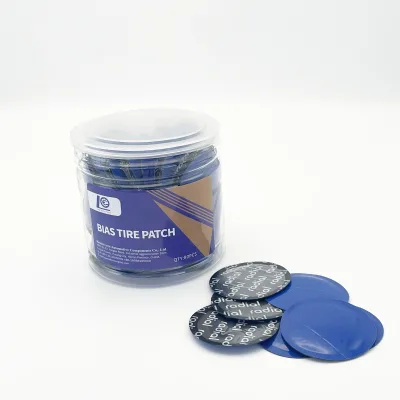
Product attributes observed in listings reveal specific design features that dictate suitability. For instance, some patches are explicitly labeled for "All Radial and Bias Tire" applications, indicating a universal fit for automotive and industrial sectors, while others are tailored for "Ordinary Bicycle, Mountain Bike, Road Bike, and Kids Bike." Material compositions vary, with some products using "Natural Rubber" and others utilizing generic "Rubber" or "Organic Material" blends. Additionally, the presence of "Pressure sensitive Adhesive" bonding functions suggests a ready-to-use format, whereas other products may require additional curing agents. Packaging formats also differ, ranging from simple "Bag-Carton-Pallet" arrangements to precise counts like "10PCS/Box" or "50PCS/Box," which impacts logistics and inventory management. These details must be cross-referenced with operational needs to avoid mismatches in performance or handling.
Technical Specifications to Verify
Verifying technical specifications is paramount to ensuring the longevity and safety of tire repairs. Buyers must confirm the physical dimensions of the patches, as observed sizes include "100mm," "170170mm," and "4575mm," alongside specific model identifiers like "Patch," "COMBI," "TJ-CP-001," and "DM-10." The ply count is another critical factor, with some products specified as having "4 Plies," which directly correlates to the patch’s tensile strength and resistance to tearing under pressure. It is essential to match the patch size and ply count to the puncture diameter and the tire’s load index. Using an undersized or insufficiently plied patch on a high-load tire can lead to premature failure, making precise dimensional verification a non-negotiable step in the sourcing process.
The chemical composition and bonding mechanism of the patch must also be rigorously evaluated. Some products are described as having a "Clear" color and "Grey Edge," which may indicate specific rubber blends or adhesive layers. The "Main Agent Composition" is often listed as "Rubber," while the "Promoter Composition" may include "Solvent," suggesting a cold vulcanization process that chemically bonds the patch to the tire liner. Other products may rely on "Pressure sensitive Adhesive" technology, which offers convenience but may differ in long-term durability compared to vulcanized bonds. Buyers should request detailed material safety data sheets (MSDS) and technical datasheets to understand the curing time, temperature requirements, and chemical resistance of the adhesive. This ensures that the repair method aligns with the tire manufacturer’s recommendations and the operational environment’s demands.
Compliance and Safety Documentation
Compliance with international standards is a critical component of sourcing rubber tire repair patches, particularly for automotive and industrial applications. Observed certifications include "ISO," "CE," and "RoHS," which indicate adherence to quality management systems, European safety directives, and restrictions on hazardous substances, respectively. The presence of "SGS" as a standard suggests third-party verification of product quality and safety. Buyers must verify that these certifications are current and applicable to the specific product category, as generic certification claims may not cover all variations in a supplier’s product line. Ensuring that the patches meet relevant regional regulations is essential for avoiding legal liabilities and ensuring market access, especially in regions with strict environmental and safety standards.
In addition to certifications, buyers should assess the product’s classification and curing requirements. Some patches are classified as "Room Curing," which simplifies the repair process by eliminating the need for specialized heating equipment. This characteristic is particularly valuable for field repairs or workshops with limited infrastructure. However, room-curing patches may have different performance characteristics compared to those requiring heat vulcanization. Buyers should also consider the "OEM" availability, as original equipment manufacturer specifications often dictate the exact materials and processes required for warranty compliance. Verifying that the patch’s compliance documentation aligns with the tire manufacturer’s guidelines is crucial for maintaining warranty validity and ensuring that the repair meets industry safety benchmarks.
Cost Drivers and Commercial Terms
The cost of rubber tire puncture repair patches is influenced by several factors, including material quality, certification status, and packaging complexity. The observed price range of $0.02 to $14.38 USD reflects these variations, with higher prices likely corresponding to patches with advanced adhesive technologies, higher ply counts, or specialized certifications. Buyers should analyze the cost per unit in the context of the total repair lifecycle, considering that a higher-quality patch may reduce the frequency of re-repairs and associated labor costs. Additionally, the MOQ range of 10 to 20,000 units allows for flexibility in order sizing, enabling buyers to balance inventory holding costs with unit price discounts. Understanding these cost drivers helps in negotiating favorable terms and optimizing the total cost of ownership.
Commercial terms, including packaging and shipping logistics, also impact the overall procurement cost. Observed packaging formats range from "Bag-Carton-Pallet" to specific box counts like "12PC/Box" or "20PCS/Box," which affect handling efficiency and storage requirements. Buyers should evaluate the supplier’s packaging standards to ensure that products are protected during transit and stored correctly to maintain adhesive integrity. Furthermore, the availability of samples, as indicated by the "Sample: Yes" attribute, allows buyers to conduct preliminary testing before committing to large orders. This reduces the risk of receiving non-conforming products and provides an opportunity to verify the patch’s performance in real-world conditions. Negotiating clear terms for sample provision, return policies, and quality guarantees is essential for mitigating procurement risks.
Supplier Qualification and Quality Control
Supplier qualification is a critical step in ensuring the reliability and consistency of rubber tire puncture repair patches. Buyers should verify the supplier’s production capabilities, quality management systems, and track record in the industry. The observation that products originate from "China" and specifically "Changsha, Hunan" provides insight into the geographic concentration of manufacturing, which may offer logistical advantages or challenges depending on the buyer’s location. Buyers should conduct on-site audits or request third-party audit reports to assess the supplier’s adherence to quality standards and production processes. This due diligence helps identify potential risks related to production capacity, quality control measures, and supply chain resilience.
Quality control measures should be integrated into the procurement process to ensure that delivered products meet specified requirements. Buyers should establish clear acceptance criteria based on the observed specifications, such as size, ply count, and material composition. Regular inspections, including pre-shipment inspections and random sampling, can help detect defects early and prevent the distribution of non-conforming products. Additionally, buyers should require suppliers to provide batch-specific test reports and certificates of analysis. Establishing a robust quality control framework not only ensures product consistency but also fosters a collaborative relationship with suppliers, encouraging continuous improvement and innovation in product development.
Long-Term Procurement Checks
Long-term procurement success depends on continuous monitoring of supplier performance and market trends. Buyers should establish key performance indicators (KPIs) to track metrics such as on-time delivery, product quality, and responsiveness to issues. Regular reviews of these metrics help identify potential problems early and facilitate corrective actions. Additionally, buyers should stay informed about advancements in patch technology, such as new adhesive formulations or eco-friendly materials, to ensure that their sourcing strategy remains competitive and aligned with industry best practices. This proactive approach enables buyers to adapt to changing market conditions and maintain a reliable supply of high-quality repair patches.
Sustainability and regulatory changes also pose long-term considerations for procurement. As environmental regulations become more stringent, buyers should prioritize suppliers who demonstrate commitment to sustainable practices, such as using eco-friendly materials or reducing waste. Verifying that suppliers comply with evolving standards, such as updated RoHS or REACH regulations, is essential for maintaining market access and brand reputation. Furthermore, buyers should consider the lifecycle impact of the patches, including disposal and recyclability, to align with corporate sustainability goals. By integrating these long-term checks into the procurement strategy, buyers can build a resilient and responsible supply chain that supports both operational efficiency and environmental stewardship.
FAQs
What certifications do rubber tire puncture repair patches have?
Many products hold ISO and CE certifications, while others meet RoHS standards. Some items are marked with ISOCE or comply with specific standards like MC-4 and MC-11. Buyers should verify the specific certification listed for each patch model to ensure compliance with regional regulations.
Which materials are used for rubber tire puncture repair patches?
The main materials typically include natural rubber or general rubber compounds. Some patches feature organic material composition with pressure-sensitive adhesive bonding functions. The color options often range from black to grey edge or clear finishes depending on the specific product model.
How are rubber tire puncture repair patches packaged for shipment?
Packaging varies by product, often using bags, cartons, and pallets for bulk transport. Specific configurations include 10 pieces per box with 24 boxes per carton or 50 pieces per box with 60 boxes per carton. Some items are simply packed in cartons or by custom carton specifications.
Can I find customized rubber tire puncture repair patches?
Customization is available for many models, allowing for tailored specifications. However, some products are listed as non-customized or follow standard models like DM-10. Buyers should check the specific product attributes to confirm if OEM or custom options are applicable for their needs.
What sizes are available for rubber tire puncture repair patches?
Available sizes include 100mm, 170 by 170mm, 45 by 75mm, and round 45mm dimensions. The specific size depends on the product model, such as Patch, COMBI, or TJ-CP-001. Buyers must select the correct size based on the tire type and puncture requirements.
Where are rubber tire puncture repair patches manufactured?
Products originate from China, with specific manufacturing locations including Changsha, Hunan. The origin is consistently listed as China for the majority of the supply. Buyers should note the specific location if regional sourcing preferences are required for their procurement strategy.
What is the minimum order quantity for rubber tire puncture repair patches?
The minimum order quantity ranges from 10 to 20,000 units depending on the supplier and product. Specific MOQs vary by model and packaging configuration. Buyers should confirm the exact MOQ with the supplier before placing an order to ensure it meets their volume requirements.