Source Rust Proof Dish Drying Rack for Kitchen, Bathroom, and Office
Find a Rust Proof Dish Drying Rack from 30 verified listings. Compare materials like stainless steel and metal, check customization options, and review specifications for kitchen storage needs. Evaluate folding designs, layer counts, and packaging details to ensure the selected unit fits your specific operational requirements and space constraints effectively.
Key considerations
Products List


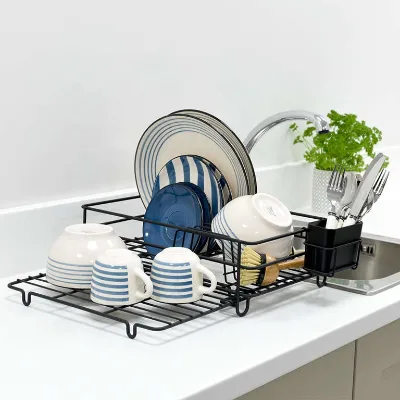


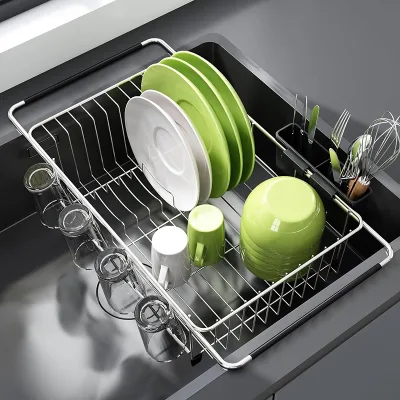


Wire Sink Drying Rack Expandable Dish Rack Stainless Steel Sink Dish Drainers Drying Rack
$3.20 - $3.24
MOQ: 308 Pieces
Comprehensive Sourcing Guide
Rust Proof Dish Drying Rack Sourcing Guide
Procuring a rust-proof dish drying rack requires distinguishing between metal construction types that inherently resist corrosion versus those requiring specific surface treatments. The observed product data indicates a diverse market offering racks made from metal, stainless steel, and plastic, each presenting different durability profiles for kitchen environments. Buyers must verify that the "rust-proof" claim specifically applies to the metal components, as stainless steel offers superior resistance compared to standard metal alloys that may rely on coatings.
The sourcing strategy should prioritize suppliers who explicitly list "Stainless Steel" or "Metal" with confirmed anti-corrosion properties alongside their product specifications. While some listings mention "Modern" styles and "Kitchen" applicability, the material composition is the primary determinant of longevity. Procurement teams should request material certificates or detailed composition data to ensure the selected unit will withstand constant exposure to water and detergents without degrading over time.
Product Scope and Observed Listing Signals
The current market signals reveal a wide variance in product configurations, ranging from simple "Dish Rack" models to complex "Dish Rack and Bowl Rack" systems with multiple tiers. Listings indicate that "Customization" is available, allowing buyers to tailor dimensions and features, yet some products are listed as "Non-Customized" with fixed standard sizes like 431717cm. This duality suggests that buyers must clearly define whether they need a standard off-the-shelf unit or a bespoke solution to fit specific kitchen layouts.
Observations show that "Folded" and "Disassembly" features are common attributes, catering to space-constrained environments, while other models are sold in "Unfolded" states. The "Color" options observed include Black and Brown, and packaging varies from "Single" units to "Set" configurations. Buyers should carefully cross-reference the "Applicable Space" and "Shape" attributes to ensure the selected rack aligns with their specific storage needs and aesthetic requirements before committing to an order.
Technical Specifications to Verify
Verification of physical dimensions is critical, as observed listings show standards ranging from compact 360-560mm widths to larger 53*33cm configurations. The "Size" attribute is frequently listed as "Can Be Customized," which implies that standard dimensions may not fit all inventory requirements. Procurement teams must confirm the exact load-bearing capacity and layer count, noting that some units are explicitly defined as "Two" layers while others may have different structural designs.
Material integrity is the second technical pillar, with data confirming the presence of "Stainless Steel," "Metal," and "Plastic" options. Buyers must ensure that the "Stainless Steel" designation is accurate for rust-proof claims, as standard "Metal" may require additional plating. Additionally, the "Design" attribute often highlights "Folding" capabilities, which necessitates checking the hinge durability and locking mechanisms to prevent structural failure during repeated use and transport.
Compliance and Safety Documentation
While the provided data explicitly lists "ISO" certification, buyers must verify the specific ISO standard applicable to kitchenware and food contact safety. The presence of "ISO" suggests a baseline quality management system, but it does not automatically guarantee that the materials are food-grade or free from harmful leaching. Procurement teams should request specific test reports confirming that the "Stainless Steel" or coated "Metal" surfaces meet international food safety standards for direct contact with dishes and utensils.
Safety documentation should also address the structural integrity of the rack under wet conditions, particularly for "Disassembly" models where joints are critical. The "Warranty Service" of one year and "After Sales Service" options like "Online Technical Support" indicate a supplier's confidence in their product, but these terms must be reviewed for exclusions related to corrosion or mechanical failure. Buyers should ensure that the "Engineering Solution Capabilities" include graphic design and total project solutions that cover safety compliance for the final assembled product.
Cost Drivers and Commercial Terms
The observed price range of 1.3 to 65 USD reflects significant variation based on material quality, customization levels, and packaging complexity. "Stainless Steel" models typically command higher prices than "Plastic" or basic "Metal" alternatives, while "Customized Package" options may incur additional logistics costs. Buyers must analyze the cost per unit against the "MOQ" requirements, which range from 100 sets to 3000 pieces, to determine the most economical order volume for their specific budget constraints.
Lead times and delivery terms are equally critical, with observed "Delivery Time" spanning 15 to 30 days. The "MOQ" values vary significantly, with some suppliers requiring 100 pieces while others demand 3000, influencing the total capital outlay. Procurement teams should negotiate based on the "OEM & ODM" capabilities, as high customization often extends lead times and increases unit costs. Understanding the relationship between the "Sample" availability and bulk pricing is essential for validating quality before scaling the order.
Supplier Qualification and Quality Control
Supplier qualification should focus on those offering "OEM & ODM" services and "Engineering Solution Capabilities," as these indicate a capacity for complex manufacturing and problem-solving. The presence of "ISO" certification is a positive indicator, but buyers must verify the supplier's track record in producing "Rust Proof" items specifically. Requesting samples is a vital step, as the "Sample" attribute is listed as available, allowing for hands-on inspection of the "Folding" mechanisms and surface finishes.
Quality control protocols must include rigorous testing of the "Disassembly" and "Folded" states to ensure the rack maintains its structural integrity after repeated assembly. The "Packaging" methods, ranging from "Carton" to "One Set in One Polybag," must be evaluated for their ability to protect the product during transit, especially for "Stainless Steel" items that could be scratched. Buyers should also assess the supplier's "After Sales Service" capabilities to ensure long-term support for any potential defects or warranty claims.
Long-Term Procurement Checks
Establishing a long-term partnership requires monitoring the supplier's ability to maintain consistent "Customized" specifications over multiple production runs. The "prod_model" numbers observed, such as 1451 and 1383, serve as identifiers, but buyers must ensure that future orders match the exact material and dimensional standards of the initial sample. Regular audits of the "prod_origin" locations, specifically Jiangsu and Zhejiang, can help verify that production remains consistent and that quality control measures are not compromised by shifts in manufacturing sites.
Continuous evaluation of the "Warranty Service" and "After Sales Service" performance is necessary to ensure the supplier remains accountable for product failures. Buyers should track the frequency of "Online Technical Support" requests and the resolution time for any issues related to rust or structural weakness. Maintaining a clear record of "prod_standard" compliance and "Material" consistency will help mitigate risks and ensure that the procurement strategy delivers reliable, rust-proof dish drying racks for the long term.
FAQs
What materials are used for rust proof dish drying racks?
Manufacturers typically use stainless steel, metal, or plastic to ensure durability and resistance to corrosion. Stainless steel options provide robust support for heavy dishes, while plastic variants offer lightweight convenience. These materials are selected to maintain structural integrity in humid kitchen environments without compromising hygiene or aesthetic appeal.
Can I customize the size of a dish drying rack?
Yes, customization is available for many models to fit specific kitchen spaces. Suppliers offer standard dimensions like 43x17x17cm or 53x33cm, but can also produce racks with sizes that can be customized according to buyer requirements. This flexibility ensures the rack fits perfectly into various kitchen layouts and storage needs.
What is the typical MOQ for ordering dish drying racks?
The minimum order quantity varies by supplier, typically ranging from 100 pieces to 300 pieces. Some vendors may accept orders as low as 4 pieces for samples, while bulk orders often start at 100 sets or 300 pieces. Buyers should confirm specific MOQ requirements with the manufacturer to align with their inventory strategy.
How long does delivery take for bulk orders?
Standard delivery time is generally between 15 and 30 days after order confirmation. This timeframe allows for production, quality control, and packaging preparation. Buyers should account for this lead time when planning inventory replenishment, especially for large orders requiring specific customization or packaging arrangements.
Are dish drying racks available with ISO certification?
Yes, many manufacturers provide products with ISO certification to ensure quality management standards. This certification indicates that the production process meets international benchmarks for consistency and reliability. Buyers seeking verified quality assurance can request documentation to confirm that the racks comply with these recognized industry standards.
What warranty and after-sales support are provided?
Suppliers often offer a one-year warranty service along with online technical support. This support helps buyers resolve any installation or usage issues promptly. The warranty covers manufacturing defects, ensuring that the product performs as expected. Buyers can rely on this support structure for long-term satisfaction and operational continuity.